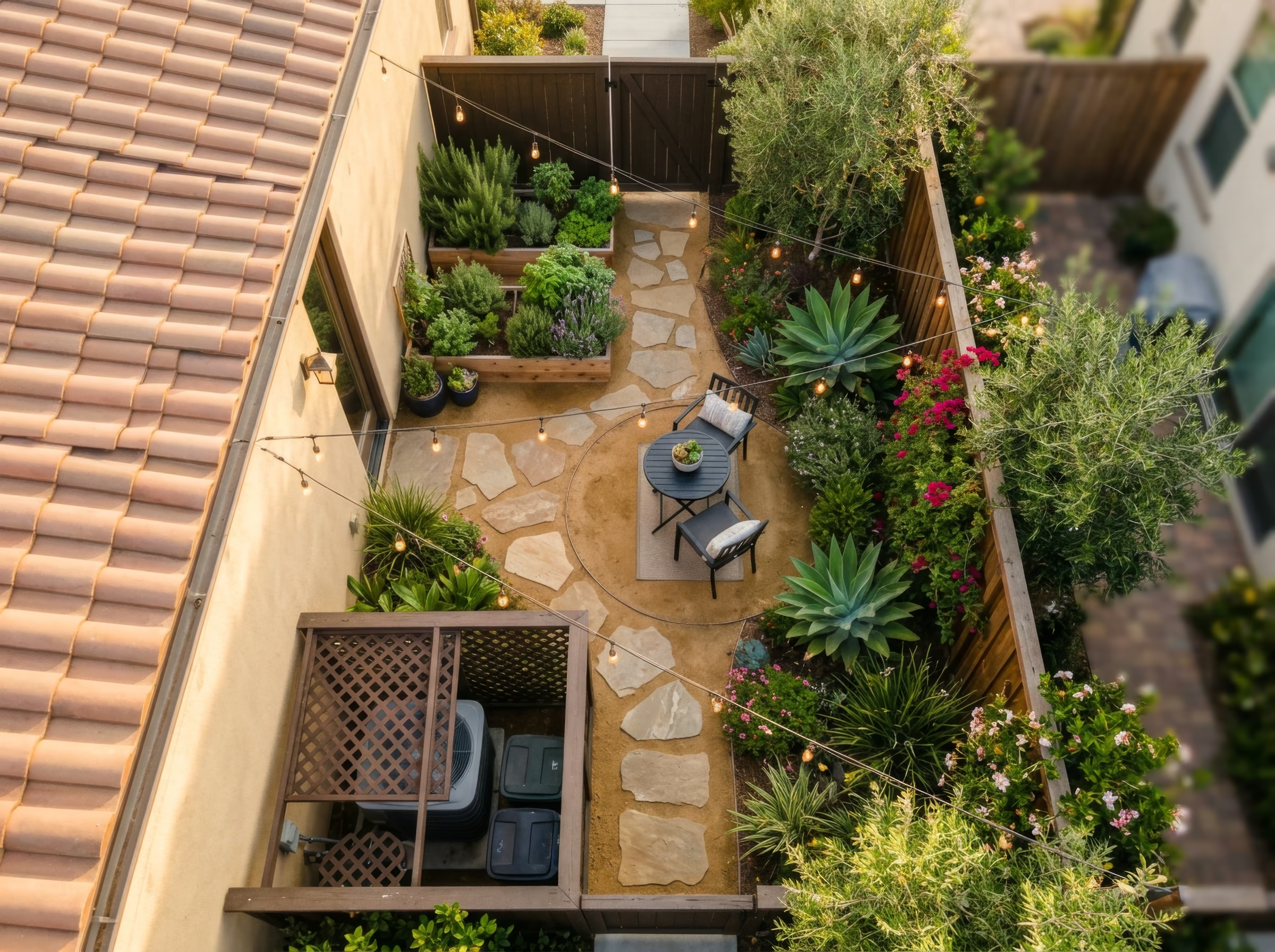
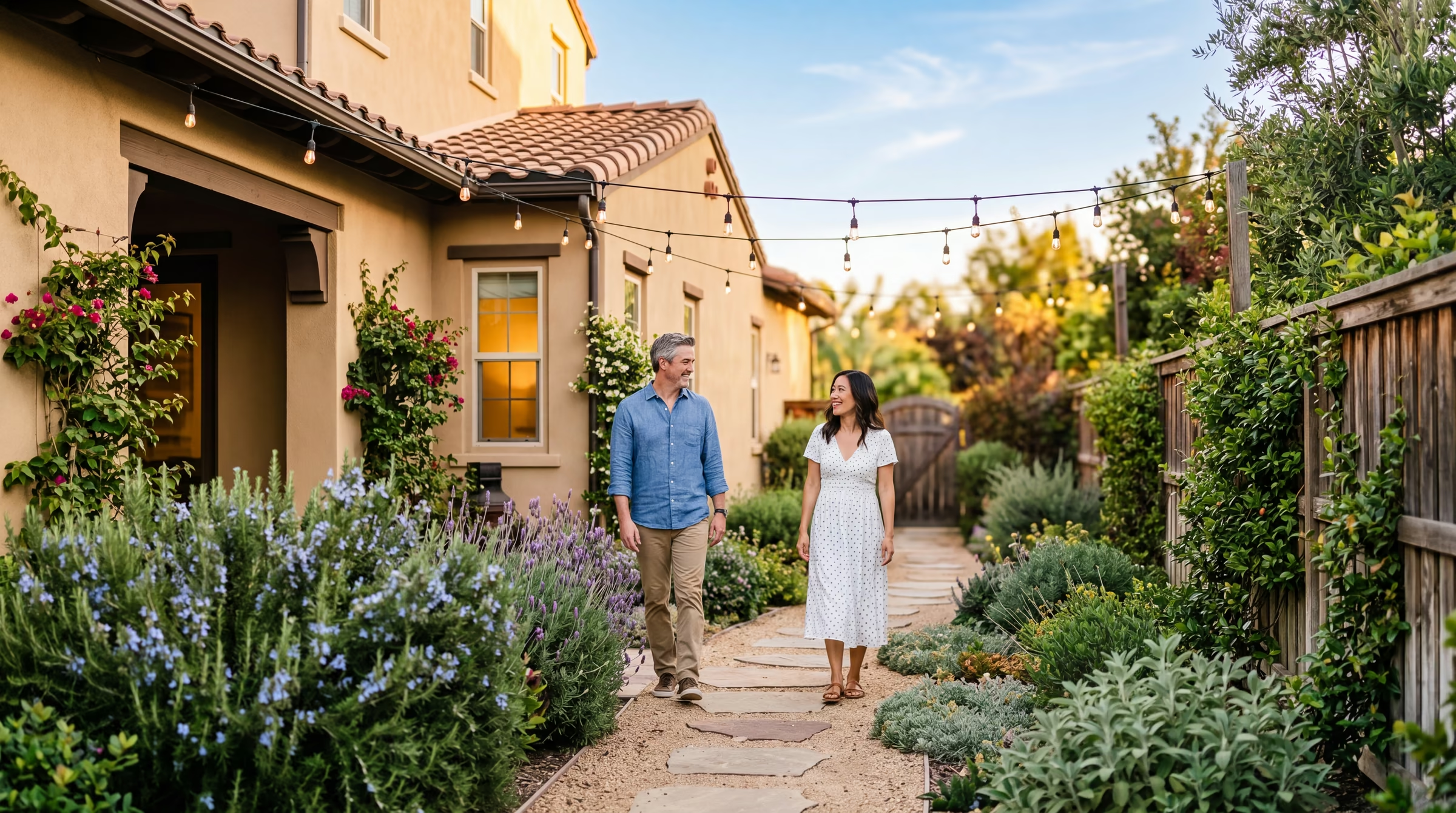
The average SoCal side yard is 3 to 6 feet wide and 30 or more feet long. That's 90 to 180 square feet of outdoor living space most homeowners walk past every single day without a second thought. In a region where every square foot of space matters, your side yard might be the easiest upgrade you haven't considered yet.
Most of us treat that narrow strip as a utility corridor: a path to drag the bins out, a place where weeds quietly take over, maybe a stretch of cracked concrete you'd rather not look at. But with a little intention, that forgotten passage can become a fragrant herb garden, a hidden lounge, or a polished walkway that makes your whole property feel more connected.
KEY TAKEAWAYS
- A typical side yard holds 90 to 180 square feet of usable space, enough for a garden walkway, a hidden seating nook, or a stylish utility zone
- Narrow side yard ideas work best when you design lengthwise flow or create distinct zones rather than fighting the shape
- Most side yard makeover projects cost between $500 and $5,000 depending on scope, and many water-smart upgrades qualify for Irvine Ranch Water District rebates
Why is the side yard the most underused space in your home?
The side yard is the most underused space in most SoCal homes because it is narrow, shaded, out of sight, and easy to walk past, yet a typical one still holds 90 to 180 square feet of usable space. It's easy to pour your energy into the backyard or front yard and forget about the spaces in between, and side yards rarely get featured in home tours or magazine spreads. But that's exactly what makes them so full of potential: they're a blank canvas with almost no expectations.
What most Irvine side yards look like (and what they could be)
Walk down a typical Irvine neighborhood and peek between the houses. You'll see the same thing over and over: a narrow concrete path, maybe some river rock, a few forgotten plant pots, and the air conditioning unit. It works, but "works" is a low bar for space you own.
“Just start, make that first mark and start generating ideas. Write down what you're thinking, and if you ever get brain fog or designer's block, you can always go back to those first marks to stay on track. Some of the best ideas have started with napkins at a restaurant or bar.”
Jonathan S., Design Principal, TerraWorks Studio
Now picture that same strip with fragrant rosemary brushing your ankles as you walk, or a pair of bistro chairs tucked under a canopy of jasmine. Same footprint, completely different experience. The shape isn't the problem. It's just that no one's given it permission to be something more.
How much usable space is hiding in a typical side yard
QUICK STAT
90 to 180 square feet — that's the usable space in a typical SoCal side yard. For context, that's roughly the size of a large walk-in closet or a small bedroom.
Most Irvine homes have two side yards, one on each side of the house. Even if one is dedicated to utilities, the other is free real estate. Measure yours this weekend. You might be surprised by what you're working with.
GOOD TO KNOW
Many Irvine neighborhoods have an HOA, and side yards sometimes fall under rules about fencing, screening, plant height, or keeping pathways and gates accessible. Before you start, it is worth a quick check of your HOA's landscape guidelines (or a note to your management company) so your plan sails through without surprises later.
What can you actually do with a narrow side yard?
The trick with narrow side yard ideas is to stop thinking of the space as a hallway and start thinking of it as a destination. Here are five approaches that work beautifully in tight SoCal corridors.
The lowest-maintenance side yard ideas are a decomposed granite path with water-smart groundcover, a mulched walkway dotted with a few potted succulents, or a hardscape strip with fence-mounted vertical planters. All three keep watering, weeding, and mowing to a minimum, which makes them ideal if you want the space to look good without becoming another chore.
1. The garden walkway (herbs, fragrance, stepping stones)
This is the most popular side yard makeover for a reason: it's achievable, it's gorgeous, and it engages your senses every time you walk through.
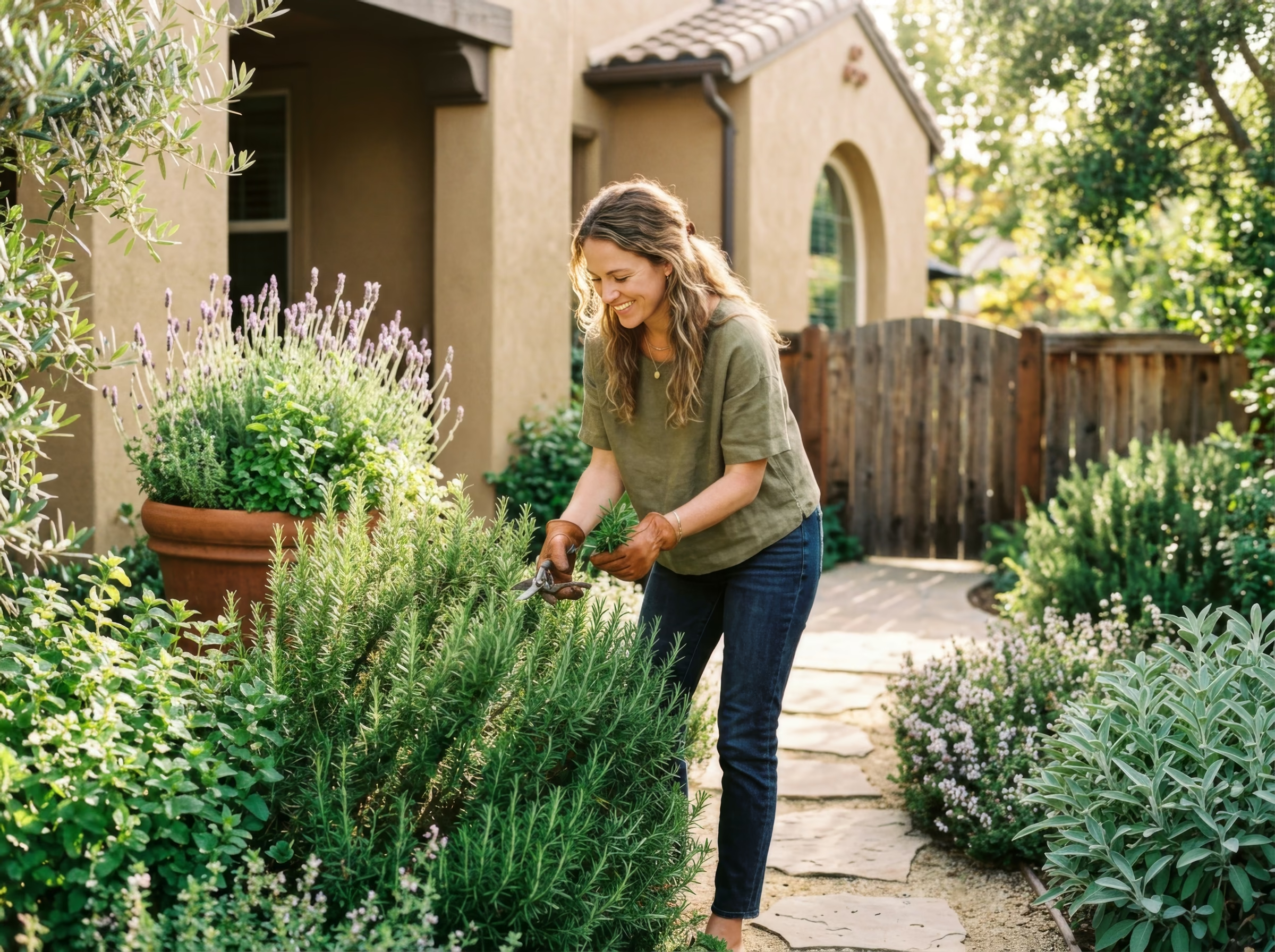
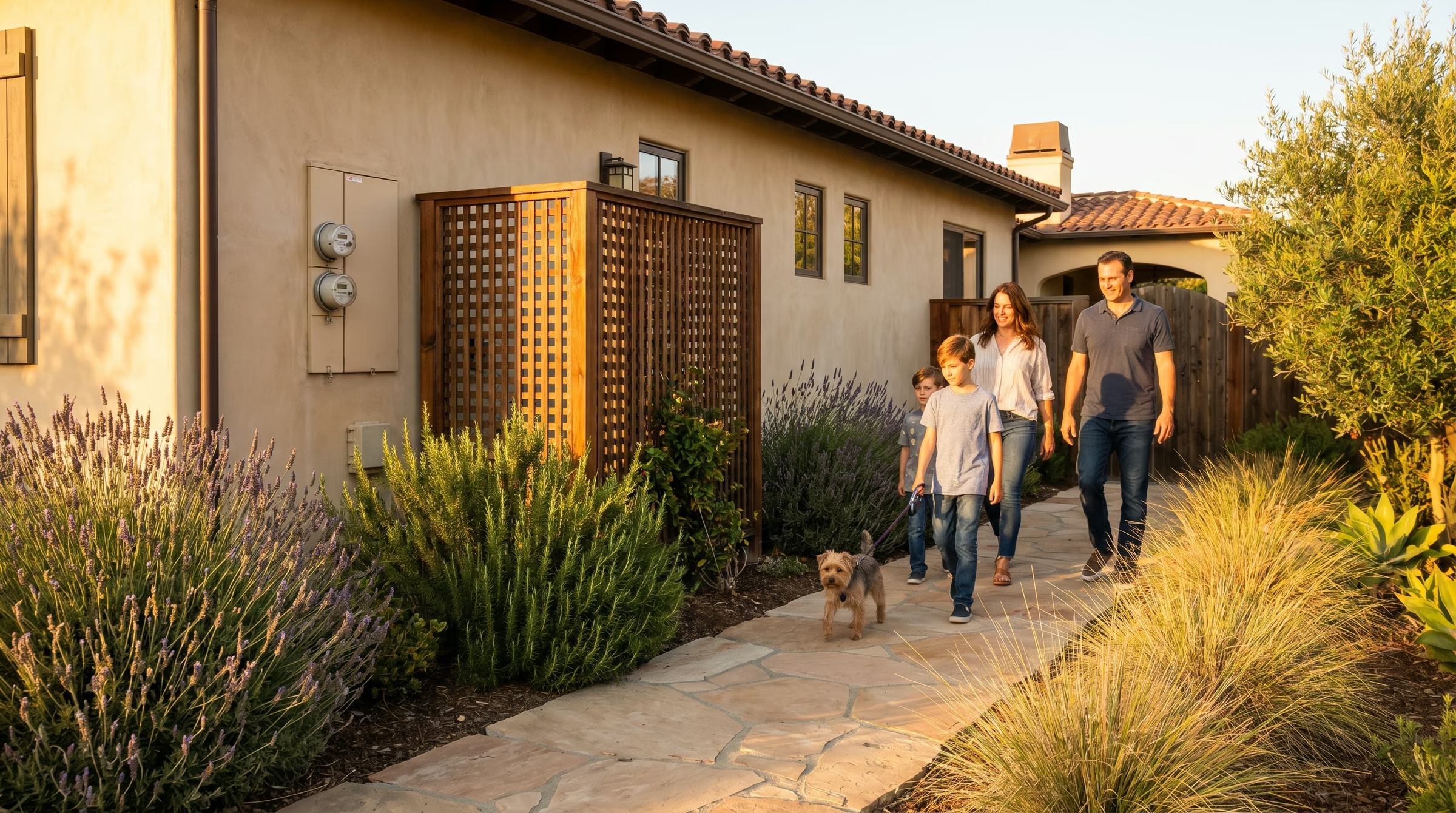
Lay irregular stepping stones through a bed of decomposed granite, then tuck low-growing herbs along both sides. Creeping thyme between pavers releases fragrance with every step. Rosemary, sage, and lavender along the edges add color and scent while staying compact enough for tight spaces.
PRO TIP
Choose herbs that thrive in part shade for the shadier side of your home. Mint, parsley, and chives handle filtered light well and give you something to snip for the kitchen on your way inside.
The best part? A garden walkway feels intentional from day one, even before plants fill in. The combination of stone, gravel, and a few well-placed herbs instantly elevates a side yard from forgotten corridor to a sensory experience.
2. The secret lounge (bistro table, string lights, a hidden retreat)
If your side yard is on the wider end (5 to 6 feet), you have room for something unexpected: a hidden seating area. A small bistro table and two chairs, a strand of warm string lights overhead, and a few potted plants to soften the edges. That's it. That's the retreat.
There's something genuinely special about a seating area that's tucked out of view. It becomes your quiet morning coffee spot, the place you go to read without interruption, a private nook that feels like discovering a courtyard in a Mediterranean village.
String lights rated for outdoor use can last several seasons in SoCal's dry climate. Look for lights with shatterproof bulbs, especially if the side yard doubles as a pathway.
3. The utility zone done right (storage, bins, but beautiful)
Let's be honest: someone has to deal with the trash cans, the garden hose, and the pool equipment. But "utility zone" doesn't have to mean "eyesore." A well-designed utility area uses screens, planters, and strategic placement to keep the practical stuff accessible without letting it dominate the space.
A simple lattice screen with a climbing vine (star jasmine works beautifully in Irvine) can hide bins from view while adding fragrance. Horizontal slat fencing creates a clean, modern look that provides airflow for equipment. Even a row of tall, narrow pots with upright plants like bamboo palm or a compact ornamental grass can create a living screen.
If your bins live in the side yard, add a strip of pavers or compacted gravel where the cans sit. It keeps them from sinking into soil and makes rolling them out on collection day much easier.
4. The dog run (pet-friendly corridor with durable groundcover)
Side yards are natural dog runs, and with the right groundcover, they can stay clean and comfortable for years. The key is choosing materials that drain well, resist digging, and won't turn to mud.
Decomposed granite (DG) is the most popular choice for SoCal dog runs. It's affordable, drains quickly, and stays cool underfoot. For a softer option, consider a water-smart groundcover like kurapia, which handles moderate foot traffic and stays green with minimal water.
Avoid pea gravel in dog runs. It gets stuck between paw pads and tends to scatter outside the designated area. Decomposed granite or compacted crushed rock stays put much better.
Keep plantings above nose height or behind a low border to protect them from curious snouts. A small rinse station at one end (even just a coiled hose and a hook) makes cleanup after muddy-paw days simple.
5. The gallery wall (vertical planters, gravel, statement plants)
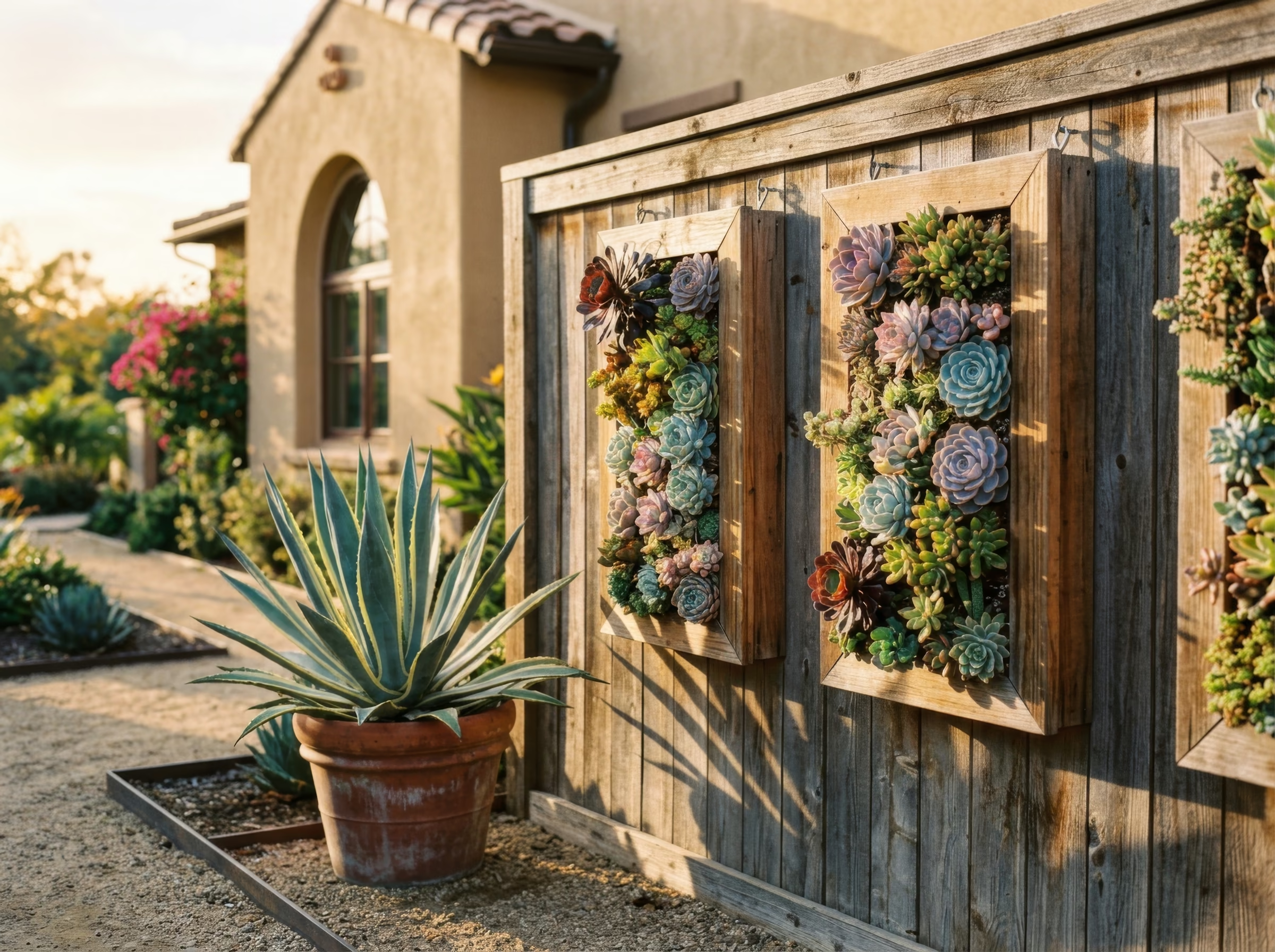
If your side yard gets good light, treat it as an outdoor gallery. A gravel floor, a few statement plants in oversized pots, and vertical planters mounted on the fence create a space that looks curated without requiring much upkeep.
Succulents are an easy starting point here: aeoniums, agaves, and echeverias bring sculptural form and rich color with very little watering. But they are far from your only option, and a gallery wall looks just as striking with other water-smart picks. Ornamental grasses like blue fescue or deer grass add soft movement, compact Mediterranean shrubs like dwarf westringia or lavender bring fragrance and a touch of bloom, and trailing plants like creeping fig or dwarf bougainvillea soften the vertical frames. Mix a few of these with or instead of succulents and you get the same curated, low-effort look with more texture and seasonal color. Mounted vertical planters (cedar frames with planting pockets) turn a plain fence into living art, and the overall Mediterranean accent vibe works perfectly with Irvine's architecture and climate.
EXPERT TIP: Juan C. Garcia, Sr. Water Efficiency Specialist, IRWD
Succulents in side yards often get overwatered because they're on the same irrigation zone as thirstier plants nearby. Put them on their own drip line or hand-water them separately. Most established succulents only need water every two to three weeks in summer.
How do you design a side yard that works in a narrow space?
A successful side yard makeover starts with understanding the shape you're working with instead of fighting it. Narrow spaces have their own design logic, and once you lean into it, the results can be stunning.
Lengthwise flow vs. zones
You have two basic approaches. The first is lengthwise flow: design the entire space as a single experience you move through, like a garden walkway with evolving plantings along its length. The second is zones: divide the corridor into distinct areas (a utility section near the garage, a seating nook in the middle, a garden at the far end).
Both work. Lengthwise flow feels more spacious and is easier to maintain. Zones give you more functionality but need clear visual transitions (a change in groundcover material or a planted border) so each section feels intentional.
Two simple design rules keep a narrow space from feeling busy. The 70/30 rule suggests giving about 70 percent of the space to structure (hardscape, gravel, and evergreen groundcover) and 30 percent to seasonal color and accents. In a side yard, that usually means stone or decomposed granite dominates, with a few flowering pots or plant clusters at the start or end of the run. The rule of three suggests planting in groups of three or other odd numbers for a more natural look, so think three matching pots, three repeating plant clusters, or three vertical accents spaced down the corridor rather than one of everything.
PRO TIP
If you're zoning a side yard, keep the utility section closest to the garage or driveway for easy access, and put the "destination" area (seating, garden) at the far end. It gives you a reason to walk the full length.
Materials that work in tight spaces
In narrow side yards, your material choices matter more than they would in a wide-open backyard. Here's what works well:
- Decomposed granite (DG): Affordable, drains well, creates a warm SoCal look. Works as both pathway and planting bed backdrop.
- Stepping stones: Irregular flagstone or square-cut pavers laid in DG or gravel create rhythm and visual interest without overwhelming a narrow space.
- Pea gravel or river rock: Best for accent areas or around plantings, not for primary walkways (it shifts underfoot).
- Concrete pavers: Clean, uniform, and low-maintenance. A great choice if the side yard is primarily a walkway.
The most affordable side yard path materials are pea gravel and decomposed granite, typically running $1 to $3 per square foot installed. Stepping stones laid in decomposed granite cost a little more but read as more polished, which makes them a popular middle-ground choice.
Lighter-colored materials (buff DG, cream pavers, light gravel) reflect more light into narrow, shaded side yards, making them feel wider and brighter.
Vertical elements to draw the eye up
The single best trick for making a narrow side yard feel larger: go vertical. When horizontal space is limited, vertical elements add dimension and draw attention upward, breaking the corridor feeling.
Options include mounted planters on fences or walls, a trellis with a climbing vine (star jasmine, bougainvillea, or creeping fig), tall narrow pots with upright plants, and outdoor wall art or decorative tiles. Even a single tall element, like a slender Italian cypress or a wall-mounted water feature, can transform the proportions of the space.
Drainage and water management
Side yards often collect runoff from the roof and driveway, so drainage should be part of your design plan from the start. A French drain or channel drain along the fence line handles most situations. If you're using DG or gravel, the material itself provides good permeability.
“Permeability is important for managing stormwater effectively. Install pavers or stone with 2 inches of space to allow water to penetrate between them, and don't grout with cement, concrete or other impermeable material.”
David G., IRWD Water Efficiency Specialist
For side yards that slope toward the house, a shallow swale or dry creek bed design can redirect water while adding visual interest. It's a practical solution that doubles as a design feature.
What should you avoid when designing a side yard?
Not every idea that works in a backyard translates to a narrow corridor. Here are the most common mistakes to steer around.
Plants that outgrow the space
This is the number one side yard mistake. A plant that's charming at 12 inches can become a wall of foliage at 4 feet, blocking pathways and crowding the corridor. Always check mature size before planting, and give preference to compact, slow-growing varieties.
Plants to avoid in narrow side yards:
- Large shrubs like oleander or pittosporum (they'll swallow the space within two years)
- Spreading groundcovers without borders (they'll creep onto walkways)
- Trees with aggressive root systems (they can damage fences and foundations)
EXPERT TIP: David Gomez, Water Efficiency Specialist, IRWD
When choosing plants for a side yard, I always recommend thinking in layers: low groundcover at your feet, mid-height herbs or small shrubs at hip level, and climbing vines or mounted planters up high. You get lush fullness without anything blocking the path.
Materials that create maintenance headaches
Some materials that look great in photos become a hassle in a narrow side yard:
- Loose river rock on a slope: It migrates downhill with every rain and every footstep.
- Bark mulch in windy corridors: Side yards between houses can funnel wind, scattering lightweight mulch into neighboring spaces.
- Unfinished wood edging: It deteriorates quickly in contact with soil and irrigation. Use composite, metal, or stone edging instead.
Before committing to a material, lay a small test section and live with it for a week. Walk on it, drag the bins over it, see how it looks after a watering. A side yard gets daily use, so durability matters more than appearance alone.
How much does a side yard makeover cost?
A side yard makeover in SoCal typically costs $500 to $5,000, with most homeowners spending $1,000 to $2,500. One of the best things about side yard projects is the scale: because the area is small, even high-quality materials and finishes stay within reach for most budgets.
Budget breakdown by project type
QUICK STAT
$500 to $5,000 — that's the typical range for a side yard makeover in SoCal, depending on scope and materials. Most homeowners land between $1,000 and $2,500.
Here's what to expect at different investment levels:
| Project type | Typical cost | What's included |
|---|---|---|
| Weekend refresh | Under $500 | Cleanup, weed barrier, decomposed granite, 2 to 3 potted plants, a simple stepping-stone path |
| Intentional upgrade | $1,000 to $2,500 | Flagstone or paver walkway, drip irrigation, path or string lighting, a screen or fence-mounted planters |
| Full transformation | $3,000 to $5,000 | Custom mixed-material hardscape, built-in seating, drainage work, lighting design, full planting plan |
Under $500 (the weekend refresh)
- Clear and clean the space
- Lay weed barrier and decomposed granite
- Add 2 to 3 potted herbs or succulents
- Install a simple stepping stone path
$1,000 to $2,500 (the intentional upgrade)
- Flagstone or paver walkway with DG infill
- Drip irrigation for new plantings
- Low-voltage string lights or path lighting
- Fence-mounted planters or a small trellis with climbing vine
- Lattice or slat screen for utility concealment
$3,000 to $5,000 (the full transformation)
- Custom hardscape with mixed materials
- Built-in seating nook or bistro area
- Drainage improvements (French drain or channel)
- Landscape lighting design
- Full planting plan with irrigation
Many water-smart upgrades qualify for IRWD rebates, including replacing impermeable surfaces with permeable materials and installing efficient drip irrigation. Check the current rebate programs before you finalize your plan — they can offset a meaningful portion of your project cost.
Whatever your budget, the return on a side yard makeover goes beyond dollars. It's about reclaiming space you already own and turning it into something that adds to your daily life. Whether it's a fragrant walkway you enjoy every morning or a hidden nook where you unwind with a book, your side yard has more to offer than you think.
Your side yard is one of the easiest places to start making real changes to your outdoor space, one corner at a time. If you're in the IRWD service area, explore the Yardtopia project gallery for more narrow side yard ideas and check out backyard ideas: weekend projects for even more ways to put overlooked spaces to work. You might also enjoy our guides on patio makeover ideas, Mediterranean garden design, and planning an outdoor dinner party.