
From simple window boxes to full backyard enclosures, a catio gives your cat the outdoors without the risks. Here is how to design one that fits your space, your climate, and your landscape.
KEY TAKEAWAYS
- A catio (cat patio) is an enclosed outdoor space that lets your cat experience fresh air, sunshine, and stimulation while staying protected from coyotes, hawks, rattlesnakes, and traffic, the leading threats to outdoor cats in Orange County.
- Catio designs range from simple window boxes that cost under $200 to build, all the way to full backyard enclosures with tunnels, climbing structures, and integrated plantings. Southern California's year-round mild weather means your cat can use the space every month of the year.
- The landscaping around and inside your catio can be both cat-safe and drought-tolerant. If you are replacing turf with a catio and surrounding water-wise plantings, the planted areas may qualify for IRWD turf removal rebates.
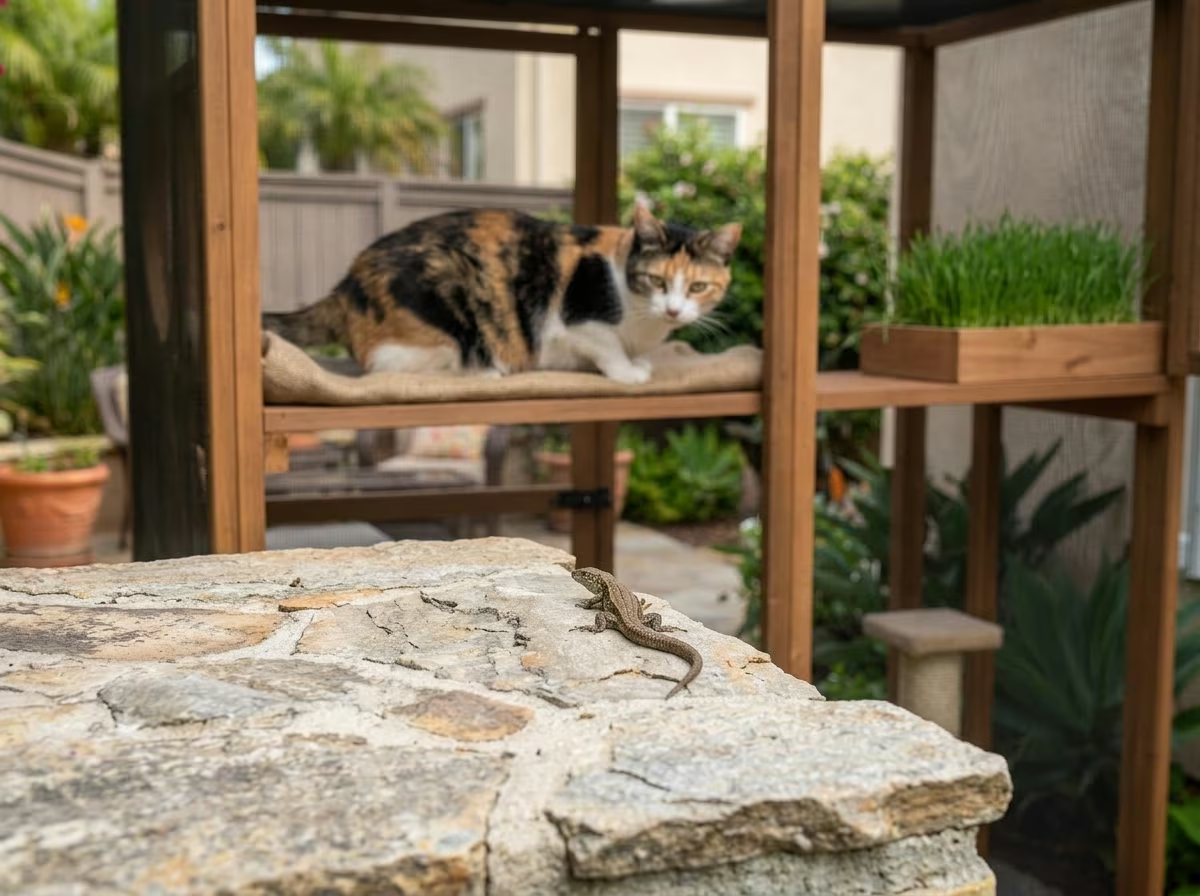
Close your eyes and picture a late afternoon in Orange County. The light is going golden. A warm breeze moves through the rosemary along the fence. And your cat is out there in it, stretched across a high shelf in a screened enclosure, watching a lizard on the other side of the mesh with the kind of intense focus only a cat can manage. The enclosure is tucked against the back of the house, shaded by a sail overhead, with cat grass growing in a planter box at one end and a tunnel leading back through the window to the living room. Your cat is outside. Your cat is safe. And you are not worried about a single thing. This is your Yardtopia, and it has room for everyone.
A catio is a simple idea. It's an enclosed outdoor space designed for cats, solving one of the most difficult decisions cat owners in Southern California face: whether to let a cat go outside at all. The outdoors is enriching for cats. It is also, in our region, genuinely dangerous. Coyotes, birds of prey, rattlesnakes, speeding cars, and encounters with other animals make outdoor access a real risk. A catio eliminates the risk without eliminating the experience. Your cat gets the sun, the air, the sounds, the smells, and the stimulation of the outdoors. The predators, the traffic, and the neighborhood hazards stay on the other side of the screen.
This guide covers every type of catio that works in Southern California, from the simplest window box to a full backyard enclosure with tunnel systems and integrated landscaping. It walks through the design considerations specific to our climate (shade is not optional, ventilation matters, and the west-side sun will test any structure), the cat-safe plants that thrive inside and around a catio, cost ranges for each type, when to build it yourself versus hiring a professional, and the wildlife realities that make a catio not just a nice idea but the safest way to give your cat outdoor access in Orange County. Remember to confirm HOA guidelines before building structures in your backyard.
What Is a Catio and Why Does Every Southern California Cat Need One?
A catio is an enclosed outdoor space designed specifically for cats. The name is a combination of "cat" and "patio," and the concept ranges from a small screened box mounted outside a window to a full freestanding structure in the backyard connected to the house by enclosed tunnels. What every catio has in common is a simple principle: cats get out, but predators and hazards stay out.
The spectrum of catio designs is wider than most people expect. At the simplest end, a window box catio is a screened enclosure that attaches to an existing window, giving your cat a few square feet of outdoor air without any structural changes to your home. At the other end, a full backyard catio can be a room-sized structure with climbing shelves, hammocks, planters, shade features, and tunnels connecting back to the house. Between those extremes, patio enclosures, freestanding structures, and cat-proof fencing systems each offer different levels of access, cost, and design flexibility.
GOOD TO KNOW
The word "catio" has entered mainstream use only in the last decade, but the concept has existed for much longer. What has changed is the range of materials and designs available. Pre-fabricated catio kits, modular tunnel systems, and specialized cat-proof fencing hardware have made the project accessible to almost any budget and skill level. You do not need to be a carpenter. You need a window, a wall, or a fence, and a plan.
In Southern California, the case for a catio is stronger than almost anywhere else in the country. The mild Mediterranean climate means your cat can use an outdoor space twelve months a year, no winterizing, no seasonal teardown, no months of a structure sitting empty while snow piles up. But that same mild climate supports a wildlife population that poses serious threats to outdoor cats.
| Catio Type | Size Range | Typical Cost | DIY Difficulty | Best For |
|---|---|---|---|---|
| Window Box | 3-6 sq ft | $100-$400 | Easy | Apartments, condos, single-cat homes |
| Patio Enclosure | 40-120 sq ft | $500-$2,500 | Moderate | Existing covered patios, multi-cat homes |
| Freestanding Backyard | 30-200+ sq ft | $1,000-$5,000+ | Moderate to Hard | Yards with space, design flexibility |
| Tunnel / Highway System | Varies | $300-$2,000+ | Moderate | Connecting house to freestanding catio |
| Cat-Proof Fencing | Whole yard | $500-$3,000+ | Moderate | Full yard access, multiple cats |
Why Is Southern California Perfect for a Catio?
Southern California's climate is one of the best in the world for year-round outdoor cat access, and also one of the most compelling reasons to make that access enclosed.
Start with the upside. Orange County averages 281 sunny days per year. Winter lows rarely drop below the mid-40s Fahrenheit, and hard freezes are essentially nonexistent in most of the county. A catio built in Irvine, Mission Viejo, or Lake Forest will be usable in January just as comfortably as it is in June. That is a significant advantage over colder climates where outdoor cat enclosures sit dormant for four to six months of the year. Your investment delivers value every single day.
Now the reality that makes enclosure essential. Coyotes are the number one predator threat to outdoor cats in Orange County. The California Department of Fish and Wildlife has documented coyote populations in every city in the county, including fully urbanized areas. Coyotes are most active at dawn and dusk, precisely when many cat owners let their cats outside. A 2019 study published in the Journal of Urban Ecology found that coyote-cat encounters in Southern California suburban areas increased by more than 30 percent over the previous decade as coyote populations adapted to urban environments.
Hawks and owls are a secondary but real threat, particularly for smaller cats. Red-tailed hawks and great horned owls are both common in Orange County and capable of taking cats weighing up to ten pounds. A catio's overhead screening eliminates this risk entirely.
Rattlesnakes are present in foothill-adjacent communities across the county: Trabuco Canyon, Coto de Caza, portions of Mission Viejo, and areas bordering the Cleveland National Forest. A ground-level catio with a solid base and proper screening prevents snake encounters.
A catio does not just protect your cat. It also protects local wildlife. Domestic cats are one of the leading causes of songbird mortality in the United States. The American Bird Conservancy estimates that free-roaming cats kill approximately 2.4 billion birds annually. An enclosed outdoor space lets your cat enjoy watching birds without being able to hunt them.
PRO TIP
If you live in a foothill-adjacent area of Orange County, consider adding hardware cloth (1/4-inch galvanized mesh) to the lower 24 inches of your catio in addition to standard screening. This provides an extra barrier against rattlesnakes and other small wildlife that could reach through standard mesh openings. It also reinforces the structure against digging predators like raccoons.
What Are the Different Types of Catios?
Each catio type suits a different living situation, budget, and level of commitment. Here is what to expect from each.
Window Box Catio
A window box catio is the simplest and most affordable entry point. It is a screened enclosure, typically two to three feet deep and the width of a window, that mounts directly to the exterior of your home around an existing window. Your cat accesses it by jumping through the open window, and you can close the window to seal it off when needed.
Window box catios are ideal for apartments, condos, townhomes, or any situation where yard space is limited or shared. They require no permanent structural modification in most cases: many mount with brackets and can be removed without leaving significant marks. A basic window box catio provides enough space for one to two cats to sit, stretch, and watch the world from an elevated vantage point.
Cost for materials on a DIY window box catio runs $100 to $300. Pre-fabricated kits from companies like Catio Spaces or Habitat Haven range from $200 to $500. A handy homeowner can build one in a weekend afternoon.
In Southern California's climate, orient the window box on a north or east-facing window if possible. A window box on a west-facing wall will receive direct afternoon sun that can make the enclosure uncomfortably hot from May through October.
Patio Enclosure
A patio enclosure converts an existing covered patio, porch, or balcony into a screened cat space. This is one of the most practical options for Southern California homes because many homes already have a covered patio that provides built-in shade and structure.
The conversion involves screening in the open sides of the existing patio using framed panels of pet-safe screening material. A cat door or a modified sliding door insert gives your cat independent access from the house. The result is a large, shaded, enclosed outdoor room that works as both a catio and a functional patio space for the household.
The built-in shade of an existing patio cover is a significant advantage in our climate. A freestanding catio requires you to engineer shade into the design. A patio enclosure inherits the shade that is already there.
Cost ranges from $500 to $2,500 depending on patio size and materials. Professional screen enclosure companies in Orange County typically quote $8 to $15 per square foot for aluminum-framed screen systems.
Freestanding Backyard Catio
A freestanding catio is a dedicated structure placed in the backyard, independent of the house. This type offers the most design flexibility: you choose the size, shape, height, shelving layout, planting areas, and location. Freestanding catios can be as simple as a four-by-six-foot screened box or as elaborate as a ten-by-twenty-foot walk-in enclosure with multiple levels, climbing walls, and integrated landscaping.
For Southern California installations, the orientation and shade strategy of a freestanding catio are critical design decisions. A structure placed in full afternoon sun without shade will be unusable during the warmest months. Position the catio where it receives morning sun and afternoon shade, or plan for a shade sail, pergola, or shade cloth covering at least 60 percent of the roof area.
Material costs for a DIY freestanding catio start around $500 for a basic structure and run to $3,000 or more for larger, more complex builds. Professional installation by a local contractor typically runs $2,000 to $5,000 depending on size, materials, and features.
GOOD TO KNOW
Freestanding catios larger than 120 square feet may require a building permit in some Orange County jurisdictions. Check with your city's planning department before building. If you live in a community with a homeowners association, review your CC&Rs for rules about accessory structures, screening materials, and setback requirements. Many HOAs approve catios when the materials and colors match the existing home exterior.
Tunnel and Highway Systems
Cat tunnels (sometimes called "catios highways" or "cat runs") are enclosed passageways that connect the house to a freestanding catio or link multiple catio structures together. They give cats the experience of traveling through the outdoor environment, not just sitting in a single enclosure.
Tunnels are typically 12 to 18 inches in diameter, made from wire mesh or clear polycarbonate panels on a frame, and can run along fence tops, across yards, or even overhead between structures. The visual effect is distinctive: it looks like a transparent tube running through your landscape, and cats love it. The movement, the changing views, and the sensation of traveling through the outdoors satisfy the roaming instinct that drives many cats to want outside access in the first place.
In Southern California, ensure tunnel sections exposed to direct sun have shade covers. A clear polycarbonate tunnel in full afternoon sun will create a greenhouse effect. Mesh tunnels are better ventilated but offer no rain protection (a minor concern in our climate given our average of 36 rainy days per year).
Cost for tunnel systems ranges from $300 to $2,000 depending on length, materials, and complexity. Modular kits make it possible to extend the system over time.
Cat-Proof Fencing
Cat-proof fencing is the maximum-freedom option. Instead of enclosing a small area, you modify your existing fence to prevent cats from climbing over it, effectively turning your entire yard into your Yardtopia's biggest catio. Systems include roller bars mounted along the fence top (cats cannot grip the spinning bar), angled mesh extensions that overhang inward, and netting systems that cover the top of the fenced area.
This approach gives cats the most space and the most natural outdoor experience. It works best in fully fenced yards with a consistent fence height (6 feet is standard in most Orange County neighborhoods). It is less effective if your yard has trees near the fence line that cats could use to bypass the system, or if the fence has gaps at the bottom where cats could squeeze through.
Cat-proof fence roller systems cost approximately $15 to $25 per linear foot for materials. A typical suburban backyard with 150 linear feet of fencing runs $2,250 to $3,750 in materials. Professional installation adds $500 to $1,500. Mesh overhang systems are generally less expensive, starting around $8 to $15 per linear foot.
PRO TIP
If you choose cat-proof fencing, do a thorough perimeter check before letting your cat out. Walk every foot of the fence line looking for gaps at the bottom (cats can squeeze through surprisingly small openings), areas where neighboring trees or structures allow a cat to bypass the fence, and gates that do not seal completely. Address every potential escape route before considering the system complete. One overlooked gap negates the entire investment.
What Plants Are Safe to Grow Inside and Around a Catio?
One of the most rewarding aspects of a catio is integrating live plants that your cat can enjoy safely. Plants provide enrichment, shade, scent stimulation, and the simple pleasure of greenery. But plant selection matters: several common garden plants are toxic to cats, and some that are safe for dogs are not safe for cats.
The plant list for a cat-safe space differs from a dog-safe list in one critical way: lilies. True lilies (Lilium species) and daylilies (Hemerocallis species) are extremely toxic to cats. Even small exposures, a cat brushing against pollen and then grooming it off their fur, can cause acute kidney failure. Lilies are not toxic to dogs, which is why they appear freely in general "pet-safe" plant guides. If you have cats, lilies of any variety should be nowhere in or near the catio.
GOOD TO KNOW
Never plant true lilies (Lilium species), daylilies (Hemerocallis), or lily of the valley (Convallaria majalis) inside, adjacent to, or within reach of a catio. Lily toxicity in cats is severe and rapid: even minor exposure to pollen can cause kidney failure within 24 to 72 hours. Other common garden plants toxic to cats include sago palm, oleander, azaleas, tulips, and chrysanthemums. When in doubt, check the ASPCA's searchable plant database at aspca.org before adding any plant near your cat's outdoor space.
Plants to Grow Inside the Catio
Cat grass (typically wheatgrass, Triticum aestivum, or oat grass, Avena sativa) is the most popular catio plant for good reason. Cats instinctively chew grass, and cat grass gives them a safe option. Grow it in containers inside the catio and rotate planters every two to three weeks as the grass matures. In Southern California, cat grass grows year-round and does best with morning sun and regular watering.
Catnip (Nepeta cataria) needs no introduction. Roughly 50 to 70 percent of cats respond to catnip with rolling, rubbing, and playful behavior. It grows easily in containers, handles full sun, and is drought-tolerant once established. Plant it in a pot rather than directly in the ground to control its spread.
Catmint (Nepeta mussinii) is catnip's ornamental cousin. It produces lavender-blue flower spikes, is drought-tolerant, attracts pollinators, and many cats respond to it similarly to catnip. It makes a beautiful border plant around the outside of a catio or in planters inside.
Valerian (Valeriana officinalis) produces a response in some cats similar to catnip but through a different compound (actinidine rather than nepetalactone). It is a good complement for cats that do not respond to catnip, and the plant produces clusters of small white or pink flowers.
Plants to Grow Around the Catio
The landscaping surrounding your catio completes the visual design and can add function: shade, scent, and habitat for the birds and butterflies your cat will enjoy watching.
Rosemary (Salvia rosmarinus) is drought-tolerant, non-toxic to cats, fragrant, and forms a dense hedge or border. It thrives in full sun with minimal water, which describes most of the areas where you would place a catio.
Thyme (Thymus vulgaris) works as a low ground cover around the catio base. It is non-toxic, drought-tolerant, and releases fragrance when brushed or stepped on. Creeping thyme between stepping stones leading to the catio creates a functional, attractive path.
Sunflowers (Helianthus annuus) are non-toxic to cats and create a seasonal backdrop of height and color behind a catio. Cats enjoy watching the bees and birds that sunflowers attract.
California native plants that are safe for cats and excellent for surrounding landscape include Cleveland sage (Salvia clevelandii), California fuchsia (Epilobium canum), deer grass (Muhlenbergia rigens), and manzanita (Arctostaphylos species). These require minimal water, support local wildlife, and create the naturalistic Southern California landscape aesthetic that complements a well-designed catio.
For a comprehensive guide to cat-safe plants for your garden, including detailed profiles and planting recommendations, explore the Yardtopia cat-safe plants article in the Petscaping series.
How Do You Design a Catio for Southern California's Climate?
Building a catio in Southern California is different from building one in Portland or New England. Our challenges are not cold and rain. They are heat, direct sun, and wind. A catio designed without these factors in mind will be an oven by June.
The Shade Problem (and How to Solve It)
A catio without adequate shade in Southern California is not a catio your cat will use. On a 90-degree day, which describes most of July through September in inland Orange County, an unshaded screened enclosure in direct sun can reach internal temperatures well above 110 degrees Fahrenheit. Cats are more heat-sensitive than dogs and can develop heatstroke at sustained temperatures above 105 degrees.
The solution is layered shade. At minimum, 60 percent of the catio's overhead area should be covered. Options include shade cloth (available in densities from 50 to 90 percent light block), shade sails, corrugated polycarbonate roofing panels (choose translucent rather than clear to reduce heat), solid roof sections, or a combination.
Orient your catio to receive morning sun (east-facing exposure) and avoid afternoon sun (west-facing exposure). In Southern California, the west side of any structure receives the most intense and prolonged heat. If your only option is a west-facing location, increase shade coverage to 80 percent or more and ensure ample ventilation.
Ventilation and Airflow
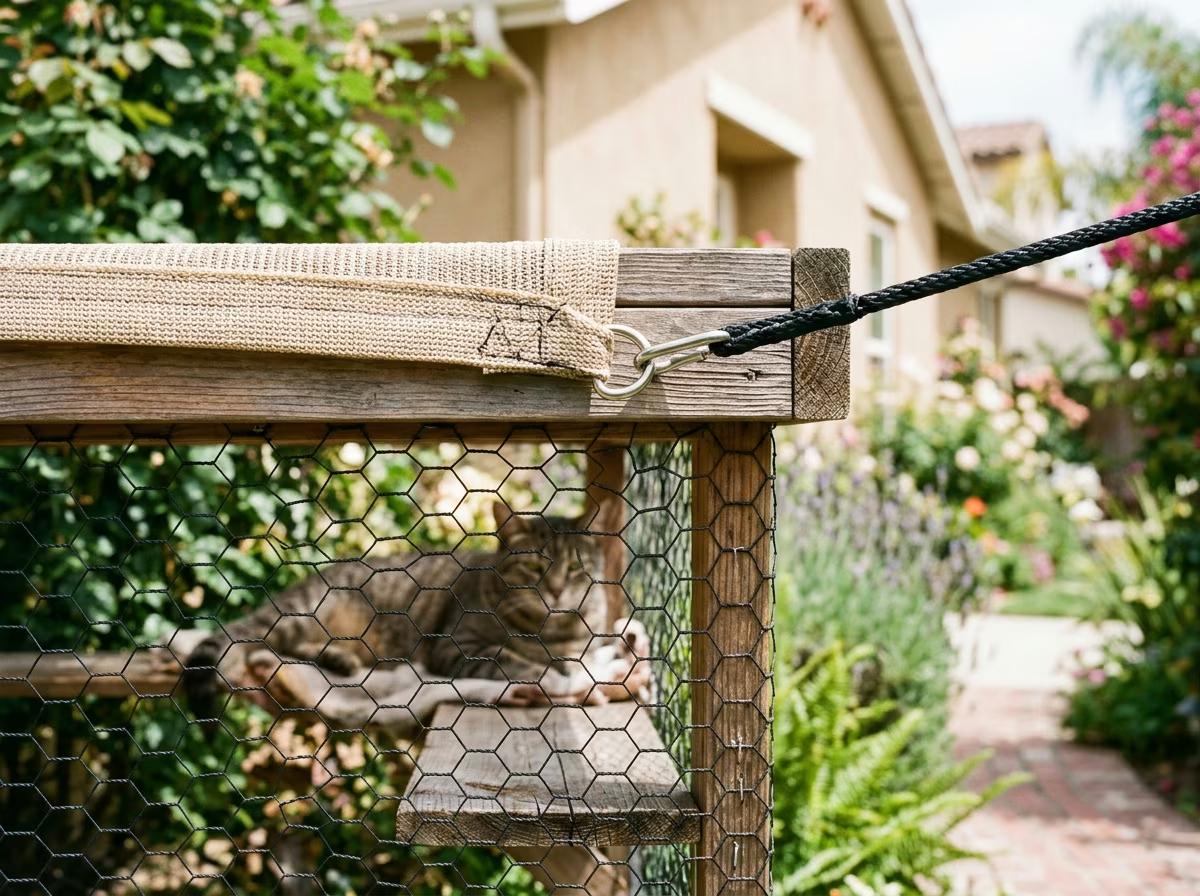
Good ventilation is the complement to shade. A fully enclosed catio with solid walls and a solid roof will trap heat even in shade. The ideal Southern California catio uses mesh screening on at least two sides (preferably opposing sides to create cross-ventilation) with a partially open or shade-cloth roof.
The standard screening material for catios is pet-resistant fiberglass or polyester mesh in 18x16 gauge. This provides visibility, airflow, and resistance to cat claws. For areas where cats will press against the screen, consider upgrading to a heavier pet-grade screen or stainless steel mesh, which is virtually indestructible.
UV-Resistant Materials
Southern California's UV exposure degrades standard materials faster than most climates. Use UV-rated screening, UV-stabilized cable ties and fasteners, and exterior-grade lumber (cedar and redwood resist rot naturally; pressure-treated lumber should be sealed to prevent chemical leaching into the soil where cats may contact it). Shade cloth should be rated for outdoor UV exposure, typically with a stated lifespan of five to ten years.
Wind Load
Santa Ana wind events bring sustained winds of 40 to 60 mph to many Orange County communities, with gusts exceeding 80 mph in canyon and foothill areas. A catio with shade sails or large screening panels must be engineered to handle these wind loads. Use heavy-duty hardware, anchor shade sails at multiple points, and consider removable shade elements that can be taken down when Santa Ana conditions are forecast.
Drainage
A catio placed directly on soil or ground cover needs drainage consideration for the occasional rain and for hose-down cleaning. Elevate the catio structure slightly above grade on concrete blocks or posts, or install a gravel or DG base beneath the structure. This prevents standing water, reduces mud, and makes cleaning easier.
GOOD TO KNOW
The ideal catio floor in Southern California depends on the structure type. For elevated or deck-mounted catios, a solid floor with drainage gaps works well. For ground-level catios, a base of decomposed granite or pea gravel provides drainage, stays relatively cool, and is easy to clean. Avoid bare soil, which turns to mud when hosed down and can harbor parasites. If you want a grassy floor, cat grass in removable containers is easier to maintain than grass planted in the ground.
Should You Build a Catio Yourself or Hire a Professional?
The answer depends on the type of catio, your comfort with tools, and the complexity of the installation.
PRO TIP
Before committing to a permanent catio structure, consider starting with a temporary or semi-permanent setup to test placement and gauge your cat's reaction. Some cats take to a catio immediately. Others need gradual introduction. A portable mesh play tent (available for $30 to $80) placed in your intended catio location lets you observe how your cat responds to the outdoor space, how the sun and shade play across the area throughout the day, and whether the location works for your household routine. A weekend of observation can save you from building in the wrong spot.
When DIY Makes Sense
Window box catios are the most accessible DIY project. The structure is small, the materials are straightforward (lumber, screening, brackets), and the installation requires basic tools: a drill, a saw, a staple gun, and a level. Numerous free plans are available online, and pre-cut kits simplify the process further. A confident beginner can complete a window box catio in four to eight hours.
Simple patio enclosures are also manageable as a DIY project if you are comfortable working with framing and screening. The existing patio provides the structure; you are adding screening panels to the open sides. The most challenging aspect is usually the door access: either a cat door through the wall, a modified sliding door panel, or a human-accessible screen door for the space.
When to Hire a Professional
Freestanding structures larger than about 30 square feet benefit from professional involvement, especially if the design includes electrical (lighting, fans), multiple levels, or integration with existing landscape features. A poorly built freestanding catio can shift, sag, or fail in wind. A professional ensures the foundation, framing, and connections are sound.
Cat-proof fencing installation is generally straightforward but requires precision. Every gap, every weak point, and every bypass route negates the system. Many homeowners start as a DIY project and then call a professional after their cat finds the one spot they missed. A professional installer who specializes in cat-proof fencing (several operate in Southern California) brings experience in identifying escape routes that are not obvious.
Tunnel systems crossing significant distances or requiring overhead runs benefit from professional engineering, particularly for anchoring, weather resistance, and integration with the home exterior.
Southern California Building Considerations
Permits: Most window box catios and small patio screen enclosures do not require permits. Freestanding structures vary by jurisdiction. In Irvine, Lake Forest, and Mission Viejo, structures under 120 square feet that do not exceed fence height typically fall under exemptions, but confirm with your city's building department.
HOA rules: Review your community's CC&Rs before building. Many HOAs restrict materials, colors, and visible structures. The good news is that most approve catios when the design uses materials and colors consistent with the home exterior. Submit your plan to the architectural review committee before purchasing materials.
Insurance: A catio is generally classified as an accessory structure, similar to a shed or pergola. Standard homeowners insurance typically covers these structures, but confirm with your provider if the catio exceeds a certain size or cost threshold.
| Catio Type | DIY Cost | Professional Cost | DIY Time | DIY Difficulty |
|---|---|---|---|---|
| Window Box | $100-$300 | $300-$600 | 4-8 hours | Easy |
| Patio Enclosure | $500-$1,500 | $1,500-$3,500 | 1-2 weekends | Moderate |
| Freestanding (small) | $500-$1,500 | $2,000-$4,000 | 2-3 weekends | Moderate |
| Freestanding (large) | $1,500-$3,000 | $3,000-$8,000+ | Multiple weekends | Hard |
| Tunnel System | $300-$1,000 | $1,000-$2,500 | 1-2 weekends | Moderate |
| Cat-Proof Fencing | $1,500-$3,750 | $2,500-$5,000 | 1-2 weekends | Moderate |
How Do You Keep Cats Safe from Wildlife in a Catio?
The wildlife safety question is the most practical reason catios have become essential in Southern California. This is not about abstract risk. It is about the specific animals that share our suburban and urban landscapes.
Coyotes
Coyotes are established in every city in Orange County. They are adaptable, intelligent, and active at dawn and dusk, the same hours when many cats are most eager to be outside. A properly built catio with mesh screening on all sides and the top provides complete coyote protection. Use a mesh gauge that coyotes cannot tear or pull apart: 16-gauge galvanized wire mesh or heavier is recommended for ground-level panels. Standard window screening is not sufficient for ground-level catio walls where a coyote could press or claw against it.
Hawks and Owls
Red-tailed hawks are common throughout Orange County. Great horned owls are active at night and hunt in suburban neighborhoods. Both can take cats weighing up to approximately ten pounds. Overhead screening on the catio is the solution. The mesh does not need to be heavy gauge for aerial predators; standard pet screening or bird netting across the top is effective.
Rattlesnakes
Southern Pacific rattlesnakes are present in foothill and canyon-adjacent communities. A catio with a solid base (concrete pad, DG over landscape fabric, or elevated flooring) and mesh that extends to the ground with no gaps prevents snake entry. If your catio is in a rattlesnake-prone area, extend hardware cloth into the ground six inches around the perimeter to prevent snakes from entering beneath the structure.
Raccoons
Raccoons are strong, dexterous, and can open simple latches. They are unlikely to harm an adult cat through a screened enclosure, but they can damage screening material and stress a confined cat. Use latches that require two motions to open (a lift-and-turn, for example), and ensure mesh is secured with screws and washers rather than staples alone.
GOOD TO KNOW
A catio does not just protect your cat from wildlife. It protects wildlife from your cat. The American Bird Conservancy classifies free-roaming domestic cats as one of the most significant threats to songbird populations in North America. An enclosed outdoor space gives your cat the visual and auditory stimulation of the outdoor environment without the ability to hunt. Many cat owners report that their cats find the "bird TV" experience of watching from inside the catio just as engaging as actual hunting.
How Does a Catio Fit into a Water-Wise Southern California Landscape?
A catio is not just a pet project. It is a landscape element. The space it occupies and the plantings around it are part of your overall yard design, and in Southern California, that means thinking about water.
If you are converting turf to a catio structure with surrounding drought-tolerant, cat-safe plantings, you are doing exactly what water agencies across the region encourage: replacing thirsty lawn with functional, water-efficient landscape. The catio structure itself uses zero water. The surrounding plantings, if chosen from drought-tolerant native and Mediterranean species, use a fraction of what the turf they replaced required.
IRWD's turf removal rebate program offers $2 per square foot for qualifying lawn-to-landscape conversions. The catio structure itself does not qualify (it is hardscape, not landscape), but the planted areas surrounding the catio do qualify when they meet program requirements: living, water-wise plants from the approved list, with appropriate mulch and irrigation. If your project replaces 200 square feet of turf with a catio and surrounding native plantings, the planted portion of that area can generate meaningful rebate value.
Design the catio and its surroundings as a unified project. Consider the catio as the anchor element in a larger garden redesign: drought-tolerant shrubs and ground covers surrounding the structure, a decomposed granite or gravel border for drainage and aesthetics, and cat-safe plants integrated both inside and around the enclosure. The result is a landscape feature that serves your cat, saves water, and looks intentional rather than bolted on. That is when a catio stops being a pet accessory and starts being part of your Yardtopia.
For multi-pet households designing outdoor spaces for both cats and dogs, the dog-friendly landscaping guide covers complementary strategies.
GOOD TO KNOW
When planning your catio project, check IRWD rebate program requirements before you start. The turf removal rebate requires pre-approval in most cases: you submit your plan, receive approval, then begin the work. Starting the project before securing pre-approval can disqualify you from the rebate. Visit Yardtopia.com for current program details, eligibility requirements, and the pre-approval process.
Frequently Asked Questions
What is a catio?
A catio is an enclosed outdoor space designed for cats, combining "cat" and "patio." Catios range from small window-mounted boxes to large backyard enclosures with climbing structures, tunnels, and integrated plantings. The enclosure allows cats to experience outdoor air, sunshine, and stimulation while remaining protected from predators, traffic, and other outdoor hazards.
How much does a catio cost?
Costs vary widely by type. A DIY window box catio starts at $100 to $300 in materials. A patio enclosure runs $500 to $2,500 depending on size. A freestanding backyard catio ranges from $500 for a simple DIY build to $5,000 or more for a large custom structure. Professional installation typically adds 50 to 100 percent to the material cost.
Do I need a permit for a catio in Orange County?
Requirements vary by city and structure size. Most window box catios and small patio screen enclosures do not require permits. Freestanding structures larger than 120 square feet may require a permit in some jurisdictions. Check with your city's building department and your HOA's architectural review committee before building.
Can I build a catio in an apartment or condo?
A window box catio is the best option for apartments and condos. It mounts to the exterior of a window using brackets and does not require permanent structural modification. However, check your lease agreement and HOA rules first: some communities restrict exterior-mounted structures. Portable mesh enclosures on balconies are another option where permitted.
What is the best catio for multiple cats?
A patio enclosure or freestanding backyard catio provides the most space for multi-cat households. The key is providing enough vertical space (shelves, perches, climbing structures) so each cat can find a comfortable spot without competing for territory. Vertical space matters more than floor space for cats: a catio with three levels of shelving in a small footprint serves multiple cats better than a large ground-level enclosure.
Are catios safe from coyotes?
A properly built catio with screened or mesh-enclosed sides and top provides complete coyote protection. Use 16-gauge or heavier galvanized wire mesh for ground-level panels, as standard window screening can be torn by a determined coyote. Ensure the structure has no gaps larger than two inches at any point, and secure the base to the ground or a solid foundation.
What plants are safe to put inside a catio?
Cat grass, catnip, catmint, valerian, rosemary, thyme, and sunflowers are all non-toxic to cats and work well inside or adjacent to a catio. The most important plants to avoid are true lilies and daylilies, which can cause kidney failure in cats from even minor exposure. Check the ASPCA plant database before introducing any new plant to a space your cat can access.
How do I introduce my cat to a catio?
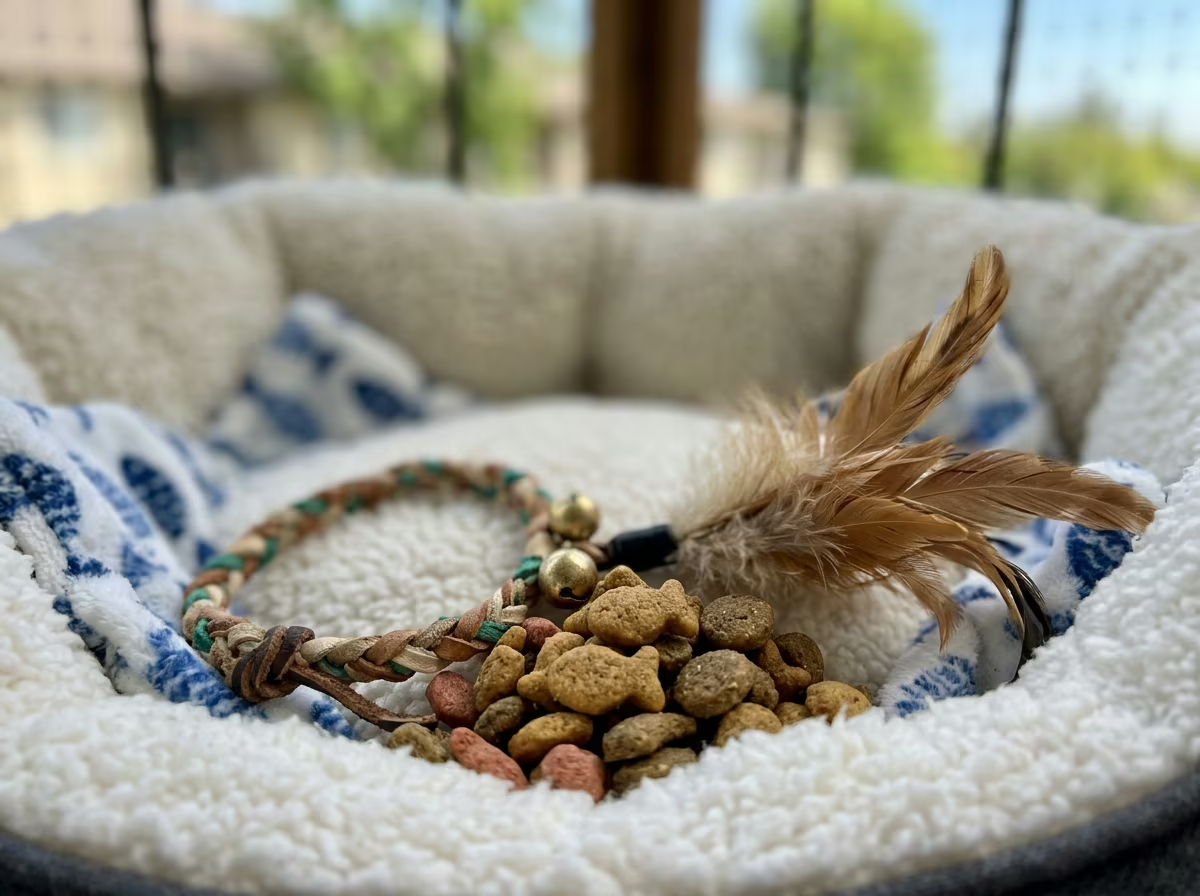
Start with supervised, short sessions. Leave the access door or window open so your cat can retreat to the house at any time. Place familiar items in the catio: a favorite bed, a toy, treats. Some cats explore confidently from the first moment. Others need several days of gradually longer visits before they are comfortable spending extended time in the space. Never force a cat into the enclosure or close them in before they have had time to acclimate.
Do catios need to be cleaned?
Regular cleaning keeps a catio hygienic and pleasant for both cats and humans. Remove any feces daily if your cat uses the catio as a bathroom (most cats prefer to use their indoor litter box, but some develop outdoor preferences). Sweep or hose down the floor weekly. Check screening for tears or loose sections monthly. Wash shade cloth or removable covers seasonally. In Southern California, the dry climate reduces mold and mildew concerns, but dust accumulation is common and a monthly hose-down keeps surfaces clean.
How hot do catios get in Southern California summers?
An unshaded catio in direct sun can exceed 110 degrees Fahrenheit internally on days when the air temperature reaches the 90s. Proper shade covering at least 60 percent of the roof area, good ventilation through mesh walls, and east-facing orientation bring interior temperatures close to ambient shade temperatures. Provide fresh water inside the catio at all times and ensure your cat can always return to the air-conditioned house during the hottest hours.
The Bottom Line
A catio is one of the simplest ways to dramatically improve your cat's quality of life while keeping them completely safe. In Southern California, where the climate makes year-round outdoor access possible and the wildlife makes unenclosed outdoor access risky, a catio is not a luxury. It is the most practical answer to the question every cat owner eventually asks: how do I let my cat enjoy the outdoors without the danger?
Your next steps:
- Decide which catio type fits your living situation: window box for apartments, patio enclosure for existing covered patios, freestanding for yards with space and design ambitions.
- Assess your site: note sun exposure throughout the day, check for west-side sun issues, and plan shade coverage accordingly.
- If you are replacing turf as part of the project, check IRWD rebate eligibility before starting. Pre-approval is required for most rebate programs.
- Start simple. A window box catio or a portable mesh enclosure lets you test the concept before committing to a larger build.
Your Yardtopia should be a place where every member of the family can soak up some sunshine, even the ones who nap in it. Explore more ideas and rebate details at Yardtopia.com.