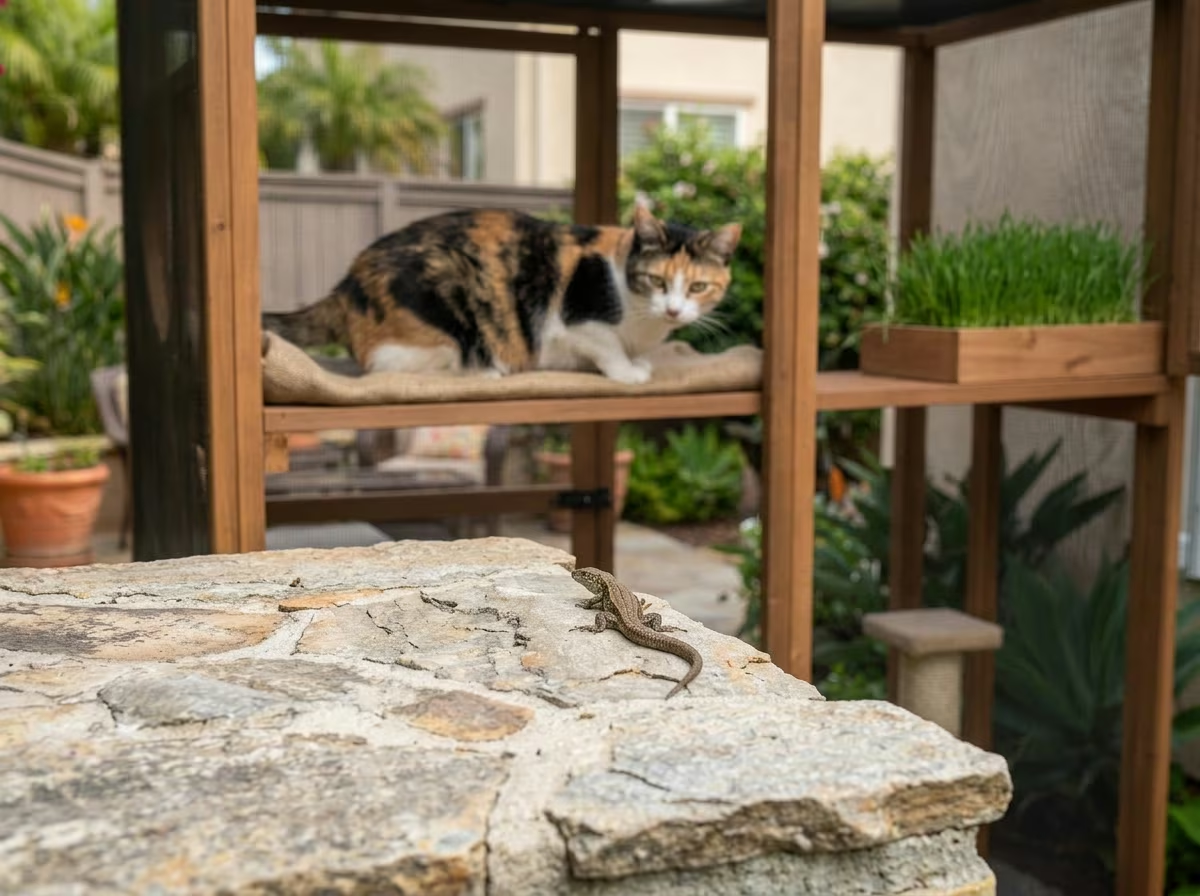

Make your Yardtopia an outdoor living space designed for every member of the family to enjoy. With thoughtful planning, your yard can be a place where beauty, functionality, and comfort all come together. From pet-safe plants and durable ground coverings to cozy gathering areas and room to play, it's possible to design a landscape that works for both people and pets.
KEY TAKEAWAYS
- Many of the most popular drought-tolerant plants sold at Southern California nurseries, including sago palm, oleander, and lantana, are among the most toxic to both dogs and cats. A pet-safe yard starts with knowing which plants to remove and which to choose instead.
- Pet friendly landscaping and water-wise landscaping overlap almost completely: the safest plants for pets are California natives and Mediterranean species that thrive on minimal water, and many of the best pet-safe ground covers qualify for IRWD turf removal rebates at $2 per square foot.
- Designing your yard in zones (play, rest, potty, protected garden) keeps pets happy, plants intact, and maintenance manageable, whether you share your yard with dogs, cats, or both.
Creating a yard that is both drought-tolerant and safe for pets is absolutely possible with the right plant choices. While nurseries often organize plants by water needs rather than pet safety, a little planning can help you build a landscape that supports both. Some common plants used in Southern California landscapes like oleander, sago palms, and certain lilies can be harmful to pets, which is why doing a quick check before planting can make a big difference. With a bit of awareness and thoughtful selection, you can design a beautiful, water-wise garden that keeps your pets safe and your outdoor space thriving. Be sure to check HOA guidelines before landscaping.
This guide is your starting point for creating a pet-friendly yard in Southern California. Inside, you'll find everything you need to design an outdoor space where pets and plants thrive together. From a simple yard safety check to thoughtful design principles, pet-safe plant selections, durable ground covers that handle paws and drought, and lawn care practices that keep harsh chemicals out of the picture. We also cover special considerations for cat owners in a region where local wildlife like coyotes and raptors are part of the ecosystem.
What Is Petscaping, and Why Does It Matter in Southern California?
Petscaping is landscape design that places pets at the center of the plan from the very beginning. It combines thoughtful plant choices, durable materials, and smart layouts to create an outdoor space that works beautifully for both animals and people. The goal is simple: a yard that is safe for pets, welcoming for your family, and designed to be enjoyed every day.
At its best, petscaping brings together three priorities: protecting animals from harmful plants, chemicals, and environmental hazards; creating a functional and visually beautiful outdoor living space; and designing with the water realities of a Mediterranean climate in mind. The result is a landscape where pets can explore freely, people can relax comfortably, and the entire yard thrives together.
In Southern California specifically, petscaping carries extra opportunity for three reasons.
First, outdoor living is year-round here. Dogs and cats in Orange County get to enjoy the yard far more than pets in regions with harsh winters or heavy rain seasons. Petscaping makes sure every hour your pet spends outside is as safe as it is enjoyable, because a yard they can access 365 days a year deserves 365-day-a-year peace of mind.
Second, Southern California's drought-tolerant landscaping movement has opened up a world of beautiful, water-wise possibilities and petscaping helps you navigate them with confidence. The push to replace thirsty lawns with smart, sustainable alternatives is exactly the right instinct. Petscaping simply adds one more layer of intention to that process, so you can embrace water-wise design knowing your choices work for your whole family, pets included. Think of it as the cross-reference your garden center wishlist has been missing.
Third, Southern California's rich wildlife is part of what makes this region so special and a well-designed petscape helps your yard work with that environment, not against it. A thoughtful petscape takes that into account, creating a backyard that feels like a true sanctuary: beautiful, sustainable, and genuinely protective of the animals you love most.
GOOD TO KNOW
According to the ASPCA Animal Poison Control Center, plant ingestion is one of the most common reasons pet owners call their hotline. In regions with year-round outdoor access like Southern California, the exposure window never closes. Petscaping reduces that risk at the source by replacing hazardous plants with safe alternatives rather than relying on supervision alone.
How Do You Audit Your Yard for Pet Safety?
Before you redesign anything, walk your yard with fresh eyes and a checklist. A pet safety audit takes about an hour and identifies the hazards that are already present. Most homeowners discover at least two or three items that need attention, even in yards that seem perfectly safe.
Toxic Plant Check
This is the most important step. Walk every garden bed, border, and container in your yard and identify each plant. Cross-reference against the ASPCA Toxic and Non-Toxic Plants Database (aspca.org). Pay particular attention to the plants that appear most frequently in Southern California landscapes and also happen to be among the most dangerous.
For dogs, the highest-risk plants you are likely to find include sago palm (all parts toxic, mortality rate above 50 percent even with treatment), oleander (cardiac glycosides that cause heart failure), and lantana (liver-damaging berries, especially the unripe green ones). For cats, the danger list adds true lilies (Lilium and Hemerocallis species), which can cause acute kidney failure from contact with even a small amount of pollen, and several common houseplants that migrate outdoors in warm weather.
Chemical Hazard Inventory
Check your garage and storage areas for lawn and garden chemicals. Traditional weed killers containing glyphosate, 2,4-D, or dicamba pose risks to pets through direct contact, ingestion of treated grass, or paw licking after walking on treated surfaces. Conventional fertilizers, particularly those with high nitrogen concentrations, can cause gastrointestinal distress. Rodenticides (rat and mouse poisons) are among the most dangerous household chemicals for pets, as the toxic bait is specifically designed to be attractive to mammals.
Surface Temperature Assessment
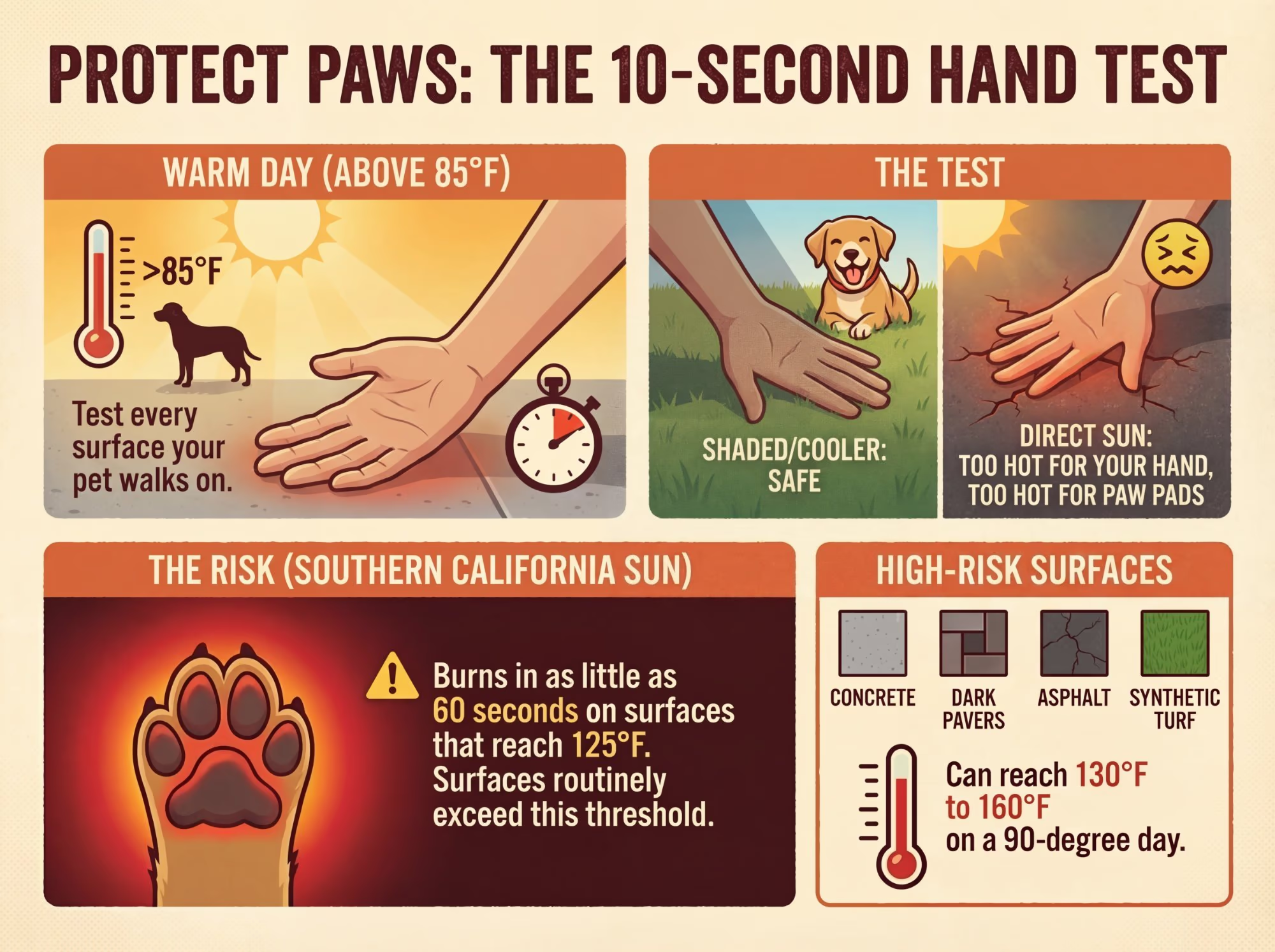
On a warm day (above 85 degrees Fahrenheit), test every surface your pet walks on. Place the back of your hand flat on the surface and hold it for ten seconds. If it is too hot for your hand, it is too hot for paw pads. Dog paw pads can sustain burns in as little as 60 seconds on surfaces that reach 125 degrees Fahrenheit, and surfaces in direct Southern California sun routinely exceed that threshold.
Common high-risk surfaces include concrete, dark pavers, asphalt, and synthetic turf, all of which can reach 130 to 160 degrees on a 90-degree day.
Escape Routes and Fencing
Walk your entire fence line. Check for gaps at the bottom (dogs dig, cats squeeze), loose boards, weak gate latches, and any points where a determined animal could get through. For cats, check for branches, structures, or stacked items near the fence that could serve as launch points for climbing over. For dogs, look for spots where soil erosion has created gaps under the fence, especially along property lines where sprinkler runoff concentrates.
Water Hazards
Pools and spas need secure fencing or covers when pets have unsupervised yard access. Standing water in saucers, birdbaths, or decorative features can harbor bacteria and, in the case of containers under oleander or other toxic plants, can contain leached toxins. Even a pot saucer that has collected runoff from a toxic plant can be hazardous if a pet drinks from it.
GOOD TO KNOW
If you identify sago palm, oleander, or lilies (for cat owners) in your yard, removal should be your first priority, before any other landscaping changes. These plants represent the highest-severity risks in Southern California landscapes. If your pet has already ingested any part of these plants, contact your veterinarian immediately or call the ASPCA Animal Poison Control Center at (888) 426-4435.
What Are the Design Principles for a Pet-Safe Yard?
The most effective pet-friendly yards are not built around restrictions. They are built around zones. When you give each activity its own space, the yard works better for everyone: pets get room to do what they need to do, plants get protection from what pets naturally do, and you spend less time managing conflicts between the two.
Zoning: The Foundation of Pet Friendly Landscaping
A well-designed pet-safe yard uses four basic zones.
The play and run area is your pet's primary activity space. For dogs, this means a clear, open area with durable ground cover and enough length for sprinting. Even a 30-foot straight run makes a meaningful difference for most breeds. Surface it with kurapia, Dog Tuff grass, decomposed granite, or another traffic-durable material. Keep this zone free of garden pots, delicate plants, and obstacles that a running dog could collide with.
The potty area is a dedicated zone with easy-drain, easy-clean surfacing like pea gravel or decomposed granite. Dogs are creatures of habit and will consistently use a designated area once trained to it. A 6-by-10-foot zone is sufficient for most dogs. Place it away from seating areas and the kitchen door.
The rest and shade zone provides a cool retreat during Southern California's intense summers. East-facing orientation catches gentle morning sun while blocking the harsher afternoon heat from the west. A raised dog cot, a water station, and at least 40 percent shade coverage make this zone functional from May through October.
The protected garden zone uses raised beds, low decorative fencing (18 to 24 inches), and strategic placement to keep delicate plantings safe from digging, trampling, and urine. The goal is a clear boundary, not a fortress. Most dogs and cats respect simple barriers once routines are established.
Traffic Flow and Sight Lines
Pets create their own paths through a yard whether you plan for them or not. Dogs, in particular, will wear tracks along fence lines, between the back door and the gate, and from the house to their favorite resting spot. Designing with those natural paths in mind, using durable surfaces where traffic concentrates and protecting plantings in quieter zones, saves you from fighting a battle you will not win.
For dogs, clear sight lines across the yard reduce anxiety and fence-running behavior. A dog that can see the entire space from the patio tends to be calmer than one navigating blind corners and dense plantings.
For cats, the opposite instinct applies. Cats prefer elevated vantage points, sheltered nooks, and spaces that feel enclosed and secure. A cat-friendly yard includes climbing surfaces, perching shelves, and places to hide and observe, ideally within a catio or enclosed structure that keeps them safe from predators.
PRO TIP
Before you commit to a layout, spend a weekend watching how your pets actually use your yard. Where does your dog run? Where does your dog dig? Where does your cat sit and watch? Where do both animals gravitate on hot days versus cool mornings? Those natural patterns tell you exactly where to place each zone, and they are more reliable than any design template. Your Yardtopia should work the way your family actually lives, pets included.
Which Plants Are Safe for Pets in Southern California?
The pet-safe plant palette for Southern California is large, beautiful, and overwhelmingly drought-tolerant. The reassuring truth is that many of the plants best adapted to our Mediterranean climate, California natives, Mediterranean herbs, and ornamental shrubs are also non-toxic to both dogs and cats. Nature, it turns out, has done a lot of the work for us.
Once you know which plants to swap out, you're left with an enormous, gorgeous, water-wise palette to work with. The goal was never to limit your landscape. It was to make sure every choice in it was one you could feel good about.
"When you create a landscape, it needs to give back."
— Farah Saquib, Partner, Urban Ecology Studio
The Toxic Drought-Tolerant Trap
Three plants illustrate this trap most clearly.
Sago palm (Cycas revoluta) is the single most dangerous ornamental plant for dogs in Southern California. Every part is toxic, and the ASPCA reports a mortality rate above 50 percent even with aggressive treatment. Despite this, sago palms remain a top seller at nurseries across Orange County.
Oleander (Nerium oleander) lines freeways and backyards throughout the region. It is beautiful, nearly indestructible, and contains cardiac glycosides that can kill both dogs and cats. Even water that has collected in a dish beneath oleander clippings can be dangerous.
Lantana (Lantana camara) is sold as a colorful, heat-loving ground cover. Its berries, particularly unripe green ones, cause liver damage in dogs. It is also toxic to cats.
For cat owners, the list adds another critical entry: true lilies (Lilium and Hemerocallis species). These are among the most toxic plants for cats, capable of causing acute kidney failure from ingestion of even a small piece of leaf or petal. Many pet owners know about lily toxicity for cats but do not realize it extends to daylilies, Easter lilies, tiger lilies, and several other species commonly grown in Southern California gardens.
Safe Alternatives That Fill the Same Design Roles
The good news is that every toxic plant has a pet-safe alternative that fills the same landscape function.
Toxic PlantDesign RolePet-Safe ReplacementAlso Drought-Tolerant?Sago PalmSculptural focal pointFoxtail Agave, Bird of ParadiseYesOleanderScreening hedgeToyon, Carolina Cherry, RosemaryYesLantanaGround cover colorCalifornia Fuchsia, Trailing RosemaryYesLilies (for cats)Garden color, cut flowersSnapdragons, Zinnias, SunflowersModerateAzaleaShade garden ornamentalCamelliaModerateJade PlantContainer succulentHens and Chicks (Sempervivum)Yes
Many of these pet-safe replacements are California natives that require little to no supplemental irrigation once established, and they qualify for IRWD turf replacement rebates when used as part of a lawn-to-landscape conversion. That means the shift to a pet-safe yard can also be a water-saving investment that pays for itself.
GOOD TO KNOW
The ASPCA maintains a searchable database of more than 1,000 plants with toxicity ratings for dogs, cats, and horses at aspca.org/pet-care/animal-poison-control. Before adding any new plant to your yard, a quick search takes less than a minute and could prevent an emergency veterinary visit. When in doubt, the Calscape.org database can help you identify California native alternatives that are both water-wise and pet-safe.
What Ground Covers and Surfaces Work Best for Pets?
Ground cover is the decision that affects daily life with a pet more than any other landscape choice. Your dog runs on it, rolls in it, and uses it as a bathroom. Your cat walks across it on patrol. And in Southern California, traditional turf grass meets those demands at a staggering water cost: approximately 44 gallons per square foot per year.
The good news is that several pet-safe, traffic-durable ground covers are also among the best lawn replacements for our climate. Many qualify for IRWD rebates, meaning the switch to a pet-safe yard can offset the cost of conversion.
| Surface | Pet Safe | Dog Traffic | Cat Friendly | Heat | Water Needs | IRWD Rebate |
|---|---|---|---|---|---|---|
| Kurapia | Yes | High | Yes | Cool | Very Low | Yes |
| Dog Tuff Grass | Yes* | Very High | Yes | Cool | Very Low | Yes |
| White Clover | Yes | High | Yes | Moderate | Low | Yes |
| Creeping Thyme | Yes | Moderate | Yes | Cool | Very Low | Yes |
| Dymondia | Yes | Moderate | Yes | Cool | Very Low | Yes |
| Decomposed Granite | Yes | High | Good | Warm | None | Varies |
| Pea Gravel | Yes | Moderate | Fair | Warm | None | Varies |
*Dog Tuff is a bermuda grass cultivar. Not listed as toxic by the ASPCA.
Kurapia is emerging as one of the most popular choices for pet owners in Southern California. It forms a dense, soft mat that handles heavy paw traffic, requires 60 percent less water than traditional turf, and stays green year-round. It recovers from wear patterns and tolerates urine better than most alternatives.
Decomposed granite is the go-to for dedicated play and potty zones. It stays significantly cooler than concrete or synthetic turf, drains quickly, and costs far less than hardscape. A properly compacted DG surface in a warm gold or natural tan tone looks clean and intentional.
Synthetic turf deserves careful consideration. It is durable and requires no water, but it comes with several tradeoffs in Southern California. Surface temperatures can exceed 150 degrees Fahrenheit on sunny days that are hot enough to burn paw pads and make the space uncomfortable for people and pets.
There are also environmental concerns. Most synthetic turf is made from plastic fibers and infill materials that can break down over time. Small fragments can wash into storm drains during rain, eventually reaching creeks, rivers, and coastal waters as microplastics that persist in the environment for decades.
Synthetic turf also does not qualify for rebates from Irvine Ranch Water District (IRWD), which prioritizes landscape conversions that support water efficiency while maintaining healthy soil and local ecosystems.
"We wanted people to see for themselves how beautiful a drought-tolerant garden can be."
— Victor Zamora, Landscape Contracts Administrator, IRWD
How Do You Keep Your Lawn and Garden Safe for Pets?
Lawn and garden chemicals represent the second major hazard category in pet friendly landscaping, right behind toxic plants. Dogs absorb chemicals through their paw pads, lick treated grass during grooming, and can ingest contaminated soil. Cats are even more vulnerable because of their fastidious grooming habits: anything that lands on fur or paws ends up in their digestive system.
The Chemicals to Watch
Weed killers containing glyphosate, 2,4-D, or dicamba are the most common chemical hazards in residential yards. While the concentration in consumer products is generally lower than commercial applications, the re-entry interval (the time you should keep pets off treated areas) is often listed in fine print that many homeowners overlook.
Conventional fertilizers with high nitrogen content can cause gastrointestinal distress if ingested. Granular fertilizers are particularly risky because dogs may eat the pellets, mistaking them for treats.
Pesticides and insecticides, including slug bait containing metaldehyde and rodenticides designed to attract mammals, are among the most dangerous chemicals a pet can encounter in the yard.
The Pet-Safe Approach
The core principle is simple: organic and natural products are not automatically pet-safe, but they are generally far less hazardous, and several categories are truly non-toxic.
Corn gluten meal serves as both a natural pre-emergent weed preventer and a slow-release nitrogen source. It is non-toxic to pets and effective in Southern California warm-season conditions.
Compost and worm castings provide balanced nutrition for garden soil without the chemical concentration risks of synthetic fertilizers.
Beneficial nematodes and companion planting address pest problems without introducing chemicals into the environment at all.
The timing of any application matters too. Even pet-safe products should be watered in and allowed to dry before pets return to the treated area. For conventional products, the label's re-entry interval is the minimum, and most veterinarians recommend doubling it.
EXPERT TIP
The simplest lawn care rule for pet owners: if you would not feel comfortable with your pet licking the treated surface within 24 hours, the product is not the right fit for a pet-friendly yard. This single filter eliminates most hazardous products and steers you toward alternatives that work just as well without the risk.
What Do Cat Owners Need to Know About Outdoor Spaces?
Cats present a different set of design challenges than dogs. Where dog-friendly landscaping focuses on durability, traffic flow, and potty zone management, cat-safe landscaping centers on containment, predator protection, and a different toxicity profile.
The Cat Toxicity Difference
Cats are more susceptible to certain plant toxins than dogs. The most critical example is true lilies: Lilium and Hemerocallis species can cause acute kidney failure in cats from ingestion of even a small amount of leaf, petal, or pollen. This is a distinctly feline risk. Dogs can ingest lily material with only mild gastrointestinal effects. For cat owners, lilies should be treated with the same urgency as sago palms for dog owners: remove them completely from any space a cat can access.
Cats also metabolize chemicals differently than dogs. Essential oils, many flea and tick treatments formulated for dogs, and certain cleaning products that are tolerable for dogs can be toxic to cats. This metabolic difference means that a yard designed exclusively with dog safety in mind may still contain hazards for cats.
Catios and Enclosed Outdoor Spaces
A catio (cat patio) is an enclosed outdoor structure that gives cats access to fresh air, sunlight, and sensory stimulation while keeping them safe from the hazards that make free-roaming dangerous in Southern California. Those hazards are real and significant in our region.
Coyotes are present in virtually every Orange County neighborhood, including dense suburban developments. They are most active at dawn and dusk but have been documented hunting in broad daylight. Hawks, great horned owls, and other raptors routinely take small mammals in residential areas. And cars remain the leading cause of death for outdoor cats nationwide.
A catio addresses all of these risks simultaneously. Designs range from simple window boxes that provide a screened perch to full yard enclosures that give a cat access to an entire outdoor space. Many can be built as weekend DIY projects with standard lumber and welded wire mesh.
GOOD TO KNOW
The Humane Society of the United States and the American Bird Conservancy both recommend keeping cats indoors or in enclosed outdoor spaces. Free-roaming outdoor cats in the United States kill an estimated 1.3 to 4 billion birds annually according to a study published in Nature Communications. A catio protects both your cat and local wildlife, a consideration that resonates with the conservation values central to water-wise landscaping in Southern California.
How Does Water-Wise Landscaping Connect to Pet Safety?
Here is the overlap that makes petscaping particularly compelling in Southern California: the Venn diagram of "plants that are safe for pets" and "plants that thrive with minimal water" is nearly a circle.
California natives like Cleveland sage, California buckwheat, deer grass, California fuchsia, manzanita, and matilija poppy are all non-toxic to both dogs and cats. They are also the plants that evolved for this exact climate, requiring little to no supplemental irrigation once established. Mediterranean herbs like rosemary, thyme, sage, and oregano are non-toxic, drought-tolerant, and edible. The ground covers that handle pet traffic best, kurapia and creeping thyme among them, are also among the most water-efficient lawn replacements available.
This alignment means that a petscaping project is not an added expense on top of a water-wise conversion. It is the same conversion, informed by one additional filter.
The IRWD Rebate Connection
Irvine Ranch Water District's turf removal rebate program currently offers $2 per square foot for replacing traditional lawn with approved water-wise alternatives. Many of the plants and ground covers recommended throughout this guide qualify. That means a 500-square-foot lawn replacement could return $1,000 in rebates, often enough to cover materials for the entire pet-safe conversion.
The key requirements: you must apply for pre-approval before starting your project, the replacement must be living plant material or permeable hardscape (synthetic turf does not qualify), and the area must have been actively irrigated turf grass. Visit Yardtopia.com for current program details, eligibility requirements, and application forms.
Rebate-eligible plants that are also pet-safe include:
Building a pet-safe yard and building a water-wise yard are, in most cases, the same project. Your Yardtopia can be both at once.
GOOD TO KNOW
IRWD rebate programs require pre-approval. Do not remove existing turf before receiving written approval from the program, or you may forfeit your rebate. The approval process typically takes two to four weeks. Use that time to plan your pet-safe plant palette and order materials. [SME: VERIFY --- current rebate timeline and approval process]
Where Can You Find Local Resources for Pet-Safe Landscaping?
Southern California pet owners have access to excellent local and national resources for petscaping guidance.
Emergency and Poison Control
- (888) 426-4435. Staffed 24/7 by veterinary toxicologists. There is a consultation fee per case. Save this number in your phone alongside your regular veterinarian and nearest emergency animal hospital.
- Pet Poison Helpline: (855) 764-7661. Alternative 24/7 hotline with board-certified toxicologists.
Plant Identification and Safety
- ASPCA Toxic and Non-Toxic Plants Database: aspca.org/pet-care/animal-poison-control. Searchable database of more than 1,000 plants with toxicity ratings for dogs, cats, and horses.
- Calscape.org: California native plant database operated by the California Native Plant Society. Search by zip code to find species native to your specific area, then cross-reference with the ASPCA database for pet safety.
Horticultural Guidance
- UC Master Gardeners of Orange County: (949) 809-9760. Free gardening advice from trained volunteers. They can help identify plants in your yard and recommend pet-safe alternatives suited to your specific conditions.
Rebate Programs
- IRWD Turf Removal Rebate: $2 per square foot for qualifying lawn-to-landscape conversions. Details and application at Yardtopia.com.
- SoCal Water$mart: Regional rebate programs for water-efficient landscape equipment including weather-based irrigation controllers and high-efficiency sprinkler nozzles.
Frequently Asked Questions
What does petscaping mean?
Petscaping is landscape design that integrates pet safety as a core requirement alongside aesthetics, function, and water efficiency. It encompasses plant selection (avoiding toxic species), surface choices (managing heat and drainage), chemical use (organic and pet-safe alternatives), and structural elements like catios and zoned layouts. The term recognizes that pets are full-time users of the outdoor space and their safety should inform every design decision.
What are the most dangerous plants for pets in Southern California?
For dogs, sago palm, oleander, and lantana represent the highest risks among common landscape plants. Sago palm ingestion has a mortality rate above 50 percent even with treatment. For cats, true lilies (Lilium and Hemerocallis species) are the most critical concern, capable of causing acute kidney failure from minimal ingestion. The ASPCA Animal Poison Control Center at (888) 426-4435 is the best immediate resource if you suspect plant ingestion.
Is pet friendly landscaping more expensive than regular landscaping?
In most cases, no. The plants recommended for pet-safe yards (California natives, Mediterranean herbs, tough ornamental shrubs) are widely available and comparably priced to their toxic counterparts. When you factor in IRWD turf removal rebates at $2 per square foot, a pet-safe lawn replacement can cost less than a conventional one. The design process (zoning, surface selection, plant layout) is the same whether you are petscaping or not. You are simply applying an additional safety filter to choices you would be making anyway.
Can I have a beautiful yard and keep my pets safe?
Yes, without compromise. The pet-safe plant palette for Southern California includes hundreds of species in every size, color, texture, and function. California fuchsia provides vivid red-orange blooms. Rosemary creates dense, fragrant hedges. Toyon produces clusters of bright red berries in winter. Kurapia forms a lush green carpet. The constraint of excluding toxic plants eliminates a handful of common species and replaces them with equally attractive, often more climate-appropriate alternatives.
Do I need to remove all toxic plants if I have pets?
You should remove or make inaccessible any plant with high or life-threatening toxicity ratings, especially sago palm, oleander, and lilies for cat households. For plants with moderate toxicity (mild gastrointestinal upset from ingestion), the decision depends on your pet's behavior. A dog or cat that never chews plants may coexist safely with moderately toxic species, while a puppy or a plant-chewing cat warrants a more conservative approach. When in doubt, replace the plant. The alternatives are just as attractive.
What is the best ground cover for a yard with both dogs and cats?
Kurapia is the strongest all-around choice for multi-pet households. It is non-toxic, handles heavy dog traffic, stays soft for cat paws, requires 60 percent less water than traditional turf, and qualifies for IRWD rebates. Creeping thyme is an excellent complement in lower-traffic areas, adding fragrance and visual variety. For dedicated potty zones, decomposed granite or pea gravel provides easy drainage and cleaning.
Are organic lawn products automatically safe for pets?
Not automatically, but they are generally far less hazardous than synthetic alternatives. "Organic" means the ingredients are derived from natural sources, not that they are non-toxic. Bone meal and blood meal, for example, are organic fertilizers that dogs find attractive and can cause gastrointestinal problems if eaten in quantity. The safest approach is to water in any product and keep pets off the treated area until it has dried completely, then verify specific ingredients against pet safety resources.
How do I protect my cat from coyotes and hawks in the backyard?
An enclosed outdoor space, commonly called a catio, is the most reliable protection. Catios range from simple window-mounted enclosures to full yard structures and can be built as DIY projects. Solid roofing or heavy-gauge wire mesh overhead protects against raptors. Secure walls and flooring prevent ground-level predator access. Free-roaming outdoor time, even in a fenced yard, carries inherent risk in Southern California where coyotes are present in virtually every neighborhood.
Petscaping is not a separate category of landscaping. It is the same thoughtful, climate-appropriate landscape design that makes sense in Southern California, with one additional filter: is it safe for the animals that live here? The answer, more often than not, leads you to the same plants, surfaces, and practices you would choose anyway. California natives are pet-safe and water-wise. Organic lawn care protects pets and soil health. Zoned yard design benefits the whole family, two legs and four.
Your next steps: