
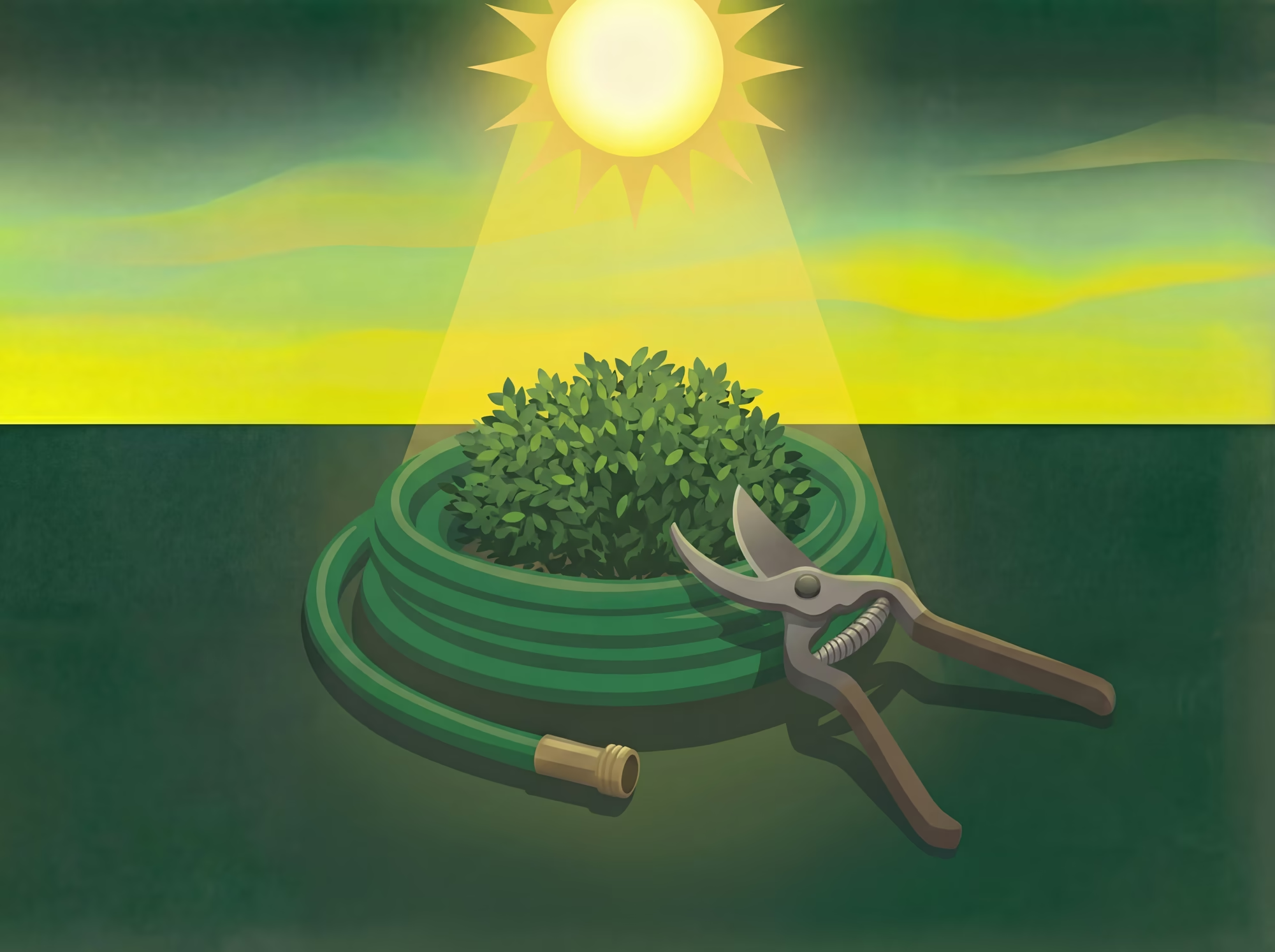
You have done the research, chosen the right plants, prepared the soil, and settled every root ball into place. The beginning of something beautiful is right there in front of you.
Now comes the question that separates gardens that thrive from gardens that quietly fade: what do you do next?
KEY TAKEAWAYS
- The best time to water plants in Southern California is early morning, between 6 and 8 a.m., when temperatures are cool, wind is calm, and roots can absorb moisture before the heat of the day causes evaporation.
- Pruning at the right time of year matters more than pruning technique: roses, lavender, citrus, and crepe myrtle each follow a different seasonal schedule, and pruning at the wrong time can remove next season's flowers.
- A simple year-round maintenance routine of watering, mulching, pruning, and feeding keeps Southern California gardens thriving with less effort than most homeowners expect, especially once plants are established.
This guide is the final chapter in a four-part series. Part 1 covered understanding your yard's conditions. Part 2 covered choosing the right plants. Part 3 covered planting and establishing them. Now, in Part 4, you will learn everything you need to keep those plants alive, healthy, and beautiful for years to come.
How Do You Keep Plants Alive in Southern California's Climate?
Keeping plants alive in Southern California comes down to understanding one fundamental reality: this is a Mediterranean climate with long, dry summers and mild, wet winters. Plants that thrive here receive consistent care matched to seasonal rhythms, not the constant year-round attention that gardening advice from wetter climates assumes.
The four pillars of long-term plant care in Orange County are water, pruning, nutrition, and protection. Your garden will improve year after year, filling in, blooming more heavily, and requiring less intervention as plants mature and root systems deepen.
"Get these four right, and your garden will not just survive—it will improve year after year."
Water is the most critical factor, and also the one most homeowners get wrong. Southern California gardeners tend to overwater in winter and underwater in the transition months of spring and fall. A plant watering schedule that adjusts with the seasons is the single most impactful change you can make.
Pruning intimidates most people unnecessarily. The truth is that most pruning mistakes are about timing, not technique. Knowing when to prune shrubs, when to cut back perennials, and when to leave things alone is more important than mastering the perfect 45-degree cut angle.
GOOD TO KNOW
Established plants need significantly less care than new plantings. The first one to two years after planting are the most labor-intensive because root systems are still developing. Once plants are established, watering frequency drops, pest resistance increases, and the garden begins to take care of itself in ways that surprise new gardeners. The investment you made during establishment in Part 3 pays dividends for decades.
When Is the Best Time to Water Plants and How Often?
The best time to water plants is early morning, between 6 and 8 a.m. At this hour, temperatures are cool, wind speeds are low, and the soil can absorb moisture before the midday sun drives evaporation. Morning watering also allows foliage to dry before evening, reducing the risk of fungal diseases.
If early morning is not possible, the second-best window is late afternoon, between 4 and 6 p.m. Avoid watering in the middle of the day when temperatures exceed 85 degrees: much of the water evaporates before it reaches the roots, and droplets on leaves can cause leaf scorch.
How Often to Water Plants in Southern California
How often you water depends on the plant type, the season, and your soil conditions. Sandy soils drain faster and need more frequent watering. Clay soils hold moisture longer and need less.
| Plant Type | Summer (Jun–Sep) | Spring/Fall | Winter (Dec–Feb) |
|---|---|---|---|
| Drought-tolerant natives (sage, buckwheat, manzanita) | Monthly deep soak or none | None (rainfall sufficient) | None |
| Mediterranean plants (lavender, rosemary, bougainvillea) | Every 2 to 3 weeks, deep soak | Monthly or none | None |
| Roses | Weekly deep soak | Every 10 to 14 days | Every 2 to 3 weeks |
| Citrus and fruit trees | Weekly deep soak | Every 10 to 14 days | Every 2 to 3 weeks |
| Succulents and cacti | Monthly or less | Monthly or none | None |
| Shade plants (ferns, coral bells, clivia) | Every 5 to 7 days | Weekly | Every 2 weeks |
| Annual flowers and vegetables | Every 2 to 3 days | Every 3 to 5 days | Every 5 to 7 days |
How Much Water Do Plants Need?
The goal is to soak the root zone deeply rather than wetting the surface lightly. For most shrubs and perennials, that means applying enough water to penetrate 12 to 18 inches into the soil. For trees, aim for 24 to 36 inches of depth. A slow, deep soak once or twice a week is far more effective than brief daily watering, which encourages shallow root systems that are vulnerable to heat and drought.
QUICK STAT
30 to 50% — The water savings homeowners can expect by switching from overhead sprinklers to drip irrigation, which delivers water directly to the root zone with minimal evaporation or runoff.
The soak-and-dry method is the gold standard for Southern California gardens: water deeply, then allow the soil to dry out partially before watering again. Drip irrigation systems make this approach effortless and reduce water waste compared to overhead sprinklers.
EXPERT TIP
To check whether you are watering deeply enough, push a long screwdriver or soil probe into the ground after irrigating. It will slide easily through moist soil and stop when it hits dry ground. If it stops at 4 or 5 inches, you need to water longer. If it slides to 12 inches or more, your depth is right. This 5-second test is more reliable than any timer setting because it accounts for your specific soil type, slope, and sun exposure. IRWD offers free irrigation evaluations for homeowners who want a professional assessment of their system's efficiency.
The Santa Ana Wind Exception
During Santa Ana wind events (typically October through March), humidity drops dramatically and temperatures spike. These hot, dry winds can desiccate plants faster than any summer heat wave. When Santa Ana conditions are forecast, water deeply the day before and monitor plants for stress. Container plants and newly established plantings are especially vulnerable. A single Santa Ana wind event can undo weeks of careful watering if plants go into it dry.
How Do You Prune Roses, Lavender and Other Southern California Favorites?
Pruning is the maintenance task that intimidates gardeners most, but the basics are simpler than they appear. The critical variable is timing. Pruning at the wrong time of year can remove flower buds, stimulate tender growth before a cold snap, or stress a plant during its natural rest period.
PRO TIP
Always sanitize pruning tools between plants, especially when working with roses. A quick wipe with rubbing alcohol or a 10 percent bleach solution prevents the spread of bacterial and fungal diseases from one plant to another. This takes 10 seconds and can prevent infections that take months to treat. Replace or sharpen blades that are dull or damaged: ragged cuts heal slowly and invite disease.
How to Prune Roses
The major annual pruning for roses happens in January, during the plant's brief dormant period in Orange County. This is when you make structural cuts: removing crossing branches, thinning the center of the bush to improve air flow, and cutting canes back to 12 to 18 inches above the graft union.
Use sharp bypass pruners for canes up to 3/4 inch in diameter and loppers for thicker wood. Make each cut at a 45-degree angle, roughly one-quarter inch above an outward-facing bud. Throughout the growing season, deadheading roses encourages continuous flowering. This simple practice can double or triple your rose's bloom production from spring through fall.
How to Prune Lavender
Lavender needs regular pruning to stay compact and productive. Without it, plants become woody and leggy within two to three years. Prune lavender immediately after the main spring bloom cycle finishes, typically in late June or early July in Orange County. Cut back the entire plant by about one-third, removing all spent flower stalks and shaping the plant into a tight mound.
The critical rule: never cut into bare wood. Unlike roses, lavender cannot regenerate from old, woody stems. If you see brown, bare wood below the foliage, stop cutting above it. A lighter trim after the secondary fall bloom keeps the plant tidy heading into winter.
Crepe Myrtle Pruning
The practice of cutting crepe myrtles back to thick stubs every winter (sometimes called "crepe murder") produces weak, spindly growth and fewer flowers. In late winter (January to February), remove only three categories of growth: suckers from the base, crossing or rubbing branches in the interior, and small twiggy growth along the main trunks. The goal is to reveal the beautiful, smooth bark and maintain an open, natural branching structure. Less is genuinely more with this tree.
When to Prune: Southern California Plant Reference
| Plant | When to Prune | What to Remove | Notes |
|---|---|---|---|
| Roses (hybrid tea, floribunda) | January (major); deadhead year-round | Crossing branches, dead wood, spent blooms | Cut to outward-facing bud at 45-degree angle |
| Lavender | Late June/July (major); light trim after fall bloom | Spent flowers, one-third of green growth | Never cut into bare wood |
| Citrus trees | February through March (light shaping) | Dead wood, suckers, water sprouts | Minimal pruning needed; avoid heavy cuts |
| Crepe myrtle | January through February | Suckers, crossing branches, interior twigs | Never top or stub-cut |
| Bougainvillea | After each bloom cycle (year-round) | Spent bloom clusters, wayward growth | Wear gloves; blooms on new wood |
| Bird of paradise | Year-round as needed | Spent flower stalks, dead outer leaves | Cut stalks at base; remove dead leaves by hand |
| Rosemary | After spring bloom; light shaping any time | Spent flowers, leggy growth | Recovers quickly from heavy pruning |
| Sage (Cleveland, white) | Late summer after bloom finishes | Spent flower stalks, one-third of green growth | Do not cut into woody base |
| Agave | Year-round as needed | Dead lower leaves only | Wear thick gloves; leaf tips are sharp |
When and How Should You Fertilize Your Garden?
Fertilizing is about giving plants the nutrients their soil cannot provide in sufficient quantities. In Orange County, most soils are moderately alkaline and deficient in nitrogen and iron. A targeted feeding schedule based on plant type and season delivers better results than blanket fertilizing everything on the same schedule.
- Roses are heavy feeders. Fertilize on a three-application schedule: mid-February as new growth begins, mid-May as the spring bloom peaks, and mid-August to fuel the fall bloom flush. Stop fertilizing roses by September. Late-season feeding stimulates tender new growth that is vulnerable to fall and winter temperatures.
- Citrus trees benefit from three feedings per year: February (spring growth), May (fruit development), and September (late-season growth flush). The "Valentine's Day, Memorial Day, Labor Day" shorthand makes this schedule easy to remember. Use a citrus-specific fertilizer that includes iron, manganese, and zinc. Yellowing leaves with green veins (chlorosis) is a classic sign of iron deficiency in Orange County's alkaline soils.
- Deciduous fruit trees (fig, pomegranate, stone fruit) need feeding once or twice per year: late February as buds begin to swell, and optionally again in May. Over-fertilizing fruit trees produces lush foliage at the expense of fruit production.
- California natives and Mediterranean plants (lavender, rosemary, sage) evolved in lean soils and rarely need supplemental fertilizer. Feeding them rich fertilizer produces leggy, weak growth. If you amend these plants at all, a light top-dressing of compost in late fall is sufficient.
- Annual flowers and vegetables benefit from regular feeding every four to six weeks during the growing season with a balanced organic fertilizer or compost tea.
GOOD TO KNOW
Organic fertilizers (compost, fish emulsion, bone meal, kelp) release nutrients slowly as soil organisms break them down. Synthetic fertilizers deliver nutrients immediately but can burn roots if over-applied and do nothing to improve soil structure. Many Orange County gardeners use a combination: organic base feeding supplemented with targeted synthetic applications (like chelated iron for citrus) when specific deficiencies appear.
What Is Deadheading and Why Does It Make Your Garden Look Better?
Deadheading is the practice of removing spent flowers before they set seed. When a plant produces seeds, it shifts energy away from flower production and toward seed maturation. By removing faded blooms before seeds form, you redirect that energy back into producing new flowers, resulting in a longer, more abundant blooming season.
- Deadheading roses: Cut the spent flower stem back to just above the first five-leaflet leaf set below the bloom. A new flowering cane will emerge from the bud at that junction within two to four weeks.
- Deadheading lavender: Remove individual spent flower spikes by cutting the stem back into the foliage mound. This encourages a secondary flush of blooms and keeps the plant looking tidy between major prunings.
- Deadheading other perennials: For salvias, gaura, and blanket flower, cut spent flower stalks back to the nearest set of leaves or to the base of the stalk. Many Southern California perennials will produce two or three additional bloom cycles if deadheaded consistently.
Not every plant benefits from deadheading. California natives in particular often provide bird food through their seed production, so leave these intact unless you are specifically managing for continuous bloom.
EXPERT TIP
Deadhead roses and perennials once a week during the growing season, ideally during your regular morning garden walk. It takes 5 to 10 minutes per session and has a bigger impact on the appearance and productivity of your garden than almost any other single maintenance task. Keep a pair of bypass pruners in a pocket or holster so the tool is always at hand. The more consistently you deadhead, the more flowers your plants produce.
How Do You Mulch Your Garden the Right Way?
Mulch is one of the most valuable tools in a Southern California gardener's maintenance routine. A 2- to 4-inch layer of garden mulch across planting beds conserves soil moisture (reducing watering needs by 25 to 50 percent), moderates soil temperature, suppresses weed growth, and feeds the soil as it decomposes. It is a single action that addresses multiple maintenance challenges simultaneously.
The best time to mulch in Orange County is twice per year: once in early spring (March) to conserve moisture heading into the dry season, and once in late fall (November) to insulate roots heading into winter. If you only mulch once, do it in spring.
- Wood chip mulch is the best all-around choice for ornamental garden beds. Arborist chips are often available free or at low cost and decompose into excellent soil amendment over 12 to 18 months. Apply 2 to 4 inches deep across all planting areas.
- Decomposed granite (DG) is the preferred mulch for succulent and cactus gardens and Mediterranean plants like lavender and rosemary that prefer dry conditions around their crowns.
- Straw or hay mulch works well around fruit trees and vegetable beds, where it decomposes quickly and enriches the soil.
GOOD TO KNOW
IRWD and many Orange County municipalities offer free or discounted mulch and compost to residents. Check with your local water district or waste management provider for mulch delivery programs. A single delivery of arborist chips can cover an entire front yard planting bed at no cost, making mulch one of the best-value maintenance investments available to homeowners.
What Are the Best Natural Pest Control Methods for Your Garden?
The best approach to garden pest control in Southern California is prevention: healthy, well-watered, properly fed plants resist pest damage far better than stressed ones. Most pest problems in home gardens are symptoms of an underlying cultural issue, such as overwatering, poor drainage, or nutrient deficiency, rather than a pest invasion that requires treatment.
The Integrated Pest Management Approach
Integrated Pest Management (IPM) is the approach recommended by UC Master Gardeners and most professional horticulturists. It prioritizes prevention, then biological controls, then targeted treatment, and uses chemical intervention only as a last resort.
- Identify the pest accurately. Not every insect in your garden is a problem. Ladybugs, lacewings, praying mantises, and parasitic wasps are beneficial predators. The UC IPM website (ipm.ucanr.edu) has a free identification tool for common Southern California garden pests.
- Encourage beneficial insects. Plant a diverse garden with flowering plants that attract beneficial predators. A healthy ecosystem keeps pest populations in check without intervention.
- Use physical and cultural controls first. A strong blast of water from a hose knocks aphids off roses. Hand-picking removes snails and caterpillars. Row covers protect vegetable crops from whiteflies.
- Apply targeted natural treatments when needed. Insecticidal soap controls soft-bodied pests on contact. Neem oil is a broad-spectrum natural treatment. Bacillus thuringiensis (Bt) targets caterpillars specifically without harming other insects.
Common Southern California Garden Pests
- Aphids are the most common pest in Orange County gardens. They cluster on new growth and flower buds, particularly on roses, citrus, and tender annuals. A strong water spray removes most infestations.
- Whiteflies affect citrus, hibiscus, and many ornamentals. Yellow sticky traps monitor populations. Insecticidal soap and neem oil provide effective natural control.
- Snails and slugs thrive in irrigated garden beds during cooler, wetter months. Hand-pick in the early morning, set copper tape barriers around vulnerable plants, or apply iron phosphate bait (safe for pets and wildlife).
- Scale insects appear as small, waxy bumps on stems and leaf undersides of citrus, roses, and ornamental shrubs. Horticultural oil applied during the dormant season (December through January) smothers overwintering scale.
What Does a Year-Round Southern California Garden Maintenance Calendar Look Like?
One of the greatest advantages of gardening in Orange County is that there is always something to do and always something blooming. The calendar below organizes all the care tasks from this guide into a seasonal rhythm designed for USDA zones 9b through 10b.
| Month | Pruning | Fertilizing | Watering | Planting | Key Tasks |
|---|---|---|---|---|---|
| January | Roses, crepe myrtle, deciduous trees, grasses | None | Minimal (rain) | Bare-root trees | Dormant oil spray; tool sharpening |
| February | Citrus (light shaping) | Roses, citrus, fruit trees (first feed) | Begin increasing | Bare-root roses, berries | Top-dress with compost |
| March | Minor | None | Spring schedule | Annuals, perennials, containers | Fresh mulch; divide perennials |
| April–May | Minor | Roses, citrus, fruit trees (second feed) | Increase with temps | Container plants | Deadhead weekly; harvest citrus |
| June–July | Lavender, bougainvillea, rosemary | None | Full summer schedule | Avoid planting | Mid-summer mulch refresh |
| August–Sept. | Minor | Roses (final feed Aug), citrus (Sept) | Full summer | Avoid planting | Check drip emitters; scout fall projects |
| October–Nov. | Lavender (light, after fall bloom) | None | Reduce with rains | Natives, perennials, shrubs (ideal window) | Fall mulch; cool-season vegetables |
| December | None | None | Minimal or suspend | None | Enjoy winter bloomers; plan January pruning |
Month-by-Month Task Detail
- January: The Reset Month. Major rose pruning (cut back to 12 to 18 inches, remove crossing and dead canes), crepe myrtle pruning (remove suckers, crossing branches, interior twigs), deciduous fruit tree pruning while dormant, cut ornamental grasses to 4 to 6 inches above the ground, apply dormant oil spray to citrus and roses, and check irrigation systems for leaks and clogs.
- February: Feeding Season Begins. First fertilizer applications for roses, citrus, and deciduous fruit trees. Plant bare-root roses, fruit trees, and berries. Begin increasing irrigation frequency as temperatures rise. Top-dress beds with compost.
- March: Spring Mulching and Planting. Apply fresh mulch to all garden beds (two to four inches of wood chips or DG). Plant warm-season annuals, perennials, and container plants. Divide crowded perennials. Begin regular deadheading as spring blooms open.
- April–May: Peak Bloom Season. Deadhead roses weekly for continuous bloom. Second fertilizer applications for roses (Memorial Day) and citrus (May). Monitor watering closely as temperatures increase. Harvest citrus (Valencia oranges ripen April through June).
- June–July: Summer Transition. Prune lavender after the main bloom cycle finishes (late June or early July). Increase irrigation to full summer schedule. Apply a light mid-summer mulch refresh. Continue deadheading roses and perennials. Prune bougainvillea after bloom cycle.
- August–September: Late Summer Care. Third and final fertilizer application for roses (mid-August). Third fertilizer application for citrus (September). Stop fertilizing roses after September 1. Harvest figs (main crop August through October). Check drip irrigation emitters for clogs.
- October–November: Fall Preparation. Plant California natives, drought-tolerant perennials, and shrubs (ideal window). Plant cool-season annuals and vegetables. Apply fall mulch layer in November. Reduce irrigation as temperatures drop and rains begin. Watch for Santa Ana wind events and water deeply before forecasted winds.
- December: The Quiet Month. Reduce or suspend irrigation if rainfall is consistent. Plan January pruning projects. Sharpen and clean pruning tools. Enjoy the garden: this is when winter-blooming plants like camellia, cape honeysuckle, and grevillea put on their show.
GOOD TO KNOW
This calendar is built for Orange County's coastal and inland valleys (USDA zones 9b through 10b). If you garden in the foothills or at higher elevations near the Santa Ana Mountains, shift spring tasks about two weeks later and fall tasks about two weeks earlier. When in doubt, watch the plants. They will tell you when they are ready.
Frequently Asked Questions
How often should you water tomato plants?
Water tomato plants deeply every two to three days during the growing season in Orange County, or daily during heat waves above 95 degrees. Tomatoes need consistent moisture to prevent blossom end rot and fruit cracking. Drip irrigation is ideal because it delivers water directly to the root zone without wetting the foliage.
How do you care for a lavender plant?
Lavender thrives on minimal care in Southern California. Plant it in full sun with well-drained soil, water sparingly once established (every two to three weeks in summer, not at all in winter), and prune by one-third after the spring bloom cycle finishes. The most common mistake with lavender is overwatering: soggy soil will kill it faster than any dry spell.
How do you care for an aloe vera plant?
Aloe vera is one of the easiest plants to maintain in Orange County gardens. Water deeply every two to three weeks in summer and once a month or less in winter. It thrives in full sun to bright shade and needs no fertilizer. The biggest risk is overwatering, which causes root rot. Let the soil dry completely between waterings.
What is the best time of day to water plants?
The best time is between 6 and 8 a.m. Morning watering allows soil to absorb moisture before midday heat causes evaporation, and gives foliage time to dry before evening, reducing the risk of fungal disease. If morning watering is not possible, late afternoon (4 to 6 p.m.) is the second-best option.
How do you keep plants alive during a heat wave?
Water deeply the day before a forecast heat wave. During the event, water early in the morning and check containers and newly established specimens daily. Provide temporary shade cloth for vulnerable plants if temperatures exceed 105 degrees. Avoid pruning or fertilizing during extreme heat. Most established plants in Southern California will tolerate heat waves without permanent damage if they enter the event with adequate soil moisture.
How often should you fertilize your garden?
Most established garden plants in Orange County need feeding two to three times per year. Roses and citrus follow a three-application schedule (February, May, August through September). California natives and drought-tolerant Mediterranean plants typically need no fertilizer at all. Annual flowers and vegetables benefit from feeding every four to six weeks during the growing season.
When should you stop watering plants in winter?
In Orange County, you can reduce or stop supplemental irrigation for most established plants once consistent winter rainfall begins, typically November through March. Drought-tolerant and native plants need no winter watering. Citrus, roses, and fruit trees may need occasional deep watering during dry winter stretches. Check soil moisture before watering in winter rather than running irrigation on a fixed schedule.
Your Action Steps
- Set your irrigation controller to a seasonal schedule today. Program four seasonal settings (winter, spring, summer, fall) and adjust the run times and frequency to match the watering table in this guide. This single step prevents the most common plant care mistake in Southern California: watering everything the same way year-round.
- Put three dates on your calendar right now: January pruning weekend (roses and crepe myrtle), March mulching day, and your first fertilizer application in February. These three anchor points organize the rest of the year's maintenance naturally.
- Start a garden journal. Note what you plant, when you prune, what blooms when, and what problems you spot. After one full year of notes, you will have a custom maintenance guide written specifically for your yard, your soil, and your microclimate.
Long-term plant care in Southern California is not about constant attention. It is about the right action at the right time. These simple rhythms, followed consistently, produce a garden that improves year after year.
Explore more resources at yardtopia.com. From IRWD rebate programs to plant selection tools and irrigation guides, everything you need to keep building your Yardtopia is there, one season at a time.