The difference between a Yardtopia that flourishes and one that frustrates is not luck, budget, or a natural green thumb. It is a simple decision framework: a clear set of questions that tells you which plants will thrive in your specific conditions so every trip to the nursery is a confident one.
KEY TAKEAWAYS
- The right plant in the right place is the single most important principle in landscaping, and it starts with matching every plant to your yard's specific sun exposure, water budget, and soil conditions.
- Five simple questions asked before you buy a single plant can prevent the most common and most expensive landscaping mistakes beginners make in Southern California.
- Orange County's USDA zones 9b through 10b support an extraordinary range of plants, from zero-water succulents to year-round fruit trees, giving you more options than almost any other climate in the country.
By the time you finish reading, you will know exactly how to evaluate any plant for your Southern California yard, and you will have a clear path to the deep-dive guides that cover every plant category in detail.
If you have not yet assessed your yard's soil, sun exposure, and microclimate conditions, start with Part 1: Understanding Your Yard's Conditions. That foundation makes everything in this guide more actionable and your results a lot more rewarding.
Why Does Choosing the Right Plant Matter?
Southern California is one of the best places in the world to grow things. A long growing season, abundant sunshine, and mild winters mean your yard has the potential to look spectacular year-round.
"Right plant, right place is the principle that separates a garden that practically runs itself from one that constantly demands attention."
It is not about having a green thumb or years of experience. It is about pairing what a plant naturally loves with what your yard naturally offers. When those pieces line up, plants establish quickly, grow confidently, and reward you with exactly what you planted them for.
GOOD TO KNOW
The California Landscape Contractors Association estimates that 50 to 70 percent of plant failures in residential landscapes are caused by wrong-plant, wrong-place decisions rather than poor care after planting. Choosing well is far more important than caring perfectly.
What Are the Five Questions Every Plant Buyer Should Ask First?
Before you pick up a single plant at the nursery, five questions will tell you whether it belongs in your yard. Also remember to check HOA guidelines before planting.
Question 1: How Much Sun Does This Spot Get?
Every plant has a sun requirement: full sun (six or more hours of direct sunlight), partial shade (three to six hours), or full shade (fewer than three hours). Putting a full sun plant in shade, or a shade plant in direct sun, is the fastest way to guarantee failure.
Walk your yard on a clear day and note which areas receive morning sun, afternoon sun, all-day sun, or mostly shade. Morning sun is gentler than afternoon sun, which matters in Southern California where summer afternoon temperatures can push above 90 degrees in inland Orange County.
Question 2: How Much Water Does This Plant Need?
In Southern California, water is the defining resource. Every plant falls somewhere on the spectrum from very low water (rainfall only once established) to high water (regular irrigation year-round). The key is matching your plant's water needs to your water budget and your irrigation setup.
Group plants by water need. This is called hydrozoning, and it is one of the smartest things you can do for both your plants and your water bill. Never mix a lavender (low water) with a hydrangea (high water) in the same bed on the same drip line. One of them will always be getting the wrong amount.
Question 3: Will This Plant Fit When It Is Full Grown?
One common surprise for new gardeners is how large plants get. That three-gallon coast rosemary from the nursery will be five feet wide in two years. Always check the mature size on the plant tag before you buy, and give the plant that much room from the start.
Crowded plants compete for light, water, and air circulation. They grow leggy, stay damp, and develop fungal problems. Planting at proper spacing feels sparse on day one, but it looks perfect by year two.
Question 4: Is This Plant Safe for My Household?
If you have dogs, cats, or young children, toxicity matters. Many common landscape plants, including oleander, sago palm, and certain lilies, are toxic to pets and people. The ASPCA maintains a searchable database of toxic and non-toxic plants that takes 30 seconds to check before you buy. Refer to our Petscaping 101 article for more information.
Question 5: Does This Plant Belong in My Climate Zone?
Orange County spans USDA hardiness zones 9b through 10b, which means winter lows typically range from 25 to 35 degrees Fahrenheit. Beyond the USDA zone, consider whether the plant is adapted to Mediterranean climates: dry summers, mild winters, and seasonal rain. Plants from Australia, South Africa, and the Mediterranean basin tend to thrive here because their home climates mirror ours.
EXPERT TIP
Before heading to the nursery, write down the answers to these five questions for each planting spot in your yard. Bring that list with you. A good nursery employee can match plants to your conditions in minutes if you can tell them: "I need something for a spot that gets full morning sun and afternoon shade, low water, 5 feet wide maximum, pet-safe, zone 10a." That specific request gets you a specific, successful answer.
How Much Sun Does Your Yard Get and Why Is It the Most Important Factor?
Sun exposure determines which plants will thrive. Understanding sun patterns in your Yardtopia helps you select the best location for every plant you choose.
Understanding the Three Sun Categories
Full sun means six or more hours of direct, unobstructed sunlight per day. Most landscaping plants prefer full sun, including lavender, red yucca, bougainvillea, rosemary, agave, and most California natives.
Partial shade means three to six hours of direct sunlight, or dappled light filtered through a tree canopy. East-facing beds that get morning sun and afternoon shade fall into this category. Partial shade plants include coral bells, camellia, and many ferns.
Full shade means fewer than three hours of direct sun. North-facing walls, areas under dense tree canopies, and narrow side yards fall here. Fewer plants thrive in full shade, but the ones that do (cast iron plant, liriope, clivia) create lush, beautiful gardens that transform these forgotten corners.
Why Southern California Sun Is Different
Southern California sun is more intense than in most other parts of the country. Hydrangeas, Japanese maples, and many perennials bred for East Coast gardens can succeed here, but they typically need morning sun with afternoon shade rather than the "full sun" their tags suggest.
Conversely, true full sun plants from arid climates: most succulents, California natives, and Mediterranean species, can handle even the most intense Southern California exposure without flinching. These are the plants that belong in your south-facing front yard and west-facing slope.
GOOD TO KNOW
The simplest way to map your yard's sun exposure is to check each area four times on a clear day: 8 a.m., noon, 3 p.m., and 5 p.m. Note whether each spot is in direct sun, filtered light, or full shade at each time. Do this in summer, when sun patterns are most extreme and most relevant to plant stress.
Which Plants Thrive With the Least Water in Southern California?
The best plants for beginners in Southern California are overwhelmingly the ones that need the least water. Low-water plants are adapted to the exact climate outside your door. They evolved under Mediterranean conditions: long, dry summers, mild winters, and modest rainfall. When you choose plants that match your climate's natural water supply, you are working with the environment instead of against it.
Low-water plants are also the most forgiving for new gardeners. If you forget to water for two weeks, a lavender plant will not even notice. A red yucca will keep blooming. A California buckwheat will look exactly the same as it did before your vacation.
The Water-Use Spectrum for Orange County
| Water Rating | What It Means | Examples | Best For |
|---|---|---|---|
| Very Low (VL) | Rainfall only once established | Red yucca, Cleveland sage, Dudleya, agave | Slopes, parking strips, areas without irrigation |
| Low (L) | Monthly deep soak in summer | Lavender, coast rosemary, bougainvillea, grevillea | Main landscape beds, borders, front yards |
| Moderate (M) | Weekly watering in summer | Bird of paradise, citrus trees, most edibles | Patio areas, featured plantings, edible gardens |
| High (H) | Regular irrigation year-round | Hydrangea, tropical plants, most turf grass | Limited to specific zones, grouped together |
Why "Drought Tolerant" Does Not Mean "No Water Ever"
Every drought-tolerant plant needs regular watering during its first one to two years in the ground. This establishment period is when roots grow outward and downward into the soil, building the underground infrastructure that sustains the plant through future dry seasons.
GOOD TO KNOW
IRWD offers rebates for homeowners who replace turf grass with water-efficient landscaping. Many of the low-water and very low-water plants in this guide qualify for these programs, which can offset the cost of purchasing plants and installing drip irrigation. Check yardtopia.com for current rebate details and eligibility before you start your project.
The goal is deep, infrequent watering that trains roots to grow deep, rather than frequent shallow watering that keeps roots near the surface where they are vulnerable.
What Are the Best Low-Maintenance Plants for Beginners?
The best low-maintenance landscaping plants combine three qualities: they tolerate irregular watering, they resist common pests without chemical intervention, and they do not require frequent pruning to look good.
Five Beginner-Proof Plants for Orange County
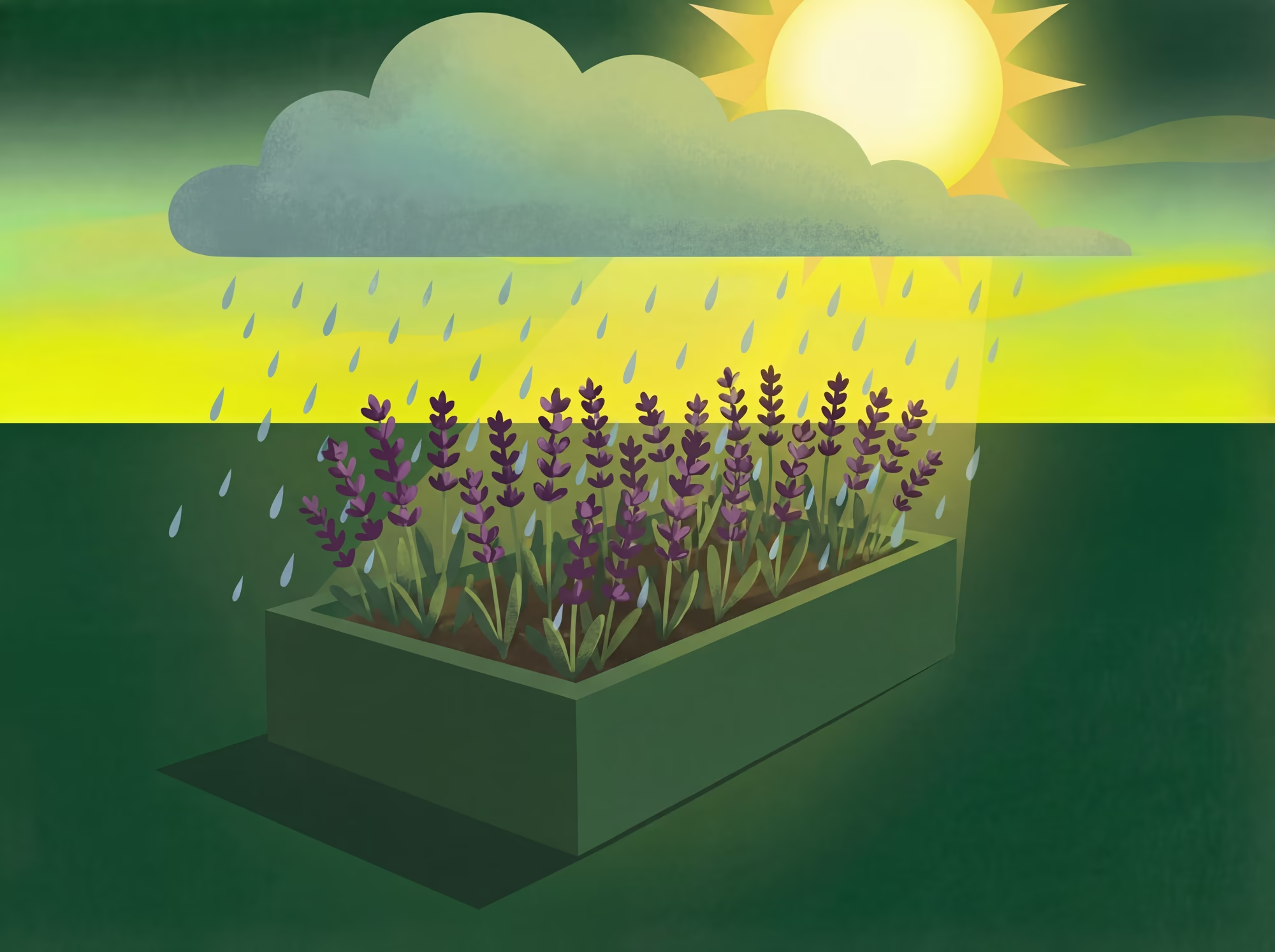
- Lavender (Lavandula stoechas) is the quintessential beginner plant for Southern California. It blooms profusely in spring and summer, smells incredible, and thrives on neglect. Full sun, good drainage, and almost no supplemental water once established. The only way to harm lavender is to overwater it.
- Coast Rosemary (Westringia fruticosa) is the most versatile structural shrub you can plant. Use it as a hedge, a foundation planting, a border, or a standalone specimen. It takes pruning gracefully, tolerates salt spray, and produces delicate lavender-white flowers from late fall through spring.
- Red Yucca (Hesperaloe parviflora) delivers arguably the highest reward-to-effort ratio in the entire plant kingdom. Coral flower stalks bloom from spring through fall, hummingbirds love it, and it needs zero supplemental water once established. It has no sharp spines, making it family-safe.
- Society Garlic (Tulbaghia violacea) blooms lilac-purple from spring through fall with minimal care. Deer and gophers avoid it. Both the flowers and leaves are edible. Low to moderate water and full sun.
- Cast Iron Plant (Aspidistra elatior) is the answer for every shady spot in your yard. It survives deep shade, drought, poor soil, and extended neglect. If you have a dark corner where nothing else will grow, Cast Iron Plant will thrive there quietly and handsomely for years.
EXPERT TIP
The fastest way to build confidence as a new gardener is to start with five plants that are nearly impossible to kill. Plant them, water them through the first summer, and watch them establish. By the time those first five are thriving, you will have learned more from observation than any book could teach, and you will be ready to expand with more specialized varieties. The five plants above are that starting lineup for Orange County.
Should You Choose Native Plants, Adapted Plants, or Both?
One of the most common questions for beginners is whether to go native, stick with adapted ornamentals, or mix the two. Both work beautifully, and combining them gives you the widest range of options for your Yardtopia. You can select native and local plants that are lush and green.
California Native Plants
Native plants are species that occurred naturally in California. They evolved alongside local soils, weather patterns, and wildlife over thousands of years. For Orange County homeowners, natives offer three compelling advantages: most need zero supplemental water once established, they support local wildlife in ways that imported plants cannot, and they create a landscape that looks authentically Southern California.
Cleveland sage fills the air with an intense herbal fragrance. California buckwheat supports dozens of native butterfly species. Toyon produces red winter berries that feed migratory birds. Western redbud erupts in magenta flowers before a single leaf appears in spring. These are not compromise plants. They are some of the most beautiful species you can grow anywhere.
PRO TIP
Native plants follow a different set of rules than traditional landscaping. Many prefer lean soil (no rich compost), no summer irrigation (it actually harms them), and fall planting aligned with winter rains. Learn those rules first, and natives will reward you with the lowest-maintenance landscape possible.
Adapted Plants
Adapted plants are non-native species that thrive in Southern California's Mediterranean climate because their home environment mirrors ours. Plants from Australia (grevillea, kangaroo paw, coast rosemary), South Africa (bird of paradise, cape honeysuckle, society garlic), and the Mediterranean basin (lavender, rosemary, bougainvillea) feel right at home here.
Adapted plants typically offer a broader color palette and a wider range of growth habits than natives alone. They fill roles in the landscape that natives may not: dense hedging, tropical focal points, year-round flowering in areas where native bloom seasons leave gaps.
The Best Approach: Mix Thoughtfully
The most successful landscapes in Southern California combine natives and adapted plants that share the same cultural requirements: low water, good drainage, and compatible sun exposure. A garden with Cleveland sage next to lavender, red yucca beside kangaroo paw, and toyon anchoring a bed of coast rosemary creates a landscape that is both visually rich and genuinely low maintenance. The key rule when mixing is water compatibility: pair plants with similar irrigation needs in the same bed.
GOOD TO KNOW
When shopping at nurseries, look for plants labeled "California Friendly" or "water-wise." Local nurseries and locations such as Roger's Gardens and Armstrong Garden Centers carry strong selections of both natives and adapted ornamentals. UC Master Gardeners of Orange County offer free plant clinics where you can bring questions about specific plants for your yard.
What Should You Plant in Your Front Yard Versus Your Backyard?
Your front yard and backyard offer different sun exposure, soil, and opportunity to bring a wider variety of plants into your Yardtopia. Assessing each space will help you choose plants that work best where you put them. Always confirm HOA guidelines before planting.
Front Yard: Curb Appeal, Low Maintenance, Water Efficiency
Your front yard is the most visible part of your property and typically the hardest to maintain. The best front yard plants are low-water, low-maintenance species that look good year-round without constant grooming.
Structural shrubs create the framework: coast rosemary, grevillea, and leucadendron provide evergreen form in every season. Low perennials and ground covers fill the foreground: lavender, society garlic, and Santa Barbara daisy add color without demanding water. Accent plants provide focal points: a single foxtail agave, a cluster of red yucca, or a well-placed bird of paradise gives the eye a place to land.
QUICK STAT
50 to 75% — The water reduction homeowners can expect when replacing a traditional lawn with structural shrubs, low flowering perennials, and decomposed granite pathways in an Orange County front yard.
Backyard: Livability, Diversity, Personal Expression
Your backyard is where you live outdoors. Plant choices here can serve functional roles as well as aesthetic ones.
- Near the patio and outdoor kitchen: rosemary and basil within arm's reach for cooking, lavender and Cleveland sage where their fragrance drifts across seating areas, a Meyer lemon tree for shade, blossoms, and year-round fruit.
- Along boundaries and fences: privacy plants like cape honeysuckle (which doubles as a hummingbird magnet), pineapple guava (privacy plus edible fruit), or bougainvillea trained on a trellis.
- In open areas: a succulent collection with agave and Echeveria, a pollinator garden with milkweed and California fuchsia, or a fruit tree mini-orchard with citrus, fig, and pomegranate.
Zoning by Purpose
Whether front yard or backyard, organize your planting by zones:
| Zone | Purpose | Plant Characteristics | Examples |
|---|---|---|---|
| Welcome zone | Entry, first impression | Year-round structure, color, fragrance | Lavender, coast rosemary, agave |
| Living zone | Patio, dining, relaxation | Sensory plants, shade, privacy | Citrus, Cleveland sage, bougainvillea |
| Production zone | Edibles, cutting garden | Fruit, herbs, vegetables | Meyer lemon, fig, rosemary, basil |
| Habitat zone | Wildlife, ecology | Pollinator plants, natives, host plants | Milkweed, buckwheat, California fuchsia |
| Low-touch zone | Slopes, borders, parking strips | Drought-tolerant, self-sufficient | Red yucca, Dudleya, deer grass |
What Should You Plant Right Now? A Seasonal Planting Guide for Southern California
Orange County's mild climate allows planting in every month of the year. Here is when to plant what.
- Fall (October through December) is the ideal planting season for most plants in Southern California. Cooler temperatures reduce transplant stress. Winter rains provide free irrigation during the critical early weeks. Plant California natives, drought-tolerant shrubs and perennials, trees, and cool-season vegetables.
- Winter (January through February) remains a strong planting window. Container-grown plants establish well in mild conditions. Bare-root fruit trees (citrus, stone fruit) are available at nurseries and are less expensive than container-grown specimens.
- Spring (March through May) is the widest planting window. Just be aware that spring-planted plants face their first summer sooner, which means more attentive watering during establishment.
- Summer (June through September) is possible but demanding. Water deeply every two to three days for the first month, then transition to a weekly schedule. Avoid planting California natives in summer. Succulents handle summer planting better than most categories.
GOOD TO KNOW
Fall planting gives roots a six-month head start compared to spring planting. A native planted in October enters its first summer with an established root system. A native planted in March enters its first summer still trying to get its roots in the ground. That head start translates directly into better survival rates, faster growth, and less watering for you.
Where Do You Go From Here? Your Plant Category Deep Dives
You now have a framework for choosing the right plants. The next step is exploring the specific plant categories that interest you.
- Plants That Attract Wildlife — Native plants that attract songbirds, lizards, frogs, and beneficial insects to your Orange County backyard, plus a water-wise starter plan.
- Ground Cover Plants — Beautiful lawn alternatives that save water and skip the mower, validated for Southern California.
- Grass Alternatives — Why SoCal homeowners are replacing lawns with low-maintenance alternatives that save water, time, and money.
- Drought Tolerant Landscaping: Soil Preparation — How to test, amend, and prepare your yard's soil foundation before drought-tolerant plants go in.
- Edible Landscaping Ideas — How to blend food-producing plants into a beautiful, water-saving landscape that feeds your family year-round.
- Raised Garden Bed Ideas — Step-by-step guide for building, filling, and planting your first backyard bed with drip irrigation.
- Plants That Repel Bugs — Best plants for natural pest control in Southern California: lavender, rosemary, marigolds, and companion planting tips.
- How to Mulch Your Garden — Best mulch types, depth, and seasonal timing for SoCal landscapes.
PRO TIP
You do not need to commit to a single category. The most compelling landscapes in Orange County combine elements from several: a native sage garden anchored by a fruit tree, bordered by succulents along the driveway, with a shade garden under the oak tree in the corner. The five-question framework works for every plant in every guide. Apply it consistently, and every choice becomes a confident one.
Frequently Asked Questions
What should I plant in my garden as a beginner?
Start with five forgiving, low-water plants that are nearly impossible to kill in Southern California. Lavender, coast rosemary, red yucca, society garlic, and cast iron plant (for shade) give you color, structure, fragrance, and year-round interest while you learn. Match each plant to the sun exposure and water conditions in your yard, and water consistently through the first year to establish roots.
What are the best landscaping plants for Southern California?
The best landscaping plants for Southern California are species adapted to Mediterranean climates: dry summers, mild winters, and modest rainfall. Lavender, bougainvillea, red yucca, coast rosemary, California native sages, and succulents like agave and Echeveria are all proven performers in Orange County's USDA zones 9b through 10b.
What should I plant now in Southern California?
In Orange County, you can plant something in every month of the year. Fall (October through December) is the ideal season for most species, especially California natives. Spring is the widest window. Summer requires more attentive watering but is possible. Winter is excellent for bare-root fruit trees.
What should I plant in the fall in Southern California?
Fall is the best planting season in Southern California. Plant California native shrubs and perennials, drought-tolerant ornamentals, fruit trees, and cool-season vegetables. The cooler temperatures and approaching winter rains reduce transplant stress and give roots months to establish before summer heat.
How do I choose plants for landscaping when I have no experience?
Ask five questions about each planting spot before you buy: how much sun, how much water can you provide, what is the mature size, is it safe for your household, and does it suit USDA zones 9b through 10b. Then start with three to five low-maintenance plants matched to those conditions.
What is the easiest plant to keep alive in Southern California?
Red yucca, cast iron plant, and society garlic are among the most forgiving plants for Orange County. Red yucca blooms for months on zero supplemental water once established. Cast iron plant thrives in the deepest shade with minimal attention. Society garlic blooms reliably through three seasons with almost no care.
What does "right plant, right place" mean?
Right plant, right place means matching every plant's needs for sun, water, soil, temperature, and space to the specific conditions where you plan to put it. When a plant's needs align with what your yard naturally provides, it establishes faster, needs less maintenance, resists pests naturally, and looks better every year.
Your Action Plan
- Map your yard's conditions. Walk your property and note the sun exposure, shade patterns, soil drainage, and existing features in each area. This 30-minute exercise is the foundation of every good plant choice.
- Start with five forgiving plants. Choose one plant for each condition in your yard: a full sun performer, a shade plant, a structural shrub, a flowering perennial, and one accent plant that makes you smile.
- Group by water need. Put thirsty plants together and drought-tolerant plants together. This single decision saves water, reduces maintenance, and keeps every plant in its comfort zone.
- Explore the deep-dive guides. Use the companion articles to find the specific plants that match your goals, whether that is a pollinator garden, a succulent landscape, an edible yard, or a combination of all three.
The yard that welcomes hummingbirds, produces lemons, blooms through every season, and practically takes care of itself starts with choosing the right plants. And now you know how.
Explore plant selection tools, design inspiration, and water-wise rebate programs at yardtopia.com. Your Yardtopia is closer than you think.