Imagine never thinking about your sprinklers again. No more squinting at a clunky dial in the garage, no more guessing how long to run each zone, no more coming home from a long weekend to find the sprinklers ran straight through a rainstorm. Your yard simply gets exactly the water it needs, on its own, while you get on with your life.
That is the quiet luxury of a smart irrigation controller. It is one of the few yard upgrades that gives you something back every single week: time, peace of mind, and a yard that looks cared for without you doing the caring. For SoCal homeowners juggling heat spikes, marine-layer mornings, and the occasional surprise storm, it might be the most useful upgrade in the whole yard.
KEY TAKEAWAYS
- A smart irrigation controller automatically schedules and adjusts your watering based on local weather, soil, and plant needs, so you never touch the timer again
- Most SoCal yards with two or more zones and a working sprinkler or drip system are a strong fit, and many homeowners can install one in a single afternoon
- The upgrade pays you back over time through lower water use, and IRWD offers programs that can offset a meaningful share of the cost for qualifying customers
What is a smart irrigation controller (and why is everyone in SoCal switching)?
A smart irrigation controller is a device that schedules and adjusts your sprinkler or drip system based on local weather, soil moisture, and plant needs, without you having to touch it. In plain terms, it is a timer that thinks for itself. Instead of running the same fixed schedule no matter what the sky is doing, it reads conditions and waters accordingly.
That difference matters more in Southern California than almost anywhere else. Our weather is not steady. A week can swing from a cool, gray marine-layer morning to a 95-degree afternoon, with a rare summer sprinkle in between. A fixed timer cannot see any of that. A smart controller can, which is exactly why so many SoCal homeowners are making the switch.
How a smart controller is different from your old timer
Your old timer does one thing: it runs the schedule you set, forever, until you change it by hand. If you set it in spring and forget it, it keeps watering spring amounts deep into a July heat wave, or right after it rains. A smart controller replaces that guesswork with automatic adjustments, raising and lowering watering as the weather and seasons change.
The result is a yard that gets what it needs without the two classic failure modes of old timers: thirsty, stressed plants in a heat spike, and wasteful overwatering after a storm.
| Old timer | Smart controller | |
|---|---|---|
| Schedule | Fixed, set by hand | Adjusts automatically to weather and season |
| After rain | Keeps running | Skips the cycle |
| Heat spike | Underwaters on the old schedule | Adds water as the heat rises |
| Leaks or broken heads | Run unnoticed for weeks | Flagged by an unusual-flow alert |
| Control | At the dial in the garage | From your phone, anywhere |
Why SoCal weather makes this upgrade especially useful
Southern California's variable weather is precisely the problem a smart controller is built to solve. Marine-layer mornings, sudden inland heat, Santa Ana dry spells, and the occasional downpour all call for different watering, and a fixed timer answers all of them the same way. A weather-aware controller adjusts to each one automatically, which keeps plants healthy and keeps you from being the one standing at the dial every time the forecast turns.
GOOD TO KNOW
A smart irrigation controller is sometimes called a smart sprinkler controller, and the two terms mean the same thing. Both describe a controller that adjusts watering automatically based on real conditions rather than a fixed clock.
What does a smart irrigation controller actually do for your yard?
A smart irrigation controller waters your yard at the right time and in the right amount by reading the weather, adjusting to your plants and soil, catching problems early, and putting control on your phone. Each of those features sounds technical on a spec sheet, but what they really add up to is a yard that takes care of itself.
It reads the weather so you don't have to
A smart controller pulls local weather data and adjusts watering on its own, so it skips a cycle after rain and adds water during a heat spike. You never overwater after a storm, and you never come home to wilted roses because the weather turned hot while you were away. The forecast becomes the controller's job, not yours.
It adjusts to your plants and soil
Once you tell it a little about each zone, such as the plant type, sun exposure, and soil, the controller tailors watering to what each area actually needs. Your shady side yard, your sunny front bed, and your container plants stop sharing one compromise schedule and start getting watered the way each one prefers.
It catches leaks and broken heads before they waste a month of water
Many smart controllers can flag unusual flow, which often means a broken sprinkler head or a leak, and alert you before it quietly runs up your bill for weeks. Catching a stuck valve in a day instead of a billing cycle is the kind of thing you only appreciate after it saves you once.
It puts your sprinklers on your phone
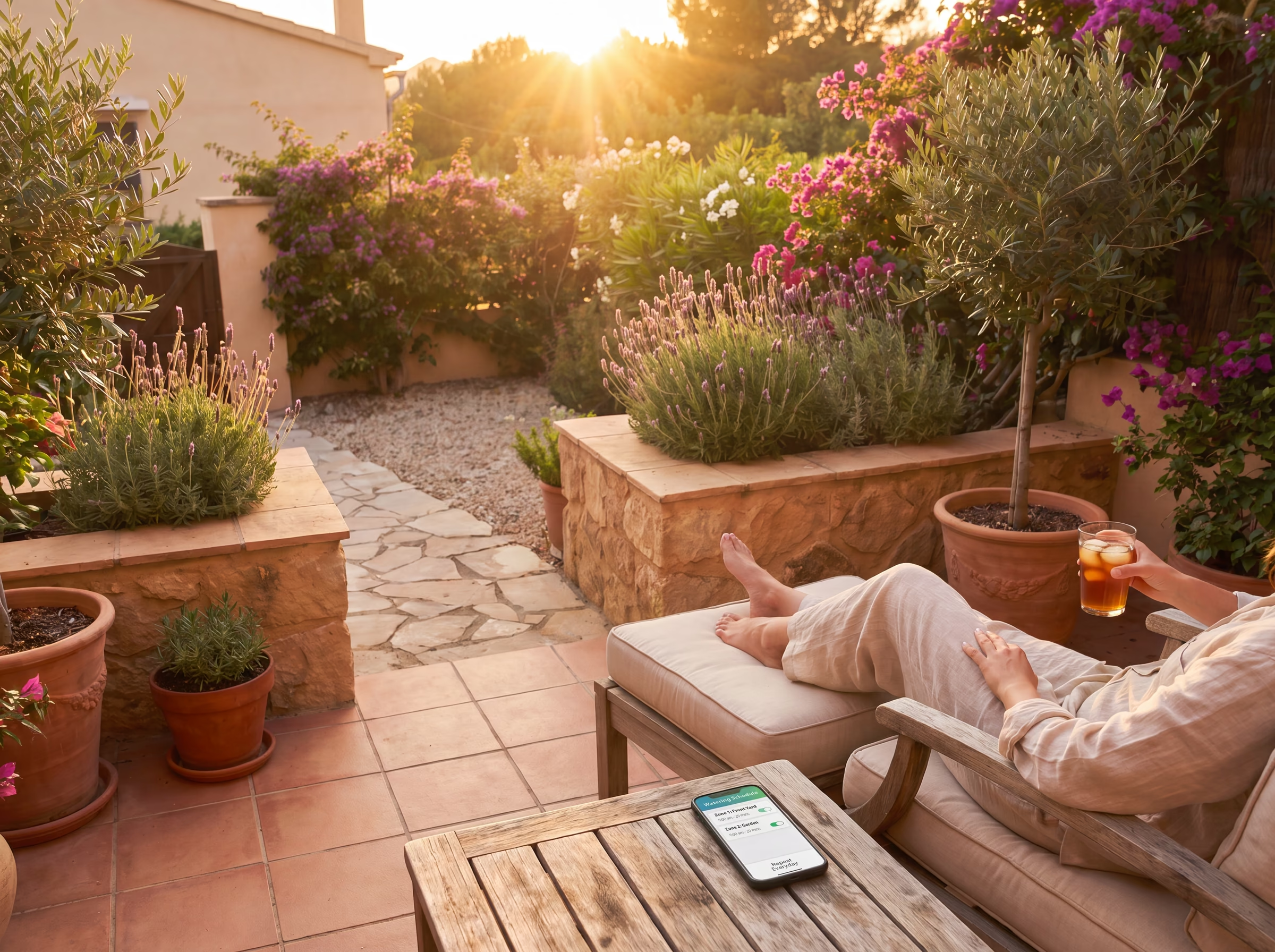
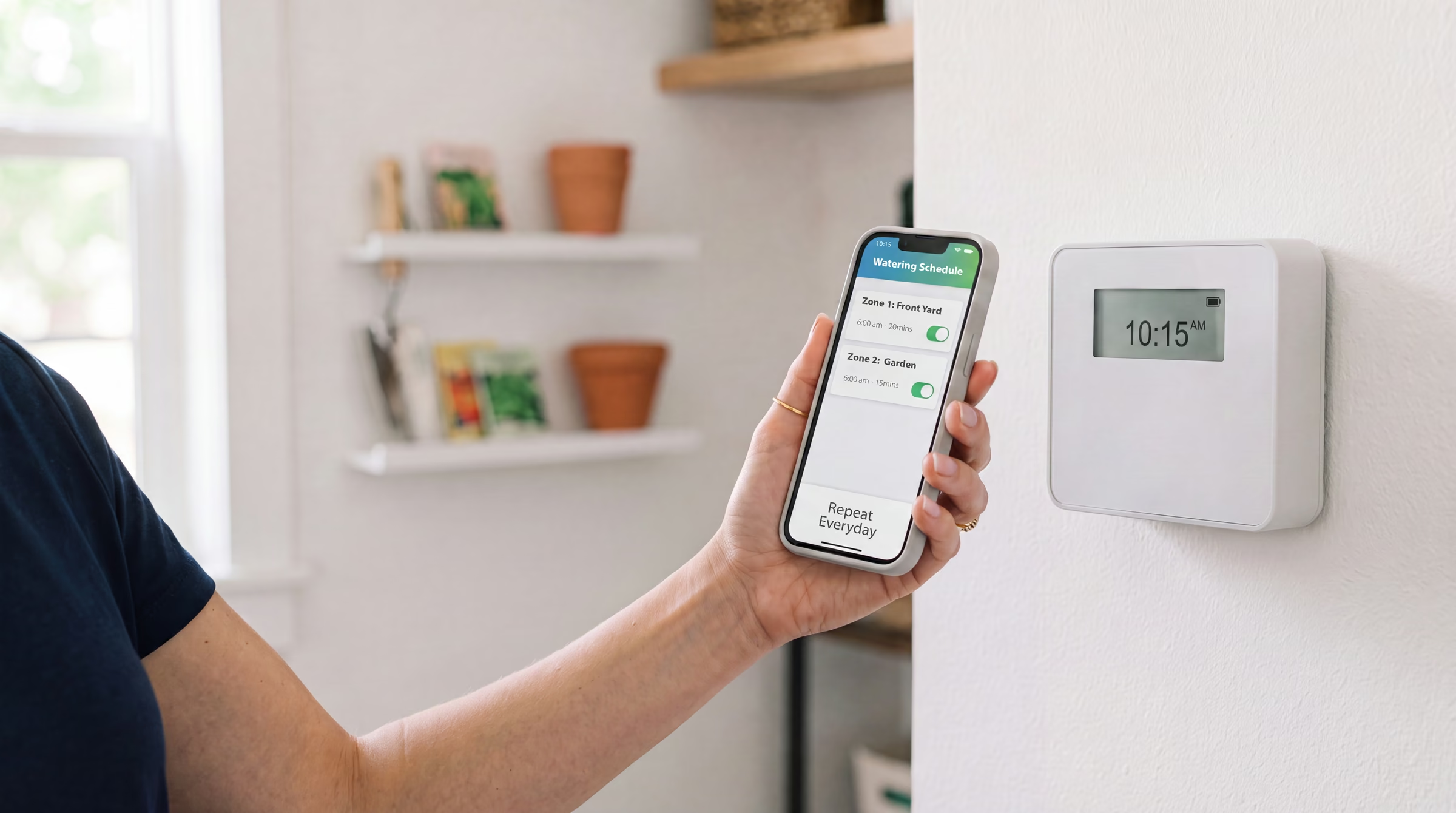
A smart controller lets you check and adjust your watering from your phone, whether you are on the couch or at a vacation rental three states away. Forgot to pause the system before a trip? Two taps. Want to run an extra cycle for new plants? Done from the kitchen. The convenience comes first, and the savings follow.
QUICK STAT
Around 50% of outdoor water is wasted by inefficient watering on average, according to the EPA WaterSense program, much of it from fixed timers running when plants do not need it.
How do you know if your SoCal yard is a good fit for a smart controller?
Most SoCal yards with two or more irrigation zones and a working sprinkler or drip system are a strong fit for a smart controller. If you already water with an automatic system, upgrading the brain of that system is usually straightforward and worthwhile. There are a few cases where the math changes, though, and it is worth being honest about them.
The yards that benefit most
Yards with variety get the most out of a smart controller: mixed plant zones, slopes, multiple sun exposures, or a combination of lawn, beds, and containers. The more different watering needs your yard has, the more a smart controller can do that a single fixed schedule never could. A large or complex yard often sees the biggest improvement in both plant health and water use.
Smaller yards and renters
A smaller, simpler yard still benefits, though the upgrade is more modest, and renters have options too. If you have a single zone or a compact space, a basic weather-based controller or even a simple hose-timer-style add-on can deliver much of the convenience without a full system. Renters who cannot alter the home's wiring can look for plug-in or battery-powered controllers that move with them.
GOOD TO KNOW
A smart controller swap changes nothing about how your yard looks, so it almost never triggers HOA review the way a bigger landscape project might. The controller lives in the garage or on a wall, and your yard simply looks well cared for, which keeps this an easy upgrade even in HOA neighborhoods.
What your existing irrigation needs to look like first
A smart controller works best on top of a healthy system, so it helps to walk your zones first and fix any obviously broken or misaimed heads. The controller manages the schedule brilliantly, but it cannot repair a cracked line or a head spraying the sidewalk. A quick tune-up of the existing system, especially if you have drip lines, lets the new controller do its best work from day one.
“Summertime typically means your sprinklers are going full-throttle, so make sure they are working as efficiently as possible. Maintenance and routine station testing are key—irrigation systems working properly one day can spew water wasting geysers the next.”
Juan G., Sr. Water Efficiency Specialist, IRWD
What features should you look for in a smart irrigation controller?
Look for a WaterSense-certified controller with enough zones for your yard, weather-based or soil-moisture-based scheduling, a solid app, and an enclosure that suits where you will mount it. You do not need to memorize brand names or chase the flashiest model. A short feature checklist gets you to the right choice.
WaterSense certification: the one box to actually check
WaterSense certification is the single most useful filter, so look for it first and let it narrow the field. WaterSense is a certification from the EPA, not a brand, and it signals that the controller has been independently tested to water efficiently. Checking for the WaterSense label does most of the quality screening for you in one step.
Number of zones and how to count yours
Match the controller's zone count to your yard, and count your zones before you shop. A zone is each separately controlled watering area, usually one valve, such as the front lawn, the back beds, or the side-yard drip line. Count how many your current timer runs, then choose a controller that handles at least that many, with a little room to grow.
PRO TIP
Open your existing timer and look at how many station or zone numbers are wired in. That number is your minimum. Buying a controller with one or two extra zones leaves room to add a bed or a drip line later without replacing the whole unit.
Weather-based or soil-moisture-based scheduling
Both approaches work well, and for most SoCal yards a weather-based controller is the simplest, most reliable default. Weather-based models adjust using local forecast and climate data. Soil-moisture-based models use an in-ground sensor to water based on actual soil conditions, which can be excellent but adds a sensor to install and maintain. When in doubt, weather-based is the easy, low-fuss choice here.
App, voice assistant, and integration features
Choose an app you find genuinely easy to use, because that is the part you will touch most. Most smart controllers offer phone apps, and many connect to voice assistants and smart-home systems. These are convenience features rather than necessities, so weigh them by how you actually live rather than by the length of the feature list.
Indoor versus outdoor mounting
Pick a controller rated for where you will actually install it. Many SoCal homes run irrigation from a garage wall, where a standard indoor-rated unit is perfect. If your controller will live outside and exposed, choose a weather-resistant outdoor-rated enclosure so it holds up to sun and the elements.
What does a smart controller cost, and what does IRWD do to help?
Smart irrigation controllers typically cost between one hundred and five hundred dollars depending on features and zone count, and IRWD offers programs that can offset a meaningful portion of that cost for qualifying customers. The price is modest for an upgrade you use every week, and the local support makes it easier still.
Typical price range by feature tier
Expect to spend somewhere in the one-hundred to five-hundred-dollar range, with the price tracking features and zones. Simpler weather-based controllers with fewer zones sit at the lower end. Higher-zone-count units with soil sensors, premium apps, and outdoor-rated enclosures sit at the top. Most homeowners land comfortably in the middle, and even the top of that range is small next to a yard's long-term value.
| Tier | Typical price | What you get |
|---|---|---|
| Entry | $100 to $150 | Weather-based scheduling, fewer zones, basic app control |
| Mid-range | $150 to $300 | More zones, flexible scheduling, a robust app, voice-assistant support |
| Premium | $300 to $500 | High zone counts, soil-moisture sensing, outdoor-rated enclosure |
How IRWD helps with the cost
IRWD offers a rebate that can offset a meaningful portion of the upfront cost of a qualifying smart controller for residential customers. Because terms and amounts are updated periodically, the current details and eligibility live on IRWD's rebate program page, which is the best place to confirm what applies to you before you buy. It is a genuine value-add, and it is worth a look once you have chosen the controller that fits your yard.
“The online rebate application makes it really easy. You can track the progress of your application and IRWD does a great job of keeping you in the loop and helping you along the way.”
Linda H., Homeowner
The payback math
The upgrade tends to pay you back, because the combination of lower water use over the controller's life and any available offset often covers the cost within a season or two. Think of it the way you would a more efficient appliance: a small upfront step that quietly works in your favor every billing cycle afterward. The point is not guilt over water, it is simply that the smart choice also happens to be the economical one.
How is a smart irrigation controller installed in a SoCal home?
Most SoCal homeowners can install a smart irrigation controller in a single afternoon by removing the old timer, mounting the new controller, and reconnecting the existing zone wires. It is a swap, not a construction project, and the existing wiring usually transfers over one labeled wire at a time.
DIY versus professional installation
Many people handle the swap themselves, and a clear path makes it approachable. If your current timer is straightforward, replacing it is largely a matter of labeling the existing wires, transferring them to the new unit, mounting it, and connecting power and Wi-Fi. The apps walk you through setup step by step.
That said, call a professional if your system has complex zones, valve or wiring issues, or if you want an outdoor-rated unit mounted and weatherproofed. There is no prize for forcing a tricky install. A pro can have it done quickly and correctly.
Typical install timeline
A simple controller swap usually takes an afternoon, often a couple of hours start to finish. Most of the time goes to carefully labeling and transferring wires and then walking through the app setup. Once it is mounted and connected, the ongoing time cost is close to zero.
What to do with your old timer
Once the new controller is running, you can simply retire the old timer. Disconnect it, and if it still works, set it aside or recycle it responsibly through a local e-waste program. There is no need to keep it wired in as a backup once the smart controller is handling the schedule.
EXPERT TIP: David Gomez, Water Efficiency Specialist, IRWD
Before you disconnect anything, take a clear photo of the old timer with all the wires still attached and labeled. If you ever get turned around during the swap, that one photo is your map back. It takes ten seconds and saves a lot of second-guessing.
How do you get the most out of a smart controller once it is installed?
Spend the first week watching a full watering cycle, fixing any broken heads, and entering basic plant and zone information, then let the controller take over from there. The setup you do in the first few days is what makes the whole set-it-and-forget-it promise actually come true.
A first-week setup checklist
In the first week, do three simple things, then you can mostly leave it alone:
- Run a full manual cycle and walk the yard while it runs, watching for broken or misaimed heads.
- Enter accurate details for each zone: plant type, sun exposure, and soil.
- Let the controller build its schedule, then check that each zone is watering as expected.
PRO TIP
Watch at least one complete cycle run zone by zone before you trust the schedule. It is the fastest way to catch a head spraying the fence or a zone that is shorter or longer than it should be, and it only has to be done once.
Seasonal adjustments, or letting the controller handle them
The best part is that a weather-based controller adjusts through the seasons on its own, so you rarely need to step in. As summer fades to fall, it scales watering back automatically. IRWD's seasonal watering schedule and the UC Master Gardeners of Orange County (part of UC Agriculture and Natural Resources) both publish local watering guidance that makes a useful sanity check if you ever want to confirm the controller is in a sensible range, but for the most part the seasonal thinking is no longer your job.
When to check in, and when to ignore it
Plan to glance at the app once a month and otherwise leave it be. A quick monthly look confirms everything is running and lets you catch any alerts, and beyond that, ignoring it is the whole point. A good smart controller earns its keep precisely by being something you stop thinking about.
A smarter yard, with less weekly thinking
Here is what all of this really buys you: a yard that quietly takes care of itself. The sprinklers run when they should and rest when they should not. Your plants look cared for through the hottest weeks of summer. You get a few weekends back, and you stop carrying around that low-grade worry about whether the system is running while you are away.
A smart irrigation controller turns your sprinkler system into something you barely think about, while using less water than your old timer ever did. That is the rare upgrade that makes your life easier and your yard healthier at the same time.
Whenever you're ready, the resources are here to make it simple. Take a look at what to plant in July in SoCal for plants that pair beautifully with efficient watering, explore IRWD's rebate program to see what support you qualify for, and try IRWD's SimplyScapes tool when you are ready to imagine the bigger picture. Your yard is ready to start thinking for itself. All you have to do is let it.