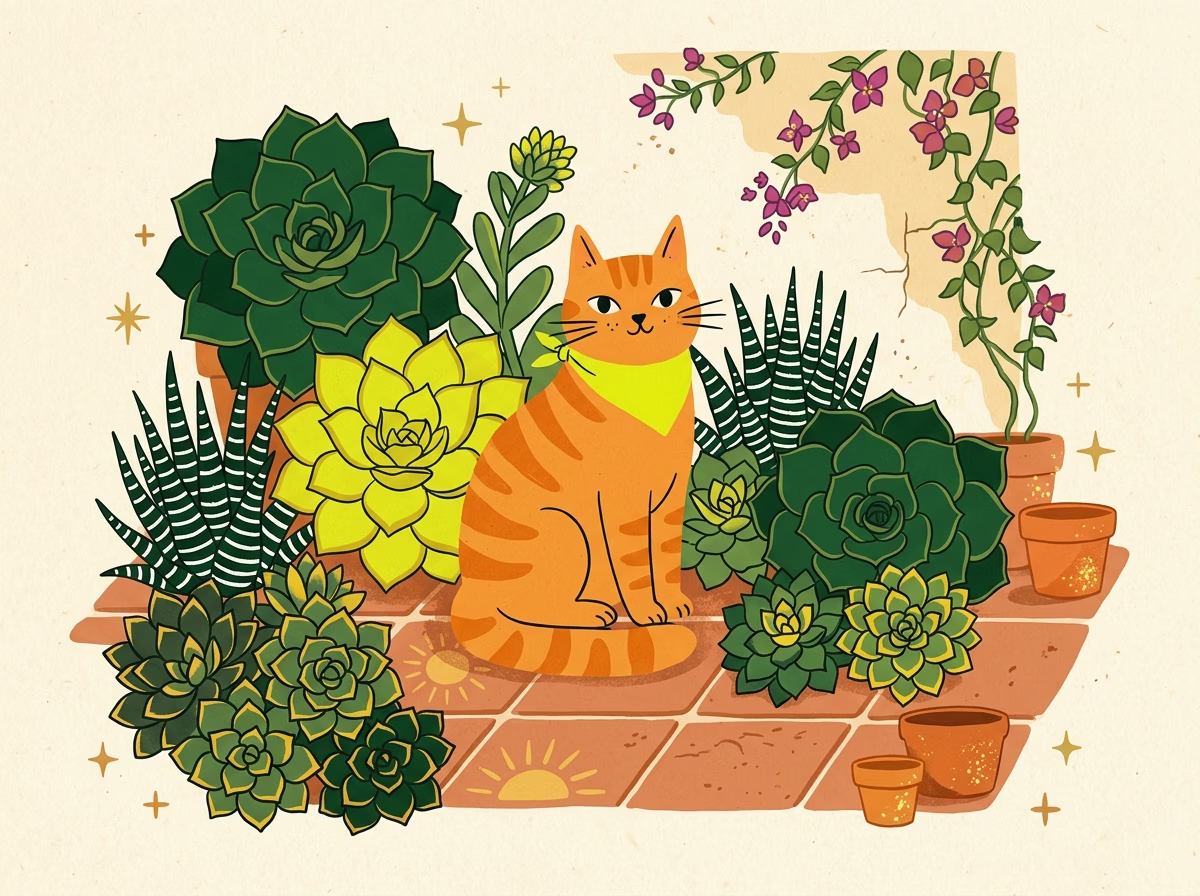
Every plant in your garden is a choice. For cat owners in Southern California, the right choices keep your yard beautiful, water-wise, and safe for the most curious member of your household.
KEY TAKEAWAYS
- True lilies (Lilium and Hemerocallis species) are the single most dangerous plant for cats in Southern California. Even a small amount of pollen groomed from fur can cause acute kidney failure. If you have a cat, every lily in your yard should be removed immediately.
- Many popular Southern California succulents, including aloe vera, jade plant, and kalanchoe, are toxic to cats, while others like echeveria, haworthia, and hens-and-chicks are completely safe. Knowing the difference matters in a region where succulents are in nearly every yard.
- The best cat-safe plants for our climate are also drought-tolerant California natives and Mediterranean species that qualify for IRWD water-wise rebates. A cat-safe yard and a water-wise yard are often the same yard.
A Yardtopia garden built around a cat is one of the more satisfying design challenges there is. They claim every warm surface, investigate every new planting, and groom themselves constantly which means the plants you choose genuinely matter. Our climate supports a long list of beautiful, cat-safe plants that thrive on minimal water and look exactly like the garden you had in mind.
Worth knowing before you plant: cats interact with the garden differently than dogs do. They don't need to chew through a plant to be affected. Brushing against certain flowers and then grooming the pollen from their fur is enough.
This guide covers everything a Southern California cat owner needs: which plants are toxic, which succulents are safe and which aren't, and how to build a garden that works beautifully in zones 9b through 10b for you and your best friend.
Why Are Lilies the Most Dangerous Plant for Cats?
True lilies are the number one plant-related killer of cats, and it is not close. While many plants cause mild gastrointestinal upset if a cat chews on them, true lilies in the Lilium and Hemerocallis genera cause acute kidney failure, a condition that can become fatal within 24 to 72 hours of exposure.
What makes lilies uniquely dangerous is how little it takes. A cat does not need to eat the plant. Brushing against a lily and grooming the pollen from her fur is enough. Drinking water from a vase that held cut lilies is enough. Chewing a single leaf or petal is enough. The toxic compound (still not fully identified by researchers) is present in every part of the plant: flowers, leaves, stems, pollen, and even the water the plant sits in.
The most dangerous species commonly found in Southern California gardens and floral arrangements include:
- Asiatic lilies (Lilium asiaticum) — popular in garden beds for their bold, upward-facing blooms
- Easter lilies (Lilium longiflorum) — widely sold as a seasonal gift plant
- Tiger lilies (Lilium lancigerum) — naturalized in many Southern California gardens
- Daylilies (Hemerocallis species) — extremely common in residential landscaping across Orange County
- Stargazer lilies (Lilium 'Stargazer') — a popular cut flower and garden ornamental
Symptoms appear within 6 to 12 hours of exposure: vomiting, loss of appetite, lethargy, and excessive thirst or urination. Without treatment, kidney failure can develop within 24 to 72 hours. The ASPCA reports that early, aggressive veterinary treatment (IV fluids within 18 hours of ingestion) significantly improves survival rates, but delayed treatment often results in irreversible kidney damage.
GOOD TO KNOW
If you suspect your cat has had any contact with a true lily, including simply brushing against the plant, contact your veterinarian or the ASPCA Animal Poison Control Center at (888) 426-4435 immediately. Do not wait for symptoms to appear. With lily toxicity in cats, the window for effective treatment is measured in hours, not days.
The most important thing a cat owner can do is remove every true lily from your property and avoid bringing cut lilies into your home. This single action eliminates the greatest plant-related threat to your cat's life. Fortunately, Southern California gardens have no shortage of beautiful, cat-safe alternatives that fill the same visual role. Camellias, zinnias, snapdragons, and sunflowers all provide the color and structure that lilies offer, with zero toxicity risk.
Note: "lily" appears in the common names of several plants that are not true lilies and are not nearly as dangerous. Calla lily and peace lily cause oral irritation but not kidney failure. Lily of the valley contains cardiac glycosides and is toxic through a different mechanism. When in doubt, check the ASPCA database by botanical name, not common name.
Which Common Southern California Plants Are Toxic to Cats?
The danger extends well beyond lilies. Several plants that are fixtures of Southern California landscaping pose real risks to cats. Some are life-threatening, while others cause moderate illness. Here is a practical reference organized by severity and how commonly the plant appears in Orange County yards.
| Plant | Toxic Parts | Symptoms in Cats | Severity | Common Uses in Southern California |
|---|---|---|---|---|
| True Lilies (Lilium, Hemerocallis) | All parts, including pollen and water | Kidney failure, vomiting, lethargy, death | Life-threatening | Garden beds, cut flowers, gift plants |
| Sago Palm | All parts, especially seeds | Vomiting, liver failure, seizures, death | Life-threatening | Ornamental focal point |
| Oleander | All parts, including water runoff | Cardiac arrhythmia, tremors, death | Life-threatening | Screening hedge, freeway median |
| Lily of the Valley | All parts | Cardiac arrhythmia, vomiting, seizures | Serious | Shade garden accent |
| Azalea/Rhododendron | All parts | Vomiting, drooling, weakness, coma | Serious | Shade garden ornamental |
| Kalanchoe | All parts | Vomiting, diarrhea, cardiac arrhythmia | Serious | Container succulent, ground cover |
| Aloe Vera | Latex (under skin) | Vomiting, diarrhea, lethargy, tremors | Moderate | Container succulent, medicinal garden |
| Jade Plant | All parts | Vomiting, depression, incoordination | Moderate | Container succulent, indoor/outdoor |
| Bird of Paradise (Strelitzia) | Seeds, fruit | Mild GI upset, nausea | Low-Moderate | Ornamental accent plant |
| Euphorbia (spurges) | Milky sap | Skin irritation, oral pain, vomiting | Moderate | Succulent gardens, ground cover |
| Dieffenbachia | Leaves, stems | Intense oral pain, swelling, drooling | Moderate | Indoor/outdoor container plant |
This is not an exhaustive list. The ASPCA maintains a searchable database of more than 1,000 plants with toxicity ratings for cats, dogs, and horses. Before adding any new plant to your yard, a quick search at aspca.org/pet-care/animal-poison-control takes less than a minute and could prevent a veterinary emergency.
GOOD TO KNOW
Cats interact with plants differently than dogs. Dogs tend to chew and swallow. Cats are more likely to bat at dangling leaves, rub against foliage, chew on grass-like textures, and groom any residue from their fur afterward. This means cats can be exposed to toxic plants without visibly "eating" them, which is exactly why lily pollen is so dangerous. When assessing your yard, think about what your cat touches, not just what she might eat.
Are Succulents Safe for Cats? The Southern California Question
This is one of the most-searched plant safety questions in our region, and for good reason. Succulents are everywhere in Southern California. They thrive in our climate, require almost no water, and show up in nearly every drought-tolerant garden redesign. But the answer is not a simple yes or no. Some succulents are perfectly safe for cats. Others are genuinely toxic.
Here is a clear breakdown of the most common succulents in Southern California yards, sorted by safety.
Cat-Safe Succulents
| Succulent | Botanical Name | Toxicity | Notes |
|---|---|---|---|
| Echeveria | Echeveria spp. | Non-toxic | One of the most popular rosette succulents. Completely safe. |
| Haworthia | Haworthia spp. | Non-toxic | Small, low-growing. Often mistaken for aloe but is cat-safe. |
| Hens-and-Chicks | Sempervivum spp. | Non-toxic | Hardy, spreading ground cover succulent. Fully safe. |
| Burro's Tail | Sedum morganianum | Non-toxic | Trailing succulent, great for hanging baskets or wall planters. |
| Ghost Plant | Graptopetalum paraguayense | Non-toxic | Pale lavender rosettes. Drought-tolerant and cat-safe. |
| Zebra Plant | Haworthiopsis attenuata | Non-toxic | Striped, compact. Popular in container gardens. |
Toxic Succulents to Avoid
| Succulent | Botanical Name | Toxicity | Symptoms |
|---|---|---|---|
| Aloe Vera | Aloe vera | Toxic | Vomiting, diarrhea, lethargy, tremors |
| Jade Plant | Crassula ovata | Toxic | Vomiting, depression, incoordination |
| Kalanchoe | Kalanchoe spp. | Toxic | Vomiting, diarrhea, cardiac arrhythmia |
| Euphorbia (spurges) | Euphorbia spp. | Toxic | Skin irritation, oral pain, vomiting |
| String of Pearls | Senecio rowleyanus | Toxic | Vomiting, diarrhea, lethargy |
The practical takeaway: you do not have to give up succulents to keep your cat safe. You just need to know which ones to choose. Echeveria, haworthia, and hens-and-chicks are available at every nursery in Orange County, cost the same as their toxic counterparts, and are equally drought-tolerant and low-maintenance.
PRO TIP
If your existing succulent garden includes toxic varieties that you want to keep, consider placing them in elevated planters, wall-mounted containers, or hanging baskets that are out of your cat's reach. Cats are climbers, so "out of reach" means truly inaccessible, not just elevated. For ground-level beds, swap toxic succulents for safe alternatives and keep the same aesthetic by mixing echeveria rosettes with haworthia and ghost plant in complementary colors and textures.
What Are the Best Cat-Safe Plants for Southern California Yards?
The cat-safe plant palette for Southern California is extensive, beautiful, and overwhelmingly well-suited to our Mediterranean climate. Many of the safest plants for cats are the same ones that thrive on minimal water, attract pollinators, and create the layered, naturalistic look that defines modern Southern California landscaping.
Here are the standouts, organized by landscape function.

Cat-Safe Shrubs and Accent Plants
Rosemary (Salvia rosmarinus) is one of the most versatile cat-safe plants for Southern California. It is non-toxic, drought-tolerant, evergreen, fragrant, and doubles as a culinary herb. Trailing varieties work as ground cover on slopes. Upright varieties form dense hedges or borders. Rosemary thrives on neglect, handles full sun, and attracts pollinators while deterring several pest insects. Most cats show no interest in rosemary due to its strong scent, which makes it an excellent choice for borders around garden beds.
Camellia (Camellia japonica / C. sasanqua) provides shade-garden color and structure without any toxicity concerns. Camellias bloom in fall and winter when most gardens are dormant, prefer partial shade, and work beautifully in north-facing side yards or under mature trees. They are among the few flowering shrubs that are completely non-toxic to cats.
Bottlebrush (Callistemon spp.) is a striking evergreen shrub or small tree with distinctive red, brush-shaped flowers that attract hummingbirds. It is non-toxic to cats, drought-tolerant once established, and serves well as a screen, accent, or specimen plant. Bottlebrush is widely used in Southern California landscapes and is available at most local nurseries.
Cat-Safe Ground Covers
Creeping thyme (Thymus serpyllum) forms a fragrant, low-growing mat that stays under two inches tall. It is non-toxic to cats, drought-tolerant, and releases a pleasant scent when walked on. It handles light to moderate foot traffic and thrives in full sun with well-drained soil. Creeping thyme works beautifully between stepping stones, along borders, and in areas where you want living ground cover without the water demands of traditional lawn.
Dymondia (Dymondia margaretae), sometimes called silver carpet, creates a flat, dense mat of narrow gray-green leaves. It is non-toxic to cats, requires almost no supplemental water once established, and never needs mowing. Dymondia spreads slowly but forms a remarkably low-maintenance carpet once filled in.
White clover (Trifolium repens) is non-toxic, tough, and fixes nitrogen in the soil. It grows quickly from seed, making it one of the most affordable ground cover options. The trade-off: clover attracts bees when flowering. Mow periodically to remove flower heads if bee activity is a concern.
Cat-Safe Herbs
Cats have a special relationship with herbs. Many cats are drawn to chew on grass-like and herb-like plants, which makes it especially important that your herb garden is free of toxic species. Fortunately, most culinary herbs are cat-safe.
Basil (Ocimum basilicum), cilantro (Coriandrum sativum), sage (Salvia officinalis), and thyme (Thymus vulgaris) are all non-toxic to cats and all thrive in Southern California's warm, dry conditions. An herb garden near the kitchen door adds culinary function and creates a safe browsing zone for a curious cat.
Cat grass (typically wheatgrass, Triticum aestivum) is worth a dedicated mention. Many veterinarians believe cats seek out grass to aid digestion, and providing a safe, intentional source of grass reduces the chances of your cat chewing on less safe plants in the garden. Cat grass grows quickly from seed, thrives in containers, and can be placed near your cat's favorite outdoor lounging spot.
California Natives That Are Cat-Safe
Several California native plants are both non-toxic to cats and perfectly adapted to our climate.
Cleveland sage (Salvia clevelandii) produces fragrant purple flowers and is one of the most water-efficient plants you can grow. It is a hummingbird magnet and requires no supplemental irrigation once established.
California fuchsia (Epilobium canum) delivers brilliant red-orange tubular flowers from late summer through fall. It is a California native that requires almost no supplemental water and is completely non-toxic to cats.
California buckwheat (Eriogonum fasciculatum) provides year-round structure with its clusters of white-to-pink flowers that age to a warm rust color. It supports native pollinators and is drought-tolerant to an extreme degree.
Deer grass (Muhlenbergia rigens) adds graceful, arching texture and movement to the garden. This native bunch grass is non-toxic, drought-tolerant, and provides visual interest in all seasons.
Manzanita (Arctostaphylos spp.) offers sculptural, reddish-brown bark and small evergreen leaves. It is one of the toughest California natives, thriving on rocky slopes and in poor soil with virtually no supplemental water.
These plants serve double duty in a cat-safe yard: they are safe for cats, they support local pollinators and wildlife, and many are eligible for IRWD turf replacement rebates when used as part of a lawn-to-landscape conversion. For a deeper dive into California natives for your garden, explore the Yardtopia Plants 101 series.
Cat-Safe Flowers
If color is what you are after, the options are plentiful.
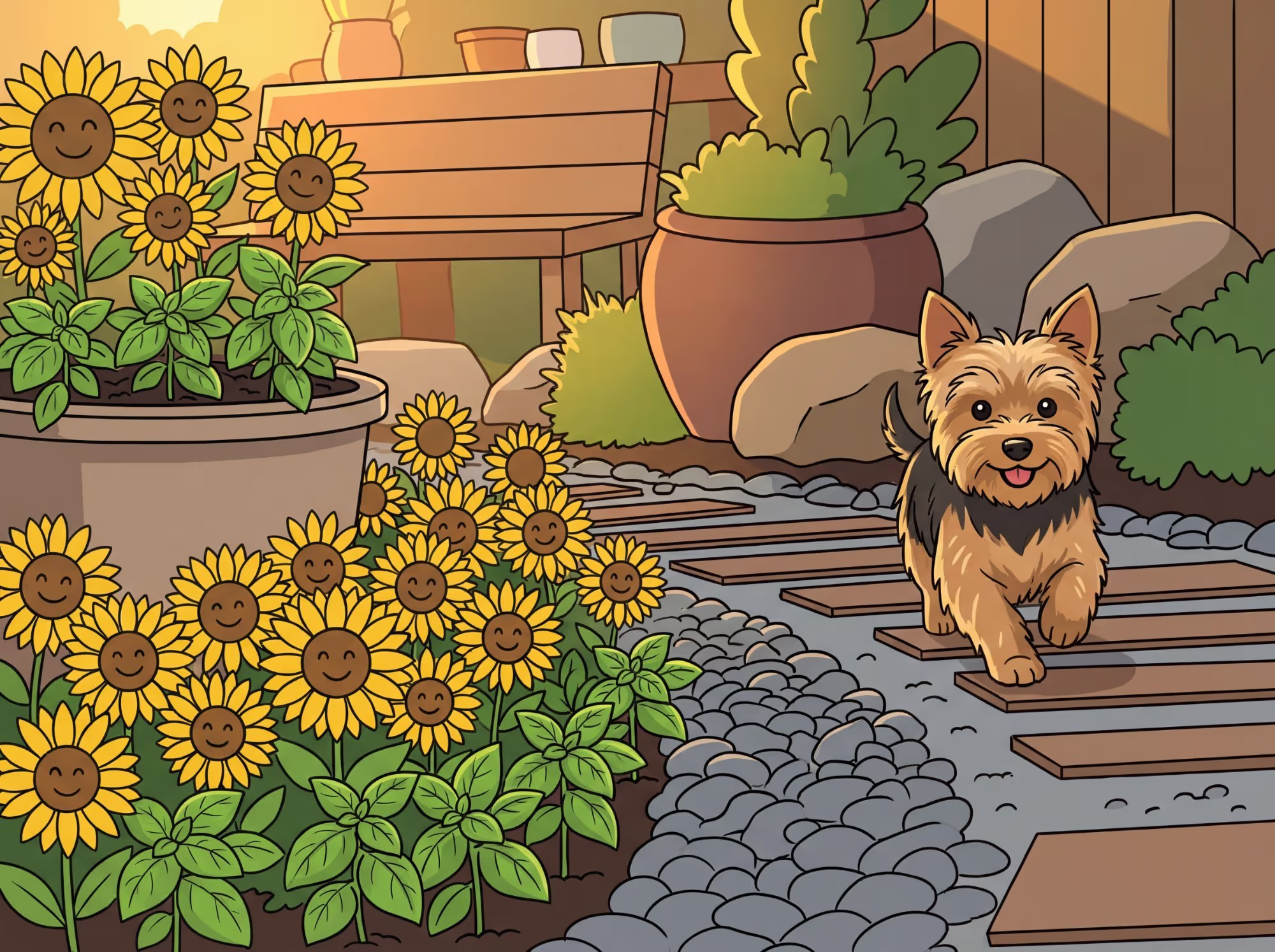
Sunflowers (Helianthus annuus) are non-toxic, fast-growing, and bring cheerful height and drama to any garden bed. Zinnias (Zinnia elegans) provide long-lasting, vibrant blooms through the warm months and are completely safe for cats. Snapdragons (Antirrhinum majus) add vertical interest and bloom reliably in Southern California's mild winters and springs. Marigolds (Tagetes spp.) are non-toxic to cats (despite a common misconception) and provide continuous color while helping deter certain garden pests. Petunias (Petunia spp.) are safe, versatile, and bloom prolifically in containers, beds, and hanging baskets.
GOOD TO KNOW
The best substitute for lilies in a cat-owner's garden is the camellia. Like lilies, camellias produce large, showy blooms in a range of colors. Unlike lilies, they are completely non-toxic to cats. Camellias bloom in fall and winter, filling the color gap when most other plants are dormant, and they prefer the partial shade that characterizes many Southern California side yards. For a cut flower alternative, sunflowers and snapdragons make beautiful, cat-safe arrangements.
How Do You Plant Specifically for Cats?
Dogs use the yard for running, playing, and patrolling. Cats use the yard for stalking, lounging, climbing, and chewing. Designing for a cat means thinking about what cats actually want from an outdoor space, and then providing it with safe plants.
Cat Grass and Wheatgrass
Many cat owners find that providing a dedicated source of safe grass dramatically reduces their cat's interest in chewing on other garden plants. Cat grass (wheatgrass) is the most popular option. It grows from seed in 7 to 10 days, thrives in containers, and can be placed on a patio, near a cat door, or alongside your cat's favorite outdoor perch.
To maintain a continuous supply, plant a new pot every two to three weeks and rotate. Wheatgrass grows quickly but also declines quickly, so a rotation schedule keeps fresh grass available year-round. In Southern California's climate, cat grass grows outdoors in all seasons, though it may need afternoon shade in the hottest summer months.
Catnip and Catmint
Catnip (Nepeta cataria) is the classic cat-attractant plant. Roughly 50 to 70 percent of cats exhibit the well-known "catnip response" (rolling, rubbing, euphoric behavior) when exposed to the plant's volatile compound nepetalactone. Catnip grows easily in Southern California, preferring full sun and well-drained soil. It is drought-tolerant once established and produces small lavender flowers that attract pollinators.
Catmint (Nepeta x faassenii) is a close relative that serves better as a landscape plant. It forms a neater, more compact mound than catnip, produces showier blue-purple flower spikes, and blooms from spring through fall with minimal water. Catmint is also attractive to cats, though typically less intensely than true catnip. It works well as a border plant, path edging, or mass planting.
Valerian
Valerian (Valeriana officinalis) affects cats similarly to catnip but through a different compound (actinidine). Cats that do not respond to catnip often respond to valerian. The plant grows well in partial shade, produces clusters of small white or pink flowers, and is completely non-toxic. It does have a strong, earthy scent that some people find unpleasant, so place it away from seating areas.
Designing a Cat Garden Zone
A dedicated cat-friendly area does not need to be large. A 4-by-6-foot section near your cat's favorite outdoor access point, planted with cat grass, catnip or catmint, and a few safe browsing plants, creates an intentional destination that keeps your cat engaged and away from ornamental beds where more delicate (or potentially less-safe) plants grow.
Include a warm, elevated surface for lounging. Cats gravitate toward flat rocks, low walls, or wooden platforms that absorb morning sun. Position the cat garden zone where it catches eastern sun and is protected from afternoon wind. Add a nearby source of moving water, such as a small bubbler fountain, and you have created a space your cat will prefer over any other part of the yard.
PRO TIP
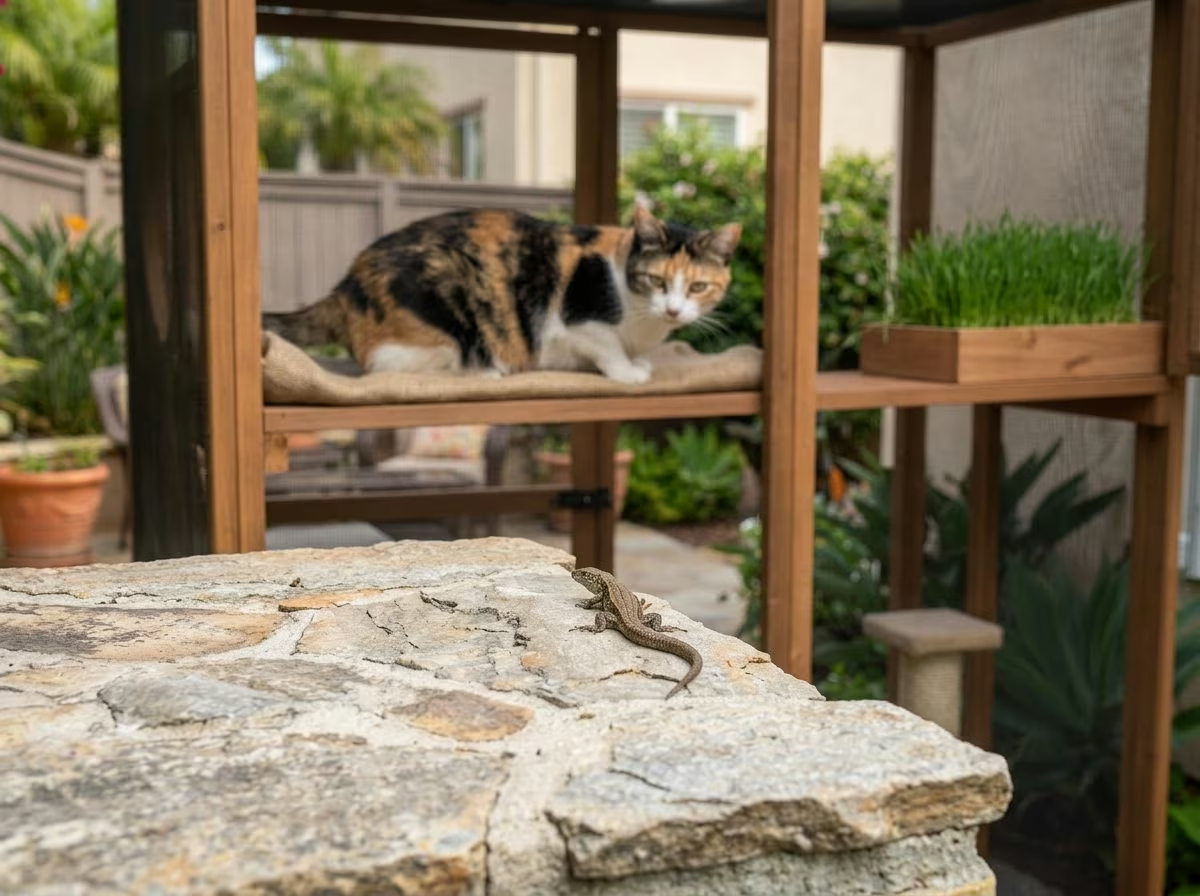
If your cat has outdoor access and you are building or considering a catio (enclosed outdoor cat space), plant the interior or perimeter with cat grass, catmint, and safe succulents like echeveria. A catio with intentional plantings gives your cat the sensory richness of being outdoors while keeping her completely contained and away from any toxic plants elsewhere in your landscape. For detailed catio design guidance, see our upcoming Yardtopia guide on catios and outdoor enclosures.
How Do You Audit Your Yard for Cat Safety?
The most effective approach to cat-proofing your garden is a systematic walk-through, plant by plant. Here is a practical process.
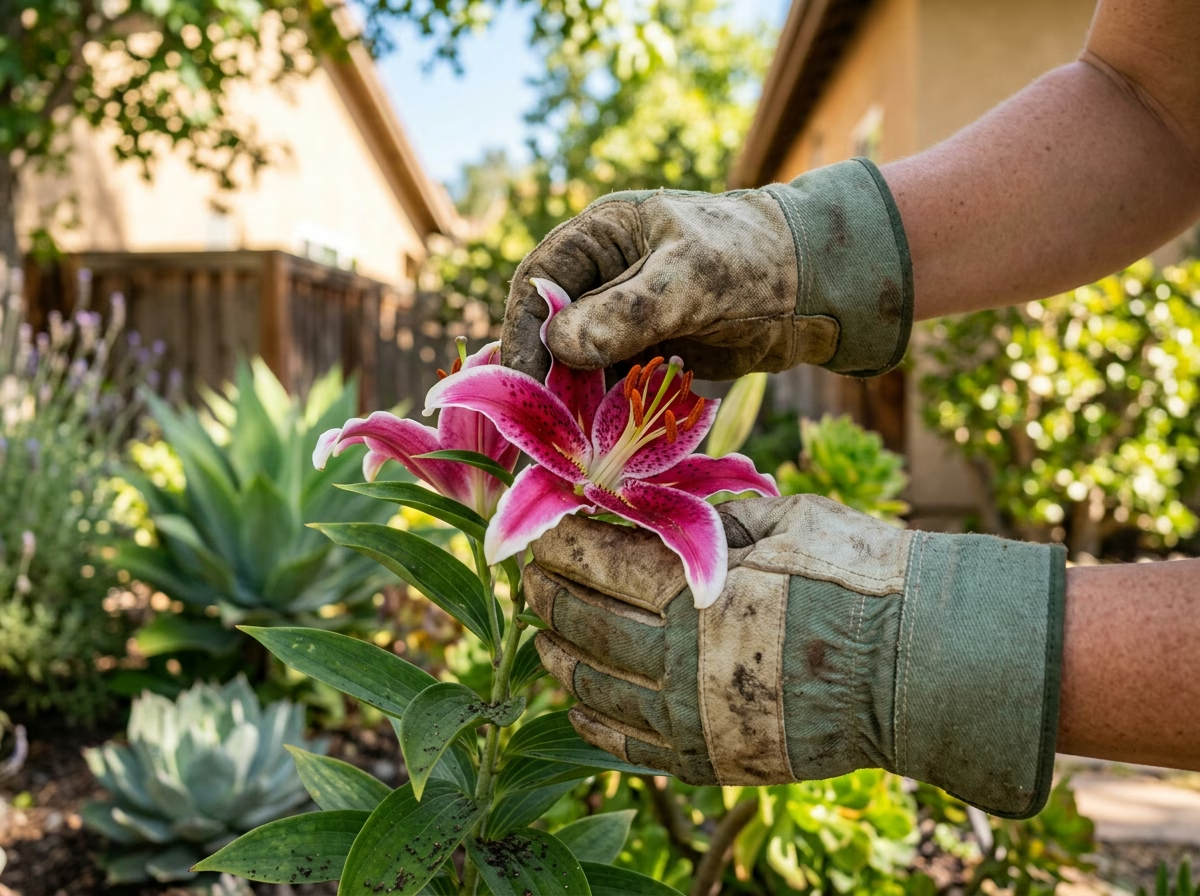
Step 1: Identify every plant in your yard. Walk the perimeter and beds with a plant identification app (PlantSnap, PictureThis, or iNaturalist all work well). Photograph anything you cannot identify by sight.
Step 2: Check each plant against the ASPCA database. Search by botanical name for the most accurate results. Common names can be misleading: "lily of the Nile" (Agapanthus) is a different plant with different toxicity than "lily of the valley" (Convallaria majalis), which is different again from true lilies (Lilium).
Step 3: Prioritize removal. Life-threatening plants (true lilies, sago palm, oleander) should be removed immediately. Moderately toxic plants (aloe, jade, kalanchoe) can be relocated to areas inaccessible to your cat or replaced at your own pace. Mildly toxic plants (bird of paradise) may be acceptable depending on your cat's behavior and access patterns.
Step 4: Replace with cat-safe alternatives. Use the plant lists in this guide to find safe substitutes that fill the same design role. In most cases, the cat-safe alternative is equally beautiful, equally drought-tolerant, and costs the same at the nursery.
Step 5: Save the ASPCA hotline number. Program (888) 426-4435 into your phone. The ASPCA Animal Poison Control Center is staffed 24 hours a day, 365 days a year, by veterinary toxicologists. There is a consultation fee per case, but the service can save your cat's life.
GOOD TO KNOW
When removing toxic plants, wear gloves and avoid composting the material in areas your cat can access. Oleander sap can irritate human skin, and sago palm seeds retain their toxicity even after the plant is removed. Bag toxic plant material and dispose of it in your regular waste collection rather than your green waste bin.
What Is the IRWD Connection for Cat Owners?
Many cat-safe California natives are also among the best plants for water-wise landscaping, and several are eligible for IRWD rebate programs. This is not a coincidence: California native plants evolved without the toxic defense compounds that many imported ornamentals rely on, making them naturally safer for local wildlife and pets alike.
IRWD's turf removal rebate currently offers $2 per square foot for replacing traditional lawn with approved water-wise alternatives. Many of the cat-safe ground covers and native plants listed in this guide qualify, meaning a transition to a cat-safe yard can be partially funded by rebate savings.
Cat-safe, rebate-eligible plants include Cleveland sage, California fuchsia, California buckwheat, deer grass, manzanita, creeping thyme, and dymondia. These plants require minimal supplemental irrigation once established, support local pollinators, and create the layered, naturalistic aesthetic that defines modern Southern California landscaping.
Before starting a turf removal project, apply for pre-approval through your IRWD rebate program. Most rebate programs require approval before work begins. Visit Yardtopia.com for current program details, eligibility requirements, and to explore design ideas that combine water efficiency with pet safety.
Your yard can be three things at once: beautiful, water-wise, and completely safe for your cat. In Southern California's climate, those goals are naturally aligned. Building your Yardtopia with cat-safe, drought-tolerant plants is not a compromise. It is the best version of all three.
Frequently Asked Questions
Are spider plants toxic to cats?
Spider plants (Chlorophytum comosum) are non-toxic to cats. They are listed as safe by the ASPCA. However, many cats are strongly attracted to spider plants and will chew on the dangling leaves and offshoots. While ingestion is not toxic, eating large amounts of any non-food plant material can cause mild vomiting or digestive upset. If your cat is an aggressive chewer, consider hanging spider plants out of reach.
Are snake plants toxic to cats?
Yes. Snake plants (Dracaena trifasciata, formerly Sansevieria trifasciata) are toxic to cats. They contain saponins that can cause nausea, vomiting, and diarrhea if ingested. While snake plant toxicity is generally not life-threatening, it does cause real discomfort and warrants veterinary attention. Cat-safe alternatives with a similar upright, architectural look include ponytail palm (Beaucarnea recurvata) and parlor palm (Chamaedorea elegans).
Is lavender safe for cats?
Lavender (Lavandula spp.) is listed as toxic to cats by the ASPCA. The plant contains linalool and linalyl acetate, which can cause nausea, vomiting, and loss of appetite if ingested. Most cats avoid lavender due to its strong scent, so proximity is rarely a problem in an outdoor garden setting. However, if your cat tends to chew on plants, it is safer to choose cat-safe fragrant alternatives like catmint or rosemary.
Is aloe vera toxic to cats?
Yes. Aloe vera is toxic to cats. The latex compound (aloin) found just under the skin of aloe leaves can cause vomiting, diarrhea, lethargy, and tremors in cats. While the inner gel is less toxic, the plant should be kept out of reach of cats or replaced with a cat-safe succulent like haworthia, which looks similar to a small aloe but is completely non-toxic.
Are jade plants toxic to cats?
Yes. Jade plants (Crassula ovata) are toxic to cats. Ingestion can cause vomiting, depression, and incoordination. The exact toxic compound has not been identified, but the ASPCA lists jade as toxic to both cats and dogs. Replace jade with echeveria or ghost plant for a similar rosette succulent aesthetic without the toxicity risk.
What flowers are safe for cats in an outdoor garden?
Sunflowers, zinnias, snapdragons, marigolds, petunias, and camellias are all non-toxic to cats and all grow well in Southern California. These flowers provide season-long color and work in beds, borders, and containers. Avoid lilies, oleander flowers, azaleas, and chrysanthemums, all of which are toxic to cats. When purchasing cut flowers for indoor arrangements, confirm they contain no lilies, including as filler greenery.
Can I keep toxic plants if I have an indoor-only cat?
Indoor-only cats are not exposed to outdoor garden plants, but many common houseplants are the same species found in outdoor landscapes. Aloe, jade, snake plant, dieffenbachia, and pothos are popular houseplants that are toxic to cats. If your cat is strictly indoors, the indoor plant selection matters more than the outdoor garden. For outdoor-access cats, audit both your indoor and outdoor plants for safety.
What is the ASPCA poison control number for cats?
The ASPCA Animal Poison Control Center hotline is (888) 426-4435. It is staffed 24 hours a day, 365 days a year, by board-certified veterinary toxicologists. There is a consultation fee per case. Save this number in your phone alongside your regular veterinarian's number and the nearest emergency veterinary hospital. For online reference, the ASPCA Toxic and Non-Toxic Plants database is searchable at aspca.org.
Are California native plants safe for cats?
Many California native plants are non-toxic to cats, including Cleveland sage, California fuchsia, California buckwheat, deer grass, and manzanita. These plants are adapted to our climate, require minimal water, and support local pollinators. However, not all natives are safe: some species have not been thoroughly studied for feline toxicity. Always check the ASPCA database by botanical name before adding any plant to a yard where cats have access.
How do I stop my cat from chewing on garden plants?
Providing a dedicated source of cat grass (wheatgrass) is the most effective way to redirect your cat's chewing instinct. Cats seek out grass-like plants for digestive reasons, and a fresh pot of cat grass near your cat's outdoor access point satisfies that drive. Catmint and catnip also redirect attention away from ornamental plants. For persistent chewers, consider a catio or enclosed garden area where only cat-safe plants are accessible.
A cat-safe garden in Southern California is not a stripped-down version of a regular garden. It is a better one. The plants that are safest for cats — California natives, Mediterranean herbs, safe succulents, and tough ornamental shrubs — are the same ones that thrive in our climate with minimal water and maximum visual impact. The one non-negotiable action: remove every true lily from your property. That single change eliminates the greatest plant-related threat to your cat's life.
Your next steps:
- Walk your yard and identify every plant using a plant ID app and the ASPCA database. Remove true lilies immediately and flag other toxic plants for replacement.
- Swap toxic succulents (aloe, jade, kalanchoe) for cat-safe alternatives (echeveria, haworthia, hens-and-chicks) that provide the same low-water, low-maintenance aesthetic.
- Plant cat grass, catnip, or catmint near your cat's favorite outdoor spot to provide a safe, intentional chewing destination.
- Check IRWD rebate eligibility for any cat-safe California natives you add as part of a turf removal or landscape conversion project.
Your Yardtopia should be a place where every member of the household, from the one who pours the coffee to the one who knocks it off the table, can be completely at home. Explore more ideas and rebate details at Yardtopia.com.
Why Trust This Guide?
This guide is produced by Yardtopia, an initiative of Irvine Ranch Water District (IRWD), serving more than 400,000 customers in central Orange County, California. Our mission is to help Southern California homeowners create outdoor spaces that are beautiful, functional, and water-wise, and that includes the households with cats who share those spaces.
Editorial Process: All content for The Yardtopia Initiative is researched, written, and reviewed by professionals with direct experience in Southern California landscaping, water-efficient design, and the intersection of pet safety and horticulture. We cite authoritative sources including the ASPCA Animal Poison Control Center, UC Davis School of Veterinary Medicine, UC Master Gardeners, and California Native Plant Society. Content is updated regularly to reflect current plant toxicity data, material costs, and rebate program details.
Disclosure: Yardtopia does not sell landscaping materials, plants, or pet products, and receives no compensation from manufacturers, nurseries, or retailers. Recommendations are based solely on safety, performance, and suitability for Southern California conditions.
Yardtopia. Find yourself outside.