
You buy a beautiful potted plant in May, baby it through June, then lose a long weekend to a heat wave in July. By the time you get back to it, the leaves are crisp and the whole thing looks defeated. Sound familiar? The fix is not more watering. It is better plants.
Drought-tolerant container plants are species adapted to dry conditions that can survive on infrequent deep watering in a confined root zone, typically needing water only once or twice a week even in SoCal summer heat. Choose the right ones and your patio pots stay lush through the hottest stretch of the year while asking for a fraction of the attention. These are the plants that make a water-smart botanical bento possible, and they are the difference between a container you fuss over and one you simply enjoy.
KEY TAKEAWAYS
- The best drought tolerant container plants for SoCal full sun are lavender, Cleveland sage, kangaroo paw, gaura, rosemary, lantana, New Zealand flax and trailing ice plant.
- Drought-tolerant in a pot means less water than a thirsty annual, not no water, because containers dry out faster than the open ground.
- Group plants with matching water needs in one pot so you can water the whole container as a single unit.
What makes a container plant truly drought tolerant?
A drought-tolerant container plant is a species adapted to dry conditions that can survive on infrequent deep watering in a pot, typically needing water only once or twice a week in SoCal summer. The key word is adapted. These plants evolved in dry-summer climates, so going a few days between drinks is normal for them, not a crisis.
There is an important distinction worth understanding: heat tolerance and water tolerance are not the same thing. Plenty of plants love full sun but still want steady moisture. What we want for a water-smart container is both, a plant that shrugs off the heat and the dry spell together.
The most reliable performers come from Mediterranean climates like our own, along with California natives and dry-climate genera from South Africa and Australia that thrive in IRWD service area conditions. Throughout this guide you will see the words water-smart and low-water used right alongside drought tolerant, because they all describe the same goal: beauty that does not depend on the hose.
GOOD TO KNOW
A plant's water needs and its sun needs are listed separately for a reason. A label that says full sun tells you nothing about thirst. Always check the water rating too, because that is what determines whether a plant belongs in a low-water bento or a higher-water pot of its own.
What are the best drought-tolerant container plants for full sun and heat?
The best drought-tolerant container plants for SoCal full sun and heat are lavender, Cleveland sage, kangaroo paw, gaura, rosemary, lantana, New Zealand flax and trailing ice plant. Each one earns its spot by staying handsome through a July afternoon on a once-or-twice-a-week soak. Here is what to know about each, and where it fits in a thriller filler spiller composition.
Spanish lavender (Lavandula stoechas)
| Water | Sun | Size | Toxicity | Origin |
|---|---|---|---|---|
| Low | Full sun | 18-24 in tall, 18-24 in wide | Non-toxic to pets and children | Mediterranean origin |
Lavender is the scented backbone of a water-smart pot. It works as a filler in a larger bento or stars on its own. Give it sharp drainage and resist the urge to overwater.
Cleveland sage (Salvia clevelandii)
| Water | Sun | Size | Toxicity | Origin |
|---|---|---|---|---|
| Very low | Full sun | 3-4 ft tall, 3-5 ft wide | Non-toxic to pets and children | Native to Southern California |
A California native that brings soft blue-purple flower whorls and a wonderful fragrance when you brush past it. Use it as a filler or, in a big pot, a thriller.
Kangaroo paw (Anigozanthos)
| Water | Sun | Size | Toxicity | Origin |
|---|---|---|---|---|
| Low | Full sun | 2-4 ft tall, 1-2 ft wide | Non-toxic to pets and children | Australia |
Architectural, upright, and unbothered by heat. The fuzzy tubular blooms in red, orange, or yellow make kangaroo paw a standout thriller or tall filler.
New Zealand flax (Phormium tenax)
| Water | Sun | Size | Toxicity | Origin |
|---|---|---|---|---|
| Low | Full sun | 3-5 ft tall, 2-3 ft wide | Non-toxic to pets and children | New Zealand, thrives in Mediterranean climates |
The go-to thriller for vertical drama, available in bronze, burgundy, and variegated forms that set the color story for the whole pot.
Trailing rosemary (Salvia rosmarinus 'Prostratus')
| Water | Sun | Size | Toxicity | Origin |
|---|---|---|---|---|
| Very low | Full sun | 6-12 in tall, 2-4 ft trailing | Non-toxic to pets and children | Mediterranean origin |
A spiller that earns its keep twice: it drapes over the rim and it is an herb you can cook with. Few plants are tougher in a SoCal pot.
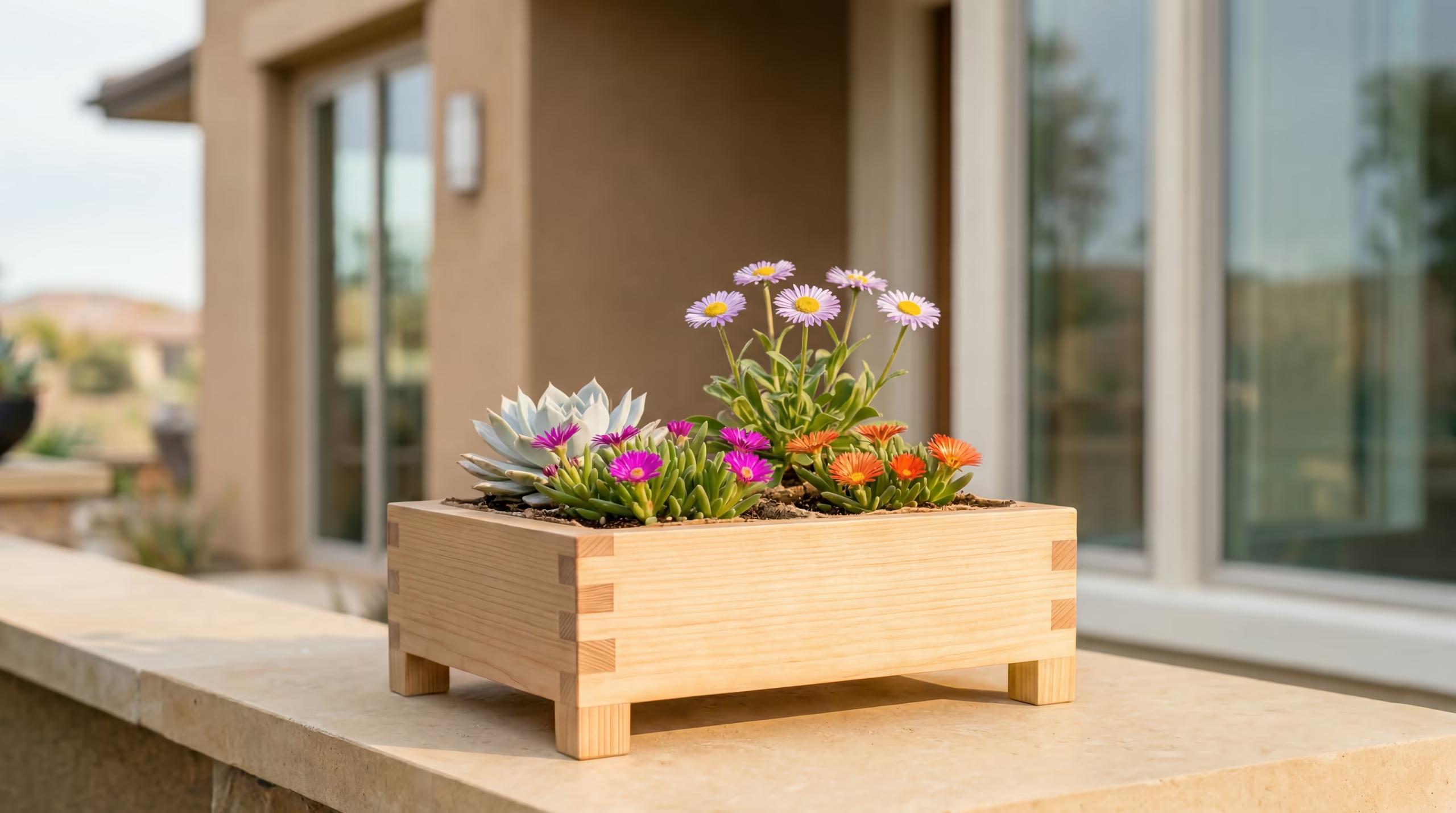
The remaining three, gaura (Oenothera lindheimeri) with its airy butterfly-shaped blooms on wands, lantana (Lantana camara) for nonstop color, and trailing ice plant (Delosperma) for jewel-toned spilling edges, round out a palette that can build dozens of combinations. Two or three of these are California or Mediterranean natives, which means they are matched to our soil and our seasons from day one.
“Did you know there are various climate-appropriate groundcovers and plants that can use less than half the water a typical lawn requires? For example, there are perennial groundcovers such as Dymondia margaretae (also known as silver carpet, because of its green and silvery leaves), the aromatic and purple flowering creeping thyme, and, my favorite, Kurapia. Another favorite is the dwarf succulent plant Ruschia lineolata, which grows very densely and is extremely durable.”
— Juan Garcia, IRWD
What about a succulent container garden in SoCal?
A SoCal succulent container garden works best with bright filtered sun and a mix of echeveria, sedum, aeonium, and senecio for layered, sculptural texture. Succulents are the most forgiving water-smart plants you can grow, and a succulent bento is a low-key, modern alternative to a flowering recipe, all clean lines and architectural rosettes.
Echeveria (Echeveria spp.)
| Water | Sun | Size | Toxicity | Origin |
|---|---|---|---|---|
| Very low | Sun to partial shade | 4-12 in tall, 6-12 in wide | Non-toxic to pets and children | Mexico and Central America |
Aeonium (Aeonium arboreum)
| Water | Sun | Size | Toxicity | Origin |
|---|---|---|---|---|
| Very low | Sun to partial shade | 1-3 ft tall, 1-2 ft wide | Non-toxic to pets and children | Canary Islands, Mediterranean climate |
Pair tight echeveria rosettes with the taller branching drama of aeonium, then add trailing senecio (string of pearls or blue chalksticks) to spill over the edge. Sedum fills the gaps with fine texture. The look is sculptural and contemporary, never dusty or stark.
GOOD TO KNOW
Even in containers, most succulents prefer bright filtered light over a west-facing full-afternoon blast in July, which can scorch their leaves. And aeonium goes dormant in summer, curling its rosettes tight, which is normal rest, not distress. It plumps back up when the weather cools.
A succulent container reads as designed and modern, never as desert. Think of it as a still-life in living form: a sculptural grouping for a side table, an entry ledge, or the center of a patio.
What potted plants do not need a lot of water?
The lowest-water potted plants for SoCal are rosemary, lavender, ice plant, Cleveland sage and most succulents, all of which thrive on once-a-week deep watering once established. These are the plants to reach for if you travel, forget, or simply want the most beauty for the least effort.
A word of honesty, though: drought tolerant in a container means less water than a thirsty annual, not no water. A pot dries out far faster than open ground because the soil volume is small and the sides are exposed to heat on all sides. Even a tough succulent needs a real drink when the mix goes bone dry.
PRO TIP
Two quick reads tell you when to water: push a finger two inches into the soil, and if it is dry, water. Or lift the pot. A light pot is a thirsty pot. Learn each container's watered weight and its dry weight, and you will never have to guess again.
What can you plant in a container with no drainage?
Almost nothing thrives long-term in a container without drainage, so the honest answer is to add drainage first. A pot that cannot drain holds water against the roots and drowns them, even drought tolerant ones. If you have fallen for a pot with no hole, you have three workarounds.
Drill a drainage hole if the material allows it, which solves the problem permanently. Use a pot-in-pot setup, slipping a draining nursery pot inside the decorative one and lifting it to empty after watering. Or, as a last resort, grow a tight grouping of succulents with very limited, careful watering, since they tolerate dry conditions better than anything else. None of these beats a real drainage hole, but each keeps plants alive in a pot that otherwise could not support them.
What is the most common mistake with container plants?
The most common mistake with container plants is overwatering, which suffocates roots in the confined soil volume of a pot. It is easy to do with kindness: the leaves look a little tired, so you water again, and the soggy soil starves the roots of oxygen.
The next three errors are nearly as common. Undersized containers crowd roots and dry out too fast. Mixing plants with very different water needs in one pot guarantees that something is always wrong, because the hydrozone rule applies to containers just as it does to a yard. And skipping a light, slow-release feeding leaves potted plants hungry, because the nutrients in a finite bag of mix run out.
“Make sure higher-water plants such as roses and hydrangeas are not watered on the same schedule as your climate-adapted native plants.”
— Jodie Cook, Sustainable Landscape Designer
To keep your container thriving once it is planted, the watering rhythm matters most. Our complete guide covers exactly how often to water outdoor potted plants in summer, including the SoCal heat-wave adjustments that trip up most people.
How do you arrange drought-tolerant plants in a Botanical Bento?
Arrange drought-tolerant plants in a Botanical Bento by placing one tall thriller off-center, two mounding fillers around its base, and a trailing spiller at the rim. The magic is choosing all three from the same water-needs group so the whole pot drinks on one schedule.
A simple, foolproof arrangement: New Zealand flax as the thriller, Cleveland sage and lavender as the fillers, trailing rosemary or ice plant as the spiller. Every plant in that pot is low-water and full-sun, so you never have to remember who needs what. For the full framework, start with the thriller filler spiller hub, and to build a deliberate color and scent story, see our guide to container plant combinations. The IRWD Botanical Bento workshop puts all of this into practice with hands-on builds.
Beyond the bento
Once a plant proves itself in your bento, it rarely wants to stop there. The drought-tolerant species in this guide are some of the easiest to graduate from a starter pot into the rest of your yard, which is exactly how a single container becomes the start of a bigger transformation.
A few ways to take these plants further:
- Move up to a larger pot. When lavender or kangaroo paw outgrows its bento, shift it into a bigger container and start a fresh bento in the space it left behind.
- Plant it in the front yard. Cleveland sage, lavender, and gaura all thrive in the ground. A few transplanted from your bento can anchor a low-water front-yard bed.
- Build continuity across your space. Repeat one hero plant from your bento in nearby in-ground plantings, and the whole area reads as one intentional design.
The plants that earned their place in your container are the same ones that will carry your whole Yardtopia. To see how the composition scales up from a single pot to a full yard, follow the thread to backyard design ideas.
Your patio is ready
The hardest part is choosing, and you have just done that. Pick three plants from this guide and one pot wide enough to hold them, and you have everything you need for a water-smart container that looks better in August than most lawns do.
Start this weekend with the plants that speak to you, then let the summer watering guide keep them thriving. The IRWD SimplyScapes design tool is there whenever you want help planning where your next pot, or your next bed, should go.