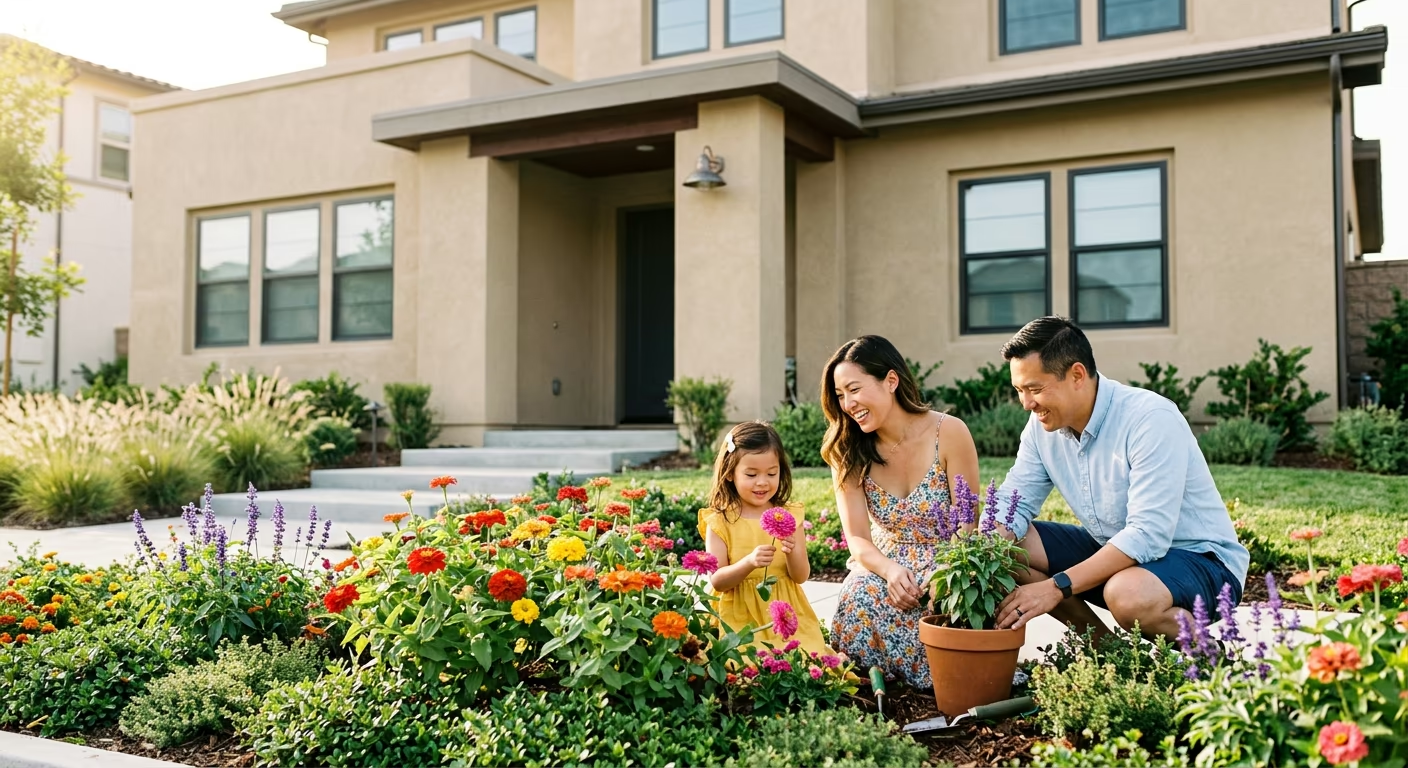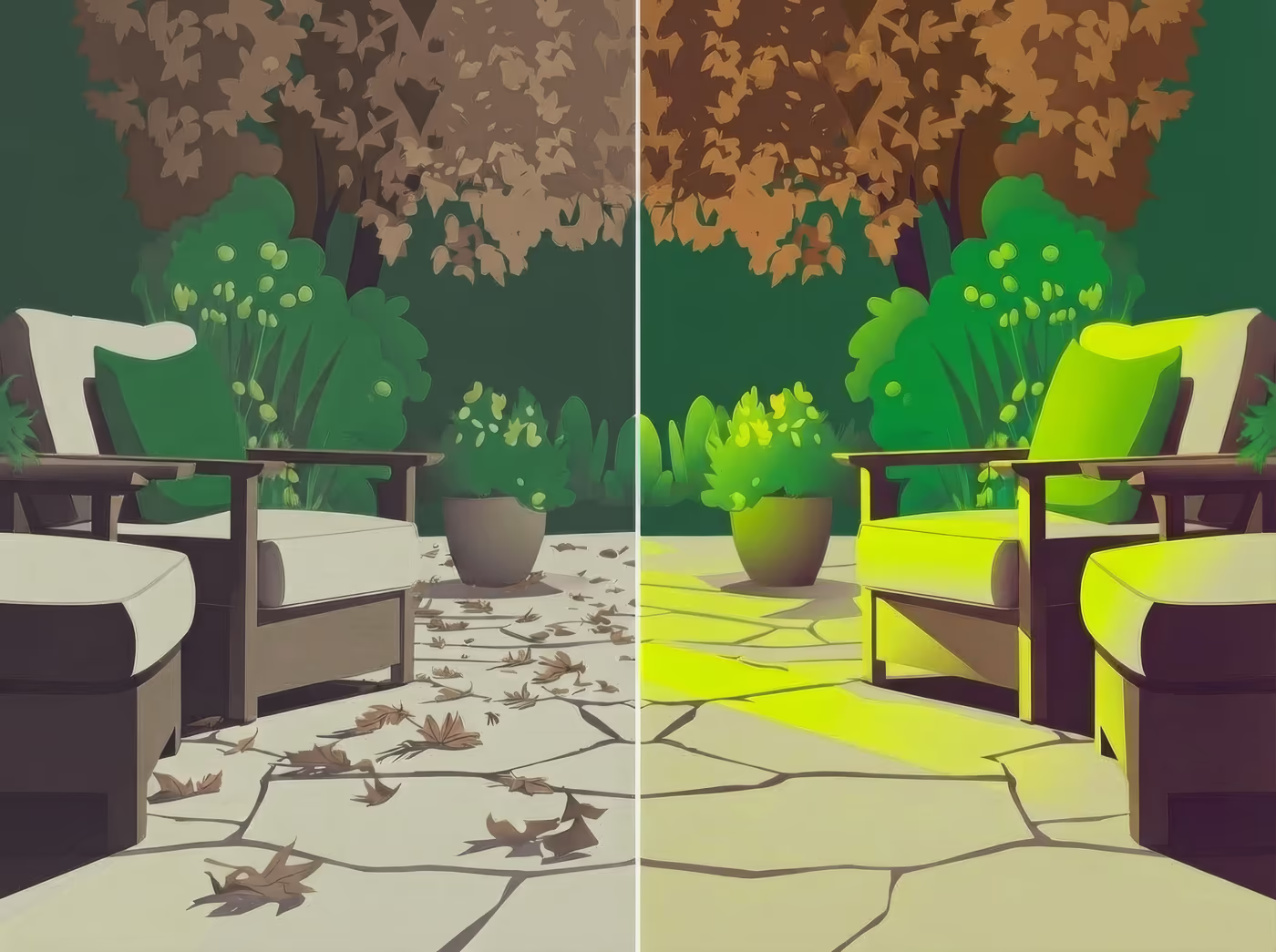
Spring gets all the credit. The first warm weekend arrives, and suddenly every homeowner in the neighborhood is at the garden center, comparing mulch prices, calling contractors who are already booked through June, and trying to make six months of decisions in a single Saturday. The plants go in too fast. The budget stretches past its limits. The vision that looked clear in January turns blurry under the pressure of a packed spring calendar. There is a better way to get your Yardtopia ready for spring, and it starts right now.
KEY TAKEAWAYS
- Fall landscaping is the strategic season that separates rushed, expensive spring renovations from calm, well-executed backyard makeovers. Cooler weather, off-season pricing, and uncrowded contractor schedules make autumn the ideal window for planning and preparation.
Why Is Fall the Best Season to Start Planning a Backyard Makeover?
Spring gets all the credit. The first warm weekend arrives, and suddenly every homeowner in the neighborhood is at the garden center, comparing mulch prices, calling contractors who are already booked through June, and trying to make six months of decisions in a single Saturday. The plants go in too fast. The budget stretches past its limits. The vision that looked clear in January turns blurry under the pressure of a packed spring calendar.
There is a better way to get your Yardtopia ready for spring, and it starts right now. Fall landscaping is not just about raking leaves and putting the garden to bed. It is the strategic season: the window where planning is calm, pricing favors the buyer, and the ground is ready to receive the plants that will look their best by next summer. Whether you are considering a full backyard renovation or a handful of thoughtful upgrades, the work you do this autumn determines whether spring feels like a scramble or a celebration.
This guide walks through a practical fall preparation process for Southern California homeowners at any budget level. Every task is designed to save you time, money, or stress when spring arrives, and most of them are surprisingly satisfying to complete on a cool October afternoon.
What Should You Envision Before You Touch a Single Leaf?
Fall gives you something spring never does: breathing room. The urgency is gone. The plants are settling in for winter rather than racing toward bloom. This is the season for sitting in your backyard with a cup of coffee and asking honest questions about what you actually want from this space.
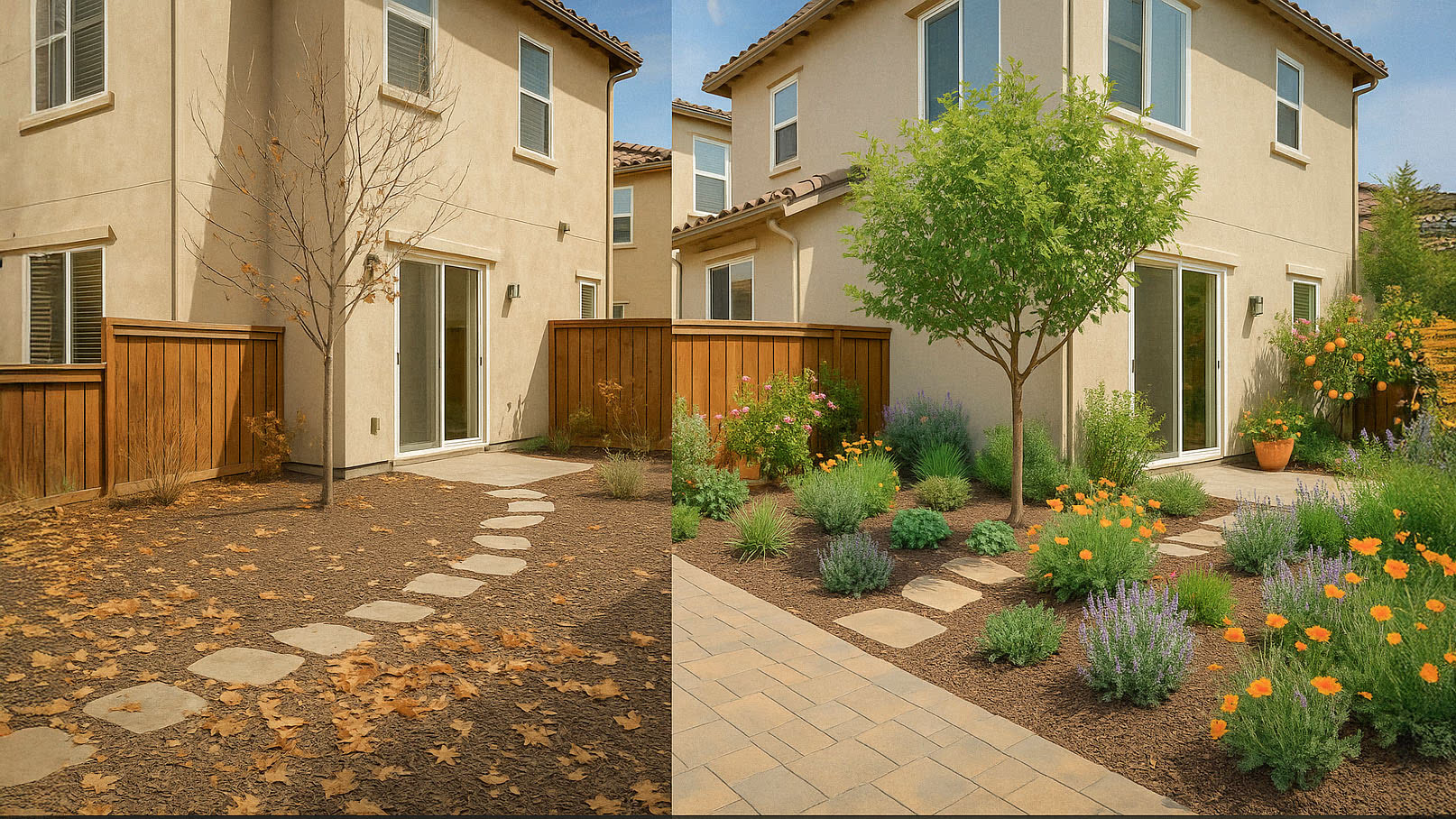
Close your eyes and picture next summer. What do you see happening out here? Maybe it is a long table under string lights where friends pass platters of grilled vegetables. Maybe it is a quiet reading corner surrounded by fragrant lavender, tucked just far enough from the house that it feels like a getaway. Maybe your kids are racing through a sprinkler on drought-tolerant turf while you tend a raised herb garden a few steps away.
That vision becomes your compass for every decision that follows. When you know you want a gathering space, you measure for a dining set and start researching patio materials. When you know you want a play area, you evaluate shade structures and ground cover options. When you know you want low-maintenance beauty, you research native plants that thrive with minimal irrigation. The vision comes first; the tasks organize themselves around it.
PRO TIP
Write your vision down, even if it is just three sentences on the back of an envelope. "I want a space where we eat dinner outside three nights a week. I want the kids to have a safe play area with shade. I want less lawn and more color." That clarity prevents the creeping scope changes that derail spring projects and inflate budgets. Every autumn task you tackle should trace back to one of those sentences.
This is also the season to collect inspiration. Screenshot backyard designs that catch your eye. Visit a local nursery just to wander and see what is blooming. Drive through neighborhoods where the landscaping makes you slow down. Fall gives you time to refine your taste before you are spending money.
How Do You Assess Your Yard When Fall Reveals What Summer Hid?
Autumn is the most honest season in your backyard. Deciduous plants drop their leaves, exposing the bones of your landscape: the sight lines, the bare spots, the drainage patterns, the areas where nothing grows well. What summer hides behind a curtain of green, fall puts on full display. Use that clarity while it lasts.
Measure and Document Everything
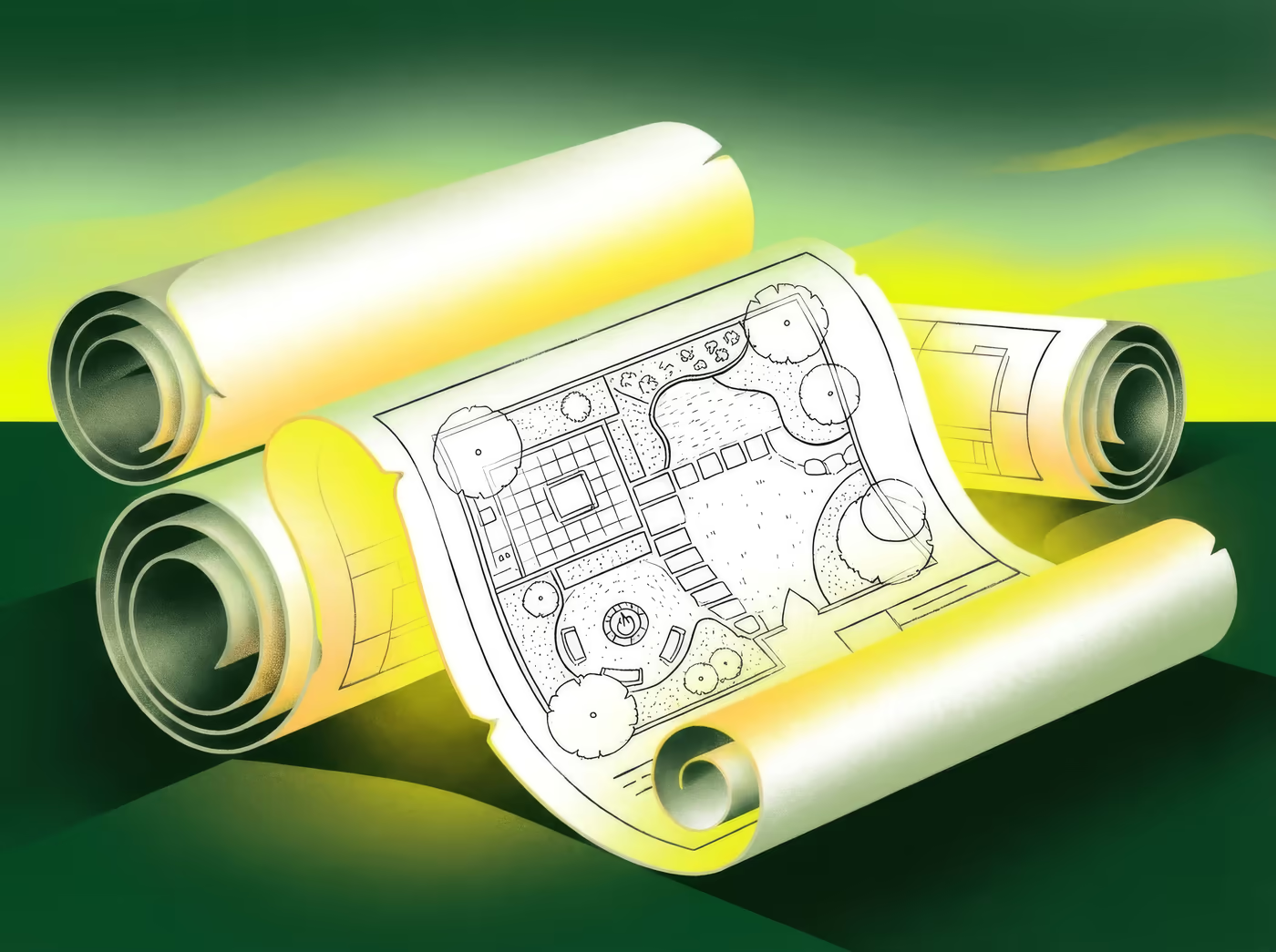
Start with measurements while the foliage is down and sight lines are clear. For rectangular sections, multiply length by width. For irregular shapes, break the space into smaller sections, calculate each one, and add them together for your total square footage. This number drives everything from material estimates to contractor quotes, and getting it right now prevents costly surprises in spring.
Take photographs from every angle, including overhead shots from a second-story window if possible. Capture the yard in morning light, midday sun, and late afternoon shadow. These photos become invaluable reference points when you are comparing design ideas over winter or explaining your vision to a contractor in January.
Identify What Is Working and What Is Not
Walk your property with fresh eyes and a notebook. Where does water pool after rain? Which areas get baked by afternoon sun? Where does the soil feel compacted and lifeless? Which plants thrived this past summer, and which ones limped through despite your best efforts? Fall assessment is not about criticizing your yard; it is about understanding its natural tendencies so you can work with them rather than against them.
Drainage: After the first fall rain, walk your yard and note where water collects or flows. These patterns reveal grading issues that are much cheaper to fix before new plantings go in than after.
Sun exposure: The sun angle drops significantly between September and December. Track where shadows fall during the hours your family uses the yard most. A patio that bakes in July might be perfectly shaded by October, and vice versa.
Soil condition: Fall is the ideal time for a soil test. Most UC Cooperative Extension offices offer affordable testing that tells you pH levels, nutrient content, and soil composition. This data guides every planting decision and amendment purchase, eliminating the guesswork that wastes money on fertilizers and conditioners you may not need.
GOOD TO KNOW
Southern California soil varies dramatically even within the same neighborhood. The heavy clay common in parts of Orange County behaves completely differently from the sandy loam found a few miles away. A $20 soil test saves hundreds in misguided amendments and failed plantings. Many IRWD customers can also access free workshops on soil health through local Master Gardener programs.
What Fall Yard Cleanup Tasks Set You Up for the Easiest Possible Spring?
Fall yard cleanup is not busywork. Every task in this section serves a specific purpose: either it prepares the ground for spring planting, protects what you already have through winter, or removes a future obstacle so spring installation goes smoothly.
Clear, Amend, and Protect Your Soil
Remove spent annuals, pull weeds before they set seed, and cut back perennials that have finished their cycle. Clear the planting beds down to bare soil. This is the moment to amend: spread two to three inches of quality compost across beds you plan to plant in spring. Fall rain and winter moisture work the organic matter into the soil over months, creating a richer, more biologically active growing medium than anything you could achieve with a spring-morning amendment and same-day planting.
For areas you are converting from lawn to garden bed (a common move for water-wise renovation), fall is the time to start that process. Sheet mulching, where you layer cardboard and mulch over grass, takes three to four months to break down. Start in October, and by February the grass is gone and the soil beneath is soft, worm-rich, and ready for planting.
Evaluate and Tune Your Irrigation
Before winter rains arrive, inspect your irrigation system while you can still run it without waste. Check for broken heads, misaligned sprayers, and leaking connections. Adjust timers to fall schedules, which need far less water than summer. If your spring renovation includes new planting beds or a shift from spray to drip irrigation, map those changes now so you can order parts, schedule installation, or apply for IRWD rebates before the spring rush.
GOOD TO KNOW
IRWD offers rebates for homeowners who convert from traditional sprinklers to drip irrigation or weather-based smart controllers. The application process takes time, and spring demand creates longer wait periods. Submitting your rebate application in fall or winter means faster processing and earlier access to funds when your spring project begins.
Research Contractors and Lock In Pricing
This is the fall preparation step with the highest return on investment. Contractors for hardscaping, irrigation, and landscape installation are significantly less busy between October and February. That availability translates into three advantages: faster response times on estimates, more flexibility on scheduling, and often better pricing. A patio installation quoted in November may cost 10 to 15 percent less than the identical job quoted in April, simply because of seasonal demand.
Request estimates from at least three contractors for any project over $5,000. Use your fall measurements, photos, and vision statement to give each one the same brief. Comparing apples to apples is only possible when every contractor sees the same scope. Check contractor licenses through the California Contractors State License Board (CSLB) before signing anything.
What Should You Plant in Fall for the Strongest Spring Results?
Here is the advantage most Southern California homeowners miss entirely. Fall planting outperforms spring planting for nearly every category of permanent landscape plant: trees, shrubs, perennials, and ground covers. The reason is simple biology. Plants installed in October or November spend the cool, wet winter months growing roots rather than fighting to survive summer heat. By the time temperatures climb the following June, fall-planted specimens have established root systems two to three times more extensive than identical plants installed in March.
That head start translates into less supplemental irrigation, stronger drought tolerance, and faster visible growth during the first summer. For a region where water efficiency matters as much as it does here, fall planting is the single most impactful timing decision you can make.
Trees and Large Shrubs: The Earlier, the Better
October through December is the prime window. Plant shade trees, fruit trees, and large screening shrubs now, and they will put on significant root growth before spring. California native oaks, drought-adapted fruit trees like pomegranate and fig, and evergreen screening plants like toyon and lemonade berry all establish beautifully from fall installation. Water deeply at planting, then let winter rain do most of the work.
Perennials and Ground Covers
California natives like Cleveland sage, yarrow, deer grass, and California fuchsia planted in fall will bloom their first full spring with vigor that spring-planted specimens take a year to match. Non-native Mediterranean perennials (lavender, rosemary, salvia) follow the same pattern. The cool-season establishment period is built into their biology.
"Your landscape went through a lot of stress this summer. Start with your planter beds, rid them of weeds and mix it with your soil as deep as possible to enrich it with nutrients and improve soil structure. Over winter, nature will do its work and help break down the compost into food for your plants."
Juan Garcia, Senior Water Efficiency Specialist, IRWD
Bulbs: Fall's Most Rewarding 30-Minute Project
Spring-blooming bulbs go in the ground between October and December in Southern California. Daffodils, ranunculus, anemone, and freesia are reliable performers in our climate. Tulips and hyacinths need pre-chilling in the refrigerator for six to eight weeks before planting, as our winters are not cold enough to trigger their bloom cycle naturally. Spend a single fall afternoon planting bulbs, and you will have a show of color next spring that feels like a gift from your past self.
PRO TIP
Buy California-native plants from local nurseries that grow their own stock rather than importing from out-of-state growers. Locally grown natives are already adapted to our specific conditions and establish faster than plants raised in different climates. Local nurseries specializing in California natives are excellent sources for Southern California homeowners.
What Does a Fall-to-Spring Backyard Makeover Timeline Actually Look Like?
The power of fall preparation is how it distributes effort across months rather than cramming everything into a few frantic spring weekends. Here is what a well-paced timeline looks like for a Southern California homeowner planning a meaningful backyard renovation.
| When | What to Do | Why It Matters |
|---|---|---|
| September | Envision, research, and collect inspiration | Decisions made calmly cost less and last longer |
| October | Measure, photograph, test soil, plant trees and perennials | Bare-branch clarity; peak fall planting window |
| November | Request contractor estimates, amend beds, plant bulbs | Off-season pricing; beds improve over winter |
| December | Compare bids, finalize design, order materials | Inventory is fresh; no spring backorder delays |
| January | Submit rebate applications, finalize contractor contracts | Faster processing; locked-in spring schedule |
| February | Finish prep work, confirm timelines, final soil prep | Last chance before spring planting season |
| March-April | Install hardscaping, plant remaining specimens, enjoy | Ground is ready; decisions are made; you are calm |
Notice what spring looks like in this timeline. Instead of researching, measuring, comparing, hiring, amending, and planting all at once, spring becomes about one thing: bringing your prepared plan to life. That shift from reactive to proactive is the entire point of fall landscaping strategy.
How Do You Make Fall Preparation Work at Any Budget Level?
There are ranges of budgets to bring your Yardtopia to life when it comes to spring planting. The best thing about spreading your renovation across seasons is that it naturally accommodates different budgets. You do not need to fund everything at once. Fall preparation scales gracefully from a few free hours of planning to thousands in early-phase investment.
Under $100: The Planning Phase
Measure your yard, photograph every angle, write your vision statement, test your soil ($20 through UC Extension), research plants online, and create a prioritized wish list. These free and low-cost tasks are where most of the decision-making value lives. A homeowner who completes only this phase in fall is dramatically better prepared for spring than one who starts from scratch.
$100 to $500: The Planting Head Start
Everything above, plus fall planting. Buy three to five native shrubs or perennials ($15 to $30 each), a bag of quality compost ($8 to $15), and a flat of spring-blooming bulbs ($20 to $40). Amend one or two planting beds and install your fall plants. These specimens will be visibly stronger than anything you plant in spring, and the soil improvement carries forward for years.
$500 to $2,000: The Preparation Phase
Everything above, plus irrigation evaluation and repair, sheet mulching lawn areas slated for conversion, and professional soil testing. This tier also funds a consultation with a landscape designer ($200 to $500 for a two-hour site visit with conceptual plan), which saves far more than it costs by preventing expensive spring mistakes.
$2,000 and Above: The Early-Phase Build
Everything above, plus early-phase hardscaping (patios, paths, retaining walls) installed at off-season rates. Contractors booked for November or December installation often quote 10 to 15 percent below peak-season pricing. Hardscaping installed in fall is ready and settled by spring, when planting around it creates the finished look.
GOOD TO KNOW
IRWD rebate programs can offset a significant portion of landscape renovation costs for eligible homeowners. Turf removal rebates, smart irrigation controller rebates, and drought-tolerant landscape incentives are all available, but processing takes time. Apply in fall so funds are available by spring installation. Visit IRWD's rebate page for current program details.
Frequently Asked Questions
Is fall really the best time to start a backyard renovation?
For the planning and preparation phases, fall is significantly better than spring. You benefit from cooler working temperatures, off-season contractor availability, better pricing on materials and labor, and biological advantages for planting. The actual installation of hardscaping and final planting can happen in fall, winter, or early spring depending on the scope. What matters is that the decisions, measurements, and groundwork are done before the spring rush begins.
What fall lawn care should I do if I plan to keep my grass?
If portions of your yard will remain as turf, fall is the time to aerate compacted areas, overseed thin spots with a climate-appropriate grass blend, and apply a slow-release fertilizer. Reduce mowing frequency as growth slows, but keep the blade height consistent. Most importantly, adjust your irrigation timer: fall lawns need roughly 40 percent less water than summer lawns. Over-watering in autumn creates shallow root systems that struggle the following summer.
What should you plant in fall in Southern California?
Nearly all permanent landscape plants perform best from fall installation in our region. Trees, shrubs, perennials, ground covers, and California natives all benefit from cool-season root establishment. Spring-blooming bulbs (daffodils, ranunculus, anemone, freesia) go in the ground between October and December. The main exceptions are warm-season annuals and tropical plants, which should wait until soil temperatures rise in spring.
How do I prepare my soil in fall for spring planting?
Clear spent plants and weeds from beds, then spread two to three inches of quality compost across the surface. Do not dig it in aggressively; let rain, earthworms, and microbial activity incorporate the organic matter naturally over winter. This method (sometimes called "top-dressing") improves soil structure without disrupting the biological ecosystem that healthy roots depend on. For areas converting from lawn to garden, lay cardboard topped with four to six inches of mulch in October. By February, the grass will be decomposed and the soil will be soft and plantable.
What is hydrozoning?
Hydrozoning is the practice of clustering plants with similar water requirements together to conserve water. It makes it possible to customize irrigation schedules for each area's needs, improving efficiency and avoiding both overwatering and underwatering. A hydrozoned yard is typically divided into four zones: Zone 1 (Routine Irrigation) for primary outdoor living spaces, Zone 2 (Reduced Irrigation) for ornamental beds with less foot traffic, Zone 3 (Limited Irrigation) for border strips and slopes ideal for California natives, and Zone 4 (No Irrigation) for patios, gravel pathways, and mulched areas that rely entirely on rainfall.
How do I find a good landscape contractor for a spring project?
Start in October or November, when contractors have the bandwidth to visit your property and provide detailed estimates. Request bids from at least three licensed contractors for any project over $5,000. Verify each contractor's license through the California Contractors State License Board (CSLB). Ask for references from projects completed in your area, and visit at least one previous job site if possible. Signing a contract in fall or winter locks in your spot on the spring schedule before availability tightens.
What is the biggest mistake homeowners make with spring yard renovations?
Trying to make all their decisions during the busiest, most expensive season of the year. Spring demand drives up material costs, stretches contractor schedules, and creates time pressure that leads to impulse purchases and design compromises. The homeowners who enjoy their renovations most are the ones who used autumn for thinking, planning, and groundwork, leaving spring free for the satisfying work of building and planting.
Do fall-planted trees and shrubs really grow better than spring-planted ones?
In Southern California's climate, yes. Fall-planted specimens spend the cool, wet months building root systems rather than fighting heat stress. By their first summer, they have two to three times more root mass than identical plants installed in March. That root advantage means less supplemental watering, faster visible growth, and stronger drought resilience through the hottest months. University of California research consistently supports fall planting as the optimal timing for permanent landscape plants in Mediterranean climates.
Fall is not the end of the outdoor season. It is the beginning of next year's. Every measurement you take, every bed you amend, every tree you plant, and every contractor conversation you start this autumn removes a decision from your spring to-do list and replaces it with momentum.
Start wherever your budget and energy allow. Even a single afternoon of walking your yard with a notebook and a camera sets you miles ahead of the homeowner who wakes up in March wondering where to begin. The goal is not perfection this fall; it is preparation that makes spring feel like a reward rather than a race.
The backyard you want next summer starts with what you do this autumn. Step outside, take a look around, and start imagining. Find yourself outside.