
Creating your Yardtopia opens up endless possibilities. It is about shaping a space that reflects you and supports your family's needs while feeling cohesive and intentional. Landscaping can serve as either the starting point or the finishing layer that brings everything together, with options at every scale to help define exactly what you want your Yardtopia to be.
This guide will help you take that first step, offer practical tips, and support your outdoor transformation at any level, from simple DIY updates to a full-scale design.
KEY TAKEAWAYS
- The clearest path to a beautiful landscape starts with inspiration and intention, not materials or plants. Getting specific about how you want to use and feel in your outdoor space makes every decision that follows easier and more rewarding.
- Yardtopia.com is built to help you move from vague inspiration to a concrete vision: use the gallery, the design tools, and the plant guides to translate what you love into what will actually work in your yard.
- Before any landscaping work begins, a quick review of your HOA guidelines protects your investment and prevents costly surprises. This is the first practical step, not the last.
Why Does Having a Clear Vision Matter Before You Start?
Many of the most successful landscape projects begin with a clear sense of purpose. Taking the time to ask the right questions early on helps shape a yard that not only looks beautiful, but also feels meaningful and supports how your family actually lives. The result is a Yardtopia that feels intentional, personal, and truly connected to your lifestyle.
A strong vision brings clarity to every decision that follows. When you know what you want your outdoor space to do for you, each choice becomes more focused and aligned. A thoughtful landscape plan is a meaningful investment, and getting it right from the start creates a smoother process, helps avoid unnecessary changes, and ensures the end result feels exactly as you imagined.
GOOD TO KNOW
Landscaping done well increases home value significantly in Southern California's real estate market. Studies from the American Society of Landscape Architects consistently show that professional landscaping returns 100 to 200 percent of its cost in home resale value, particularly in desirable Orange County communities where outdoor living is a year-round priority.
What Does Your Outdoor Space Actually Need to Do?
The best starting point is to focus on its functionality. Here are the questions worth sitting with:
"Before you think about what you want your yard to look like, think about what you want it to do."
- How do you want to use the space? Is this primarily a place for entertaining? A quiet retreat? A space where your children or pets can run and play? An extension of your living room?
- How much maintenance are you willing to do? Be honest. A stunning low-maintenance landscape is completely achievable in Southern California's climate. The answer should drive your entire plant and material selection.
- Who uses the space? Children, dogs, elderly parents, weekend guests, all of the above? The people who will spend time in your yard determine what features make sense and which plants are safe.
- What do you want the space to feel like? Sometimes the answer is one word: serene, vibrant, welcoming, sophisticated. That single word can guide an entire design.
PRO TIP
Write down your answers to the questions above before you start browsing for inspiration. Your instinctive answers, before you get influenced by trends or other people's yards, are the most honest reflection of what you actually want. Save them somewhere. They will be the compass you come back to when decisions get complicated later.
How Can You Use Yardtopia.com to Build Your Vision?
Yardtopia.com is designed to help take you from "I want something different" to "I know exactly what I want and why." Here is how to make the most of it.
- Start in the gallery. Browse project photos and style guides without trying to make any decisions. Let yourself react. After browsing fifteen or twenty images, patterns will emerge: you keep gravitating toward certain materials, certain plant textures, certain moods. Those patterns are your aesthetic.
- Use the design tools. The SimplyScapes design tool lets you experiment with ground cover options, plant combinations, and layout ideas for your specific yard conditions. It replaces guesswork with a visual you can react to.
- Read the plant and project guides. The Plants 101 series and the ground cover and grass alternatives guides give you the language to describe what you want to a landscape designer or nursery professional.
- Explore the rebate information. IRWD's turf replacement and water-efficient landscaping rebates can significantly offset the cost of your project. Understanding what qualifies before you design means you can build those opportunities into your plan from the start.
GOOD TO KNOW
IRWD offers free landscape consultations to homeowners in the service area. A certified Water Efficiency Specialist can evaluate your existing landscape, walk through your vision with you, and recommend water-wise approaches that align with your goals. This is one of the most underused resources available to Orange County homeowners, and it costs nothing. Visit yardtopia.com to connect with current program details.
What Is Your Landscape Style?
Your landscape style is the visual and emotional language of your outdoor space. Southern California supports a wide range of styles beautifully, and the best choice is always the one that feels like an extension of your home and your personality.
- California Contemporary is clean lines, warm neutrals, and a curated mix of drought-tolerant plants with strong architectural form. Think concrete pavers, decomposed granite, ornamental grasses, and agaves used as sculpture. Low maintenance, high impact.
- Mediterranean Garden draws from the same climate that shaped Southern California: terracotta, stone, lavender borders, citrus trees, and the smell of rosemary on a warm afternoon. Romantic, sensory, and feels at home in almost any Orange County neighborhood.
- Coastal Casual is relaxed and layered, with drifts of flowing grasses, soft colors, and furniture that invites you to stay awhile. Effortless rather than designed, with an emphasis on comfort and natural materials.
- Lush Entertainer prioritizes abundance: full planting beds, layered textures, dramatic focal points, and a layout that supports gathering. It suits homeowners whose yard is their primary entertaining space.
PRO TIP
You do not have to pick just one style. The most interesting yards often blend two: a California Contemporary hardscape with a Mediterranean plant palette, or a Lush Entertainer layout with Coastal Casual furniture and lighting. Browse Yardtopia.com's gallery with your style notes in hand and see which combinations make you want to stay on the page.
What Should You Know About HOA Requirements Before You Start?
If you live in a community with a homeowners association, your HOA guidelines are the first practical document to pull before you do anything else. Understanding the rules upfront means your finished landscape will sail through approval and you will never have to undo work you already paid for.
Most HOA landscape guidelines in Orange County address: approved plant lists and prohibited species, turf and ground cover requirements, fence and structure heights, color palette restrictions, and the approval process and timeline. Most HOAs require a formal submission and approval before any landscaping work begins. Build this timeline into your project plan: approval can take anywhere from two weeks to sixty days.
GOOD TO KNOW
California law has become increasingly favorable to water-efficient landscaping. Under AB 2104 and related legislation, HOAs in California cannot prohibit homeowners from replacing traditional lawns with drought-tolerant plants and water-efficient landscaping. If your HOA pushes back on a water-wise design, know that state law supports your right to make those changes.
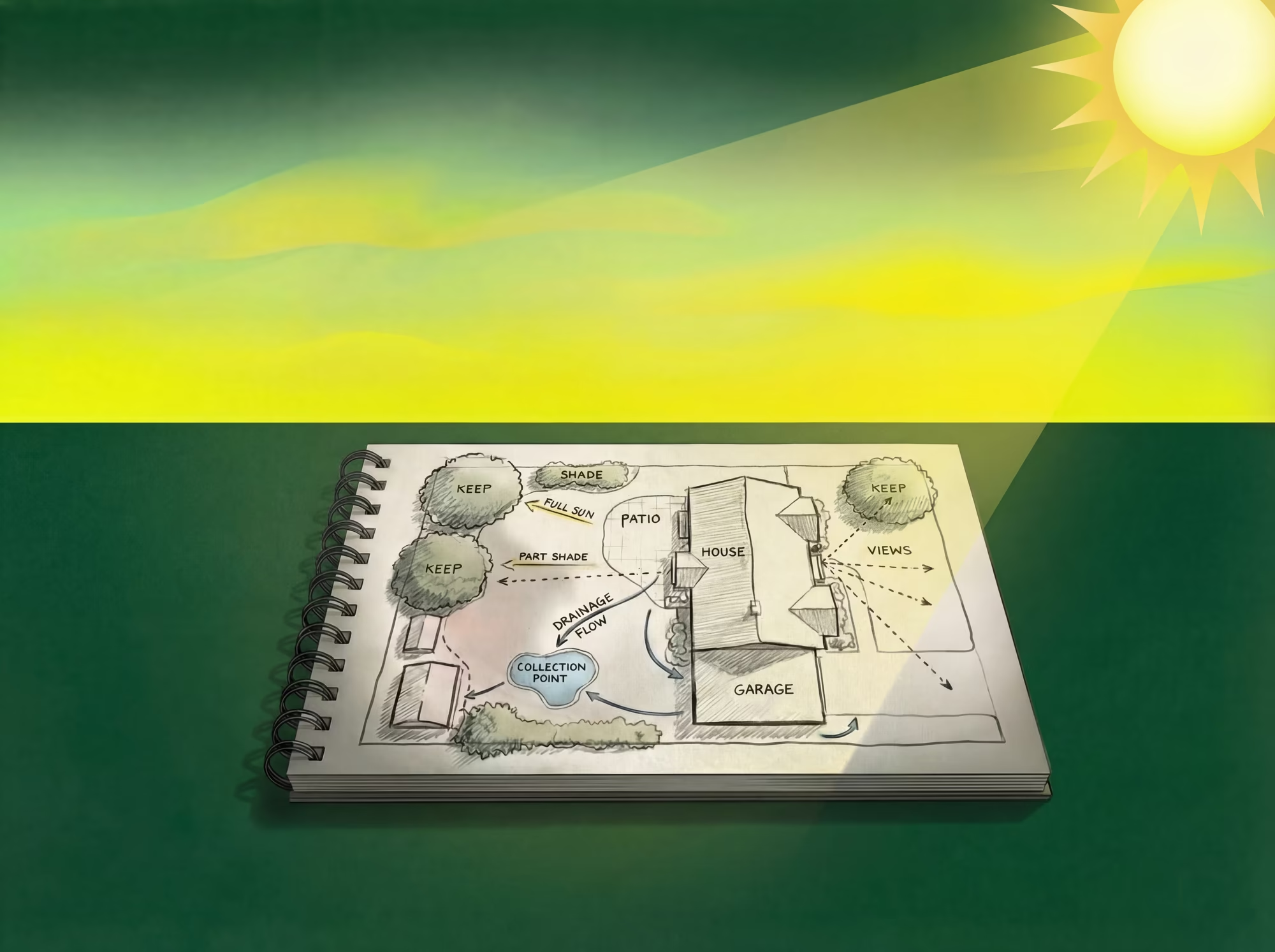
How Do You Create a Simple Yard Map?
A simple hand-drawn map done in an afternoon gives you a working reference document that you will use through every phase of this process. Here is what to include:
- The footprint of your yard (rough dimensions are fine)
- The location of your home, garage, and any outbuildings
- Existing features you are keeping: mature trees, permanent structures, hardscape, irrigation valve boxes
- Features you want to change or remove
- Sun exposure notes for each area (full sun, part shade, shade)
- Drainage patterns: where does water collect after rain? Where does it drain toward?
- Views: what do you look out at from your main windows and doors?
- Your HOA's boundaries for what can change
Your DIY Moment: The Vision Board
Create a simple vision board with three sections.
- How I want to feel in this space: three to five words or phrases.
- Images that stop me: five to ten images from Yardtopia.com or anywhere else that make you feel something.
- One thing I want to change first: the single change that would make the biggest difference in how you feel about your outdoor space right now.
Bring this vision board to every conversation with every professional you involve in your Yardtopia. It communicates more than a thousand words of description ever could.
Frequently Asked Questions
Where do I start if I have no idea what I want?
Start with how you want to feel, not what you want things to look like. Words like "relaxed," "proud," "social," or "peaceful" are more useful than style labels when you are just beginning. Then browse Yardtopia.com's gallery without any agenda: just notice what makes you stop and look longer.
How do I know if my HOA will approve my landscape plan?
Request the current version of your CC&Rs and any separate landscaping guidelines from your HOA management company. Look specifically for sections covering front yard coverage, approved materials, plant restrictions, and the approval process. When in doubt, submit a concept sketch for informal feedback before committing to a full design.
Do I need a landscape designer, or can I plan this myself?
For small projects or single-zone transformations, many homeowners plan successfully with Yardtopia.com tools and nursery professionals. For full yard transformations, adding hardscape, or any project involving drainage or grading, a landscape designer is worth the investment. Part 4 of this guide covers how to find and work with the right professional.
What if I want to do my yard in phases?
Phasing is one of the smartest approaches to a full landscape transformation. It spreads the cost, lets you live with each change before committing to the next, and gives plants time to establish. The key is designing the full vision first, then executing it in phases so each stage makes sense as part of the larger picture.
Your Next Step
Your Yardtopia starts here, with clarity about what you want and confidence that it is entirely achievable. Explore the gallery, try the design tools, and pull your HOA guidelines this week. Continue to Part 2: Designing a Sustainable Southern California Landscape to learn how to translate your vision into a real, water-wise design plan.