Every yard has a personality hiding inside it. The small courtyard that feels cramped could feel intimate and elegant. The big, open backyard that feels overwhelming could feel like a resort. The awkward side yard that has sat ignored for years could become the most private, most personal corner of your entire property.
This is the most creative part of the landscaping process: taking what you have and reimagining it as something you genuinely want to live in, your Yardtopia.
KEY TAKEAWAYS
- Every outdoor space, regardless of size, benefits from zones: defined areas with distinct purposes that make the space feel intentional and livable rather than just open or just planted.
- Small spaces are best designed for intimacy and detail, not scale. The design principles that make a small patio feel like a complete outdoor room are different from the ones that make a large backyard feel curated and connected.
- Transition spaces, side yards, entries, and awkward corners are some of the highest-opportunity areas in any Southern California yard. A thoughtful treatment of a forgotten corner often has more impact per dollar than any other landscape investment.
What Does It Mean to Design Zones in Your Yard?
Zoning is the single design idea that transforms an outdoor space from a yard into a place you actually want to be. A zone is simply an area with a defined purpose: this is where we eat, this is where the kids play, this is where I go to be quiet, this is where guests gather.
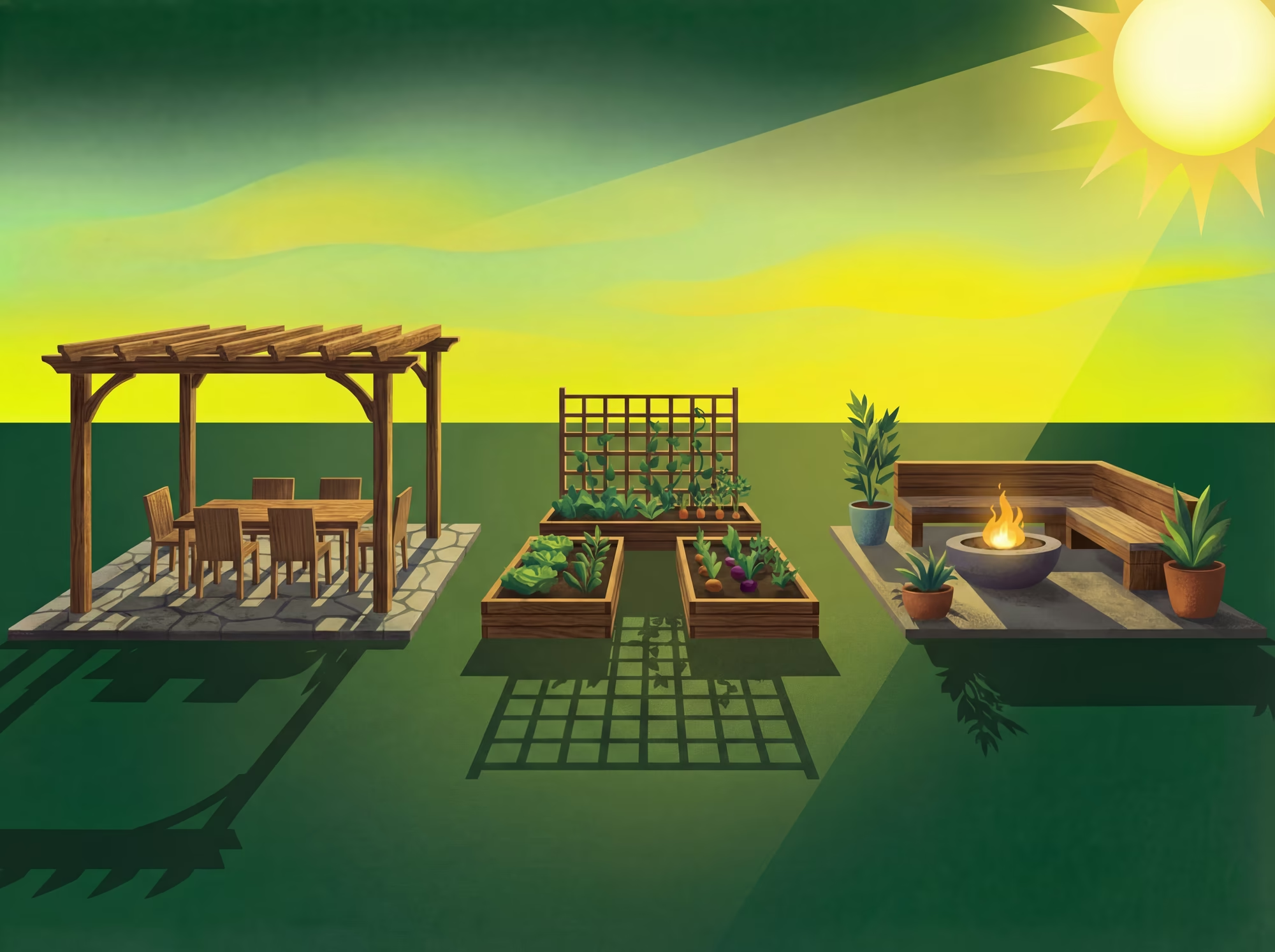
In Southern California, most residential yards benefit from two to four zones:
- The living zone is the primary outdoor room: a patio, deck, or paved surface adjacent to the house where you spend most of your outdoor time. This is where the furniture lives, where guests gather, where morning coffee happens.
- The garden zone is the planted landscape that frames and enriches the living zone. In a water-wise yard, this zone does most of its work on its own once established.
- The feature zone is the element that gives the yard personality: a fire pit, a water feature, a dining area, a play space, a quiet meditation corner.
- The transition zone is the pathway, border, or planting strip that connects zones and guides movement through the space. Well-designed transitions make a yard feel planned with intention.
How Do You Design a Large Backyard?
Large backyards are a wonderful problem to have. The answer is almost always the same: break the space into multiple zones, connect them with pathways and planting, and let each zone have its own character.
"An open expanse of lawn feels like possibility and then, somehow, also like a void."
- Create a destination at the far end. The single most effective thing you can do in a large backyard is give people a reason to walk to the back of it. A fire pit seating area, a dining pergola, or a beautiful statement planting creates a visual anchor that makes the whole yard feel more purposeful.
- Use planting to create enclosure. A single row of tall ornamental grasses or a hedge of medium-height shrubs creates the psychological sensation of being in a room without blocking light or views.
- Connect zones with deliberate pathways. A pathway through a planted area turns a walk across the yard into a small experience. Stepping stones through a planting bed or a DG pathway between zones makes the space feel designed.
- Reserve lawn only where it earns its place. A 15-by-20-foot lawn area surrounded by beautiful planting is more functional and more visually interesting than a 60-by-40-foot lawn that nobody uses most of the year.
PRO TIP
When designing a large backyard, walk it at different times of day before committing to a layout. The best spot for a morning coffee seating area is not the same as the best spot for an evening fire pit. Sun angles, privacy from neighbors, and shade patterns all shift through the day and by season.
How Do You Design a Small Backyard or Patio?
Small outdoor spaces reward a completely different design approach. The goal is not to make the space feel large. It is to make it feel complete. A small backyard or patio that is beautifully finished and thoughtfully furnished feels like a private outdoor room.
- Commit to one strong focal point. In a small space, everything competes for attention. Choosing one strong focal point gives the eye somewhere to land and makes the space feel intentional. Resist the urge to fill every surface with something.
- Go vertical. When floor space is limited, vertical surfaces become your canvas. A trellis planted with climbing jasmine or bougainvillea adds beauty and fragrance without taking up any horizontal space.
- Choose furniture to scale. Oversized furniture makes a small space feel smaller. Leave some open floor space: the perception of spaciousness depends more on breathing room than actual square footage.
- Use containers as your garden. In a small space, containers are the garden. A carefully curated collection of pots in complementary materials and sizes creates a garden without occupying any planting bed space. Also HOA-friendly in virtually every community.
- Layer lighting. Small spaces feel dramatically more special after dark. String lights overhead, a lantern or two on the table, and uplighting on one beautiful plant transforms a modest patio into a space you want to be in every evening.
GOOD TO KNOW
Small outdoor spaces often have higher square-foot impact than large ones when designed well, because every element is visible and every detail matters. A small patio with beautiful pavers, a statement container, comfortable furniture, and good lighting will be used and loved every day. Size is not the variable that determines how much joy a space delivers.
What Do You Do With a Side Yard?
Side yards are the most overlooked spaces in Orange County residential landscaping. They are often narrow, awkward, and treated as utility corridors rather than livable space. But side yards also offer some of the best privacy available in a residential lot.
- The utility approach (but make it beautiful): A clean decomposed granite surface, simple stepping stones, and a row of tall, narrow plants along the fence turns a functional corridor into something that looks considered.
- The garden pass-through: A decomposed granite path, stepping stones through low ground cover, and a trained climbing rose or jasmine on the fence creates a moment of beauty that every guest who uses that path will remember.
- The secret garden: If your side yard is eight feet or wider, it can become a private destination: a small bistro table, a single comfortable chair, a wall fountain, and layered planting against the fence.
- The pet zone: A fenced side yard is an ideal solution for creating a dedicated pet area that keeps dogs out of the main entertaining zones while giving them their own comfortable space.
PRO TIP
Before designing a side yard, check your HOA guidelines for any restrictions on side-yard access gates, fence heights, or materials. Many Orange County communities have specific requirements for side yard fencing and gate hardware. Knowing these upfront prevents having to redo work you already paid for.
How Do You Design a Front Yard That Makes a Statement?
Your front yard is the first impression of your entire property. In Orange County, where curb appeal directly affects property values, a beautiful front yard is both a personal pleasure and a practical investment.
- Lead with structure, add color. The most consistently beautiful front yards have a clear structural framework of evergreen plants and defined hardscape that looks good in every season. Seasonal color layers on top of that structure.
- Create a clear arrival sequence. The pathway from the street or driveway to your front door is a design opportunity. A well-defined walkway at least 36 inches wide, well-lit and planted on either side, creates a sense of welcome and arrival.
- Use scale thoughtfully. Front yards are viewed primarily from a distance. A single large specimen plant, a dramatic container at the entry, or a mass planting of one species creates the visual impact needed to register from the street.
- Choose plants that earn their place year-round. Drought-tolerant evergreen shrubs (coast rosemary, grevillea, leucadendron), and ground covers with interesting foliage all provide year-round beauty with minimal care.
GOOD TO KNOW
The front yard makeovers that most often qualify for IRWD turf removal rebates are front yard projects. Removing a traditional lawn and replacing it with drought-tolerant plants, decomposed granite pathways, and drip irrigation is the most common and most rebate-eligible transformation in Orange County. A 500 square foot front lawn converted to a water-wise landscape could qualify for $1,500 to $2,000 in rebates while dramatically improving your home's curb appeal.
Your DIY Moment: The One-Corner Transformation
Pick one corner, one zone, or one underperforming area and give it a complete treatment. A great one-corner transformation has three elements:
- A surface treatment. Replace bare soil or tired ground cover with decomposed granite, stepping stones, or a low ground cover that reflects your design style.
- A focal point plant or container. One statement plant with strong form (an agave, a tall ornamental grass, a standard-form rosemary) gives the eye somewhere to land.
- One finishing detail. A simple border of steel edging, a small solar light, or a handful of smooth river stones. This is the detail that makes the corner look designed rather than assembled.
Budget: $150 to $400. Time: one Saturday morning. Impact: immediate and significant.
Frequently Asked Questions
How do I make a small backyard feel bigger?
Use one strong focal point, go vertical with climbing plants or wall-mounted planters, choose furniture to scale, and keep the floor space mostly open. Layered lighting after dark dramatically expands the perceived size of a small space. Avoid trying to include too many elements: restraint is what makes small spaces feel curated rather than cramped.
What can I do with an awkwardly shaped yard?
Irregular shapes often become the most interesting yards. Curved pathways, organic planting beds that follow the natural shape of the space, and a focal point placed at the most visible point of the irregular area turn awkward into distinctive.
How do I add privacy to my backyard without a tall fence?
Layered planting is more effective and more beautiful than a fence in most situations. A row of tall ornamental grasses or a hedge of fast-growing shrubs creates visual screening without the cost, maintenance, or HOA complications of a solid fence.
What is the best layout for an outdoor entertaining space?
Keep the food preparation area close to the home for ease of service, create a clear central gathering space around a fire pit or dining table, and include multiple seating options at different scales. Good flow between inside and outside is critical.
Your Next Step
Every outdoor space has more to offer than it currently shows. Continue to Part 4: Bringing It to Life, where you will learn how to find and work with the right landscape contractor, what to expect from the installation process, and how the finishing touches transform a completed landscape into a space that feels truly yours.