
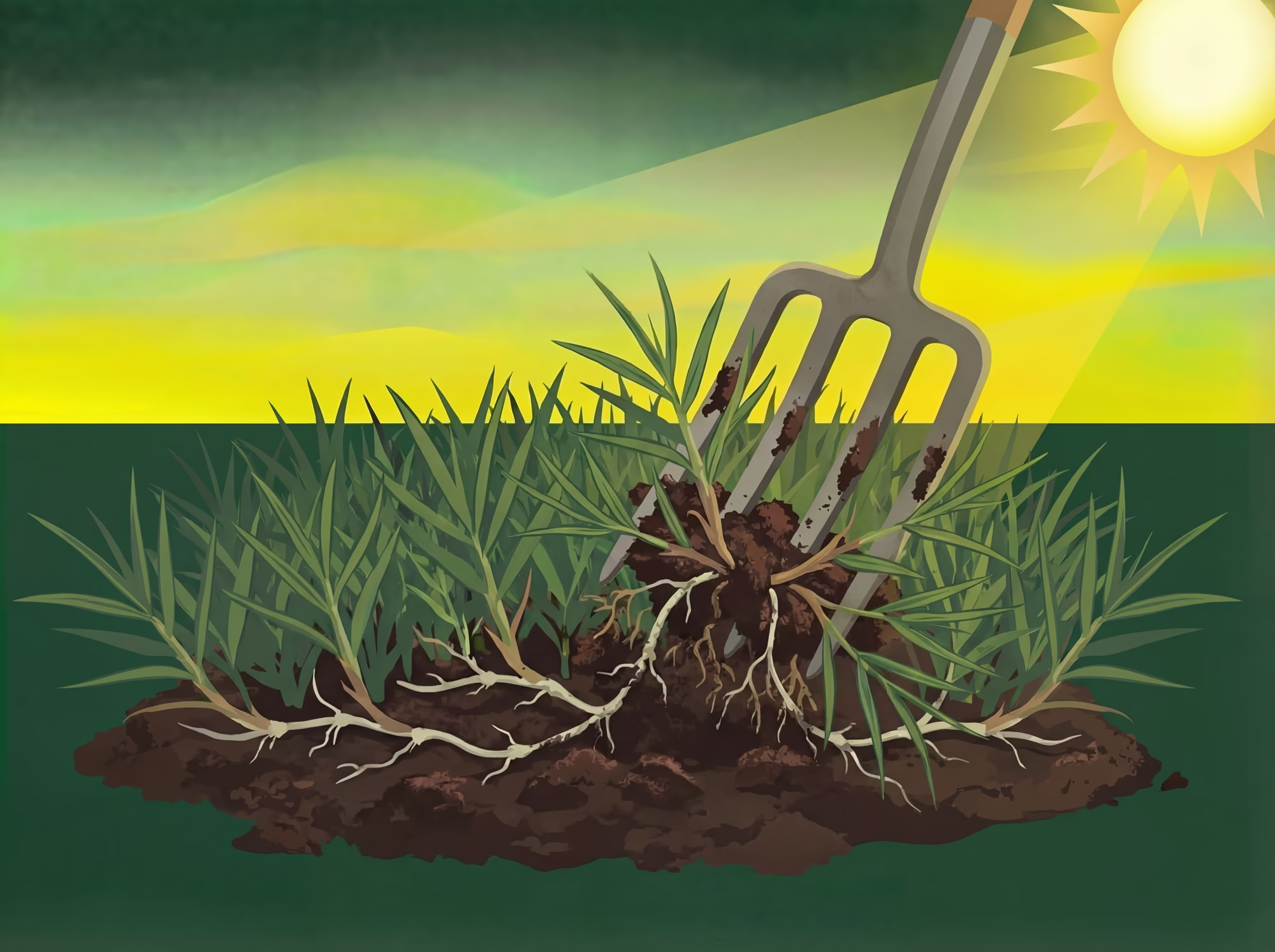
You have seen it happen before. You spend a weekend pulling bermuda grass out of a garden bed, filling bags with runners and roots, raking the soil clean. Two weeks later, new green blades push up through the mulch like nothing happened. Three weeks after that, the runners are back, threading across the surface, rooting at every node, reclaiming ground you thought you had won.
"Bermuda grass is a plant engineered by evolution to survive drought, heat, foot traffic, and even your best efforts to remove it."
Bermuda grass is the most persistent grass in Southern California. It is not a weed you can pull once and forget. In Orange County, where mild winters rarely force it into full dormancy and loose, well-drained soils let its roots run deep, bermuda grass thrives in conditions that stress almost everything else.
KEY TAKEAWAYS
- Bermuda grass spreads through both above-ground stolons and below-ground rhizomes, and every fragment left behind can regrow into a new plant. Understanding this biology is the single most important step toward removing it permanently, because it explains why quick fixes fail.
- Solarization during peak summer is the most effective passive method for Southern California homeowners, requiring clear plastic, saturated soil, and a full six weeks of uninterrupted treatment during the hottest months.
- Permanent removal requires a two-part strategy: kill the existing grass, then prevent reinvasion with root barriers, monitoring, and ongoing maintenance. Skipping the second part is why most homeowners end up fighting bermuda grass more than once.
But permanent removal is possible. It takes the right method, the right timing, and a realistic understanding of what you are up against. This guide covers the biology that makes bermuda grass so difficult, the removal methods that actually work in our climate, and the reinvasion prevention strategies that make the results last.
Why Is Bermuda Grass So Difficult to Remove?
Before you choose a removal method, you need to understand what you are fighting. Bermuda grass (Cynodon dactylon) is classified as an invasive species in California by the California Invasive Plant Council, and it has earned that classification through a remarkable set of survival adaptations.
Bermuda grass spreads two ways simultaneously. Above ground, it sends out runners called stolons: long, wiry stems that creep across the soil surface, rooting at every node they touch. Below ground, it produces rhizomes: underground stems that push through soil at depths of one to six inches in undisturbed ground. In loose or sandy soil, against foundations, or in areas that have been tilled, rhizomes can reach well below six inches.
Here is the detail that makes bermuda grass so frustrating: every fragment of stolon or rhizome left in the soil can regrow into a complete new plant. According to UC IPM, fragments of stolons and rhizomes can root and regrow if cut and left in moist soil. This means that tilling bermuda grass, which chops rhizomes into dozens of pieces, can actually make an infestation worse. Each piece becomes a new starting point.
Bermuda grass enters active growth when soil temperatures reach 65 degrees Fahrenheit. In Southern California, that threshold arrives as early as March and holds through November, giving the plant eight to nine months of aggressive growing season.
GOOD TO KNOW
Bermuda grass was introduced to the United States from Africa in 1751 and is now found across California at elevations below 3,000 feet. In Southern California's USDA zones 9b through 10b, it rarely goes fully dormant during winter, which means it can continue slow growth even during the coolest months. This near year-round activity is one reason it is harder to remove here than in regions with true freezing winters.
Understanding this biology is the foundation of every effective removal strategy. Methods that kill top growth but leave rhizomes intact will fail. Methods that kill roots but leave gaps in coverage will see reinvasion within weeks. Permanent removal means addressing both the above-ground and below-ground growth systems, then preventing new bermuda grass from moving back in.
What Is the Most Effective Way to Remove Bermuda Grass Without Chemicals?
If you want to remove bermuda grass without herbicides, you have three proven options. Each one works differently, takes a different amount of time, and suits different situations.
Solarization: The Fastest Passive Method
Solarization uses Southern California's summer sun to cook bermuda grass and its root system right in the soil. You cover mowed, saturated ground with clear plastic sheeting and let solar heat build underneath for four to six weeks. The trapped heat raises soil temperatures to 108 to 140 degrees Fahrenheit at a two-inch depth, enough to kill bermuda grass plants, rhizomes near the surface, and many weed seeds.
QUICK STAT
108 to 140°F — The soil temperatures solarization reaches at a two-inch depth during peak summer in Southern California. At this range, bermuda grass plants, shallow rhizomes, and many weed seeds are killed.
Step by step:
- Mow the bermuda grass as short as possible and remove clippings.
- Water the area deeply, saturating the top 12 inches of soil. Moist soil conducts heat far better than dry soil.
- Lay clear polyethylene plastic (2 to 4 mil thickness) directly over the soil, pulling it taut against the ground.
- Bury all edges under 4 to 6 inches of soil to trap heat completely. Any edge that lifts releases heat and compromises the treatment.
- Wait a full six weeks without disturbing the plastic. Every time you lift it, you restart the clock.
- Remove the plastic and monitor closely for regrowth over the following eight weeks.
Clear plastic works because it creates a greenhouse effect, transmitting 85 to 95 percent of solar radiation to heat the soil directly. UC research shows that clear plastic raises soil temperatures approximately 3 to 9 degrees Fahrenheit higher than black plastic at comparable depths. In inland Orange County, solarization works best from June through September. UC IPM specifically warns that suboptimal solarization applied in early spring can actually promote bermuda grass growth. Starting too early does not just waste time. It can make the problem worse.
PRO TIP
Solarization will kill everything under the plastic, including desirable plants, soil organisms, and tree roots near the surface. Do not extend plastic into the drip zone of trees or established shrubs you want to keep. After treatment, add 2 to 3 inches of compost to help beneficial soil organisms recolonize.
Limitation: Solarization kills rhizomes in the top several inches of soil. Deeper rhizomes, particularly in sandy or previously tilled soil, may survive. After treatment, monitor for new shoots and pull them immediately.
Sheet Mulching: The Soil-Building Method
Sheet mulching smothers bermuda grass under layers of cardboard and organic material, blocking all sunlight while the grass, the cardboard, and the compost slowly decompose into rich, plantable soil. It is the lowest-effort method and the best for soil health, but it requires serious patience. For bermuda grass, standard sheet mulching is not enough. You need to modify the standard approach:
- Mow as short as possible and water deeply.
- Lay double-layer cardboard, overlapping seams by at least 12 inches (not the standard 6 inches). Bermuda stolons will find and exploit any gap.
- Wet the cardboard thoroughly until it is dark and pliable.
- Add 6 inches of mulch (arborist wood chips work well) over the cardboard.
- Water the entire system again.
- Wait 6 to 12 months minimum. Do not assume bermuda is dead after a few months.
EXPERT TIP
Start sheet mulching for bermuda grass in October or November. Winter rain keeps the materials moist and drives decomposition. By the following October, you will have had a full growing season under cover, which is when the biological activity that kills rhizomes is highest. This timing also positions you perfectly for fall planting, which is the ideal window in Southern California.
Limitation: Sheet mulching works well in the center of a treated area, but bermuda grass at the edges can push underneath the cardboard from untreated ground. Install root barriers along the perimeter before laying cardboard, or extend the cardboard at least two feet beyond the visible bermuda growth.
Manual Removal: The Immediate but Exhausting Method
Manual removal means digging out every stolon, rhizome, and root fragment by hand. It provides immediate results and requires no waiting, but the physical effort is significant and the margin for error is thin. Use a garden fork, not a shovel. A shovel chops rhizomes into fragments, each of which can regrow. A garden fork lets you loosen soil and lift intact root networks without cutting them.
- Water the area deeply the day before. Moist soil releases roots far more easily.
- Sink the fork 6 to 8 inches into the soil, lean back, and shake to expose the root network.
- Gently pull the bermuda grass, following stolons and rhizomes as far as they extend. Pull slowly to avoid breaking runners.
- Sift through the loosened soil by hand, removing every visible root fragment. In loose or sandy soil, go deeper than 6 inches.
- Bag and dispose of all removed material. Do not compost bermuda grass unless your compost pile reaches sustained temperatures above 140 degrees Fahrenheit.
Limitation: This method is practical for small areas only: a garden bed, a strip along a fence, a section of pathway. For areas larger than 100 to 200 square feet, the labor becomes prohibitive. Return to the area every two weeks for at least two months and pull any new sprouts immediately.
When Should You Consider Using Herbicides?
For severe bermuda grass infestations, especially over large areas, herbicides may be the most practical option.
- Glyphosate-based herbicides kill bermuda grass by being absorbed through foliage and translocating down into the root system. UC IPM recommends applying glyphosate during late summer, when bermuda grass is actively storing carbohydrates in its roots. Wait at least seven days after application before mowing or cultivating. Expect two to three applications spaced two to three weeks apart. Apply on calm, windless days, never within 24 hours of expected rain or irrigation.
- Selective herbicides can target bermuda without killing surrounding turf if bermuda is invading an existing lawn of a different grass species. Active ingredients include fluazifop (Fusilade II, Ornamec 170) and sethoxydim (Grass Getter). Apply in early spring when new bermuda growth is less than 6 inches tall.
Methods Not Recommended
- Corn gluten meal: Oregon State University research found it did not control any weeds in any trials under any circumstances over a two-year period. Any perceived effect comes from the nitrogen content, not herbicidal properties.
- Horticultural vinegar (20% acetic acid): Burns foliage on contact but does not translocate to roots. Bermuda grass regrows from rhizomes within weeks. Also poses serious safety hazards: chemical burns to skin, permanent eye damage including blindness. Requires full protective equipment.
- Salt: Damages soil structure for years. Nothing grows in heavily salted soil until rain leaches it out over multiple seasons.
- Boiling water: Kills top growth in a small area but does not reach rhizomes. Impractical at any meaningful scale.
GOOD TO KNOW
Contact herbicides and naturally derived options (acetic acid, d-limonene, clove oil) will brown bermuda grass foliage on contact, but UC IPM confirms they do not affect the roots or rhizomes. You will see dead-looking grass for a few days, followed by complete regrowth. These products suppress top growth temporarily but do not contribute to permanent removal.
What Is the Best Time of Year to Remove Bermuda Grass in Southern California?
Timing is one of the biggest factors in bermuda removal success, and Southern California's Mediterranean climate creates a specific calendar that differs from national guides.
| Method | Best Months | Why |
|---|---|---|
| Solarization | June through September | Requires consistent heat above 80°F for 4 to 6 straight weeks. Inland Orange County is ideal. Coastal areas work best August through September. |
| Sheet mulching | October through December (start) | Winter rain keeps materials moist. Full growing season under cover follows. Ready to plant the following fall. |
| Manual removal | October through March | Soil is softer after rain. Bermuda growth slows (though rarely stops). Working conditions are cooler. |
| Glyphosate application | Late summer (August through September) | Bermuda is actively storing carbohydrates in roots, pulling herbicide deeper into the rhizome system. |
| Root barrier installation | Any time | Mechanical work. Best done before or concurrent with removal method. |
A Practical Southern California Timeline
- Late summer (August through September): Apply for your water district lawn removal rebate. IRWD and many Orange County districts require pre-approval before you touch the grass. Start the process now so you have your Notice to Proceed by the time you are ready to act.
- September through October: If using solarization, lay clear plastic during the last weeks of reliable heat. You need at least six full weeks before temperatures drop. Alternatively, begin glyphosate treatments during this window when bermuda is storing root energy.
- October through November: If sheet mulching, lay double-layer cardboard and 6 inches of mulch. Winter rain handles the moisture. Install root barriers along property edges.
- March through November (following year): Monitor for regrowth. Pull any bermuda shoots that emerge through mulch or at treated area edges. This monitoring phase is where permanent removal succeeds or fails.
- October through November (following year): Plant your new landscape. Fall planting gives roots months to establish before their first summer.
EXPERT TIP
If you have a neighbor whose bermuda grass shares a property line with your yard, no removal method will be permanent without a root barrier between the two properties. Bermuda rhizomes do not respect fences. A 12-inch metal or heavy plastic barrier, buried at least 8 inches deep with 4 inches above the soil surface, is the only reliable way to stop lateral invasion from neighboring lawns.
How Do You Prevent Bermuda Grass From Coming Back?
Killing bermuda grass is only half the battle. Without a reinvasion prevention plan, new bermuda grass will find its way back through three pathways: surviving rhizomes that were too deep for your removal method, stolons creeping in from neighboring properties, and seeds carried by wind, birds, or contaminated soil amendments.
Install Root Barriers
Root barriers are the single most effective reinvasion prevention tool. Use 12-inch metal or heavy-gauge plastic edging, buried at least 8 inches deep with 3 to 4 inches extending above the soil surface. The buried portion blocks rhizomes. The above-ground portion blocks stolons.
Install barriers along every edge where bermuda grass exists on the other side: property lines, fence lines, sidewalk borders, and transitions to untreated areas of your own yard. Rhizomes will travel along foundations, under sidewalks, and against any solid structure, sometimes reaching deeper than they do in open soil.
Maintain a Dense Planting
Bare soil is an open invitation for bermuda grass seeds and stolons. Once your removal method has done its work, plant your new landscape as quickly as conditions allow. Dense ground covers, native plantings, and thick mulch layers all reduce the light and open space that bermuda needs to establish from seed.
Monitor and Respond Quickly
Set a recurring reminder to walk your treated area every two weeks during the growing season (March through November). Look for new green shoots emerging through mulch or ground cover, and stolons creeping in from edges.
When you spot regrowth, pull it immediately. A bermuda grass shoot that is pulled within its first week has not yet developed the rhizome network that makes removal difficult. A shoot left for a month has already sent runners in multiple directions.
GOOD TO KNOW
The first full growing season after removal is the critical monitoring window. If bermuda grass does not return during that March-through-November stretch, the odds of permanent success increase dramatically. By the second year, dense new plantings and maintained mulch create conditions that make bermuda establishment much harder.
Combine Methods for the Hardest Cases
For severe bermuda grass infestations, the most effective approach combines two methods. Remove the surface grass with a sod cutter (which handles the stolons and shallow roots immediately), then apply a long-duration follow-up method (sheet mulching or solarization) to suppress regrowth from deep rhizomes. This combination addresses both the immediate above-ground growth and the persistent below-ground root system, and delivers the most reliable results for heavy infestations.
How Much Does Bermuda Grass Removal Cost?
The cost of removing bermuda grass depends on your method, your yard size, and whether you hire professionals or do the work yourself.
| Method | DIY Cost (1,000 sq ft) | Professional Cost | Timeline |
|---|---|---|---|
| Solarization | $30 to $100 (plastic sheeting) | $200 to $500 | 6 weeks (summer only) |
| Sheet mulching | $50 to $150 (compost and mulch) | $300 to $800 | 6 to 12 months |
| Manual removal | Free (tools only) | $0.50 to $1.50/sq ft | Days to weeks |
| Sod cutter and sheet mulch | $135 to $300 (rental and materials) | $500 to $1,200 | 1 day and 6 to 12 months |
| Glyphosate (2 to 3 applications) | $20 to $60 | $150 to $400 | 4 to 8 weeks |
| Root barrier (perimeter) | $2 to $5/linear foot | $5 to $10/linear foot | 1 day |
Rebates Can Cover Most of the Cost
If you are removing bermuda grass as part of a full lawn-to-landscape conversion, water district rebates can offset most or all of your expenses. IRWD and many Orange County water districts offer rebates starting at $2 or more per square foot for qualifying turf replacement projects. A 1,000 square foot bermuda grass lawn could qualify for $2,000 to $3,000 in rebates.
The most important detail: you must apply and receive approval before you begin any removal work. If you start or complete your project before receiving your reservation of funds, you are not eligible for the rebate. Start the rebate application process first, then plan your removal method while you wait for your pre-inspection.
QUICK STAT
$2 to $3 per sq ft — The IRWD rebate range for qualifying turf replacement projects in Orange County. A 1,000 square foot bermuda grass lawn could qualify for $2,000 to $3,000 in rebates toward your conversion project.
Frequently Asked Questions
How long does it take to permanently remove bermuda grass?
Most methods require 6 to 12 months for the removal phase, plus a full growing season of monitoring to confirm the grass does not return. Solarization is the fastest passive method at 4 to 6 weeks during summer, but even after solarization, you should monitor for regrowth for at least 8 weeks. The total timeline from first action to confident, permanent removal is typically 12 to 18 months.
Can I remove bermuda grass without using any chemicals?
Yes. Solarization, sheet mulching, and manual removal are all effective without chemicals. Solarization during peak summer is the most effective non-chemical method for bermuda grass in Southern California. Sheet mulching with double-layer cardboard and 12-inch overlaps can suppress bermuda over 6 to 12 months. For the most stubborn infestations, combining sod removal with sheet mulching provides the best chemical-free results.
Will bermuda grass grow through landscape fabric?
Bermuda grass can push through thin landscape fabric, particularly at seams and edges. UC IPM notes that landscape fabric works only when overlapped so stolons do not grow between the fabric sheets, and even then, bermuda may find edges and gaps. Heavy-duty geotextile fabric with overlapping seams performs better, but fabric alone is rarely sufficient for bermuda.
Does sheet mulching kill bermuda grass?
Sheet mulching can kill bermuda grass, but it requires modifications beyond the standard approach. Use double-layer cardboard with 12-inch overlaps (not the standard 6 inches), apply at least 6 inches of mulch, and extend the timeline to 6 to 12 months minimum. UC Master Gardeners recommend leaving bermuda grass under cardboard for a full 6 months without disturbing it.
What depth do bermuda grass roots reach?
In undisturbed soil, bermuda grass rhizomes typically grow 1 to 6 inches deep. In sandy soil, tilled areas, or along foundations and sidewalks, rhizomes can extend well below 6 inches. This depth variability is why solarization, which heats the top several inches of soil, may not kill the deepest rhizomes in loose soil.
Is tilling effective for bermuda grass removal?
Tilling alone is one of the least effective methods for bermuda grass. Tilling chops rhizomes into fragments, and each fragment can root and grow into a new plant. UC IPM warns not to cultivate bermuda grass if the soil is moist or the weed will spread. Tilling can be useful as a first step before solarization but should never be used as the sole removal method.
When does bermuda grass go dormant in Southern California?
Bermuda grass enters dormancy when soil temperatures drop below 55 degrees Fahrenheit. In most of Southern California, bermuda grass rarely goes fully dormant because winter temperatures remain mild enough to support slow growth. It typically yellows and slows significantly from December through February but can resume active growth as early as March.
The Bottom Line
- Learn what you are fighting. Bermuda grass spreads through both stolons and rhizomes, and every fragment can regrow. Methods that only kill top growth will fail. Target the root system.
- Choose your method based on your situation. Solarization for the fastest passive results during summer. Sheet mulching for the best soil outcome with patience. Manual removal for small areas. Herbicides for severe infestations over large areas. Combining methods delivers the most reliable results.
- Install root barriers before or during removal. A 12-inch barrier buried 8 inches deep is the difference between removing bermuda grass once and removing it repeatedly.
- Monitor through one full growing season. The March-through-November window after removal determines whether your work holds. Pull every shoot that appears, promptly and completely.
Bermuda grass is the toughest grass to remove in Southern California, but it is not invincible. The yard that emerges on the other side of this process is worth the effort.
Explore grass alternatives and drought-tolerant landscaping options at yardtopia.com to discover what thrives in your Yardtopia after the bermuda grass is gone.