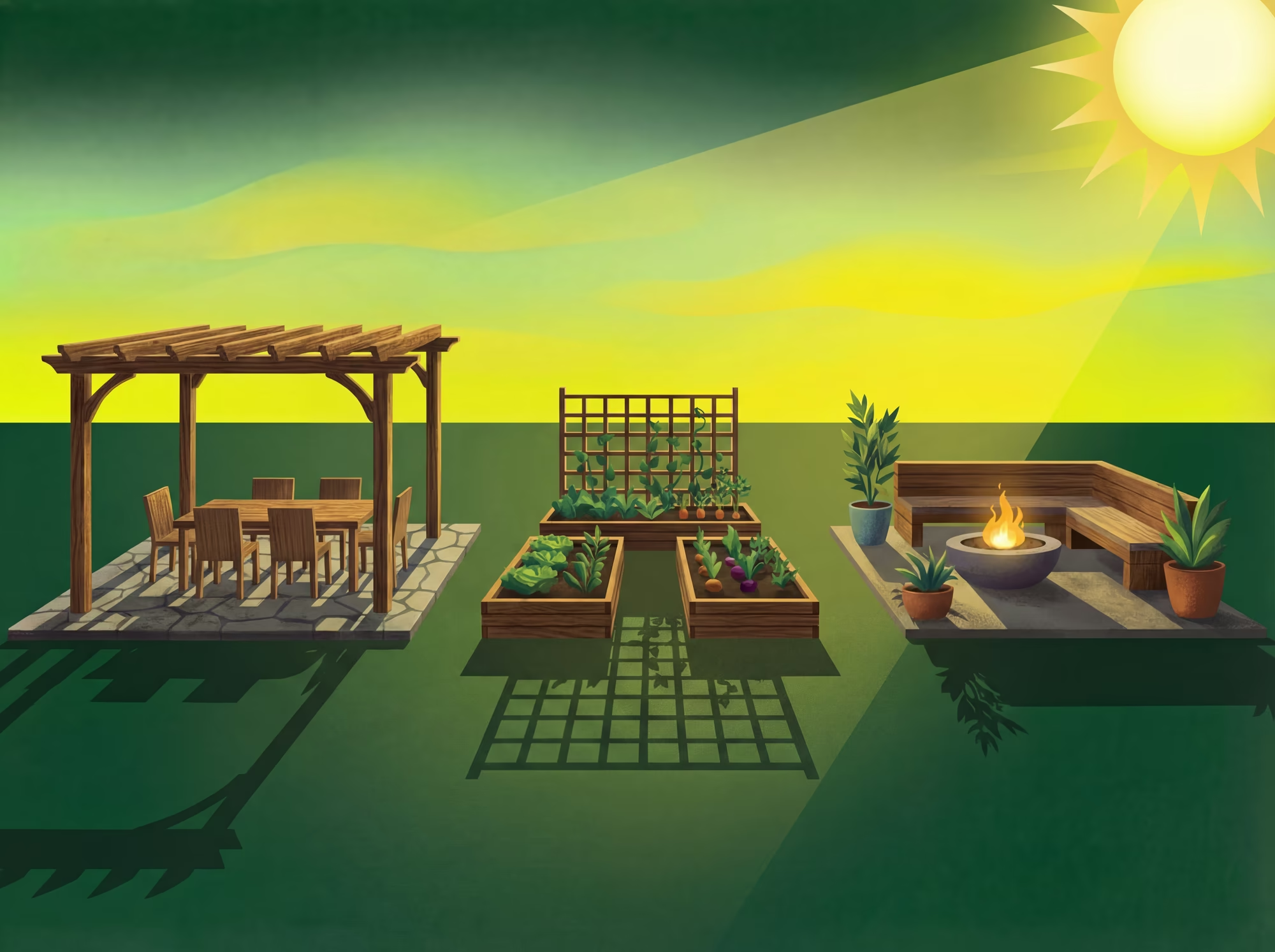
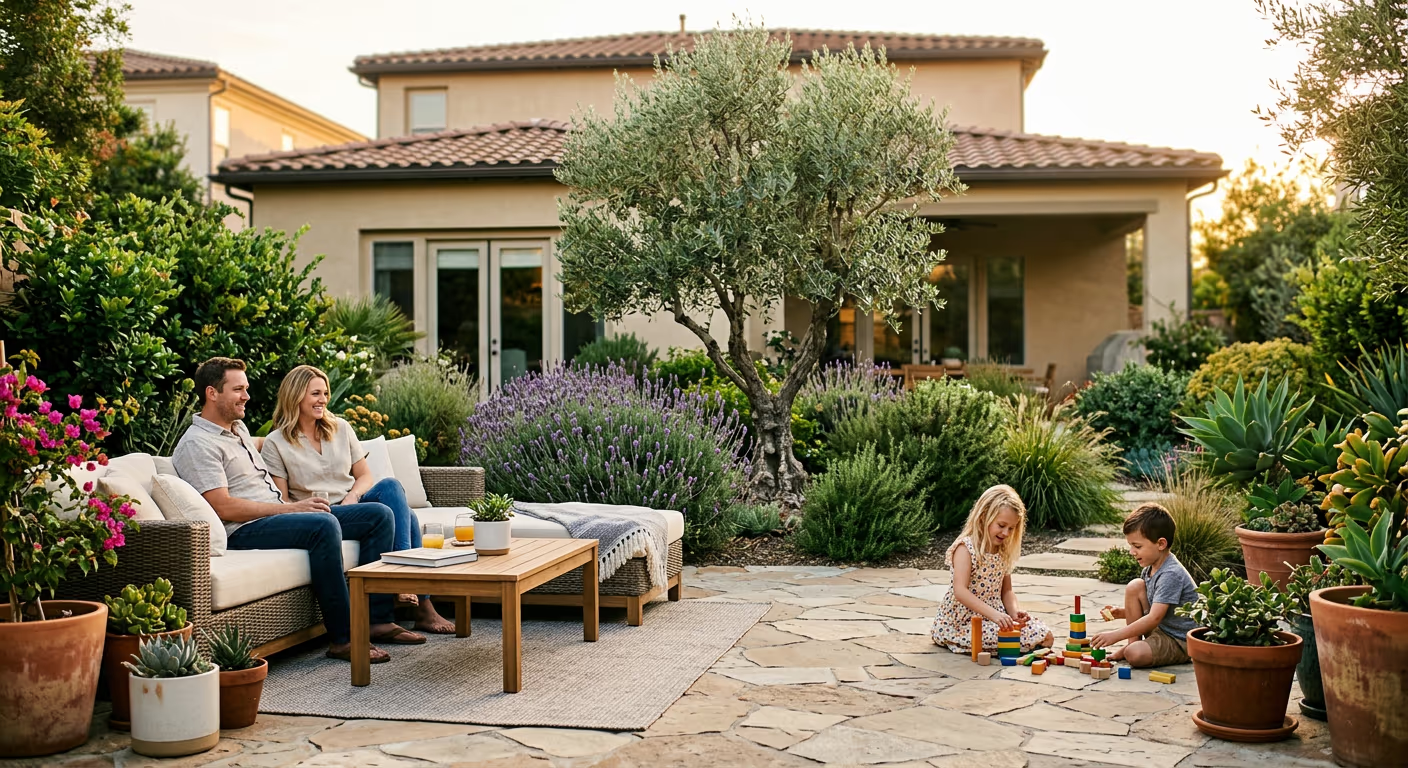
You have probably stood in your backyard at some point, coffee going cold, and thought: I have no idea where to start. There is a corner that gets too much sun, a patch that never grew right, a fence you would rather not look at. The plants you have bought over the years are all fine on their own, but together they do not add up to anything. That feeling is not a lack of taste. It is a lack of a framework.
The best backyard design ideas start with the framework you are missing, not with a shopping list. A backyard design feels finished in SoCal when every zone has a clear purpose, every plant is chosen for its place, and the whole yard reads as one connected outdoor room. The good news is that you may already own the framework that gets you there. If you have built a Botanical Bento, you have practiced every principle a great yard needs. This guide shows you how to scale it up.
KEY TAKEAWAYS
- A finished backyard design comes from composition, not collection: every zone has a purpose and every plant has a place.
- A botanical bento is a yard in miniature, teaching the same composition, microclimate, plant pairing, water, and color logic at a small scale.
- The smartest first move toward a whole-yard design is to build one bento as your prototype.
What are the best backyard design ideas for a finished SoCal yard?
The best backyard design ideas all share one trait: a finished yard gives every zone a clear purpose, chooses every plant for its place, and reads as one connected outdoor room. The gap most homeowners fall into is collecting plants without composing them, ending up with a yard that has plants but does not feel designed.
SoCal has an unfair advantage here. Our Mediterranean climate means year-round outdoor living and a palette of plants that look composed in every season, so a well-designed yard pays off 12 months a year. The goal is simple to say and worth repeating: design the yard you want to be in, the one that pulls you outside in the evening, not the one that merely checks a box.
GOOD TO KNOW
The difference between a yard that has plants and a yard that feels designed is almost always structure, not budget. A modest planting arranged with intention reads as more finished than an expensive collection with no composition behind it.
Why does the Botanical Bento work as the starting point for any backyard design?
A Botanical Bento works as the starting point because it is a yard in miniature: the same composition, microclimate, plant pairing, water and color logic applies at both scales. A bento is a designed object in a container. A yard is a designed outdoor space inside a property line. The principles do not change. The scale does.
Every bento you build teaches five lessons that scale directly:
- Composition. Thriller, filler and spiller become focal tree, mid-layer shrubs and groundcover.
- Microclimate. The sun-and-shade read you do for a pot is the same read you do for a yard.
- Plant pairing. Grouping by water needs in a pot becomes hydrozoning across a yard.
- Water rhythm. Watering a bento as one unit becomes watering each zone on its own schedule.
- Color story. A unified palette in a pot becomes a coherent palette across the whole space.
If you can design a bento, you can design a backyard. Start with the Botanical Bento and everything that follows is the same thinking, scaled.
What are the composition principles that scale from a bento to a full yard?
The four composition principles that scale from a bento to a full yard are thriller-filler-spiller layering, the rule of three, visual weight and balance, and microclimate mapping. Each one starts as a bento concept and grows into a yard-scale move:
- Thriller-filler-spiller layering becomes focal tree, mid-layer mass plantings and groundcover.
- The rule of three becomes odd-numbered groupings repeated across the yard.
- Visual weight and balance spreads the eye-catching elements so no corner feels heavy or empty.
- Microclimate mapping reads sun, shade and wind at yard scale the way you read it for a pot.
The clearest way to see it is to line the two scales up side by side:
| Bento element | Scales up to | SoCal example |
|---|---|---|
| Thriller (tall focal plant) | Focal tree | Dwarf olive, citrus |
| Filler (mounding middle) | Mid-layer mass shrubs | Westringia, rockrose, salvia |
| Spiller (trailing edge) | Groundcover / trailing edge | Dymondia, kurapia |
| One shared color story | One yard-wide palette | Silver, purple, warm citrus |
| One watering schedule per pot | One hydrozone per zone | Low-water beds grouped together |
Thriller-filler-spiller, scaled up
In a pot, the thriller is a tall focal plant. In a yard, it is a focal tree like a dwarf olive or citrus. The bento's fillers become mid-layer mass plantings of Mediterranean shrubs like westringia and rockrose, and the spillers become groundcovers and trailing edges like dymondia and kurapia. Same three layers, bigger canvas. The thriller filler spiller framework is the throughline.
What is the Rule of 3 in landscaping?
The Rule of 3 in landscaping is to plant in groupings of 3, repeat key plants 3 times across the yard, and design in 3 layers: canopy, mid-layer and groundcover.
- Group in 3s. Odd-numbered groupings read as natural rather than rigid.
- Repeat 3 times. Repeating a key plant at least 3 times across the yard creates rhythm that ties the whole space together.
- Build 3 layers. A canopy layer, a mid-layer and a groundcover layer give the yard depth, the same way thriller, filler and spiller give a bento depth.
Visual weight and balance
Every yard has visual weight, the way a large tree or a bold planting pulls the eye. Balance it across the space so one corner does not feel heavy while another feels empty, exactly the way you set a bento's thriller off-center to balance the trailing spiller.
Microclimate mapping
The same sun-and-shade analysis you do for a single pot, you do for the whole yard. Some zones bake, some stay cool, some catch wind. Mapping them is the foundation of every good plant decision.
"I stopped counting how much turf I've taken out after one million square feet."
Robin R., landscape water-efficiency specialist
How do you map your yard into zones the way a bento maps a container?
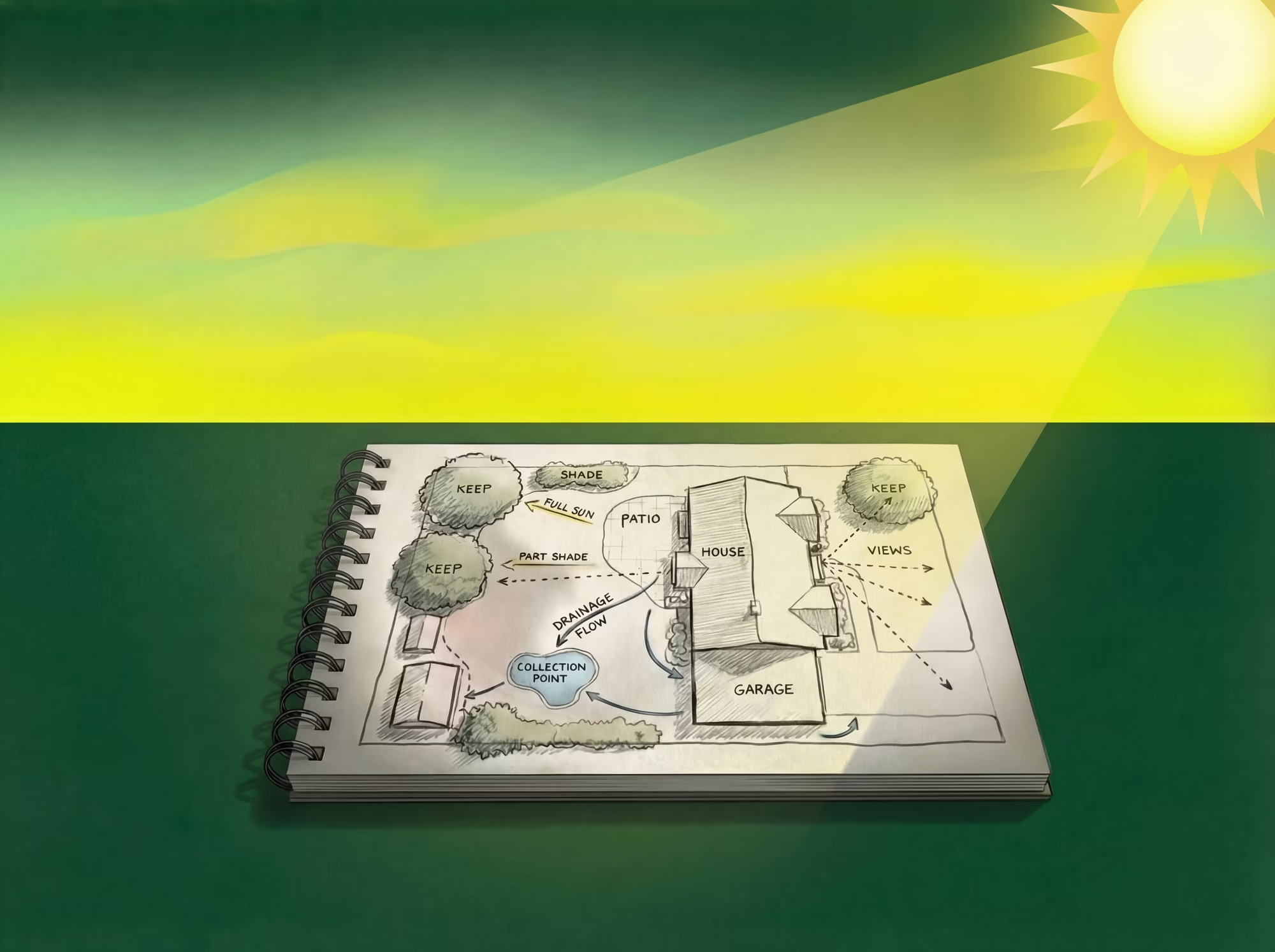
Map your yard into zones by walking it at 1 p.m. and 5 p.m. to mark sun and shade, defining activity zones based on how you live, and giving every zone an anchor object that holds the eye. It is a pencil-and-paper exercise, and it is the single most valuable hour you will spend on your yard.
Start with two walks. At 1 p.m., mark where the sun is strongest and where shade falls. At 5 p.m., walk it again, because the light will have moved and so will the comfortable spots. Note where the wind funnels through. Then define your activity zones by lifestyle: a lounge area, a dining zone, a play space, a garden, and the transitions that connect them.
PRO TIP
Sketch your yard from inside the house, looking out through the windows and doors you use most. The views you live with every day are the ones worth designing for first, and they tell you exactly where your strongest anchor planting should go.
Sightline planning is the bridge between inside and out: design so the best view from your kitchen or living room lands on something beautiful. And here is the key bento callback: every zone benefits from its own anchor object, a designed vignette that holds the eye, just like a bento anchors a patio. The IRWD SimplyScapes design tool can help you turn these sketches into a real plan.

Which plants carry from a bento to backyard scale?
Plants that carry from a bento to backyard scale include westringia, salvia, lavender, kangaroo paw and rosemary, all Mediterranean species that look just as composed in a pot as they do in a mass planting. This crossover is what lets you build visual continuity between your containers and your beds.
Many picks from our water-smart container plant list thrive both in pots and in the ground. A handful work best in just one setting: compact succulents like aeonium make sculptural container moments but rarely anchor a bed, while large natives like manzanita, ceanothus, and oaks belong in the ground, never a pot.
The continuity trick is simple and powerful. Use the same hero plant in a patio bento and in a nearby mass planting, and the two read as one connected design. A pot of lavender by the door echoed by a drift of lavender along the path makes the whole yard feel intentional. We keep vegetables in their own beds rather than the bento, and we frame succulents as sculptural and modern, never desert.
How do you handle the irrigation jump from container to in-ground?
Container plants want frequent shallow water because of their limited soil volume, while in-ground plants want deep infrequent water, and the bridge between them is hydrozoning: grouping plants with similar water needs together at every scale. Get this right and the rest of yard care gets easy.
The math is just soil volume. A pot holds a few gallons of mix that dries in a day or two, so you might water every other day in summer. A bed holds an enormous reservoir of soil that dries slowly, so the same plants in the ground want a deep soak once a week or less. For the full container side of this, see how often to water outdoor potted plants in summer.
Hydrozoning is the yard-scale version of the bento rule never to mix plants with different water needs in one pot. It is the most under-used principle in SoCal landscaping, and it is the difference between a yard that wastes water and one that thrives on a fraction of it. When your zones get larger, a smart controller keeps each hydrozone perfectly tuned, and our guide to smart irrigation controllers and IRWD rebates covers how to choose one and what rebates may apply.
EXPERT TIP: Juan C. Garcia, IRWD Water Efficiency Specialist
Group your yard into hydrozones before you choose a single plant. Decide which areas will be low-water, which will be moderate, and which need regular moisture, then plant accordingly. Designing around water needs from the start saves more water and more frustration than any device you add later.
What does a scaled-up bento look like in three different SoCal yards?
A scaled-up bento looks like one anchor container on a small patio, one anchor bento plus hardscape zones in a small backyard, and three anchor bentos plus in-ground mass plantings in a full transformation. The same principles work at every scale, only the canvas grows.
Case study 1: the renter with a 10x10 patio
One statement bento anchors the space, surrounded by a few supporting container clusters in the same palette. Everything is portable and lease-friendly. The bento principle at work here: one anchor object gives a small space focus. See more in our guide to small space garden ideas.
Case study 2: the small backyard
One large bento anchors the patio, paired with simple hardscape zones for dining and lounging and low-maintenance in-ground plantings around the edges. The bento principle at work here: composition and restraint make a modest yard feel designed.
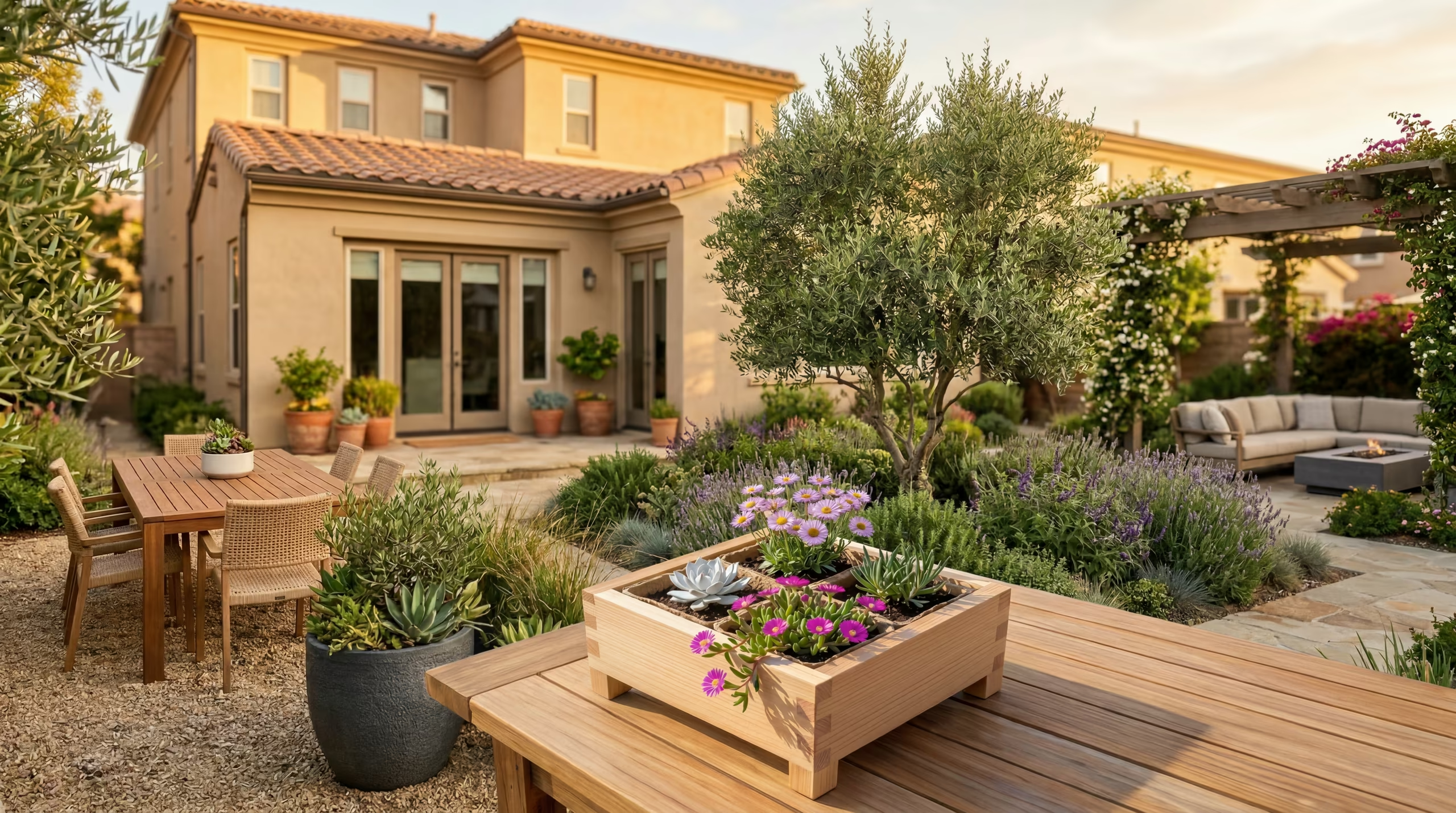
Case study 3: the full transformation
Three zones, each with its own anchor bento, tied together by in-ground mass plantings that repeat the container palette, with hardscape that defines the rooms. The bento principle at work here: repetition and three-layer planting unify a whole yard. For the homeowner ready for this, our low-maintenance landscaping guide and IRWD rebate programs are the natural next steps.
"We reached out to Irvine Ranch Water District, who analyzed our billing account and helped perform a free evaluation of our irrigation system. Once we understood the problem, we contracted with a landscaping company to fix it."
Kelly R., community board member
What is the smartest first move if you want to design your backyard?
The smartest first move is to design and plant one Botanical Bento, a single container that applies the composition, microclimate, plant pairing, and color logic of the full yard you want. The bento is your prototype. It is low-cost, low-risk, and it teaches you the exact thinking a whole-yard design requires, in an afternoon instead of a season.
From there, choose the next step that fits your ambition:
- Smallest step: Attend the IRWD Botanical Bento workshop and build your prototype with guidance.
- Medium step: Use the free SimplyScapes design tool to plan one zone of your yard.
- Largest step: Explore IRWD rebate programs and a full transformation when you are ready to scale all the way up.
Beyond the bento
If the bento is your prototype, then the work after it is not really beyond the bento at all. It is the same idea, multiplying. The most reliable way to grow a yard is to let each successful planting seed the next one.
A few ways to keep the momentum going:
- Build your next bento from the first. Once a container is thriving, design a second for a different zone, then a third, until the anchors are spread across the whole yard.
- Propagate what already works. Many bento plants, like salvia, lavender and rosemary, are easy to divide or take cuttings from. Use your established plants as the free starting stock for new beds and pots.
- Let one zone prove the next. Finish one corner completely, live with it for a season, and let what you learn shape the next zone. A yard built one confident step at a time always reads better than one rushed all at once.
The bento was never the whole plan. It was the first move that made the rest of your Yardtopia feel possible. When you are ready, start with a single bento and let it grow into the yard you have been picturing over that cold cup of coffee. The IRWD Botanical Bento workshop and SimplyScapes are there for whichever step comes next.