A beautiful yard and a kid-friendly Yardtopia are not hard to create. The best family backyards blend play, nature, and style in ways that work for everyone. The secret is intentional design, not choosing between a space your kids love and a space you are proud of, but creating one that is both.
KEY TAKEAWAYS
- Southern California's year-round outdoor season means your backyard can be your family's favorite room, blending active play, creative exploration, and SoCal-smart design.
- You don't need a huge yard or a huge budget -- water-wise materials, native plants, and flexible zones create spaces that grow with your kids from toddlers to teenagers.
- This guide covers water play, nature gardens, climbing zones, hangout spaces for older kids, safe surfaces, and budget-friendly approaches, all designed for how Southern California families actually live.
Imagine a golden Southern California evening. The air smells like citrus blossoms and warm earth. Your kids are running barefoot through the yard, dodging between boulders and clambering onto a climbing wall while you settle into a chair and watch the last amber light stretch across the fence. Laughter bounces off the stucco. The sprinkler is off, the lawn is gone, and somehow the yard has never felt more alive.
That scene is not a fantasy reserved for magazine spreads or homes with acreage. It is what happens when you design a backyard with your family in mind, specifically for the way families actually live in Southern California. And when it comes to backyard ideas for kids, this region gives you something most of the country can only dream about: 300 or more days of outdoor weather, a climate that supports year-round play, and a landscape tradition that is shifting toward smarter, more beautiful, more livable yards.
This guide covers every category of kid-friendly design, from toddler splash zones to teenager hangout spaces, with a SoCal lens on every recommendation. Along the way, we'll point you to deeper dives on mud kitchens, natural playgrounds, backyard games, and playground safety and ground cover for the topics that deserve their own full guides.
Your Yardtopia is waiting. Let's build it together.
Why Your Backyard Is the Best Room in Your Southern California Home
Think about the rooms in your home that get the most use. The kitchen where everyone gathers. The family room where movie nights happen. Now look outside. In Southern California, your backyard has the potential to be the most-used room you own, the one with the best ceiling, the freshest air, and the most flexible floor plan.
A kid-friendly backyard is not just a place where children play while you watch from the window. It is where your toddler discovers the feeling of sand between her fingers. Where your eight-year-old learns to climb higher than he thought possible. Where your teenager actually puts the phone down because the hammock and the evening breeze are too good to leave. And where you, finally, get to sit down and breathe.
GOOD TO KNOW
Southern California homeowners use their outdoor spaces an average of 300+ days per year. A well-designed backyard is not just a nice-to-have. It is additional living space that your family uses daily.
For foundational planning concepts that apply to any yard transformation, explore our landscape planning fundamentals.
Research consistently shows that kids who spend regular time in unstructured outdoor play develop stronger motor skills, longer attention spans, better emotional regulation, and more creative thinking. They sleep better. They argue less. They come inside calmer. And in a region where you can be outside comfortably in every month of the year, not taking advantage of that feels like leaving the best room in your house locked.
The "extension of living space" philosophy is central to everything Yardtopia does. Your yard is not separate from your home. It is the room where the walls come down and the sky opens up. Water-wise landscaping and kid-friendly design are not trade-offs. They are natural partners: native plants create sensory play opportunities, drought-tolerant groundcovers make durable play surfaces, and smart irrigation means less time with a hose and more time watching your kids explore.
It starts with seeing the space differently. Not as the yard. As the room.
"Define those important zones that link the elements of a garden, providing room to get in and out of those spaces, and designing each area as its own unique experience."
David Gomez, Water Efficiency Specialist, IRWD
How Can Kids Play with Water in a Drought-Conscious Yard?
Here is a tension every Southern California parent feels: kids love water play. They are drawn to it like magnets. But we live in a region where water consciousness is part of the culture, part of the landscape, part of who we are. So how do you let your kids splash and pour and spray without feeling like you are working against the values that make this community what it is?
The answer is simpler than you might think. Water-wise play and water play are not opposites. They are design choices, and the best fun backyard ideas for kids embrace both.
Recirculating Splash Pads and Spray Grounds
A recirculating splash pad is one of the smartest water play features you can install. Unlike a sprinkler left running on the lawn, a splash pad cycles the same water through a closed system. Jets, misters, and spray nozzles pop up from a flat, slip-resistant surface. Kids run through, cool off, laugh until their sides ache, and the water goes right back into the system to be filtered and recirculated. The footprint can be as small as six by eight feet, and the surface doubles as a patio when the water is off.
PRO TIP
A recirculating splash pad uses 50 to 100 gallons per session compared to 500+ gallons for a sprinkler left running for an hour. The water cycles through a closed system, making it one of the most water-efficient play features you can install.
Water Tables and Sensory Stations
For younger kids, a water table or sensory station delivers hours of engagement with a fraction of the water. Fill a table with two to three gallons, add cups, funnels, boats, and scoops, and watch a toddler discover physics. These stations fit on any patio, cost under $50 for a basic setup, and teach cause-and-effect thinking while keeping kids cool on warm afternoons.
Rain Harvest Play Systems
Connect your water play to a rain barrel system and you create something even better: a play feature that teaches kids where water comes from. Kids fill their water table or sensory station from captured rainwater, learning conservation as a natural part of play, not a lecture. In a region where every drop matters, this turns backyard activities for kids into a quiet lesson they carry with them.
Pair water play features with native plantings that attract butterflies and hummingbirds. A small fountain or birdbath surrounded by California milkweed and salvia creates a living water feature the whole family enjoys.
For drip irrigation setup that integrates with play gardens, and California-native plant selection around water features, explore those guides next.
What Is a Nature Play Space and Why Do Kids Love Them?
Close your eyes and think about your favorite childhood memory outdoors. Chances are it was not on a manufactured play structure. It was climbing a tree, digging in dirt, building something from sticks, catching a lizard, picking a flower you probably were not supposed to pick. Nature play taps into something ancient and essential in children: the need to explore the natural world on their own terms.
Nature play is unstructured outdoor exploration using natural materials. Logs, boulders, sand, plants, water, dirt. No batteries, no instructions, no single "right" way to play. And the developmental benefits are remarkable. Children who regularly engage in nature play demonstrate stronger problem-solving skills, longer attention spans, and better emotional regulation compared to peers who primarily play on manufactured equipment.
"My generation was more attuned to nature, but I feel like my kids don't care as much. At Urban Ecology Studios, my partners Dana Martin, Suzee Ramirez and I work a lot with local schools on garden projects. With these habitat gardens, the kids are out in nature, exploring the plants, marveling at pollinators, climbing on rocks... It's great!"
Farah Saquib, Partner, Urban Ecology Studio
Sensory Gardens with California-Native Plants
Build a sensory garden with plants kids can touch, smell, and in some cases safely taste. Lavender releases its fragrance when little hands brush the stems. Rosemary is sturdy enough for kids to run their fingers through without damage. California poppies open and close with the sun, teaching kids to observe. Strawberries growing in a raised bed at kid height turn gardening into snacking. A butterfly and hummingbird garden adds a layer of wonder that no toy can replicate. Plant milkweed for monarchs and salvia for hummingbirds, and your yard becomes a living science lesson your kids will remember long after the swing set is gone.
Mud Kitchens: The Play Feature Every Kid Loves
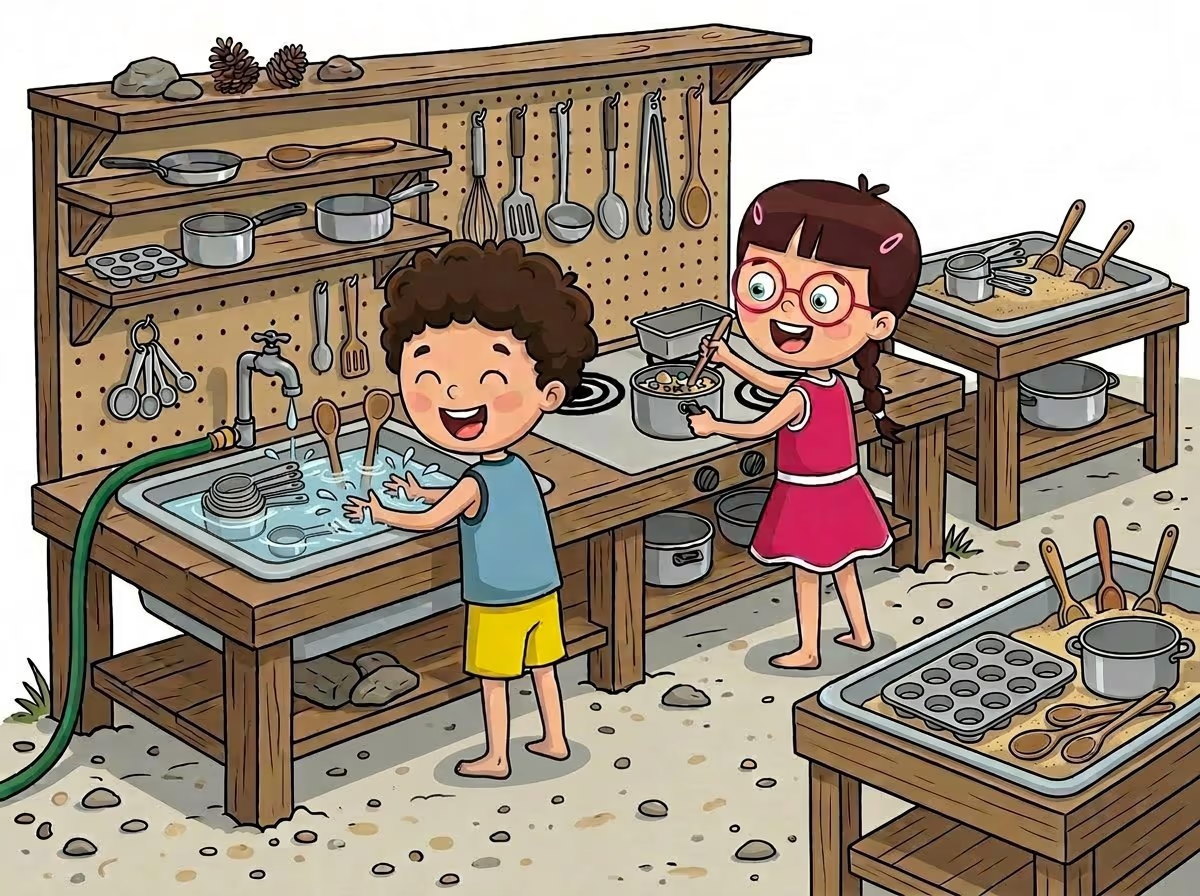
If you have not heard of a mud kitchen, prepare to hear your kids beg for one. A mud kitchen is an outdoor play station where kids "cook" with mud, water, leaves, seeds, and whatever nature provides. It is one of the most popular outdoor play features in the country right now. We have a complete guide on how to build a mud kitchen that covers materials, layout, age-appropriate features, and SoCal-specific design tips. It is one of the best fun backyard ideas for kids of any age.
Edible Gardens Kids Can Grow (and Eat)
Kid-height raised beds planted with cherry tomatoes, snap peas, strawberries, and herbs give children ownership of a real, living project. They water it. They watch it grow. They pick the tomatoes and eat them warm from the sun, and something shifts. The backyard becomes their place, not just the yard they are sent to when you need them out of the house.
GOOD TO KNOW
Studies show children who regularly engage in nature play demonstrate stronger problem-solving skills, longer attention spans, and better emotional regulation compared to peers who primarily play on manufactured equipment. Nature play is not a trend. It is how children have learned for thousands of years.
For deeper guidance on designing a complete nature play environment, explore our guide to natural playground ideas. And for help choosing the right California-native plants for sensory gardens, our plant guide covers the best species for every SoCal microclimate.
How Do You Set Up Creative Play Zones in Your Backyard?
Not every backyard moment needs to be a physical one. Some of the best play happens when kids are building, painting, making music, and inventing worlds from scratch. Creative play zones turn your Yardtopia into a studio, a stage, and a laboratory, all at once.
Chalk Walls, Art Stations, and Music Walls
Paint a section of your fence with chalkboard paint and you have created an art surface that resets with every rainstorm. Add a weatherproof easel, a bucket of sidewalk chalk, and a splash-safe area for finger painting, and you have an outdoor art station that keeps kids engaged for hours. The beauty of chalk and paint outdoors is that mess is not mess. It is just color that washes away.
A music wall takes creativity in a different direction. Mount pots, pans, metal bowls, wooden spoons, a xylophone, and found-object percussion instruments on a fence or wall. Kids create rhythms, experiment with sound, and learn that music does not require a screen or an app.
Loose Parts Play and Building Zones
Loose parts play is one of the most research-backed approaches to creative development. Give kids a collection of wooden blocks, fabric scraps, PVC pipes, pool noodles, and cardboard boxes, and step back. They will build forts, bridges, castles, vehicles, and structures you could never have imagined. The materials are inexpensive and the play value is limitless.
Sand Pits and Dig Zones
A dedicated sand pit with a cover to keep cats and debris out remains one of the most reliable backyard toys for kids under seven. Add scoops, molds, small construction vehicles, and a water source, and a sandbox becomes a construction site, a bakery, a beach, and an archaeological dig, all before lunch.
PRO TIP
The most-used creative play stations share one thing in common: they are open-ended. A chalk wall beats a coloring station because the possibilities reset every time. A bucket of loose parts beats a single-purpose toy because kids invent the game. When designing creative zones, invest in the surface, not the supplies.
What Are the Best Active Play Features for a Kid-Friendly Backyard?
Some kids need to run, climb, swing, and launch themselves through the air before they can sit still for five minutes. Active play features give them exactly what they need: physical challenge, controlled risk, and the full-body satisfaction of pushing their limits. And here in Southern California, where mild weather means your backyard ideas for kids can be active ideas twelve months a year, the right features get daily use.

Play Structures That Grow With Your Kids
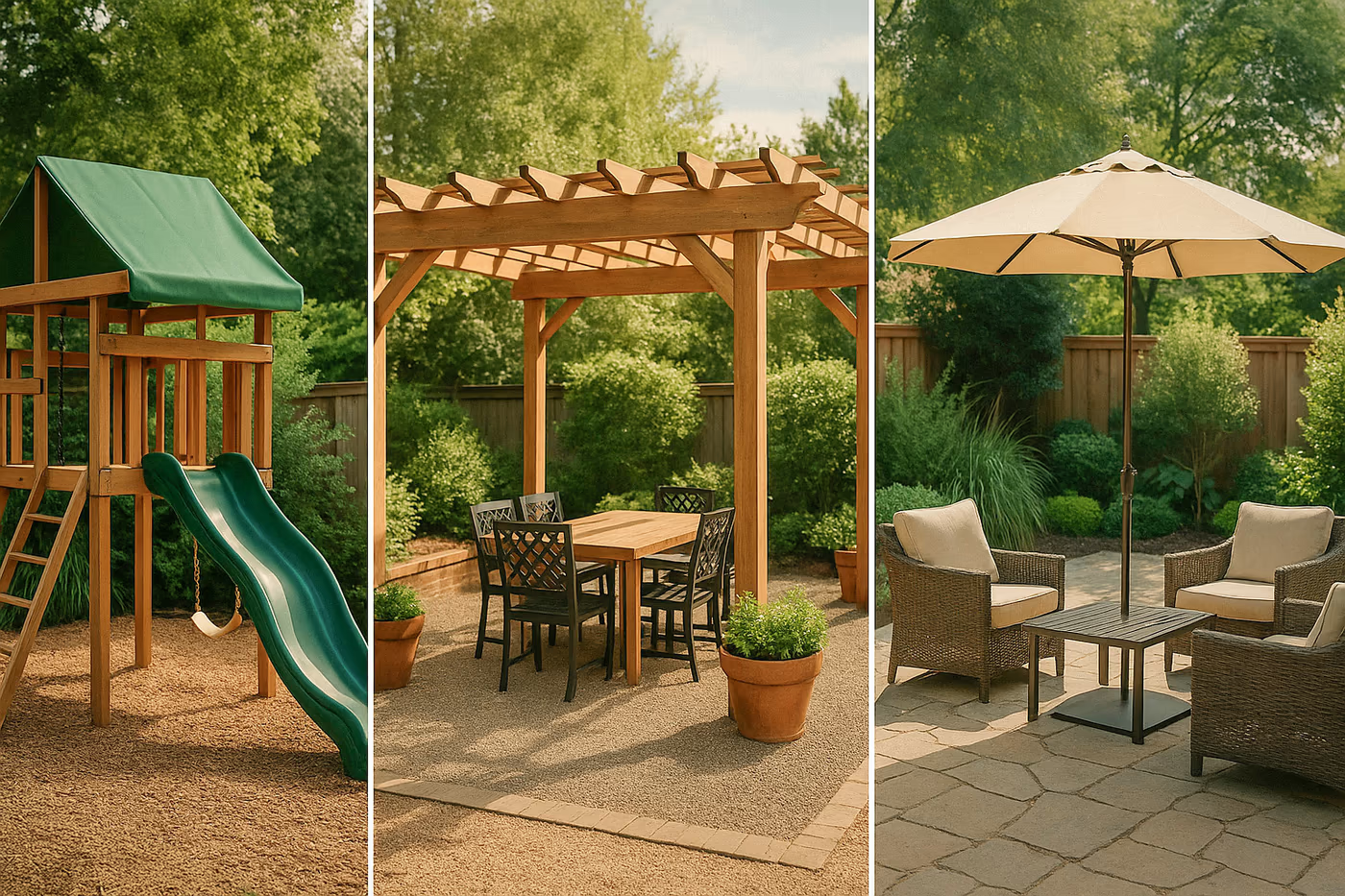
The classic swing set has evolved. Modern modular play structures can be configured for toddlers (low platforms, baby swings, short slides) and reconfigured as kids grow (rock walls, monkey bars, rope bridges, taller decks). A well-chosen modular system serves a family for eight to ten years. One thing to watch in this region: choose structures made from materials that do not absorb extreme heat. Metal slides and dark plastic surfaces can become dangerously hot in inland valleys during summer afternoons.
Climbing Walls, Ninja Courses, and Zip Lines
For the adventurous family, a fence-mounted climbing wall costs a fraction of a commercial installation and delivers years of backyard activities for kids. Ninja warrior courses (rope swings, ring traverses, balance obstacles) have exploded in popularity and are surprisingly DIY-friendly. Backyard zip lines work in yards with 40 to 150 feet of run and provide the kind of thrill that gets kids outside voluntarily.
Sports Courts and Multi-Use Zones
A half-court basketball setup, a pair of soccer goals, or a multi-sport court on synthetic turf creates a space that serves the whole family. In SoCal, where backyard toys for kids need to hold up to year-round use, synthetic turf courts offer a durable, low-maintenance surface that drains well and stays playable in every season.
| Feature | Typical Cost | Best For |
|---|---|---|
| Modular play structure | $800 to $3,000 | Ages 2-10, multiple kids |
| In-ground trampoline | $1,500 to $4,000 installed | Ages 3-15, daily use |
| Backyard zip line | $200 to $600 DIY | Ages 5-14, adventure seekers |
| Climbing wall (fence-mount) | $150 to $500 DIY | Ages 4-12, small spaces |
| Half-court basketball | $500 to $2,000 | Ages 6+, teens especially |
For activity ideas that pair with these features, our guide to backyard games for kids covers 30+ games organized by age group. And because any elevated play structure needs the right surface underneath, our playground safety and ground cover guide walks through fall zone requirements and material comparisons.
What Are the Best Backyard Ideas for Older Kids and Teenagers?
Here is what most "kid-friendly backyard" content gets wrong: it stops at elementary school. But tweens and teens need outdoor spaces too, and they will actually use them if the space feels like theirs. The number one reason teenagers say they don't spend time outside? The yard doesn't have anything for them.
Movie Nights Under the Stars
An outdoor movie zone might be the single best investment for keeping older kids in the backyard. A portable projector, a blank wall or pull-down screen, comfortable floor cushions or beanbags, and a Bluetooth speaker. That is the setup. In Southern California, where dry evenings stretch from April through November (and honestly most of the winter too), an outdoor movie night becomes a weekly ritual.
Fire Pit Hangouts and Evening Gathering Spaces
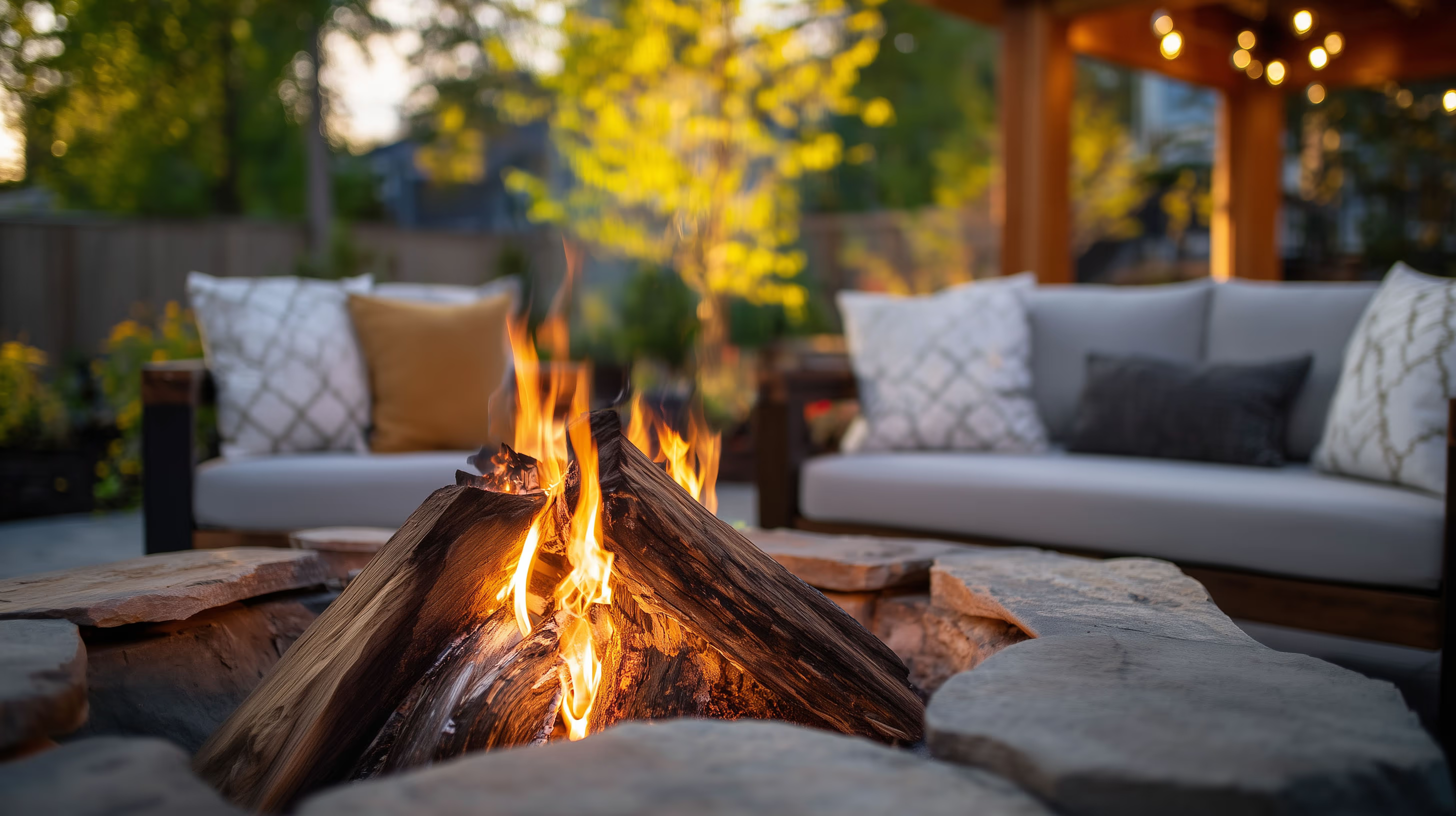
A fire pit gathering area works for the whole family, but teenagers especially gravitate toward it. There is something about fire that draws people together without demanding conversation. S'mores help. So do warm SoCal evenings where you can sit outside in a t-shirt in January. For fire pit design options, check out our outdoor fire pit guide.
Teen Lounges and Quiet Corners
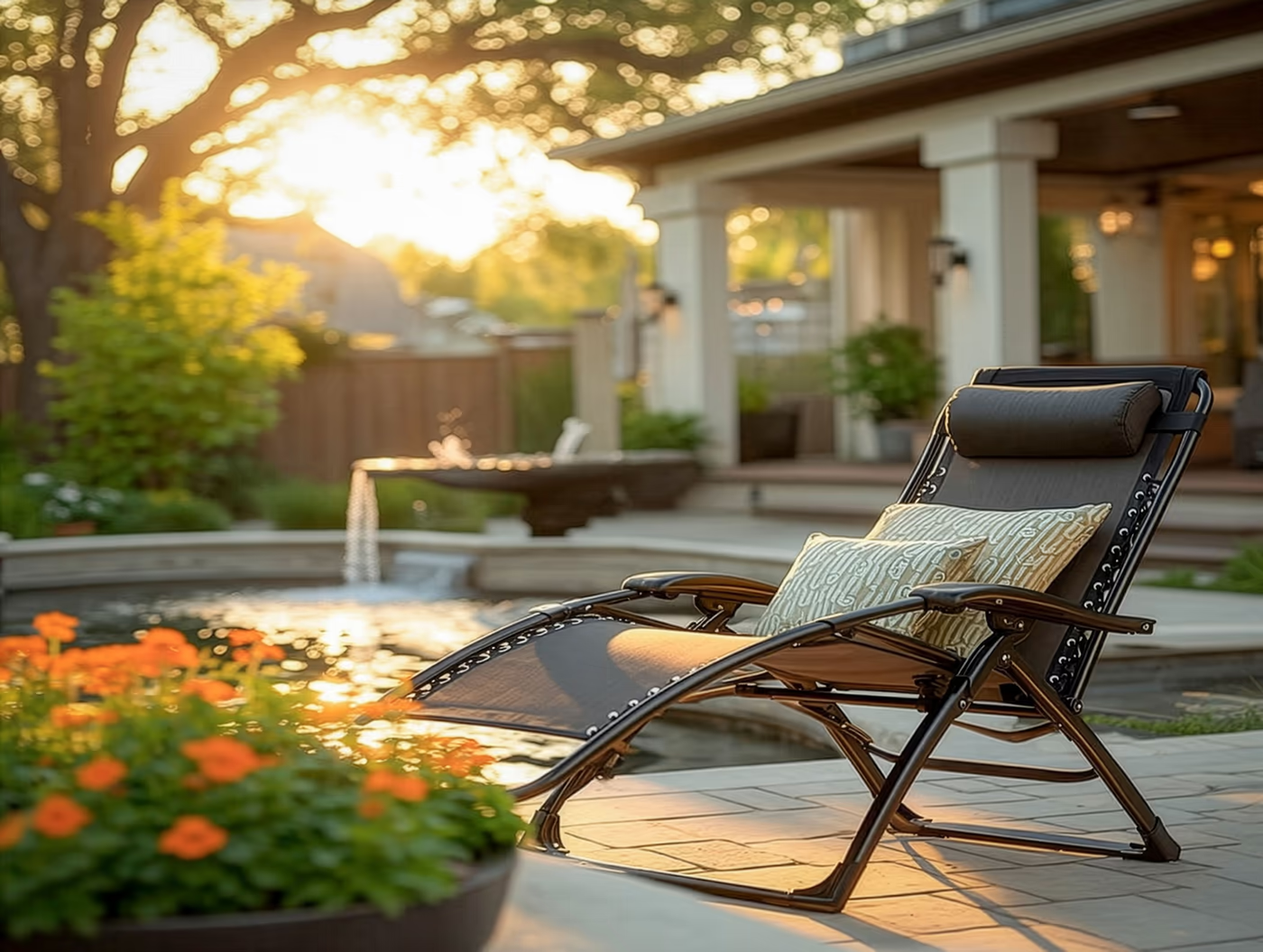
A covered patio section with weather-resistant cushions, string lights, and a designated spot for a Bluetooth speaker creates a space that belongs to them. Hammocks strung between trees or from a dedicated frame. A reading nook in a shaded corner. The key is giving older kids a zone that feels separate from the "parent" areas of the yard. They want autonomy. A dedicated corner gives them that without giving up proximity.
DIY projects work powerfully for this age group. A teenager who helps build the fire pit, string the lights, paint a mural on the fence, or construct raised garden beds feels ownership. And a teen who owns a space is a teen who uses it.
GOOD TO KNOW
The number one reason teenagers say they don't spend time outside? The yard doesn't have anything for them. A dedicated zone that feels like "their space" changes everything. Even a hammock, a string of lights, and a Bluetooth speaker can turn an unused corner into their favorite spot.
For covered hangout structures, explore our guide to shade solutions for your yard.
What Are the Best Kid-Friendly Ideas for a Small Backyard?
Here is the honest truth about small backyards and building your Yardtopia in a small space: they force better design. When you have 200 square feet instead of 2,000, every decision matters. Every feature needs to earn its footprint. And the result, when done intentionally, is often a yard that delivers more play value per square foot than a sprawling lawn with nothing in it.
Multi-Purpose Zones for Compact Yards
The magic of small-yard design is multi-purpose thinking. A sandbox with a fitted cover becomes a seating platform when the toys are put away. A chalkboard-painted fence doubles as an art station and a property line. A fold-down table against the house wall serves as a mud kitchen station, a craft table, and a dining surface depending on the hour.
Divide even a 15 by 20 foot space into three zones: active (climbing wall, balance beam), creative (art station, sand pit), and green (container garden, sensory plants). Each zone only needs 50 to 70 square feet. The separation creates a sense of variety and exploration that a single open space cannot.
Container Gardens and Portable Play
Fold-away and portable features are a small-yard family's best friend. Collapsible soccer goals that lean against the fence. Inflatable splash pads that store flat in a bin. A removable balance beam that slides under the deck. Container gardens at kid height, strawberries, cherry tomatoes, herbs, clustered along fence lines, give kids growing projects without dedicating permanent bed space.
PRO TIP
The most effective small-yard designs use three principles: go vertical, make everything multi-purpose, and choose fold-away over permanent. A 200-square-foot yard with smart zoning can deliver more play value than a 1,000-square-foot lawn with no features.
For space planning tools, try the SimplyScapes design tool. And for zone planning fundamentals, our landscape planning guide covers the basics.
How Do You Create a Kid-Friendly Backyard on a Budget?
Some of the best backyard ideas for kids cost almost nothing. And the rest can happen in phases, spreading the investment over months or years while your kids enjoy each new addition into your Yardtopia as it arrives.
Ideas That Cost Almost Nothing
Nature scavenger hunts use the plants and creatures already in your yard. Painted rock gardens turn an afternoon art project into permanent yard decor. Obstacle courses built from household items (pool noodles, hula hoops, buckets, jump ropes) cost nothing and can change every weekend. Chalk art on existing concrete transforms your patio into a game board, a racetrack, or a mural. Cardboard box forts are free and can be as elaborate as your recycling bin allows. If your yard has trees, a rope swing is one of the highest-value, lowest-cost additions you can make.
The Best DIY Weekend Projects
With a modest budget and a weekend, you can build features that rival professional installations:
Under $50: a chalk wall (one can of chalkboard paint on a fence section), a nature scavenger hunt station, a painted rock garden.
Under $200: a sand pit with a plywood cover, a rope swing from a sturdy branch, a container herb garden with kid-friendly plants.
Under $500: a DIY mud kitchen built from reclaimed pallets, climbing holds mounted on an existing fence, a string light canopy over a seating area.
IRWD Rebates That Offset Your Investment
Here is where living in IRWD's service area becomes a real advantage. Turf replacement rebates, irrigation upgrade incentives, and water-efficient landscape programs can offset a meaningful portion of your backyard transformation costs. Replacing a water-hungry lawn with drought-tolerant play surfaces and native plantings? That is exactly what these programs are designed to support. Check IRWD rebate eligibility for landscape improvements.
| Budget Tier | What You Can Build | Timeline |
|---|---|---|
| Under $50 | Chalk wall, nature scavenger hunt station, painted rock garden | One afternoon |
| Under $200 | Sand pit with cover, rope swing, container herb garden | One weekend |
| Under $500 | DIY mud kitchen, climbing wall, string light canopy | Two weekends |
| $500 to $2,000 | In-ground fire pit, modular play structure, synthetic turf zone | Phased over a month |
| $2,000+ | Splash pad, sports court, full landscape redesign | Professional installation |
The phased approach is how most families build their dream yard. Year one: nature play features and creative stations. Year two: an active play structure. Year three: hardscape zones for the whole family. Each phase is a celebration, and your kids get to enjoy every step of the journey.
What Is the Best Ground Cover for a Backyard Playground in Southern California?
Safety surfaces might not be the most glamorous topic in kid-friendly backyard design, but in Southern California, the ground your kids land on is one of the most important decisions you will make. And here, it is not just about cushioning a fall. It is about temperature.
Metal slides burn in July. Dark rubber mulch can reach 160 degrees or more in direct sun. Concrete radiates heat long after the sun has shifted. In SoCal, material choice is a safety decision, not just an aesthetic one.
Engineered wood fiber is affordable, natural-looking, and provides excellent impact absorption. It does need annual replenishing as it compresses and decomposes, but the cost per square foot makes it accessible for most families.
Rubber mulch is more durable and requires less maintenance, but dark colors absorb significant heat. If you go this route in Southern California, choose light-colored options and always test the surface temperature before letting kids play barefoot.
Poured-in-place rubber is the premium option. It creates a consistent, level surface that is virtually maintenance-free. It is available in light colors that stay dramatically cooler in SoCal heat.
Synthetic turf is versatile, clean, and available with cooling infill technology designed for hot climates. It works well for multi-use areas where kids run, tumble, and play field games.
Pea gravel offers excellent drainage and a natural look, but the small stones are not ideal for toddlers who put everything in their mouths.
Sand is a classic choice that doubles as a play material. It requires regular maintenance and covers to keep clean, but kids love it.
One critical note: any elevated play structure needs impact-absorbing surface material extending at least six feet in all directions from the structure. This is not a suggestion. It is a safety standard.
GOOD TO KNOW
In Southern California's summer heat, surface temperature matters as much as impact absorption. Dark-colored rubber mulch can reach 160 degrees or more in direct sun. Always test surface temperature with your hand before letting kids play barefoot. Light-colored materials and shaded play areas dramatically reduce burn risk.
How Do You Plan a Kid-Friendly Backyard Transformation?
You have read the ideas and explored other guides on Yardtopia.com. You have bookmarked the sections that made your kids' eyes light up. Now the question is: where do you actually start? The answer is not a trip to the hardware store. It is a walk through your own yard.
- Step 1: Observe. Spend two weeks watching how your family actually uses the yard. Where do your kids naturally gravitate? Where do they avoid? Where does water puddle? Where does shade fall at different times of day?
- Step 2: Prioritize by age. List what each child needs now and what they will need in two to three years. Design for where your family is heading, not just where it is today.
- Step 3: Measure and zone. Grab a tape measure and sketch your space. Identify zones: active, creative, nature, gathering, and transition.
- Step 4: Set a budget tier. Reference the budget section and decide whether you are building all at once or phasing over time.
- Step 5: Check rebates. Before you spend anything, check IRWD rebate eligibility for landscape changes.
- Step 6: Decide DIY vs. professional. Be honest about your skills and your time. DIY creative stations and nature features are great weekend projects. Elevated structures and plumbing deserve professional hands.
- Step 7: Start with one zone. Pick the highest-impact, lowest-cost zone and build it first. One completed zone creates momentum and shows you what the rest of the yard can become.
The Bottom Line
Your family's perfect backyard starts with understanding how you actually live outside. Observe, plan, prioritize, and start with one zone. You don't need to build everything at once. The best kid-friendly backyards grow with your family, season by season.
Your next steps: Walk your yard this weekend and note where your kids naturally play. Pick one idea from this guide that excites your family. Check IRWD rebate eligibility for landscape improvements. Explore the SimplyScapes design tool to visualize your transformation.
For step-by-step planning fundamentals, our landscape planning guide walks you through the full process. And for plant selection that supports play, wildlife, and beauty, Plants 101 is your starting point.
Frequently Asked Questions About Kid-Friendly Backyards
How do you make a backyard more fun for kids?
Start creating your Yardtopia with inspiration from what your kids already love doing. If they love running, add an obstacle course or sports zone. If they love building, create a loose parts station or mud kitchen. The most-used backyards combine at least three play types: active (climbing, running), creative (art, building, mud play), and nature (gardens, water, sand). In Southern California, you can build all three with fun backyard ideas for kids that cost under $500 using DIY approaches.
What are backyard playground must haves?
Every kid-friendly backyard playground needs three fundamentals: impact-absorbing ground cover beneath any climbing or elevated feature, age-appropriate equipment, and shade. Beyond safety basics, the features families use most are a swing, a climbing element, and a creative play station like a sandbox or mud kitchen. In SoCal, shade structures and light-colored surfaces are essential.
How do you make a backyard playground fun?
The best backyard playgrounds go beyond a swing set. Add variety: a climbing wall for physical challenge, a sand pit for sensory play, a chalk wall for creativity, and open space for running games. Rotate backyard activities for kids seasonally to keep things fresh. Most importantly, include open-ended features (loose parts, building materials, natural elements) that let kids invent their own games rather than following a script.
What can kids do in the backyard?
More than most parents realize. Beyond traditional play equipment, kids can tend a vegetable garden, run a mud kitchen restaurant, build obstacle courses, create outdoor art, host movie nights, play field games, explore nature, catch bugs, stargaze, and build forts. Southern California's year-round outdoor season means these backyard activities for kids are not limited to summer. For organized game ideas, check out our guide to backyard games for kids.
How do you make a kid-friendly backyard on a budget?
Start with what is free: nature scavenger hunts, painted rock trails, obstacle courses from household items, and chalk art on existing concrete. Under $200, you can build a sandbox, hang a rope swing, or start a container garden. A DIY mud kitchen costs under $100 using reclaimed materials. Kid-friendly backyard ideas on a budget work best when you phase your approach, building one zone at a time. IRWD rebate programs can offset costs for landscape improvements like turf replacement and irrigation upgrades.
What is the safest ground cover for a backyard playground?
For Southern California playgrounds, engineered wood fiber and poured-in-place rubber are the most popular choices. Engineered wood fiber is affordable and provides excellent impact absorption but needs annual replenishing. Poured-in-place rubber is more expensive but virtually maintenance-free and available in light colors that stay cooler in SoCal heat. Any surface under climbing or elevated play features should extend at least six feet in all directions.
What are good backyard ideas for older kids who are bored of play structures?
Older kids and teens want spaces that feel like theirs: a hammock reading nook, an outdoor movie zone, a fire pit gathering area, or a sport court for basketball and volleyball. DIY projects work especially well for backyard ideas for older kids. Let them string the lights, build the fire pit, or paint a mural on the fence. A teen who helps create a space is a teen who actually uses it.