
Family-friendly backyard design is about giving every corner of your outdoor space a reason to be used, so that your family actually uses it. Most backyards fall short of that, not because they lack square footage, but because they lack intention. A flat expanse of grass or an empty patio offers space without purpose. Creating a family friendly Yardtopia doesn't always require a huge property, an unlimited budget, or a professional landscape architect. It requires something simpler: a backyard that was designed with your family's real life in mind.
KEY TAKEAWAYS
- The best family backyards are not designed around any one feature or any one person. They are designed around moments: the weeknight dinner outside, the Saturday morning coffee, the Sunday evening fire. Intentional zoning turns your backyard into a space the whole family actually uses.
- You do not need a large yard or a large budget. Dividing even a modest space into clear zones (a place to eat, a place to gather, a place to play, and a place to breathe) creates a backyard that feels bigger and works harder than an open lawn ever could.
- Southern California gives you something most of the country cannot offer: 300 days of outdoor weather. A family-friendly backyard design takes full advantage of that by creating a space your family will use year-round, not just on summer weekends.
This guide walks through how to think about that design for your outdoor living space: how to zone your space, what to put in each zone, and how to make the whole thing work for the way Southern California families actually live. All just a few steps outside your door.
Why Does Designing for Your Family Change Everything About Your Backyard?
Creating a Yardtopia centered around family begins with your intentions. One is a space attached to your house. The other is a room your family lives in.
Families who design their outdoor spaces with purpose use them three to five times more frequently than families who do not. That is not a statistic about landscaping budgets or square footage. It is about having a reason to go outside. A comfortable place to sit. A table big enough for dinner. A corner where the kids naturally drift. When those elements are there, the back door stays open.
The shift starts with seeing your yard the way you see the inside of your home. You would not leave your living room as an empty rectangle and hope your family figures out how to use it. You would put a couch here, a table there, a reading lamp in the corner. You would create spaces within the space. Your backyard deserves the same thinking.
In Southern California, this matters more than most places. You have the climate to be outside comfortably in every month of the year, from a January evening with the fire pit crackling to an August morning with the canyon breeze still cool. Your backyard is not a seasonal luxury. It has additional living space, a room with no ceiling and the best light in the house. Family-friendly backyard design is how you unlock it. Be sure to check your HOA guidelines before building.
GOOD TO KNOW
The "extension of living space" philosophy is the foundation of great outdoor design. Your yard is not separate from your home. It is the room where the walls come down and the sky opens up. Families who approach outdoor spaces with the same intentionality they give their interiors consistently report that their backyard becomes the most-used room in the house.
How Do You Zone Your Backyard for Different Family Moments?
The single most effective technique in family-friendly backyard design is zoning: dividing your outdoor space into distinct areas, each with its own purpose. Not with fences or walls, but with furniture placement, changes in surface material, a row of deer grass or Cleveland sage, shifts in lighting, or even just a change in elevation (a two-inch step down into a patio, a raised planter that frames a seating area).
In order to create your ideal Yardtopia centered around family, think about how your family actually spends time outside, and you will find there are four to five types of moments that repeat:
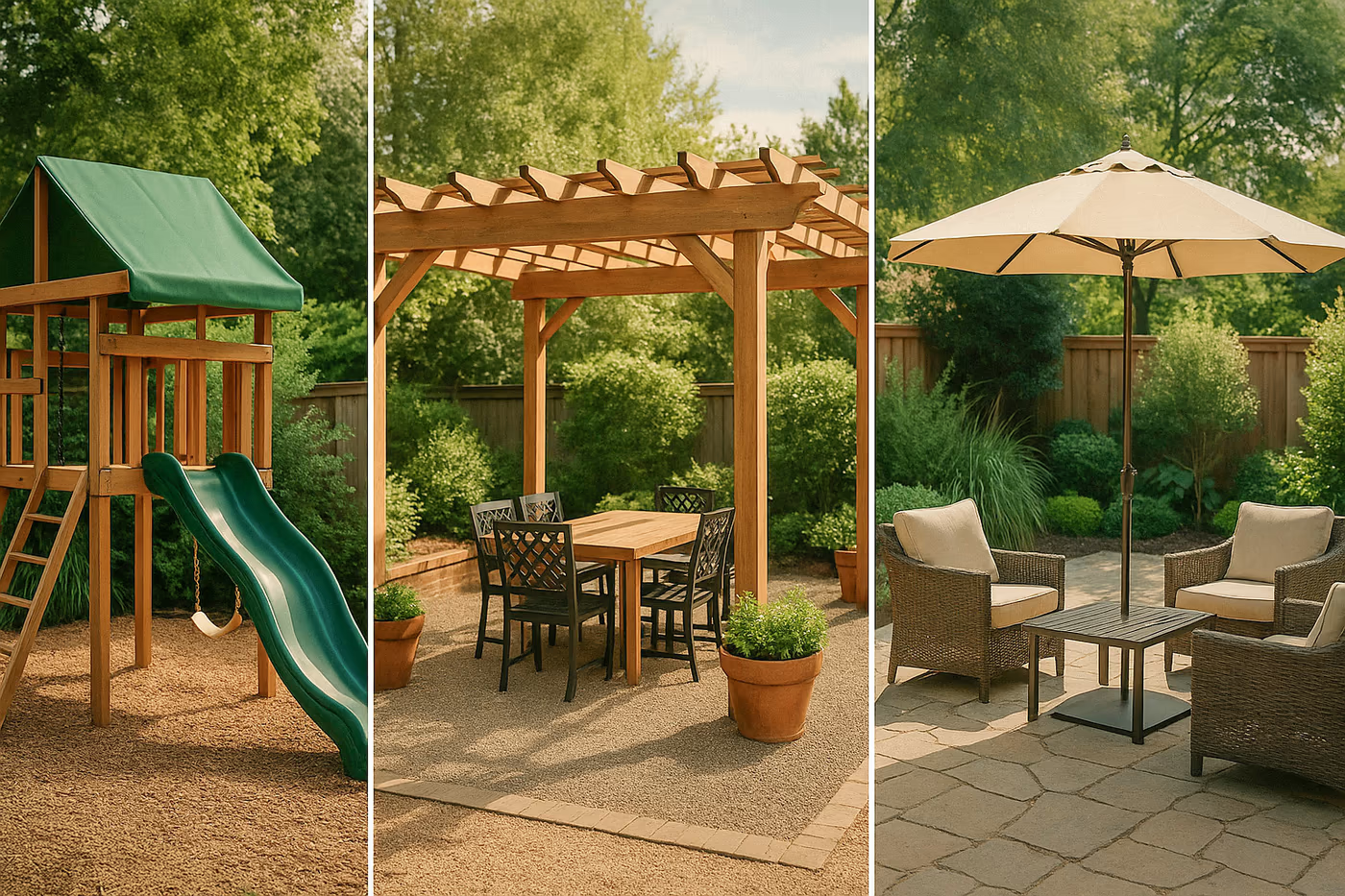
The meal. Breakfast, lunch, dinner, or just snacks. You need a table, shade, and a surface that is easy to clean.
The gathering. Evening conversations, fire pit nights, watching the sunset. You need comfortable seating arranged so people face each other.
The play. Kids running, climbing, digging, inventing. You need open ground and features that match your children's ages.
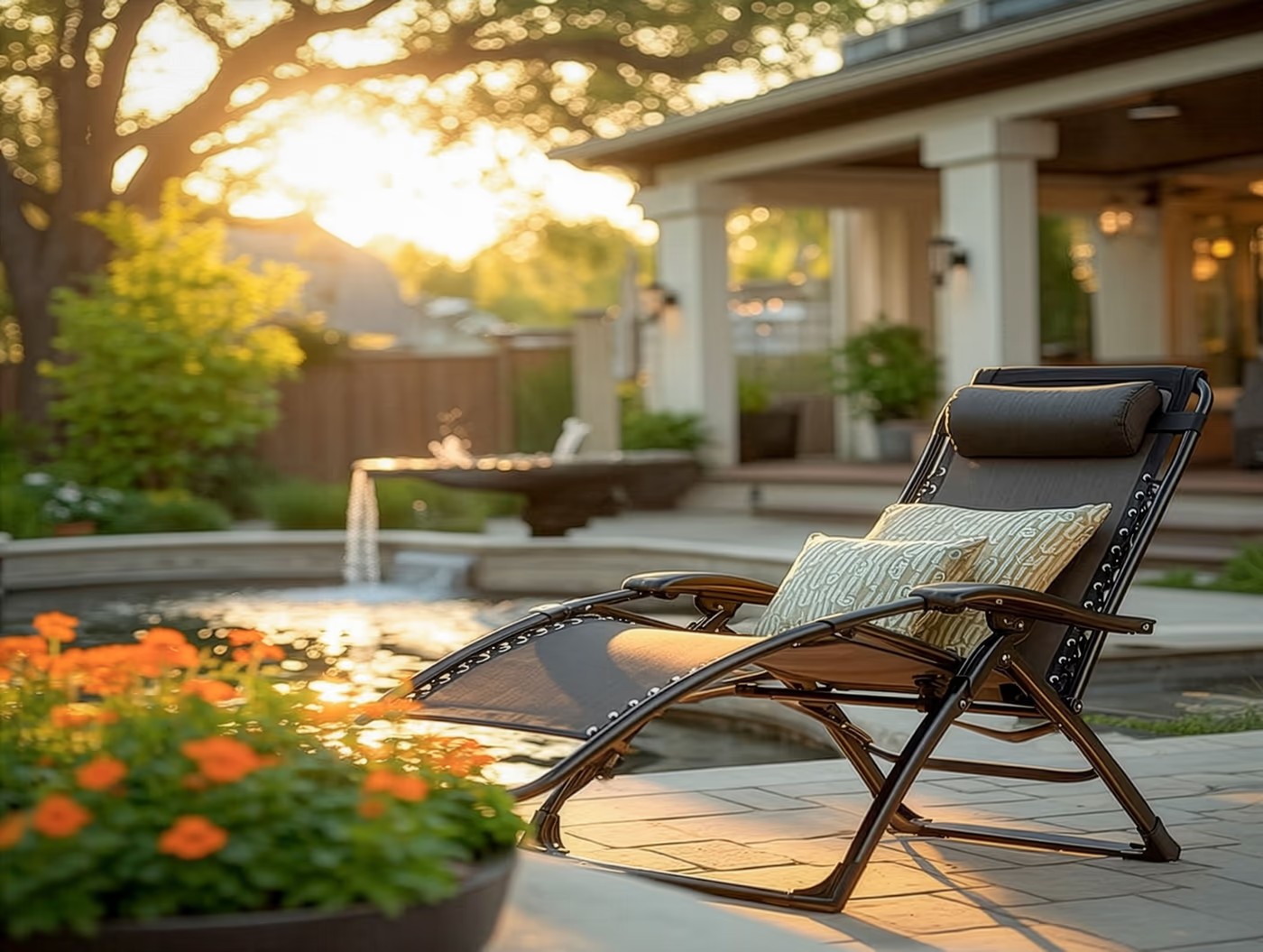
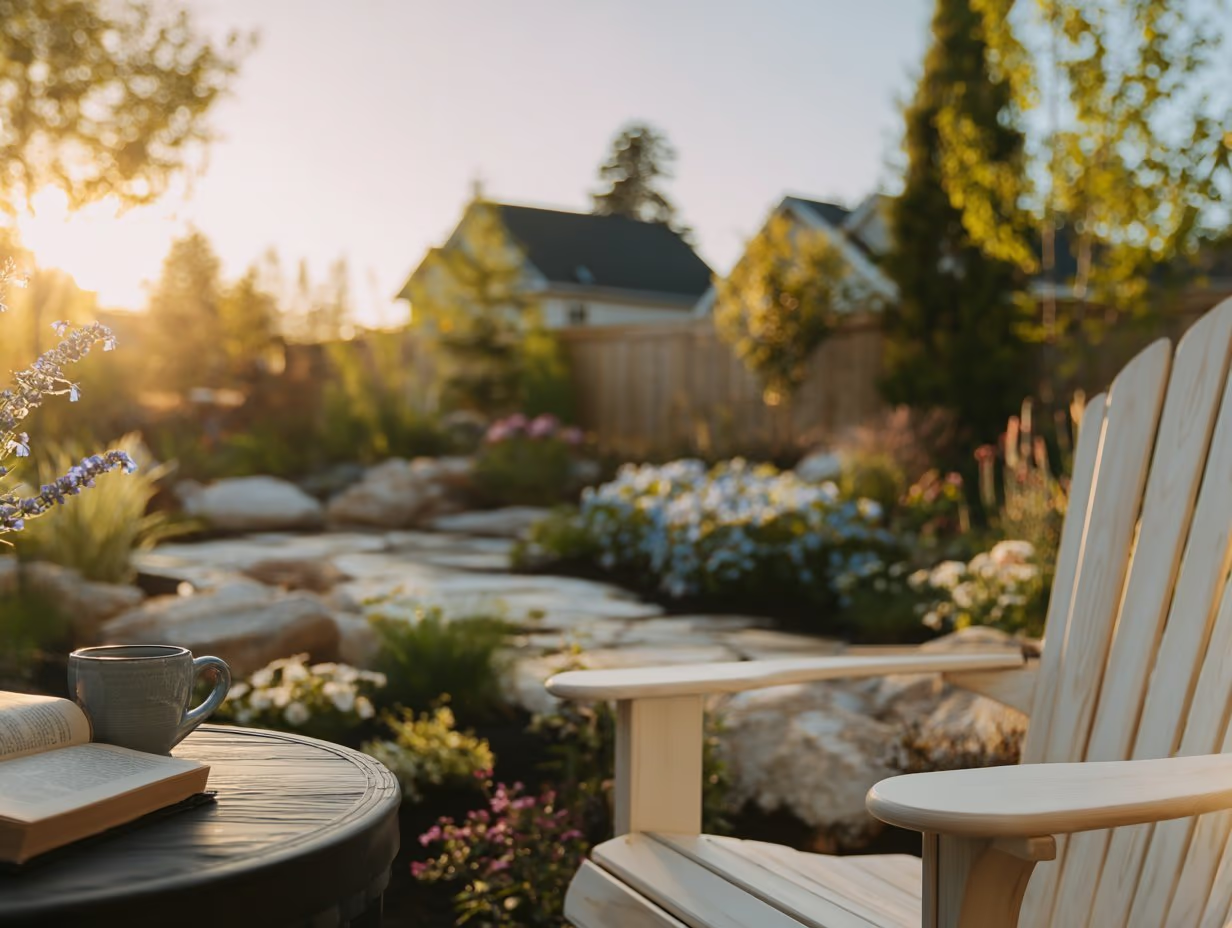
The quiet. Reading, coffee, decompression. You need a chair in a corner where you can sit alone for ten minutes and feel like you left the house.
The hosting. Friends over, birthdays, holidays. You need flexibility, enough seating, and a layout that flows between cooking, eating, and conversation.
Your backyard does not need to serve all five of these in separate dedicated areas. A dining zone and a gathering zone can overlap. Play space and open hosting space can share ground. The point is to think in terms of these moments before you think about specific features, and let the moments guide where things go.
How to Map Your Zones
Start with a pencil and a rough sketch of your yard. Mark the fixed elements: the house, the fence, the patio, any mature trees, the direction the sun sets. Then place your zones based on three principles:
Proximity to the house. Your dining zone belongs closest to the kitchen. Nobody wants to carry a platter of carne asada across 40 feet of yard. A quiet reading corner can go further away, toward the back fence where the neighbor's bougainvillea spills over and the noise from the house fades.
Sun and shade. In Southern California, shade drives comfort. Your dining area and your kids' play space need shade during the afternoon, especially from May through October when afternoon temperatures in Orange County regularly reach the mid-80s to low 90s. Your gathering area can be more open if you use it primarily in the evening. Observe where shade falls at 10 a.m., 2 p.m., and 6 p.m. before you commit to placement.
Sightlines. Parents of young children need to see the play zone from wherever they sit. Place the play area in view of both the dining and gathering zones, so you can settle into a conversation and still keep an eye on things without craning your neck.
EXPERT TIP
Before you buy anything or move anything, spend two weekends observing your yard. Note where the sun hits at different times of day, where your family naturally gravitates, and where the dead zones are (the corner nobody walks to, the strip along the side fence). Those observations will tell you more about where to place your zones than any design app or Pinterest board.

What Makes a Great Outdoor Dining Space for Families?
If there is one feature that easily and quickly transforms a backyard from a yard into a living space, it is a table. Not just a decorative bistro set tucked into a corner but a real table where your family gathers.
The dining zone is the anchor of family-friendly backyard design because it is the one feature every family member uses, at every age, in every season. Toddlers eat snacks at it. Teenagers do homework at it. Adults linger over wine at it after the kids go to bed. It is the kitchen island of your outdoor space.
Sizing Your Table
The most common mistake is buying a table that seats your family and nobody else. Choose a table that seats your household plus two to four guests. For a family of four, a 72-inch rectangular table comfortably seats six. A family of five or six should look at 84 inches, which accommodates eight. When friends come over, when grandparents visit, when your kid brings a friend home from school, you want room without stacking folding chairs.
Round tables (48 to 54 inches in diameter) work beautifully for families of four in smaller spaces because everyone faces everyone, conversations flow more naturally, and dishes pass easily. For larger families, a rectangular or oval table with a bench on one side lets kids sit together and maximizes seating in a tighter footprint.
Materials That Handle Real Family Life
Your outdoor dining table needs to survive more than weather. It needs to hold up for all the time you will be spending in your new outdoor living space.
Teak develops a warm honey-to-silver patina and handles Southern California's dry climate beautifully. A quality teak table runs $1,200 to $3,500 for a six-seat set, but routinely lasts 25 to 50 years. Eucalyptus offers a similar look at a lower price point ($400 to $1,000). Powder-coated aluminum is lightweight, completely rust-proof, and wipes clean in seconds, making it a favorite for families with young children ($500 to $1,800 for a dining set). Concrete tops are virtually indestructible and give a clean, modern feel ($800 to $2,500). High-density polyethylene (recycled plastic lumber) shrugs off everything and never needs refinishing ($600 to $2,000).
What to avoid: glass tops in a family yard (anxiety every time someone sets down a plate too hard), untreated softwoods that splinter after a season, and anything that requires covering or storing between uses. The best family outdoor furniture is the furniture you leave out and never think twice about.
Shade Over the Table
A dining area without shade is a dining area you will not use between May and October. In Southern California, afternoon shade over the dining zone is not optional. It is the difference between a table that gets used daily and a table that collects pollen.
Options range from a market umbrella ($80 to $300, budget-friendly, moveable) to a shade sail ($150 to $600, modern look, easy DIY install) to a permanent pergola ($2,000 to $8,000 installed, year-round coverage that also supports string lights and climbing vines like star jasmine or pink trumpet vine). What matters most is that shade is there when the afternoon sun swings west. For a full rundown of options suited to our climate, see our guide to backyard shade ideas.
GOOD TO KNOW
Outdoor dining surfaces in direct Southern California sun can reach temperatures uncomfortable to touch, especially dark-colored metals and stone. Shade over your table is not just about comfort for your family. It protects furniture finishes, keeps food at better temperatures, and extends the usable hours of your outdoor dining space from morning through evening.
Lighting the Table
The table that works at lunch needs to work at dinner too. String lights overhead are the simplest, most effective transformation: warm, flattering, and capable of turning an ordinary Tuesday into something that feels like a dinner party. Hang them in a zigzag pattern 8 to 10 feet above the table, strung between the house and a post, a tree, or a pergola beam, and your dining zone becomes an evening destination your family gravitates toward the moment the sun drops behind the roofline.
For layered approaches that combine string lights, pathway lights, and uplighting on specimen trees, explore our landscape lighting guides.
"Define those important zones that link the elements of a garden, providing room to get in and out of those spaces, and designing each area as its own unique experience."
— David Gomez, Water Efficiency Specialist, IRWD
How Do You Create a Gathering Space the Whole Family Gravitates Toward?
The dining zone is where your family sits at a table. The gathering zone is where your family sits around each other. Couches, chairs, benches, and cushions arranged in a loose circle or L-shape, oriented toward a focal point that draws people in and keeps them there. This is where the evening exhale happens: the moment dinner is cleared, the plates are stacked on the kitchen counter, and everyone drifts back outside because the air is still warm and nobody is ready to go in yet.
The Fire Pit as a Focal Point
There is a reason the fire pit has become the most popular outdoor feature in the country. Fire does something no other design element can: it holds attention without demanding it. For families, a fire pit gathering area is the space where the best evenings happen, the ones you remember years later when you realize your kids grew up faster than you thought possible.
Gas fire pits ($300 to $1,500 for portable models, $2,000 to $5,000 for built-in) are cleaner, easier, and offer instant on-and-off convenience. Wood-burning fire pits ($150 to $800) offer the crackling, campfire authenticity that kids especially love, plus the smell of wood smoke that becomes its own kind of nostalgia. Either works. What matters is the seating around it: deep enough to be comfortable for an hour, arranged so everyone can see everyone else, with room for kids to sit on the ground, roast a marshmallow, or pull up a stool.
When planning planting around fire features, choose fire-smart species and keep combustible materials at safe distances. Our guide to fire-resistant landscaping covers safe setback distances and plant selection for the zones around fire pits.
Movie Night Setup
Bring your movie nights into your Yardtopia. An outdoor movie zone is one of the highest-return features for families with kids over five. A portable projector ($50 to $150 for solid entry-level options), a blank wall or pull-down screen, a pile of floor cushions and blankets, and a Bluetooth speaker. That is the entire setup! In Southern California, where dry, clear evenings stretch from spring through fall (and honestly through most of winter too), movie night becomes a weekly ritual your kids will ask for every Friday. Imagine the screen glowing against the side of your house, the sound of the opening credits, and six kids wrapped in blankets on the lawn with a bowl of popcorn the size of a laundry basket.
The gathering zone can double as the movie zone. Arrange the seating to face both the fire pit and a screen wall, and you have two modes for one space.
The Conversation Arrangement
Not every gathering needs fire or a screen. Sometimes the best gathering space is just good seating with good sightlines. An outdoor sofa and two lounge chairs arranged around a low coffee table, tucked under the canopy of a mature California pepper tree or a pergola draped in bougainvillea, creates a space that feels like an outdoor living room. Add a few throw pillows in sun-resistant fabric, a side table for drinks, and the sound of wind moving through ornamental grasses like deer grass or purple fountain grass, and your family will migrate there after dinner without being asked.
PRO TIP
The secret to a gathering space people actually use: face the seating toward each other, not toward the view. A beautiful yard is nice to look at, but people stay outside because of other people. Arrange furniture so conversation is easy, so eye contact is natural, and the space will fill itself every evening.
What About Spaces for Kids and Spaces for Adults?
The best family-friendly backyard design does not force everyone into the same zone at the same time. It gives each member of the family a reason to be outside and a place that feels like theirs, even if the whole yard is only 800 square feet.
Kids Need Their Zone
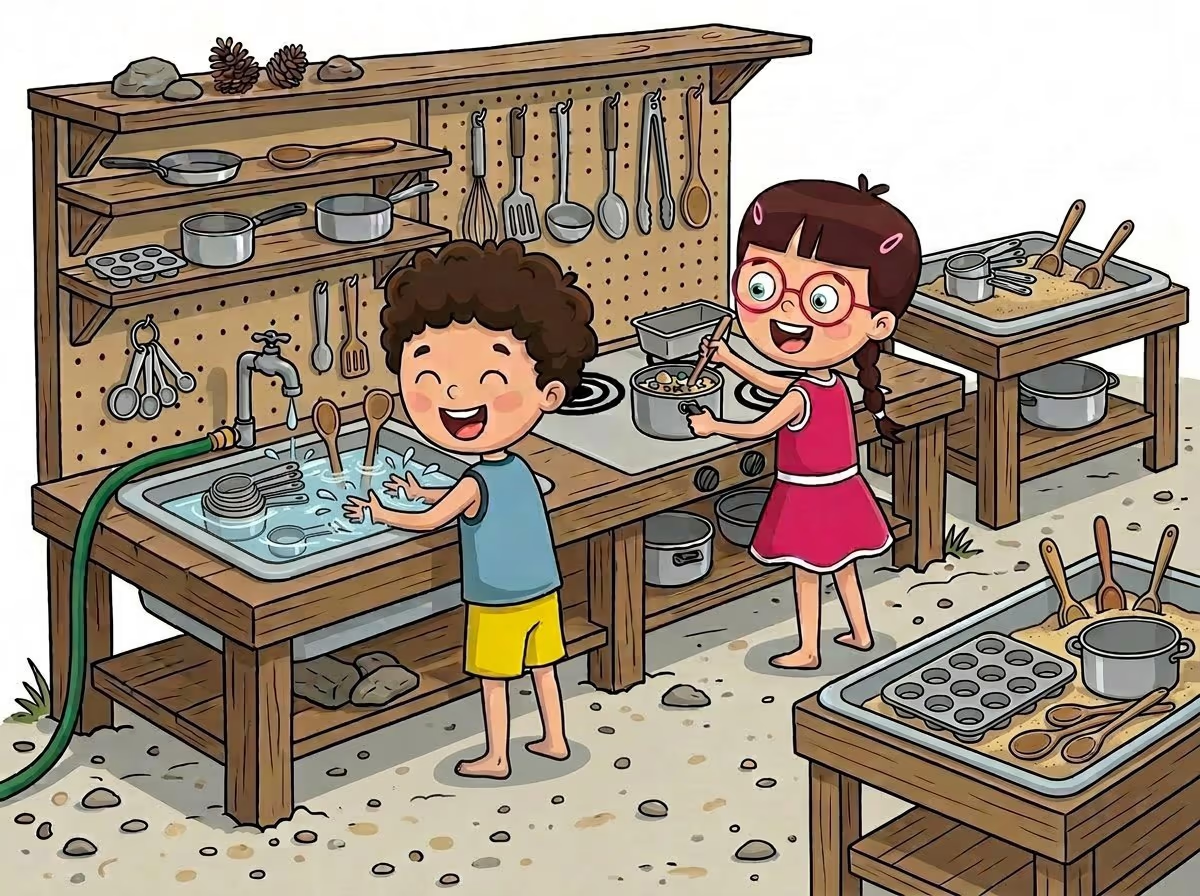
Children use outdoor space differently than adults. They need room to move, surfaces that can handle impact, and features that match their developmental stage. Toddlers want sand and water and things they can pour. Elementary-age kids want climbing, building, open running space, and a patch of dirt they are allowed to dig in. Teenagers want a hammock, string lights, a Bluetooth speaker, and the feeling that the space is theirs, not their parents'.
The play zone does not need to dominate the yard. It needs to be visible from where you sit (sightlines again), and it needs to be separated enough from the dining and gathering zones that a soccer ball does not end up in someone's dinner plate. A low border of lavender or rosemary (fragrant, tough, and forgiving when a kid crashes through it) can define the edge between play space and adult space without a hard barrier.
For a deep dive into age-specific play features, nature play, safety surfaces, and budget-friendly ideas, our kid-friendly backyard guide covers everything in detail. It is the companion piece to this article: that one is about play features, this one is about the design that holds everything together.
Adults Need Their Zone Too
This is the part most family backyard content skips entirely. Parents spend so much energy designing for their kids that they forget to design for themselves. The quiet corner with a comfortable Adirondack chair and a view of the garden. The small side table where a coffee cup fits next to a book you have been meaning to finish for three months. The pocket of space where, for ten minutes, you are not managing anyone's experience. You are just sitting in the shade of a coast live oak, listening to a hummingbird work the Cleveland sage, and breathing.
If your yard has a mature tree, put a chair under it. If you have a fence corner with afternoon shade, tuck a bench there and plant lemongrass or trailing rosemary nearby so the air smells like something worth noticing. It does not need to be large or expensive. It needs to exist. That is where your Yardtopia starts to feel like more than a family project. It starts to feel like something that is also for you.
Designing for Different Ages at the Same Time
If you have a toddler and a 12-year-old, your yard serves two very different developmental stages simultaneously. The solution is not one compromise space. It is two intentional zones with a shared gathering area in between.
The toddler zone needs containment: a defined area with safe surfaces (engineered wood fiber or poured-in-place rubber), close to the house, visible from everywhere. The older kid zone needs autonomy: a corner of the yard that feels farther away, with a hammock, a small table, maybe a chalk wall on the fence. The gathering zone (fire pit, dining table, outdoor couch) is the neutral ground where the whole family comes together.
As your kids grow, the zones evolve with them. The sandbox becomes a raised garden bed planted with cherry tomatoes and strawberries. The climbing wall gets taller hold placements. The hammock corner that belonged to your teenager becomes your reading nook when they leave for college. A well-designed family backyard does not become obsolete. It grows with you.
GOOD TO KNOW
Families with multiple children at different ages often feel caught between baby-proofing and teen-friendly design. The answer is not one compromise space. It is distinct zones connected by shared areas. Each child gets what they need at their stage, and the gathering spaces bring everyone together. The zoning approach means you adjust individual zones over time instead of rethinking the entire yard every few years.
How Do You Make It All Work in a Southern California Yard?
Everything described in this guide works anywhere. But if you live in Southern California, you have a set of advantages that most of the country would trade for in a heartbeat. You also have a few specific considerations that shape how these ideas come to life.
The Year-Round Advantage
In much of the country, a backyard is a three-season room at best. In Southern California, it is twelve months of usable outdoor living. Your dining zone gets used on a mild January evening when the air is 62 degrees and the sky is sharp and clear. Your fire pit gets used in August when the inland heat breaks after sunset and the temperature drops into the 70s. Your kids play outside in December. When you invest in family-friendly backyard design here, in USDA zones 9b through 10b, you are investing in space your family uses nearly every day, not a space that sits dormant for five months of the year.
This changes the math on every decision. A pergola that costs $4,000 installed sounds like a lot until you realize you will sit under it 250 to 300 evenings a year. An outdoor dining table that costs $1,500 sounds expensive until you calculate the cost per meal over a decade of regular use: less than a dollar a dinner.
Shade Is Infrastructure, Not Decoration
In Southern California, shade is the single most important structural element of family outdoor design. It determines which zones are comfortable, which hours your yard is usable, and whether your family actually stays outside or retreats to the air conditioning by 2 p.m.
Plan shade the way you plan walls in a house: as infrastructure that defines how the space is used. A shade sail over the play zone. A pergola over the dining table. A mature tree canopy over the gathering area. Even a strategically placed crape myrtle or Chinese elm, which grow quickly and provide filtered light, can transform an unusable zone into a favorite spot within two to three growing seasons.
Build shade into your design from the beginning, not as an afterthought. For detailed options including shade sails, pergolas, umbrellas, and tree canopy strategies, our backyard shade guide covers every approach. Reminder to check with your HOA before building.
GOOD TO KNOW
Unshaded hardscape and play surfaces in Southern California can reach surface temperatures above 140 degrees Fahrenheit during summer afternoons. Always check surface temperatures by hand before young children play barefoot, and prioritize light-colored materials (concrete pavers, decomposed granite, light-colored synthetic turf) in sun-exposed areas.
Plants That Look Beautiful and Stay Out of Your Way
The landscaping that frames your family's outdoor living space should be gorgeous and low-maintenance. You want plants that fill in beautifully, bloom in waves through the year, attract hummingbirds and butterflies, and do not ask you to spend every Saturday morning pruning.
Southern California gives you an extraordinary plant palette. California buckwheat (Eriogonum fasciculatum) produces clouds of white-to-rust blooms that pollinators love. Cleveland sage (Salvia clevelandii) fills the air with a fragrance that stops visitors in their tracks. Dymondia (Dymondia margaretae) creates a dense silver-green groundcover that handles light foot traffic and looks like a living carpet between stepping stones. White sage (Salvia apiana) adds silvery foliage and cultural significance. Deer grass (Muhlenbergia rigens) provides a graceful, arching texture that catches the evening light. Lavender and rosemary thrive on neglect and reward you with fragrance every time someone brushes past.
Use them to define the edges of your zones, soften hardscape, create privacy screening along fence lines, and add color that shifts with the seasons. Choose species that stay within their boundaries without aggressive pruning (Cleveland sage stays in a tidy 4 by 4 foot mound; deer grass forms a clean fountain shape), and you get a landscape that looks intentional year-round without weekend maintenance becoming a second job. Local nurseries like Tree of Life in San Juan Capistrano specialize in California natives suited to exactly these conditions, and UC Master Gardeners offer free guidance on species selection for your specific microclimate.
For a full plant selection library organized by sun exposure, water needs, and design function, explore the California-native plant guide on Yardtopia.com.
Typical Lot Sizes and Small-Yard Thinking
Orange County yards are often more modest than people expect. Many newer neighborhoods in Irvine, Tustin, and Lake Forest have rear yard footprints of 400 to 1,200 square feet. If you are working with a compact space, every design decision has to earn its place. The good news: a well-zoned small backyard feels bigger than an unzoned large one.
Combine zones where you can. Your dining table can border your gathering seating, sharing a single shade structure. Your play zone can double as open hosting space when you move the portable climber aside. Use vertical elements (tall planters, a star jasmine vine climbing the fence, a wall-mounted herb garden with basil, mint, and cilantro at picking height) to create visual depth without consuming floor space. A 600-square-foot yard with three clear zones can feel more spacious and usable than a 2,000-square-foot lawn with nothing in it.
"Fire pits elevate outdoor spaces by creating a warm gathering area for family and friends. They add a welcoming atmosphere that expands your living space outdoors and significantly enhances the overall look and feel of your home."
— Edgar Godinez, Owner, Urban Customs Landscape
Where Do You Start When You Want to Transform Your Family's Backyard?
You have the framework. You can see the zones in your mind. Now the question is how to move from vision to reality without the project stalling out, going over budget, or becoming a source of stress instead of joy. Your Yardtopia does not need to happen all at once. It just needs to start.
Step 1: Observe Before You Plan
Spend two weeks paying attention to your yard. Where does the sun hit at breakfast? Where is it shaded by 3 p.m.? Where do your kids naturally end up when they go outside? Where do you stand when you come out with your coffee? Where does nobody ever go? Notice where the breeze moves through in the evening and where the air sits still and warm.
These observations are your design brief. They tell you where each zone belongs better than any mood board or magazine layout.
Step 2: List Your Family's Moments
Write down the five moments you want your backyard to support. Tuesday night dinner. Saturday morning coffee while the kids eat cereal on the patio. Playing after school. Weekend friends over. Sunday evening fire pit. Your backyard does not need to do everything. It needs to do five things well.
Step 3: Sketch Your Zones
On paper, not on an app. Draw your yard's rough shape. Mark the house, the fence, the patio, any existing trees. Then place your zones based on the observations from Step 1 and the moments from Step 2. Dining near the kitchen. Gathering where the evening light is best. Play where you can see it from the table. Quiet where the shade is deepest.
For interactive planning tools that help translate a rough sketch into a scaled layout, try the SimplyScapes design tool and our landscape planning guide.
Step 4: Start With One Zone
Do not try to build the entire vision at once. Pick the zone your family will use most (often the dining zone) and do it well. One great zone creates momentum. It shows you what the rest of the yard can become. And it gives your family a reason to be outside tonight, not six months from now when the whole project is "done."
Step 5: Add Zones Over Time
The phased approach is how most families build their Yardtopia. Season one: the dining zone with a good table, shade, and string lights. Season two: the gathering space with a fire pit and comfortable seating. Season three: the play area, the landscaping, the finishing details that make the whole yard feel like one cohesive outdoor room. Each addition is its own small celebration. Each one makes the yard more complete. And your family enjoys every step of the transformation instead of enduring a months-long construction project. Worth checking IRWD rebate programs before you begin, as landscape improvements like turf replacement and irrigation upgrades may qualify for incentives that offset your costs.
Family-friendly backyard design is not about choosing the right furniture or the right plants. It is about understanding how your family lives and creating a space that supports that life. Zone your space around your family's real moments. Start with one zone and build from there. And remember that in Southern California, your backyard is not a seasonal bonus. It is the best room in your house.
Your next steps: 1. This weekend, spend 30 minutes in your backyard at three different times of day. Note where the sun falls, where shade lands, and where your family naturally goes. 2. List the five outdoor moments your family wants most. 3. Sketch your zones on paper. 4. Pick one zone and make it happen.
Explore Yardtopia.com for tools, inspiration, and resources to bring your vision to life. Your Yardtopia is waiting.
Frequently Asked Questions About Family-Friendly Backyard Design
How do I make my backyard more family-friendly?
Start by observing how your family actually uses the space, then design around those patterns. The most effective approach is zoning: create distinct areas for dining, gathering, play, and quiet relaxation. Even a small yard of 500 to 600 square feet can support three or four zones when each area is designed with a clear purpose. Focus on comfortable seating, shade, and features that match your children's current ages and your family's daily routines.
How do I design a backyard that works for both kids and adults?
Create separate zones connected by shared spaces. Kids need open room to move, age-appropriate features, and safe surfaces. Adults need comfortable seating, a quiet corner, and spaces designed for conversation and relaxation. A central gathering area, like a fire pit circle or an outdoor dining table, brings the whole family together. Place the play zone within sightlines of the adult areas so parents can relax while keeping an eye on younger children.
What is the best layout for a family backyard?
Place your dining zone closest to the kitchen for easy meal service. Position your gathering space where evening light and shade are best. Put the play area in view of both the dining and gathering zones. Reserve a quiet corner, even a small one, for solo relaxation. Use changes in surface material, low plantings, or furniture arrangement to define each zone. This layout keeps the most-used zone accessible, maintains sightlines to the kids, and gives adults their own space.
How do I create an outdoor living space on a budget?
Start with one zone instead of transforming the entire yard at once. A dining table and chairs under a shade umbrella can cost under $500 and immediately changes how your family uses the backyard. Add zones over time as your budget allows. Many of the best family features cost less than a single piece of indoor furniture: a fire pit ring ($150 to $400), string lights ($15 to $30), or a play area with decomposed granite and natural boulders ($200 to $600 depending on size).
Can a small backyard work as an outdoor living space for a family?
Absolutely. Small yards force better design because every decision earns its footprint. Combine zones where you can: a dining table that borders a gathering bench, a play area that doubles as open hosting space. Use vertical elements like tall planters, climbing vines on the fence, and wall-mounted herb gardens to add visual depth without consuming floor space. A 500-square-foot yard with clear zones and multi-purpose furniture can feel more spacious than a 2,000-square-foot lawn with nothing in it.
How do I design a backyard that grows with my family?
Choose flexible features over fixed ones. Modular seating that reconfigures for different group sizes. A play area that can transition from sandbox to raised garden bed as kids age. A gathering zone that works for family movie nights now and adult dinner parties later. The zoning approach naturally supports this evolution: as your family's needs change, the purpose of each zone shifts while the overall structure remains.
Sources: Target 8-12 authoritative references including landscape design principles, outdoor living research, USDA zone data, and Southern California climate data.