
Outdoor string lights can turn a space you walk through into a space you settle into. And in a climate where outdoor living is not a three-month window but a year-round reality, that shift matters more than almost any other change you can make to your Yardtopia.
KEY TAKEAWAYS
- Outdoor string lights are the single fastest way to transform a backyard into an inviting evening destination, and Southern California's 280+ dry evenings per year mean you will use them far more than you expect.
- LED and solar string lights outdoor options last three to five seasons with minimal maintenance, and solar models eliminate the need for outdoor outlets in water-wise yards where electrical access may be limited.
- Strategic placement creates distinct outdoor zones for dining, conversation, and relaxation that make your patio feel like a true extension of your living room, not just a place with lights hanging overhead.
Why Do Outdoor String Lights Transform a Backyard More Than Any Other Single Upgrade?
There is a moment, right around dusk, when a backyard crosses from ordinary to something else entirely. The sun drops behind the roofline. The air softens. And then the string lights come on, and suddenly your patio feels like a place you never want to leave. That warmth overhead, that gentle amber glow catching the edges of succulents and terracotta, changes everything about how a space feels and how long people want to stay in it.
Outdoor string lights deliver that transformation faster and more affordably than any other backyard upgrade. A quality set of LED string lights costs between $30 and $100, installs in an afternoon, and creates the kind of atmosphere that a full landscape lighting system, running $2,000 or more, takes weeks to achieve. For Southern California homeowners who already live with 280+ usable evenings a year, string lights are not a seasonal decoration. They are infrastructure for your outdoor life.
GOOD TO KNOW
There is a reason patios lit by string lights feel more relaxing than those lit by standard outdoor fixtures. Research on environmental psychology consistently links warm-toned light (2200K to 2700K) with lower stress and greater social comfort, while bright, cool-toned lighting signals productivity and alertness. The color temperature of most LED string lights falls squarely in the warm, relaxing range.
What Type of Outdoor String Lights Should You Choose?
The best outdoor string lights for your space depend on three things: how you plan to power them, how much maintenance you are willing to do, and the look you want to create. Here is an honest breakdown of each option so you can choose with confidence.
LED String Lights: The All-Around Winner for Southern California
LED outdoor string lights have become the default for good reason. They run cool to the touch (no scorched fingers when adjusting a bulb at head height), consume roughly 80% less energy than incandescent bulbs, and last 25,000 to 50,000 hours compared to the 1,000 to 2,000 hours you get from old-school filament bulbs. In practical terms, that means three to five full seasons of nightly use before you replace a single bulb.
For Southern California patios, the heat advantage matters more than you might think. Incandescent string lights radiate enough warmth to raise the ambient temperature around your seating area by several degrees on an already warm evening. LEDs do not. When August evenings still hover near 80 degrees after sunset, that difference is the difference between lingering at the table and heading inside.
Most quality LED sets now offer warm-white tones (2200K to 2700K) that replicate the golden glow people associate with vintage Edison bulbs. The early criticism that LEDs looked "cold" or "clinical" no longer applies to any reputable brand.
Best for: Most homeowners. The combination of low energy use, long lifespan, and comfortable warmth makes LED the right starting point for nearly every patio setup.
Solar String Lights: The Southern California Advantage
Solar string lights outdoor models are uniquely well-suited to this region. With 280+ sunny days a year, the solar panel charges reliably even in winter months, and you avoid the hassle of running extension cords or installing new outlets. For homeowners who have replaced their lawn with drought-tolerant landscaping, where outdoor electrical access may not have been part of the original yard design, solar eliminates the biggest barrier to entry.
Modern solar string lights deliver six to eight hours of illumination on a full charge, which covers an entire evening from dusk through late night. The trade-off is brightness: solar sets produce noticeably less output than a wired LED set. For ambient patio lighting, that softer glow is often preferable. For task lighting or large coverage areas, solar alone may not be sufficient.
Best for: Yards without convenient outdoor outlets, post-lawn-removal landscapes, and homeowners who want a completely wireless installation with zero operating cost.
Bulb Styles: Edison, Globe, Fairy, and Festoon
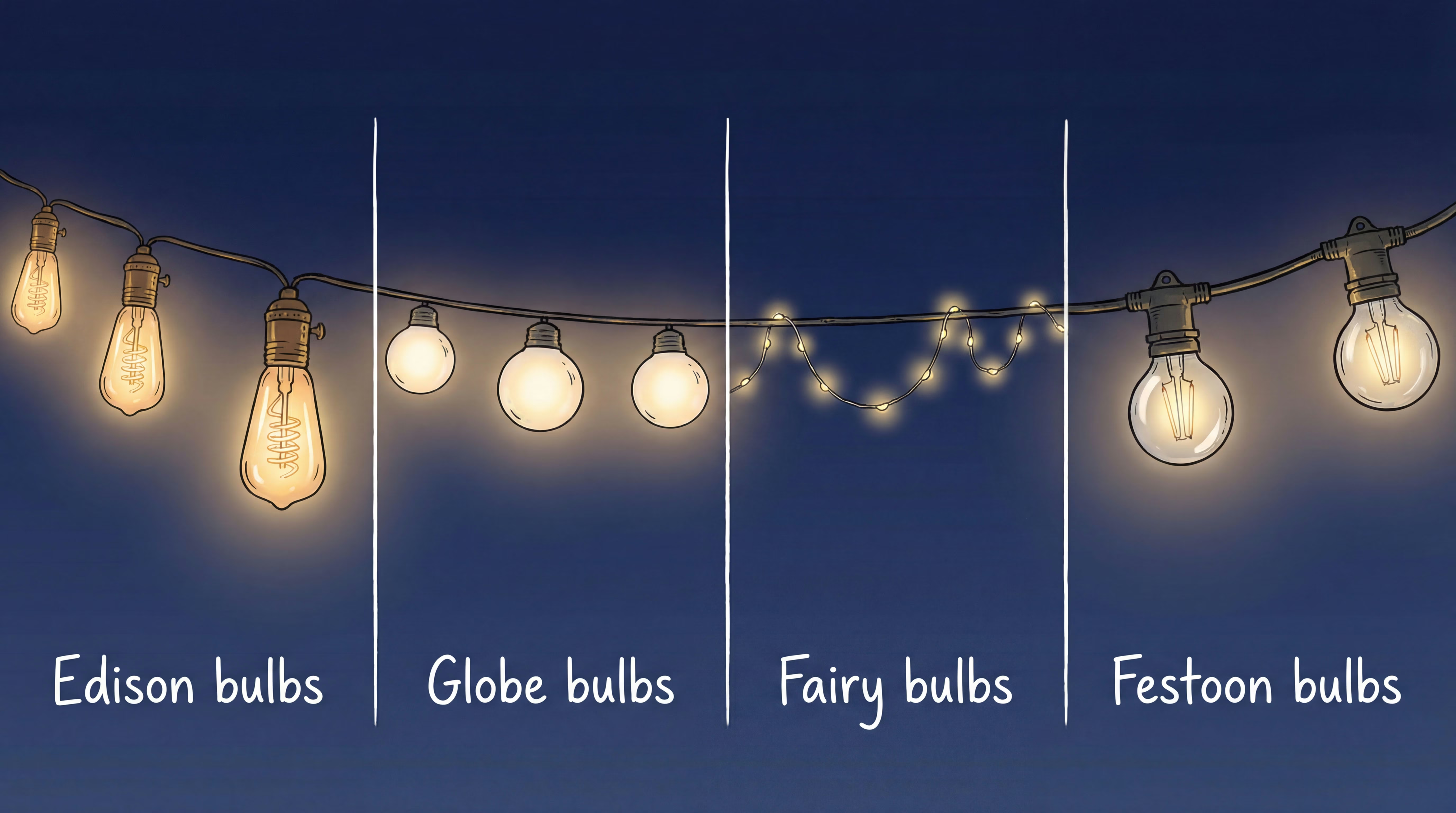
Beyond the power source, bulb shape sets the visual tone of your space:
Edison bulbs (the exposed-filament look) deliver a warm, vintage character that pairs beautifully with wood pergolas, rustic tables, and Mediterranean-style landscaping. These are the most popular choice for outdoor date night ideas and entertaining setups.
Globe bulbs (round, frosted or clear) create a softer, more even glow with less visual complexity. They work well in modern or minimalist outdoor spaces and distribute light more uniformly than Edison styles.
Fairy lights (tiny micro-LEDs on thin wire) produce a delicate, starfield effect. They are ideal for wrapping through tree branches, draping along fence lines, or creating a canopy effect over smaller seating areas. Their subtlety makes them better as accent lighting than as primary illumination.
Festoon lights (evenly spaced, larger bulbs on heavy-duty cable) are the commercial-grade option designed for permanent outdoor installation. Restaurants, wineries, and resort patios use festoon lighting because it withstands years of continuous weather exposure. For homeowners planning a permanent installation, festoon-style sets offer the best durability.
Weatherproofing: Why IP Ratings Matter Here
Every outdoor string light set carries an IP (Ingress Protection) rating that tells you exactly how much weather it can handle. Two numbers matter:
IP44: Protected against splashing water from any direction. Adequate for covered patios and areas with partial shelter. Not recommended for fully exposed installations in locations that receive direct rain.
IP65: Protected against low-pressure water jets from any direction, plus completely dust-sealed. This is the minimum rating for any string lights installed in an open, unsheltered space in Southern California. While rain is infrequent, when it arrives, it can be heavy. IP65 also protects against the fine dust that accumulates during Santa Ana wind events.
Waterproof outdoor string lights rated IP65 or higher cost marginally more (typically $5 to $15 per set) and last significantly longer. For a permanent or semi-permanent installation, the upgrade pays for itself within the first season.
Quick Comparison: LED vs. Solar vs. Incandescent
| Feature | LED (Wired) | Solar | Incandescent |
|---|---|---|---|
| Lifespan | 25,000–50,000 hours | 15,000–25,000 hours | 1,000–2,000 hours |
| Energy cost | ~$3–5/season | $0 | ~$15–25/season |
| Brightness | High | Moderate | High |
| Heat output | Minimal | Minimal | Significant |
| Setup complexity | Needs outlet or hardwiring | Self-contained | Needs outlet |
| Best for | Most installations | Outlet-free areas | Temporary events |
| Price range | $25–80 | $20–60 | $15–40 |
How Do You Hang Outdoor String Lights That Actually Stay Up?
The difference between string lights that look effortless and string lights that sag, droop, or blow down in the first windstorm comes down to how they are supported. The lights themselves are decorative. The support system is structural. Getting this right the first time means you will not find yourself re-hanging lights after every Santa Ana wind event.
The Support Cable Method (Most Reliable)
The single best technique for hanging outdoor string lights is to run a galvanized steel cable or heavy-duty guide wire between your anchor points first, then drape the lights along the cable. This separates the structural load from the electrical strand. The cable bears the weight and wind force; the lights simply follow the line.
Use 1/8-inch galvanized steel cable, turnbuckle tensioners at each end, and appropriately rated eye hooks or screw-in anchors at your support points. The cable should be taut but not guitar-string tight: leave about two inches of sag per ten feet of run. Attach the string lights to the cable with small zip ties or light clips every 12 to 18 inches.
This method increases wind resistance dramatically. A strand hung without a support cable is vulnerable to sagging and failure in moderate wind. The same strand on a steel cable maintains structural integrity through wind events including typical Santa Ana conditions.
Pergola and Structure Mounting
If you have a pergola, patio cover, or other overhead structure, mounting becomes simpler. Use screw-in cup hooks along the beams, spaced every two to three feet, and drape the lights in your chosen pattern. For a crisscross canopy effect, run lines from corner to corner or beam to beam.
Key consideration: Wooden pergolas accept screw hooks directly. For aluminum or vinyl structures, use adhesive-backed cable clips rated for outdoor use, or drill pilot holes and use appropriate anchors. Never rely on tape or temporary adhesive for permanent installations.
Tree-to-Tree Hanging
Hanging string lights between trees creates a naturally organic, garden-integrated look. Use tree-safe hanging methods: screw-in hooks are generally acceptable for large, mature trees. For smaller or younger trees, use adjustable tree straps that wrap around the trunk without penetrating bark.
Run your support cable between the tree anchors at eight to ten feet height, then drape lights along the cable. Allow extra cable length and use turnbuckles, because trees move with wind and seasonal growth. A rigid connection will eventually pull out or damage the tree.
Planning Your Layout: Height, Spacing, and Sag
Height matters more than most people realize. String lights hung at eight to ten feet above ground work best over dining areas, creating an intimate ceiling effect without interfering with standing guests. For open lawn or lounge areas, ten to twelve feet provides a more expansive, airy feel.
Spacing between support points depends on your cable and strand length. For most residential setups, 10 to 15 feet between posts or anchor points works well. Beyond 20 feet without an intermediate support, sag becomes visually distracting even with a steel cable.
The sag calculation: Allow roughly 12 to 18 inches of natural drape per 10-foot run. Lights hung perfectly taut, look industrial and rigid. A gentle catenary curve (the natural arc of a suspended line) looks intentional and relaxed. This is the visual difference between a parking lot and a patio.
GOOD TO KNOW
Electrical safety is not optional. Any wired string light installation should connect to a GFCI-protected outdoor outlet. If you do not have a GFCI outlet on your patio, have one installed by a licensed electrician before running permanent outdoor lighting. Extension cords rated for indoor use should never be used outdoors, even temporarily. Look for cords marked "W" (weather-rated) in the insulation code. For any installation involving new wiring or hardwired connections, consult a licensed electrician.
Where Should You Place String Lights for the Best Effect?
Strategic placement is what separates a thoughtfully lit patio from a backyard that simply has lights hanging in it. The goal is to create distinct zones that invite different activities and moods, the same way rooms inside your home serve different purposes.
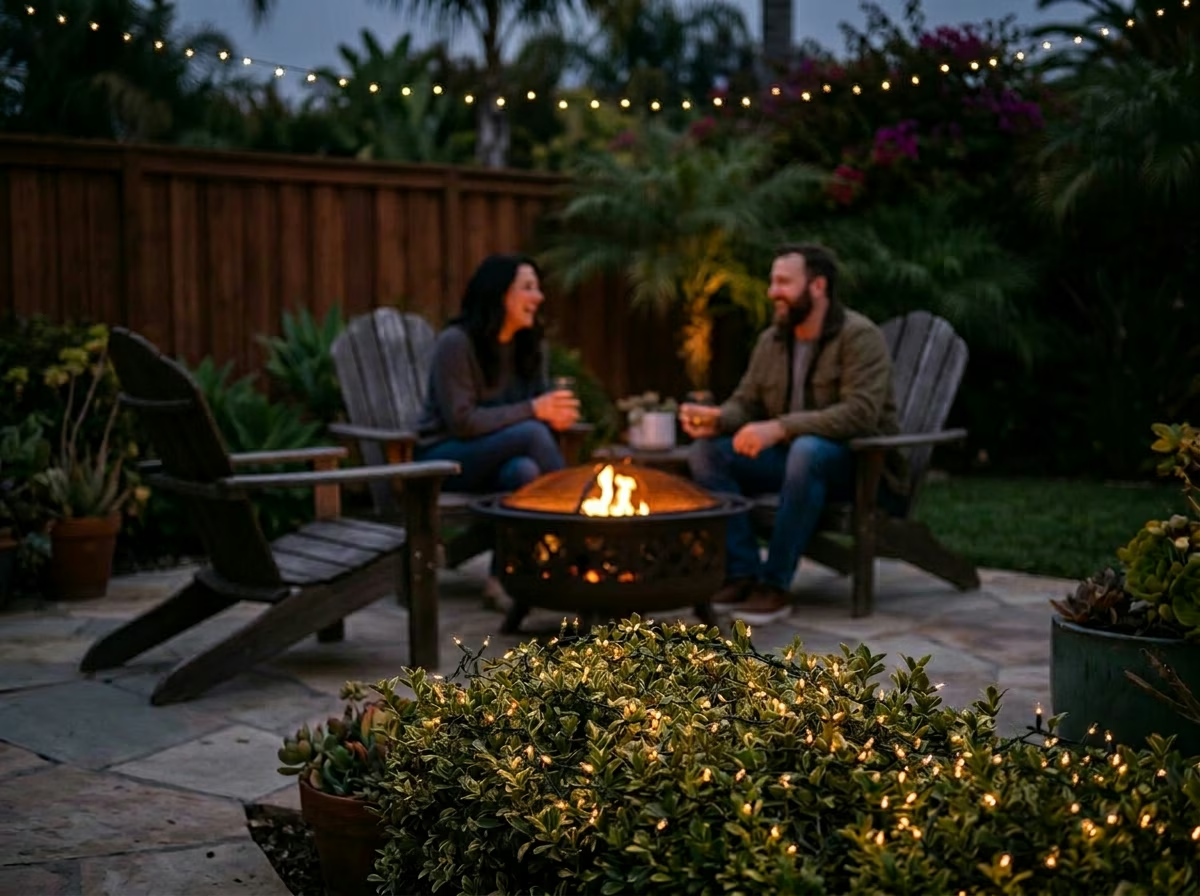
The Zone Approach
Think of your outdoor space the way you think about interior rooms:
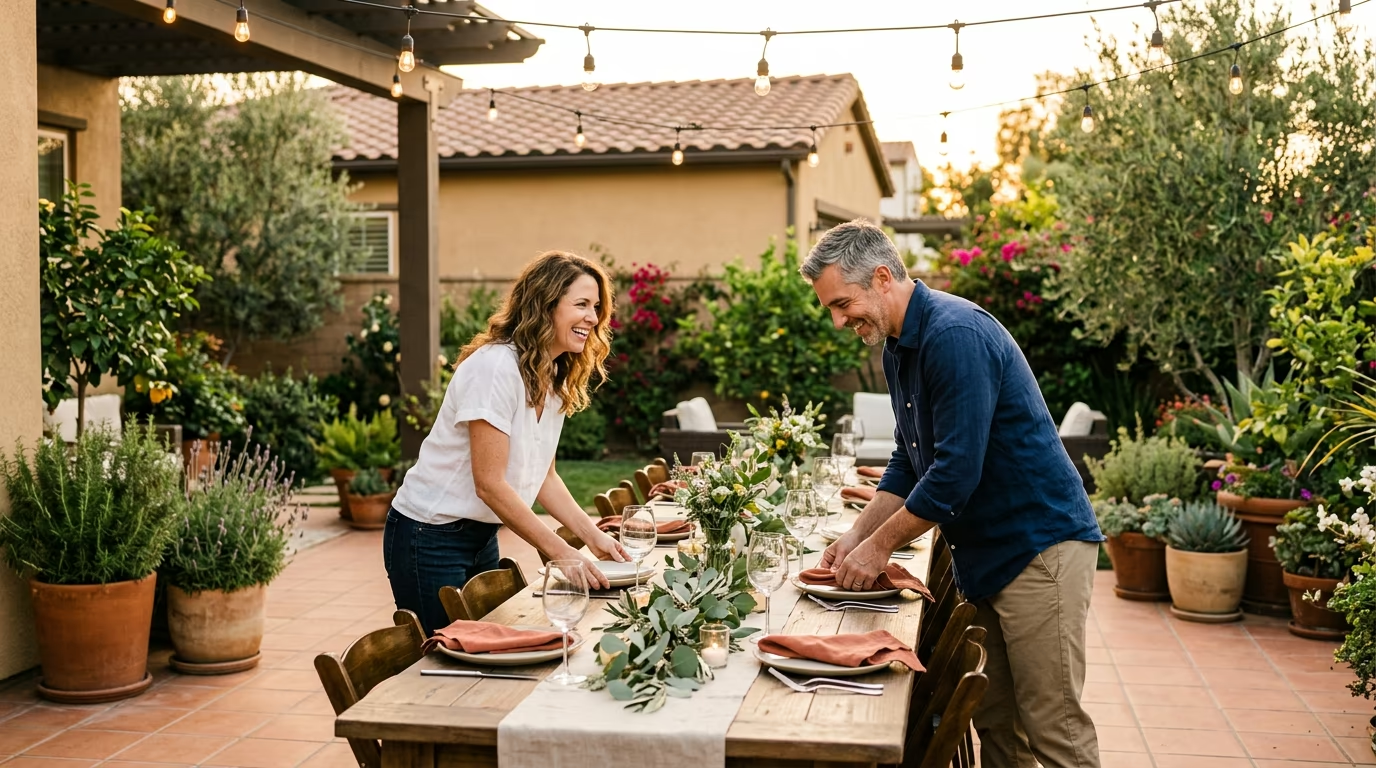
Dining zone: String lights directly overhead at eight to ten feet, creating a defined "ceiling" above the table. This is your primary social anchor, the spot that draws people in and keeps them gathered. If you are choosing patio dining furniture for this area, warm overhead string lights make even simple pieces feel like part of a curated space.
Conversation zone: Softer, slightly lower lighting around lounge seating, a fire pit area, or a pair of Adirondack chairs. Use fairy lights woven through nearby shrubs or a separate strand at a lower height to distinguish this area from the dining zone. The lower light level encourages quieter, more intimate conversation.
Transition pathways: Gentle perimeter lighting along walkways, fence lines, or garden borders that guides movement between zones without competing with the focal areas. This is where string lights work in concert with pathway lights and low-voltage accent lighting to create a layered system.
The "Ceiling" Technique
The most dramatic string light effect is the overhead canopy: multiple lines of lights running parallel or in a crisscross pattern across an area, creating the sensation of an outdoor room with a glowing ceiling. This technique works best over defined hardscape areas (patios, decks, courtyards) where you have solid anchor points on at least two sides.
For a 12x16-foot patio, three to four parallel runs spaced three to four feet apart create a balanced canopy. For larger areas, a crisscross pattern from corner to corner adds visual complexity and distributes light more evenly.
Lighting Your Water-Wise Landscape
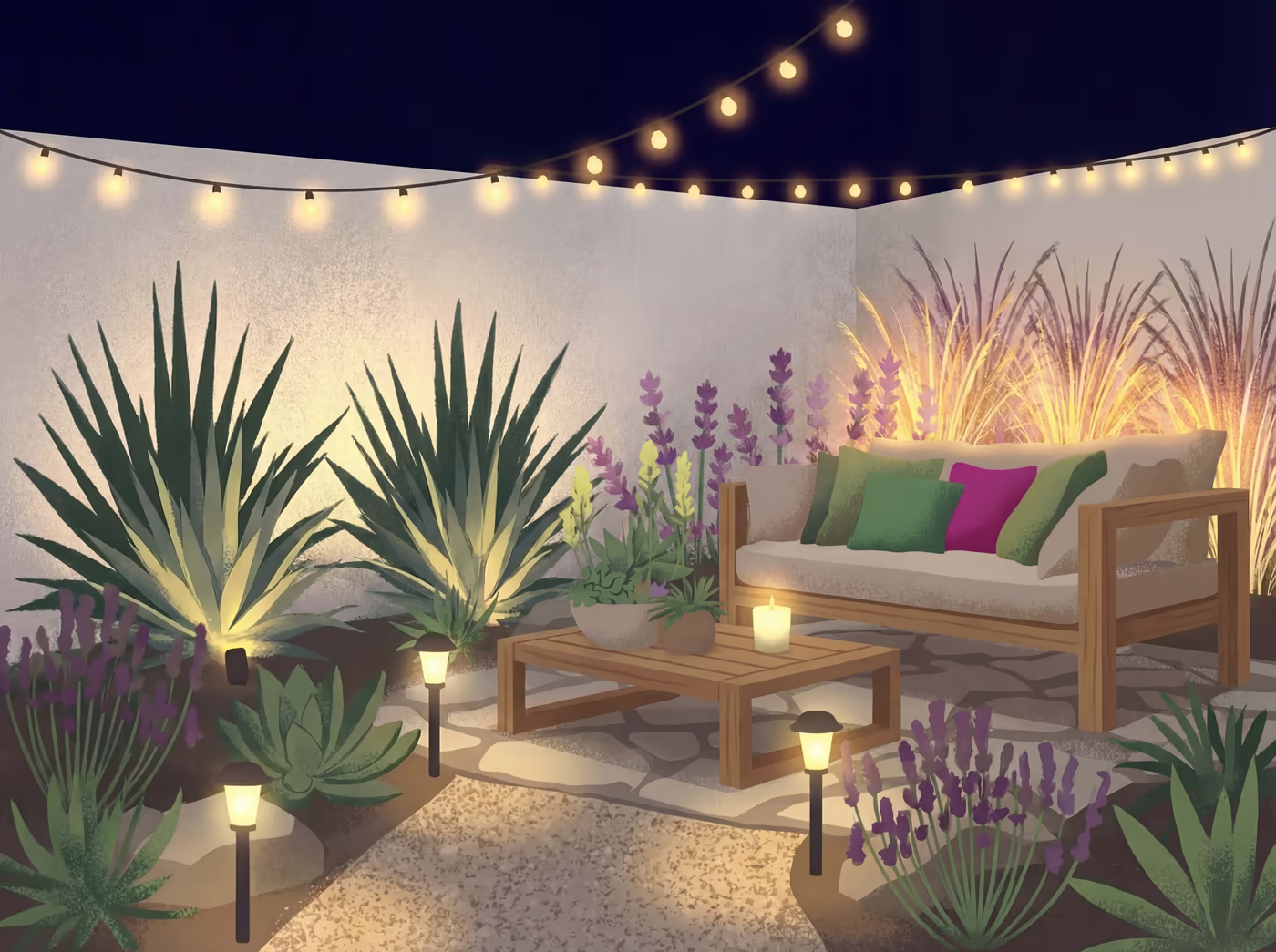
One of the most rewarding effects of string lights is how they bring drought-tolerant gardens to life after dark. Succulents, gravel pathways, native grasses, and decomposed granite, the materials that define water-smart Southern California landscaping, respond beautifully to warm overhead light. The glow catches the textures and shadows of agave rosettes, the silver sheen of artemisia foliage, and the warm tones of decomposed granite in ways that daylight never quite reveals.
If you have transformed your yard from traditional lawn to a water-wise landscape, string lights are the finishing touch that makes the space feel intentionally designed rather than simply practical. The interplay of warm light and drought-tolerant plantings is one of the signature looks of modern Southern California outdoor living: proof that water-conscious choices and beautiful evening ambiance are not just compatible but complementary.
GOOD TO KNOW
Color temperature makes a measurable difference in outdoor ambiance. Bulbs rated at 2200K to 2700K produce the warm amber glow that feels inviting and relaxing. Anything above 3000K starts to shift toward cooler, bluish tones that feel more like workspace lighting than evening atmosphere. When shopping for outdoor string lights, check the color temperature on the packaging. Most quality sets marketed as "warm white" fall in the 2700K range. For an even warmer, more candlelit effect, look for sets specifically labeled 2200K.
How Do You Power Outdoor String Lights Without Running Extension Cords Everywhere?
The least glamorous part of outdoor string lights is also the most important: getting power to them cleanly, safely, and without visible cords snaking across your patio. Several options exist depending on your setup and budget.
Solar Power: Best for Wireless Freedom
As discussed above, solar string lights outdoor models eliminate the power question entirely. The self-contained panel charges during the day and powers the lights at night. No outlets, no cords, no electrician. For yards where the nearest outlet is 30 feet or more from your desired light location, solar is often the simplest and most cost-effective solution.
Position the solar panel where it receives maximum sunlight (south-facing in Southern California), and run the strand from the panel to your hanging points. Most solar sets include 10 to 15 feet of "leader" wire between the panel and the first bulb, giving you flexibility in placement.
PRO TIP
Solar string light performance depends entirely on panel placement. In Southern California, position the solar panel facing south to maximize exposure during shorter winter days. The panel needs a minimum of six hours of direct sunlight for a full charge. Avoid placing it under eaves, tree canopy, or anywhere that casts afternoon shadow. A poorly placed panel is the number one reason people conclude that solar string lights "don't work."
Dedicated Outdoor Outlet Installation
For wired LED or festoon lights in a permanent installation, a dedicated outdoor GFCI outlet near your lighting area is the cleanest solution. A licensed electrician can install one in most patio configurations for $150 to $350, and the result is a permanent, code-compliant power source that serves string lights, speakers, and any future outdoor electronics.
If fall is the best time to plan your landscape upgrades, adding an outdoor outlet during that phase means your string lights will be ready for the holiday season and beyond.
Smart Plugs and Timers: Automation Without Complexity
Once your lights are powered, a smart plug or outdoor timer transforms the experience. Rather than walking outside to flip a switch every evening, set your lights to turn on automatically at sunset and off at midnight (or whatever schedule suits your routine).
Outdoor-rated smart plugs ($15 to $30) connect to WiFi and let you control your lights from your phone, set schedules, or integrate with voice assistants. A basic outdoor mechanical timer ($10 to $15) does the same job without the smart features. Either option means your patio is already glowing when you step outside, which is exactly the kind of effortless ambiance that makes outdoor living feel natural rather than staged.
PRO TIP
If you are considering smart outdoor string lights with built-in WiFi, dimming, and color control, be aware that the technology is still maturing. Current smart string lights work well for basic scheduling and dimming but can experience connectivity issues at distances greater than 30 feet from your WiFi router. For most homeowners, a standard LED set paired with a smart plug delivers the same automation at lower cost and higher reliability. Invest the savings in better bulb quality instead.
How Do You Maintain String Lights Through Southern California Seasons?
One of the great advantages of outdoor string lights in Southern California is that you can leave them installed year-round. Our mild winters, minimal freezing, and limited precipitation mean there is no seasonal need to take them down and rehang them. That said, a few simple maintenance habits will keep your lights looking their best and working reliably for years.
The Year-Round Advantage (and One Caveat)
LED string lights rated for outdoor use are designed for continuous exposure to the elements. In Southern California, the primary degradation factor is not rain or cold but UV radiation. Over two to three years of continuous sun exposure, plastic lens covers and wire insulation gradually break down. Bulbs that turn cloudy, yellowish, or noticeably dim are showing UV fatigue and should be replaced.
To extend the lifespan of your lights, position them where they receive some daytime shade when possible. Lights hung under a pergola or partially shaded by a tree canopy last measurably longer than those in full, unprotected sun. This is not always practical, but when you have the choice, partial shade during peak afternoon hours adds a season or more to the life of your set.
Dust and Cleaning
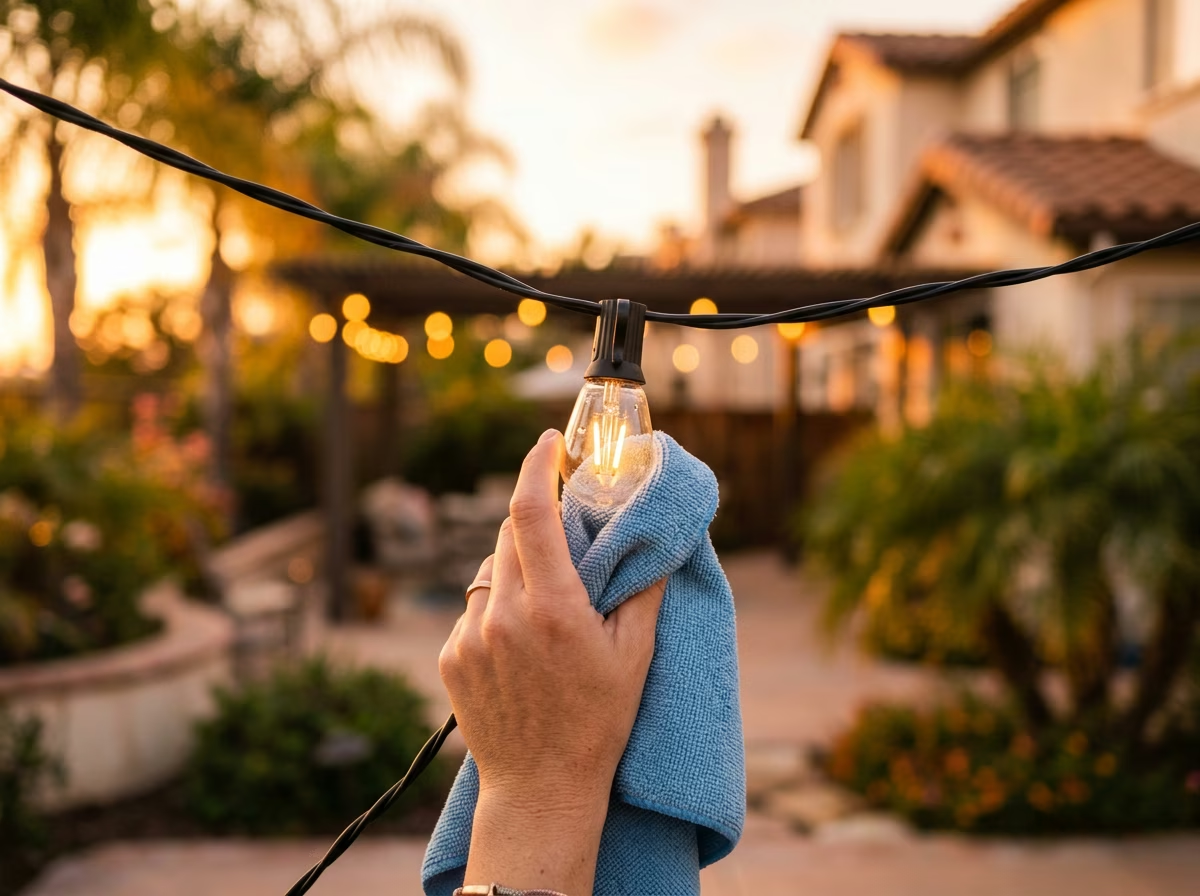
Southern California's dry climate means dust accumulates on bulbs and strands more quickly than in humid regions. A layer of fine dust dims the output of your lights and gives them a tired appearance. Once a month, wipe bulbs with a dry or slightly damp microfiber cloth. For a deeper clean, a garden hose on gentle spray removes accumulated grit without damaging connections.
Santa Ana Wind Preparation
The Santa Ana winds that sweep through Orange County several times a year (typically between October and March) are the biggest physical challenge for outdoor string lights. Before a forecasted wind event:
- Check that all cable connections and anchor points are secure
- Confirm turnbuckles are tensioned appropriately (not loose, not over-tight)
- Inspect zip ties and clips for brittleness or breakage
- If using lightweight fairy lights without a support cable, consider temporarily taking them down
A well-installed string light setup on a steel support cable will handle Santa Ana conditions without intervention. Lighter fairy light strands and any installation without structural support are more vulnerable.
Solar Panel Maintenance
For solar string lights, the panel is the most maintenance-sensitive component. Dust, pollen, and the fine grit carried by Santa Ana winds coat the panel surface and reduce charging efficiency. Wipe the panel with a damp cloth once a month, or more frequently during dusty periods. A clean panel charges more efficiently than a dusty one, which translates directly into brighter, longer-lasting illumination each evening.
GOOD TO KNOW
LED outdoor string lights rated IP65 or higher can stay installed year-round in Southern California without seasonal removal. The main factor that shortens lifespan in our climate is UV degradation, not water or cold. Replace individual bulbs that turn cloudy or dim rather than discarding the entire strand. Most quality sets use standard E12 or E26 bases that accept individual replacement bulbs, keeping the cost of upkeep minimal.
Frequently Asked Questions
How long do outdoor string lights last?
LED outdoor string lights typically last three to five seasons of nightly use, which translates to 25,000 to 50,000 hours of total illumination. Incandescent sets last one to two seasons at most. Solar models fall in between, with the solar panel and battery usually being the first components to degrade after two to four years. Replacing individual bulbs as they dim extends the life of the overall strand significantly.
Can you leave string lights up in the rain?
Yes, provided they carry an IP44 rating or higher. IP65-rated waterproof outdoor string lights are designed for continuous outdoor exposure including direct rain. In Southern California, rain is infrequent enough that even IP44-rated lights perform well in most installations. The greater concern in our climate is dust accumulation and UV exposure, not moisture.
How far apart should string light posts be?
Space support posts or anchor points 10 to 15 feet apart for most residential installations. Wider spacing creates more sag, which may look intentional and relaxed at 12 to 18 inches of droop but becomes visually distracting beyond that. If your span exceeds 20 feet, add an intermediate support point or use a tensioned steel cable to maintain a clean line.
Do solar string lights work well in Southern California?
Solar string lights perform exceptionally well in Southern California, arguably better here than anywhere else in the country. With 280+ sunny days per year, solar panels charge reliably in every season. Most quality solar sets deliver six to eight hours of illumination on a full charge. The key is panel placement: south-facing, in direct sunlight, away from tree canopy or structural shade.
How high should you hang outdoor string lights?
Hang string lights at eight to ten feet above ground over dining areas for an intimate canopy effect, and ten to twelve feet over open areas for a more expansive feel. Below eight feet, lights interfere with standing guests and feel cramped. Above twelve feet, the ambiance effect diminishes because the light source is too far from the social activity below.
What is the best color temperature for patio string lights?
Look for bulbs rated between 2200K and 2700K. This range produces the warm amber glow that creates relaxing outdoor ambiance. Bulbs rated 2200K offer a deeper, more candlelit warmth, while 2700K provides a slightly brighter warm white. Avoid anything labeled "daylight" (4000K+) for patio use, as cooler tones create a commercial or workspace atmosphere rather than the inviting evening feel you want.
How do you hang string lights without drilling?
Several no-drill options work for renters or homeowners who prefer not to penetrate surfaces. Adhesive-backed outdoor hooks rated for the weight of your strand work on smooth surfaces like stucco, vinyl siding, and metal pergola beams. Adjustable tree straps wrap around trunks without screws. Freestanding light poles (available as DIY projects or commercial products) can be set in weighted planters or driven into garden beds to create anchor points anywhere in your yard.
Outdoor string lights are the simplest, most affordable way to extend your living space into the evening hours. In Southern California, where year-round outdoor living is not a luxury but a lifestyle, they turn a patio, pergola, or garden path into a destination your household gravitates toward night after night.
Start here: choose LED string lights for most installations, or solar for outlet-free areas. Plan your layout by mapping zones (dining, conversation, transition) rather than just hanging lights randomly. Install with a galvanized steel support cable for wind resistance that lasts through Santa Ana season and beyond.
Next step: once your string lights are up, explore how they work alongside landscape lighting ideas and pathway lights to create a fully layered outdoor lighting system. For winter backyard entertaining, string lights paired with a fire pit and warm blankets make even the coolest Southern California evenings feel inviting.
Ready to design an outdoor space that glows? Browse design ideas, plant guides, and water-smart landscaping inspiration at Yardtopia.com to start building your Yardtopia, one evening at a time.