
Your Yardtopia can be created by replacing that underutilized lawn and turning it into the perfect outdoor living space.
KEY TAKEAWAYS
Traditional lawns consume 50 to 70 percent of residential water in Southern California, yet most homeowners use their front yard less than 10 minutes per week. The math simply does not add up.
Lawn alternatives can cut water use by 50 to 75 percent while creating a more interesting, lower-maintenance landscape that reflects how you actually live.
Southern California's Mediterranean climate is ideal for hundreds of beautiful grass alternatives that thrive without constant watering, making this one of the best places in the country to rethink your lawn.
Across Orange County and throughout Southern California, homeowners are quietly making a decision that changes how they experience their own property: they are replacing their grass. Not because someone told them to. Because they looked at their lawn one Sunday afternoon, thought about the water bill, the mowing, the fertilizer, the brown patches that show up every August no matter what they do, and asked a simple question: what if there is something better? There is.
This guide walks through why so many homeowners are making the switch, what the best grass alternatives look like in our climate, how much water and money you can actually save, and how to decide if removing your lawn is the right move for you. Whether you are imagining a complete front yard transformation or just exploring the idea, you are in the right place.
Why Are So Many Homeowners Replacing Their Grass?
The shift away from traditional lawns is one of the most significant changes in residential landscaping in a generation, and it is happening fastest right here in Southern California. According to the EPA, landscape irrigation accounts for nearly one-third of all residential water use nationwide. Traditional turf grass can consume 50 to 70 percent of a household's total water use, all to maintain a surface that most homeowners rarely use for anything beyond looking at.
The numbers tell part of the story. The average Southern California homeowner spends 150 to 200 hours per year maintaining their lawn: mowing, edging, fertilizing, aerating, dealing with weeds. That is roughly four full work weeks dedicated to a single surface. Add the cost of water, a lawn mower, fuel, fertilizer, and herbicides, and you are looking at $1,500 to $2,500 annually to keep grass green in a climate that does not naturally support it.
Water districts like IRWD offer substantial rebates for turf replacement. Nurseries specializing in California natives report record demand. Landscape designers say that lawn removal projects now make up the majority of their residential work. Something has shifted, and it is not going back.
GOOD TO KNOW
The average American lawn is about 10,000 square feet. In Southern California, that lawn requires roughly 55,000 gallons of water per year just to stay alive, not thriving, just alive. That is enough water to fill a backyard swimming pool twice over.
What Are the Best Grass Alternatives for Southern California?
The best replacement for your lawn depends on how you use your yard, how much maintenance you want, and the look you are going for or what creating your Yardtopia means to you. Southern California homeowners have more options than almost anywhere else in the country, thanks to our mild winters, long growing seasons, and the sheer diversity of plants that thrive in our Mediterranean climate.
Here is an overview of the major categories. Think of this as a menu, not a prescription. Most beautiful lawn-free yards combine two or three of these approaches. Remember to check your HOA guidelines before replacing your lawn.
Ground Cover Plants
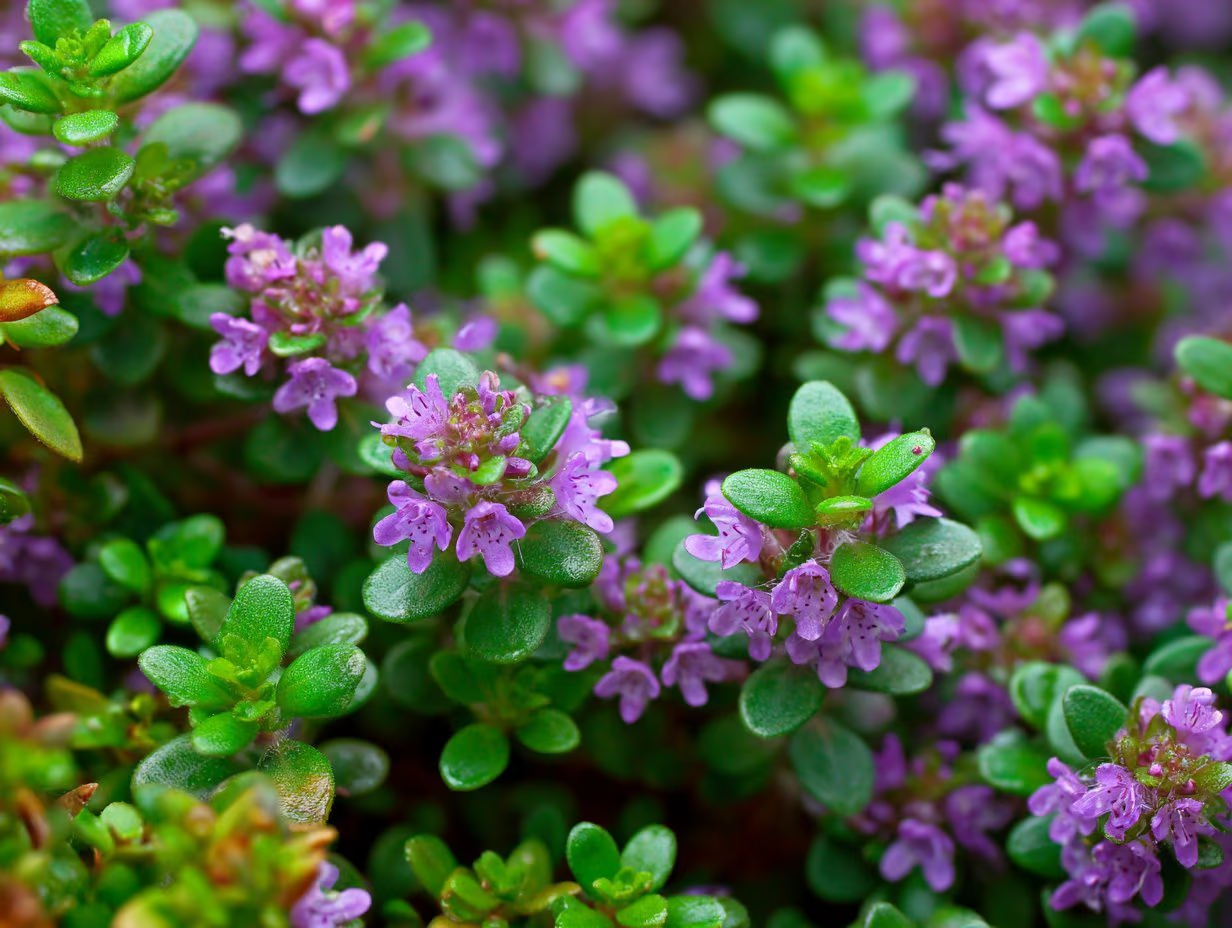
Ground covers are the closest thing to a living lawn that does not need mowing. Plants like creeping thyme, dymondia, and native sedges form dense, low mats that stay green with a fraction of the water. Many tolerate light foot traffic, fill in between stepping stones beautifully, and attract pollinators.
The range is wider than most people expect. California native ground covers like Ceanothus (California lilac in its prostrate form), yarrow, and lippia offer different textures, heights, and bloom colors. You can create a ground-level tapestry that changes with the seasons, something a grass lawn never does.
[For a deep dive into specific ground cover species, spacing, and installation, see our complete guide to ground cover plants.]
Native and Drought-Tolerant Plantings
California native plants evolved for exactly this climate. They expect dry summers. They thrive in our soil. They support local wildlife, from butterflies and hummingbirds to beneficial insects that keep your garden healthy. A yard planted with natives is not just low-maintenance. It is ecologically productive.
Popular choices include California buckwheat, manzanita, sage species, deer grass, and California poppies. These plants look lush and full through the seasons when grass struggles most, and many require no supplemental irrigation once established.
No Mow Grass and Ornamental Grasses
If you love the look of grass but hate the maintenance, there are no mow grass options that deliver the texture without the upkeep. UC Verde Buffalo Grass, for example, forms a soft, green lawn that needs mowing only once or twice per year and uses 75 percent less water than traditional turf. Ornamental grasses like deer grass, purple fountain grass, and blue fescue create movement and texture while staying completely self-sufficient.
These are not the stiff, artificial-looking alternatives you might imagine. A well-chosen ornamental grass garden catches the breeze, changes color through the seasons, and creates the kind of gentle, natural beauty that a clipped lawn never delivers.
Hardscape and Planting Combinations
Some of the most striking lawn alternatives are not plants at all, or at least not entirely. Decomposed granite pathways winding through native plantings. Flagstone patios surrounded by creeping ground cover. Gravel gardens with clusters of succulents and ornamental grasses. These designs create structure, reduce maintenance to almost zero, and often look more intentional and sophisticated than a plain grass lawn.
The key is balance. Too much hardscape feels stark. The right combination of permeable surfaces and strategically placed plantings creates a space that feels alive and welcoming while being essentially maintenance-free.
EXPERT TIP
The most successful lawn replacement projects start by identifying zones in your yard. Keep a small patch of natural grass where kids play or the dog lounges, and convert the rest to low-water alternatives. You do not have to choose all or nothing. A hybrid approach gives you the function where you need it and the beauty everywhere else.
How Much Water (and Money) Can You Actually Save?
This is the question that moves most homeowners from "maybe someday" to "let us do this." And the numbers are genuinely compelling.
A standard 1,000-square-foot lawn in Southern California requires approximately 44 gallons of water per square foot per year to maintain. Replace that same area with drought-tolerant native plantings or ground covers, and water use drops to 10 to 18 gallons per square foot per year, a reduction of 50 to 75 percent. For a typical 2,500-square-foot front and back lawn, that translates to roughly 65,000 to 90,000 gallons saved annually.
On your water bill, those savings add up. Southern California homeowners who replace traditional lawns report water bill reductions of $50 to $150 per month during peak summer watering season. Over a full year, total savings typically range from $400 to $1,200 depending on the size of the area converted and the alternatives chosen.
But water is only part of the equation. Once your lawn is gone, so are the ongoing costs of maintaining it:
Mower fuel and maintenance: $150 to $300 per year
Fertilizer and herbicides: $100 to $250 per year
Professional mowing service (if applicable): $1,200 to $2,400 per year
Overseeding and aeration: $100 to $200 per year
A homeowner who hires a mowing service and converts a 2,000-square-foot lawn could realistically save $2,000 to $3,500 per year in combined water and maintenance costs. That is real money, and it starts the first month.
Rebates That Help Cover the Upfront Cost
IRWD and other Southern California water districts offer turf replacement rebates that significantly reduce the cost of conversion. Current IRWD rebate programs can provide up to $3 per square foot for qualifying turf removal projects, which means a 1,000-square-foot conversion could come with up to $3,000 back in your pocket.
When you factor rebates into the equation, many homeowners find that their lawn replacement project pays for itself within two to three years through reduced water and maintenance costs alone. Everything after that is savings you keep.
GOOD TO KNOW
Rebate programs typically require before-and-after photos, a minimum area of conversion (often 250 square feet), and proof that real, living turf was removed, not bare dirt or weeds. Check current requirements before you start, because meeting the criteria is straightforward but needs to happen in the right order. [Visit Yardtopia.com for the latest rebate information and eligibility details.]
"We wanted people to see for themselves how beautiful a drought-tolerant garden can be."
— Victor Zamora, Landscape Contracts Administrator, IRWD
What Does a Lawn-Free Yard Actually Look Like?
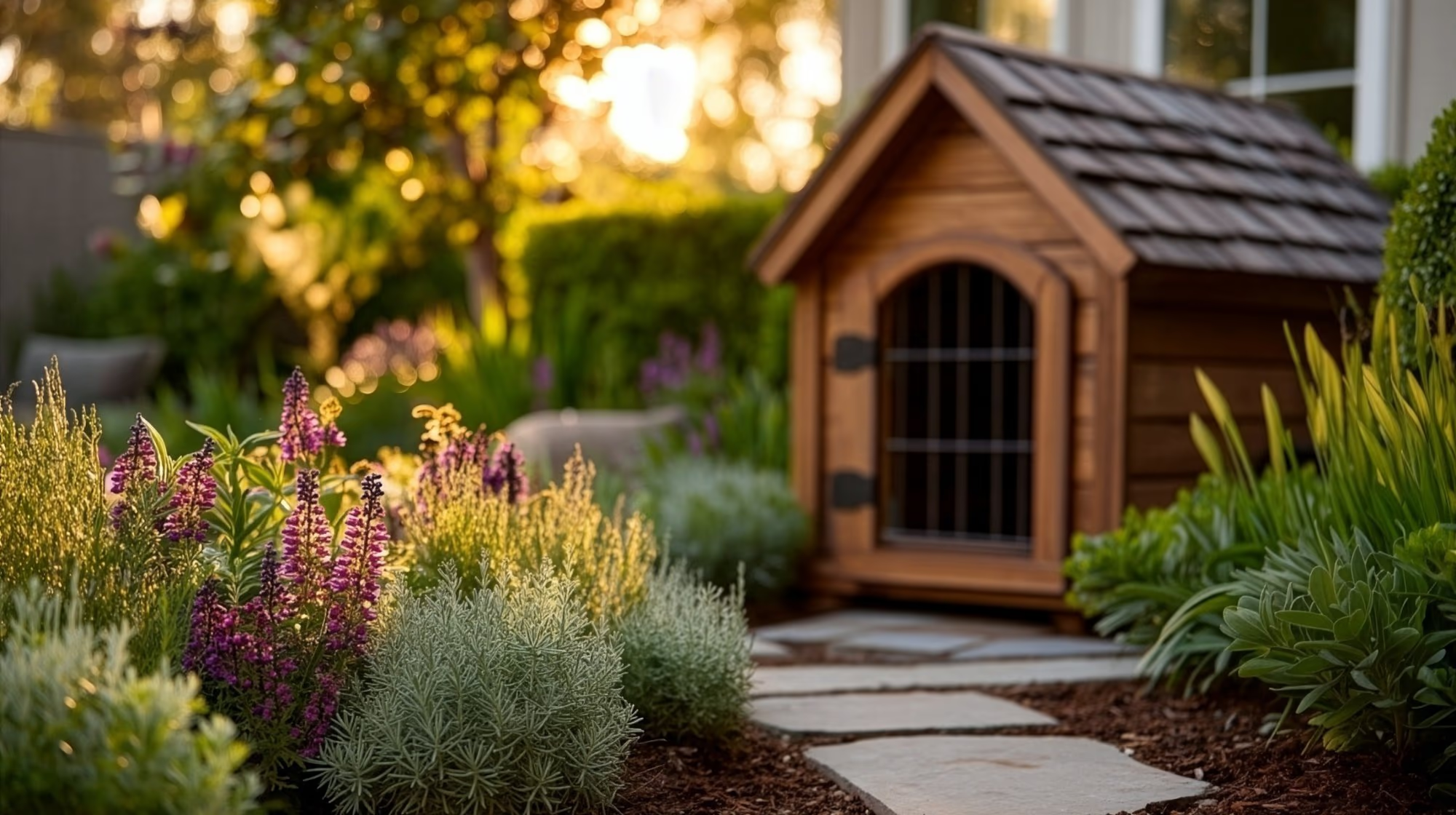
This is where skepticism turns into excitement. If the only lawn-free yards you have seen are the sparse, gravel-and-cactus landscapes that gave xeriscaping a bad reputation in the 1990s, prepare to update your mental picture. Today's lawn alternatives are lush, layered, and often more visually interesting than the grass they replaced.
Mediterranean Style
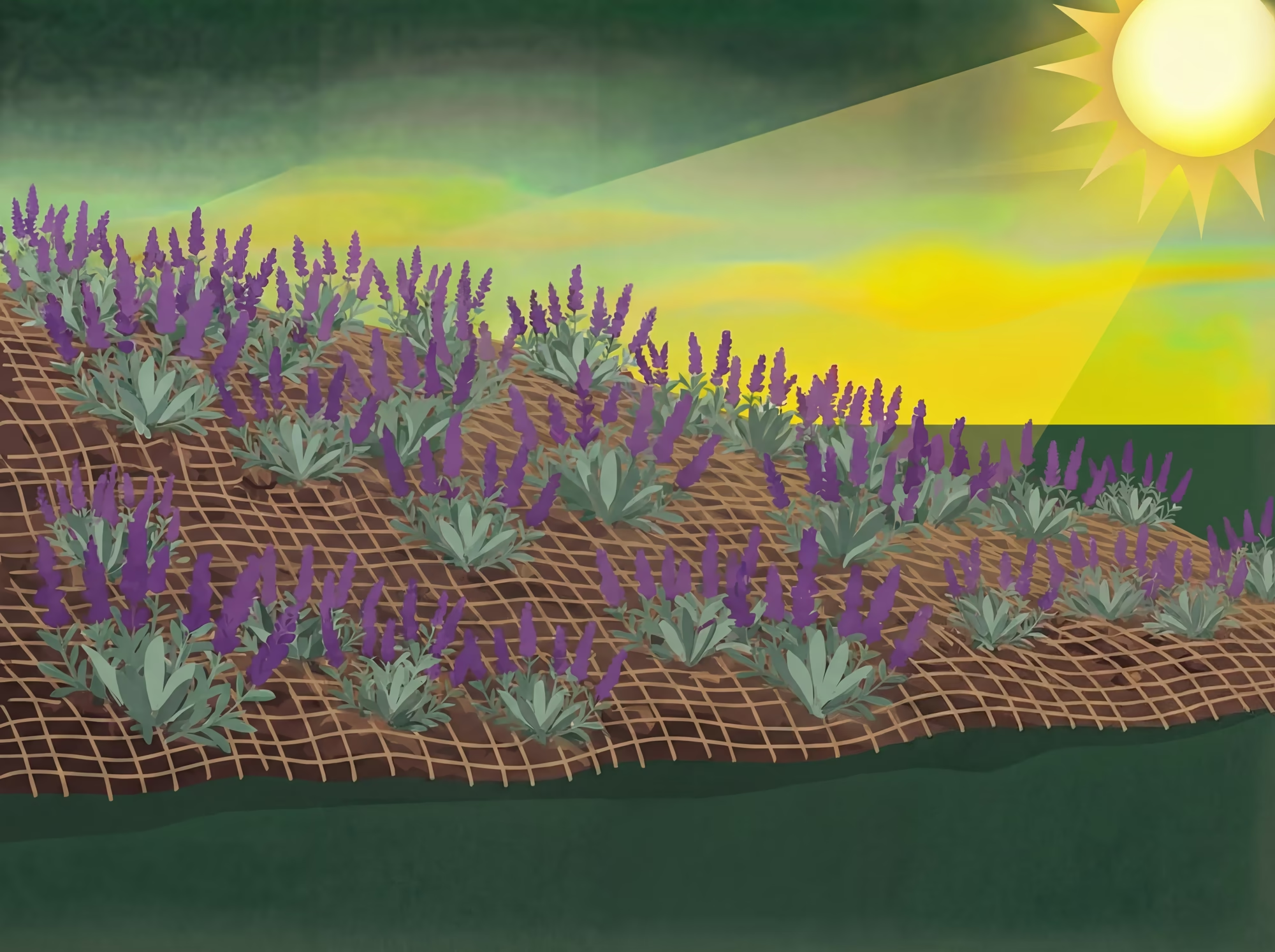
Lavender, rosemary, and ornamental grasses surround a central gathering space. Decomposed granite pathways wind through beds of sage and salvia. An olive tree or Italian cypress anchors the corner. The color palette runs warm: silvers, purples, muted greens, pops of yellow from black-eyed Susans or yarrow. It feels like a Tuscan courtyard, but it is your front yard in Orange County, and it drinks almost nothing.
California Native
This is the yard that looks like it has always been here. Coast live oak provides dappled shade. Manzanita, ceanothus, and deer grass fill the middle layer. Creeping sage and California fuchsia carpet the ground, blooming in waves from spring through fall. Monarch butterflies are regulars. Hummingbirds are practically residents. It is the most ecologically productive option, supporting dozens of native species while requiring zero fertilizer and, after establishment, very little water.
Modern Minimalist
Clean lines, negative space, and bold architectural plants. A single specimen agave centered in a bed of smooth river rock. Linear pavers with strips of low-growing dymondia between them. A sculptural steel planter with trailing rosemary. This look works beautifully for contemporary homes and small front yards where every element needs to be intentional. Maintenance is almost nonexistent.
The Edible Landscape
Replace your lawn with food. Raised beds of tomatoes, peppers, and herbs where the grass used to be. Blueberry bushes lining the pathway. A fig tree provides shade and fruit. Citrus trees that perfume the air every spring. In Southern California, where the growing season essentially never ends, an edible front or backyard is productive 12 months a year.
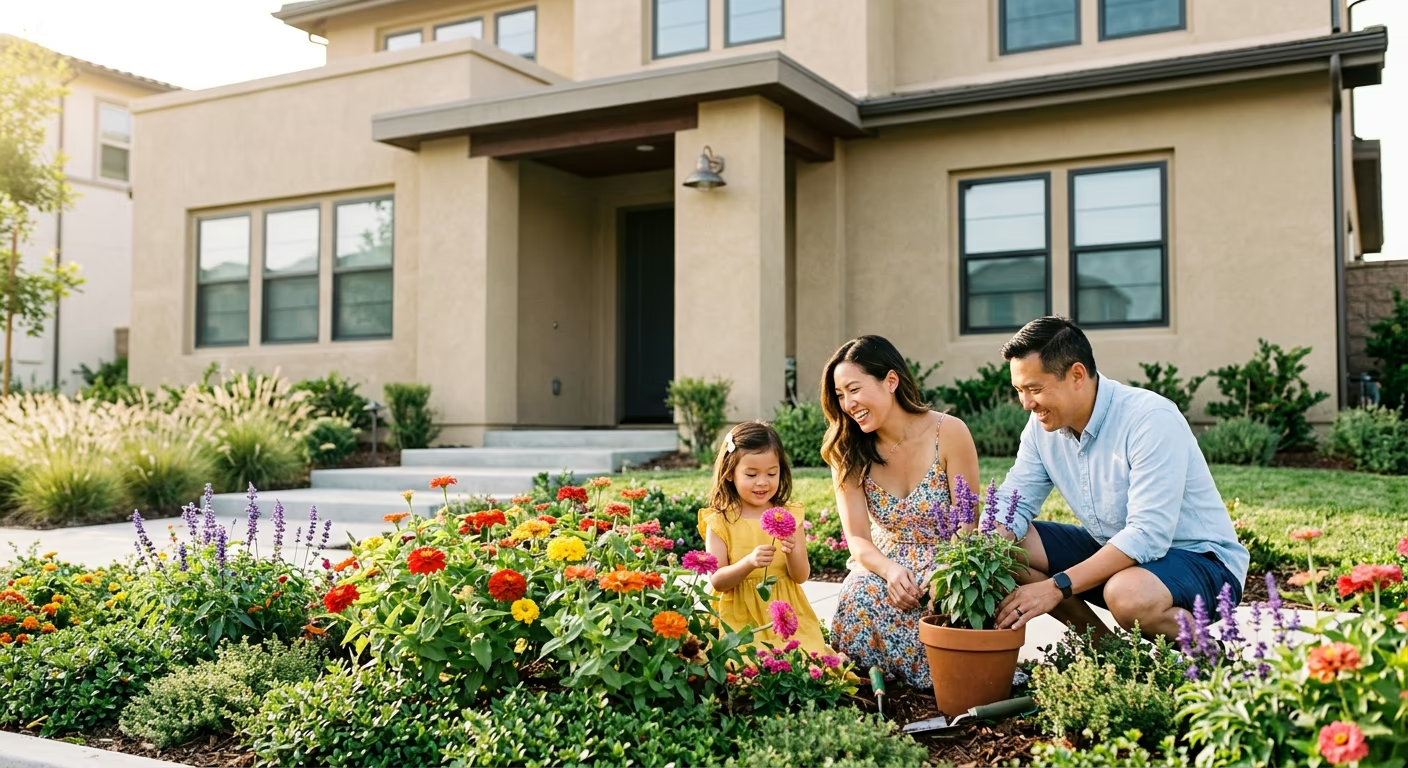
Close your eyes and picture spending time in your yard. What do you see? A Mediterranean retreat where friends gather around the firepit? A native habitat that makes you feel connected to the land? A modern space that looks like it belongs in a design magazine? Your yard, your vision. That could be your Yardtopia.
PRO TIP
When planning your lawn-free design, think in layers: tall anchor plants (trees, large shrubs) in the back, medium shrubs and grasses in the middle, and low ground covers at the front and along pathways. This layered approach creates visual depth that a flat lawn never offers and makes even small yards feel larger and more interesting.
"The online rebate application makes it really easy. You can track the progress of your application and IRWD does a great job of keeping you in the loop."
— Linda Hay, Homeowner
Is Removing Your Lawn the Right Move for You?
Honest answer: probably, but it depends on how you actually use your yard. Not everyone needs to remove every blade of grass, and knowing where you fall on that spectrum helps you make a decision you will feel great about for years.
When Full Removal Makes Sense
If your lawn is primarily decorative, meaning you look at it but rarely use it, full removal is almost always the right call. Front yards are the most common candidate. Most homeowners use their front lawn less than 10 minutes per week, yet it consumes hundreds of dollars in water and maintenance annually. Replacing it with a designed landscape that reflects your style and requires a fraction of the upkeep is one of the highest-return improvements you can make to your property.
Full removal also makes sense if you are tired of the maintenance cycle: the weekly mowing, the seasonal fertilizing, the constant battle against crabgrass and dollar weed. If maintaining your lawn feels like a chore rather than a joy, your time and energy deserve a better return.
When a Hybrid Approach Works Better
If you have young kids who need space to tumble and play, a dog who loves to roll in the grass, or you genuinely enjoy Sunday afternoon croquet, keeping some lawn makes sense. The strategic approach is to keep functional turf where you actually use it, a play area in the back, a pet zone near the patio, and convert everything else.
Many homeowners find that they only need 200 to 500 square feet of actual grass for the activities they value. That is a fraction of what most lawns occupy, and the rest becomes an opportunity for the kind of creative, low-water landscape that adds character and reduces your workload.
The Transition Question
Moving from a full lawn to a lawn-free yard does not have to happen in a single weekend. Phased approaches work beautifully. Start with the front yard this fall. Tackle the side yards next spring. Convert the back in stages as your budget and energy allow. Each phase reduces your water use, your maintenance time, and your frustration, while giving you a chance to learn what you like before committing to a complete vision.
The question is not really "should I remove my lawn?" It is "how much lawn do I actually need?" For most Southern California homeowners, the answer is far less than they currently maintain, and the space freed up becomes the most interesting part of the property.
GOOD TO KNOW
Worried about home value? Research consistently shows that well-designed, drought-tolerant landscapes maintain or increase property values in Southern California. A 2023 study by the National Association of Realtors found that landscape upgrades return 100 to 200 percent of their cost at resale. The key word is "well-designed." A thoughtful lawn replacement adds curb appeal. Simply removing grass without a plan does not.
Frequently Asked Questions About Grass Alternatives
What is the best alternative to grass in Southern California?
The best substitute for lawn in Southern California depends on your goals. For a living, walkable surface, creeping thyme and UC Verde Buffalo Grass offer low-water, no mow options. For visual impact with minimal maintenance, native plantings like California buckwheat, manzanita, and deer grass thrive in our Mediterranean climate. Most successful conversions combine ground covers, native shrubs, and permeable hardscape for a layered look that requires far less water and care than traditional turf.
How much does it cost to replace a lawn?
Professional lawn replacement in Southern California typically costs $8 to $15 per square foot for design, removal, soil preparation, and new plantings. A 1,000-square-foot front yard conversion generally runs $8,000 to $15,000 before rebates. DIY approaches can reduce costs to $3 to $7 per square foot. Water district rebates of $2 to $3 per square foot offset a significant portion of the investment, and most homeowners recoup the remaining cost within two to four years through reduced water and maintenance expenses.
Will replacing my lawn increase or decrease my home value?
Well-designed lawn alternatives consistently maintain or increase home values in Southern California. Buyers in this market increasingly prefer drought-tolerant, low-maintenance landscapes over traditional lawns. The key is professional-looking design with clear intentionality, not simply bare dirt or gravel. Native plantings, structured hardscape, and mature specimen plants all signal quality and care to prospective buyers.
Can I get a rebate for removing my lawn?
Yes. IRWD and most Southern California water districts offer turf replacement rebates, typically $2 to $3 per square foot of qualifying lawn removed. Programs usually require that you remove real, living turf (not bare soil or weeds), replace it with approved water-efficient landscaping, and submit before-and-after documentation. Check with your local water provider for current rates, minimum area requirements, and application deadlines.
The Bottom Line
The traditional grass lawn had a good run. For generations, it was the default for every front and backyard in America. But in Southern California, where water is precious and sunshine is abundant, the lawn is being outperformed by alternatives that look better, cost less to maintain, and actually match how people live today.
Here is where to start:
Walk your property with fresh eyes. Note where you actually use the grass, where it is purely decorative, and where it frustrates you most. That map is your starting point.
Explore what excites you. Visit a local nursery like Tree of Life or Roger's Gardens. Look at native plant demonstration gardens. Browse Yardtopia.com for inspiration. The goal is to find a vision that makes you genuinely excited, not one that feels like a compromise.
Check your rebate eligibility. Contact IRWD or your local water district to understand current turf replacement rebate programs before you start any work. The application process is straightforward but needs to happen before removal begins.
Start small if you want. Your front yard. One side of the house. A single bed along the driveway. Every square foot of grass you replace is water saved, maintenance eliminated, and beauty gained.
Your Yardtopia can begin by replacing your lawn. And in a region blessed with year-round growing weather and hundreds of stunning plant options, the replacement is almost always more interesting than what it replaced.
Imagine walking out your front door six months from now and seeing a landscape that reflects your taste, supports local wildlife, uses a fraction of the water, and looks better in August than it does in April. That could be your Yardtopia.