
Some of the most peaceful yards are the ones that work with nature rather than against it. By designing around the local flora and fauna, your outdoor space becomes an extension of the natural landscape — one that supports native plants, invites birds and pollinators, and reflects the character of the region.
KEY TAKEAWAYS
- A wildlife garden and a water-wise garden are the same garden. The native plants that attract the most songbirds, lizards, and beneficial insects to Orange County backyards are also among the lowest-water plants you can grow.
- Blue Elderberry supports more bird species than any other plant you can add — over 30 species eat the berries, from scrub-jays and mockingbirds to bluebirds and warblers.
- Five core native plants, arranged in layers, can recreate the coastal sage scrub ecosystem that once covered Orange County — attracting dozens of wildlife species on zero supplemental water after establishment.
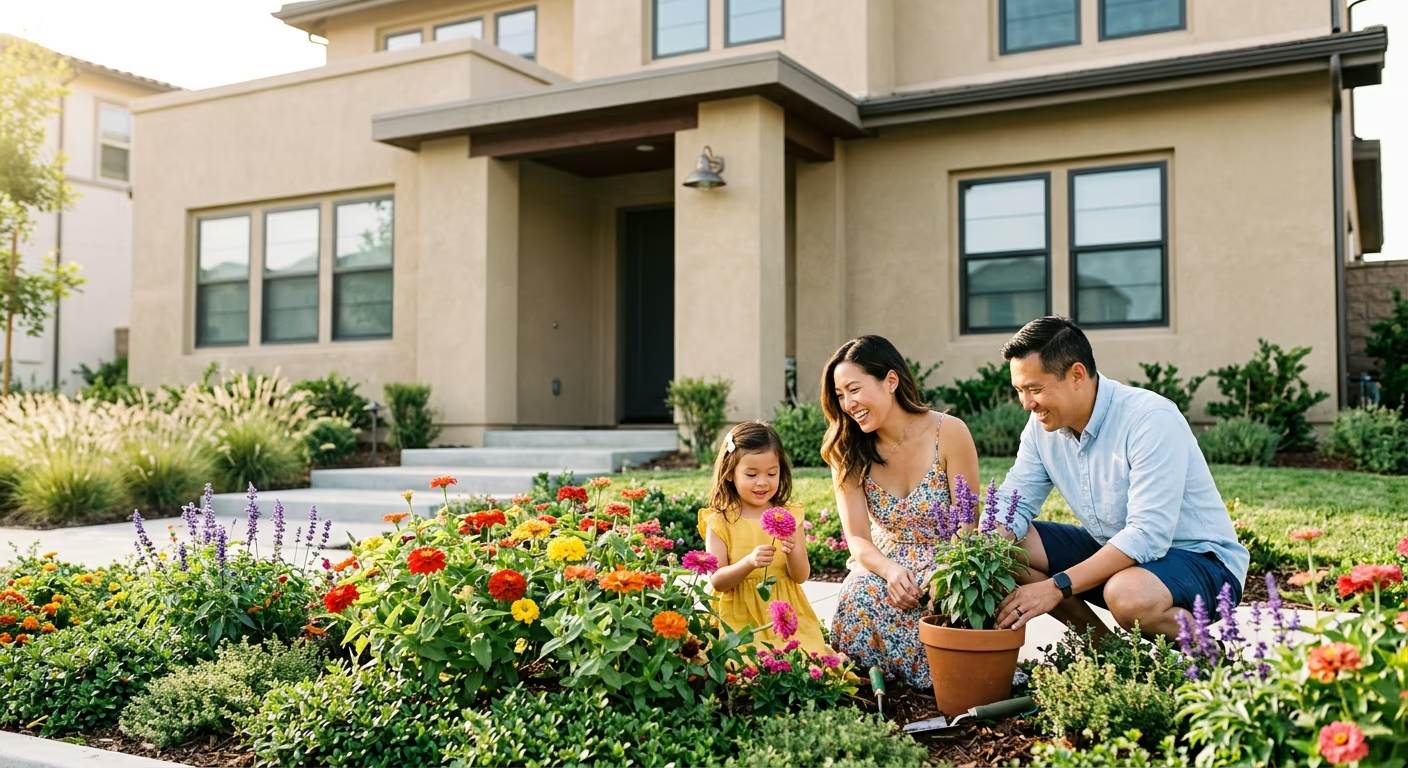
Your Yardtopia can be a place where hummingbirds stop by, butterflies drift through the garden, and native plants thrive in the climate they were meant for. Thoughtful choices like planting regionally appropriate greenery, creating layers of habitat, and using water wisely can help create a yard that feels both vibrant and balanced.
The result is an outdoor living space that feels welcoming and alive. A place where friends and family can gather, where the landscape feels connected to its surroundings, and where the beauty of nature becomes part of the experience you've created.
Your Backyard Already Has a Guest List
Orange County sits within the California Floristic Province, one of only 36 biodiversity hotspots on the planet. That distinction is not about the Santa Ana Mountains or Crystal Cove. It includes the 6,000-square-foot lot where you park your car and eat dinner.
The wildlife is already here. California Towhees scratch through leaf litter in front yards across Irvine. Western Fence Lizards sun themselves on every block wall in Tustin Ranch. Lesser Goldfinches land on backyard fences in Lake Forest, looking for seed heads that are not there. The animals are present. What most backyards lack is not proximity to nature — it is the right plants to support it.
That is the idea behind birdscaping, a term gaining momentum in 2026 as homeowners move beyond decorative landscaping toward gardens designed around the specific food, shelter, and habitat that local wildlife depends on. And in Orange County, where decades of development have replaced the native plant communities these creatures evolved alongside, a backyard wildlife garden does real ecological work.
This guide covers the plants that attract songbirds, lizards, beneficial insects, frogs, and bats to Southern California backyards. If you are looking specifically for plants that attract butterflies, hummingbirds, and native bees, our companion guide on pollinator plants covers those in depth, with profiles of ten species and a year-round bloom calendar. This article goes wider — the rest of the creatures that make a backyard feel genuinely alive.
What Does a Backyard Wildlife Habitat Actually Need?
The National Wildlife Federation certifies residential yards as official wildlife habitats when they provide four things. These same four elements serve as a useful framework for planning a wildlife garden in Orange County.
Food. Different animals need different food sources. Songbirds need berries, seeds, and insects. Lizards need insect prey and sunny basking spots. Beneficial insects need pollen and nectar from specific plant families. A wildlife garden provides food across seasons so there is always something available.
Water. A shallow dish with pebbles, a small recirculating fountain, or a birdbath with a dripper. The water source does not need to be elaborate — it needs to be consistent and shallow enough that small creatures will not drown.
Shelter. Dense shrubs for nesting birds. Rock piles for basking lizards. Leaf litter for ground beetles and salamanders. Rough-barked trees for fence lizards to climb. Wildlife needs places to hide from predators, escape extreme heat, and rest between foraging.
Places to Raise Young. Nesting sites for birds (dense shrubs, tree cavities). Host plants for caterpillars. Undisturbed mulch for ground-nesting insects. A yard that provides all four elements becomes more than a garden — it becomes a functioning habitat.
GOOD TO KNOW
NWF Certified Wildlife Habitat
The National Wildlife Federation's Certified Wildlife Habitat program lets you register your yard as an official wildlife habitat for $25. Over 250,000 yards nationwide are certified. The requirements align closely with water-wise landscaping principles — native plants, reduced chemical use, water features, and habitat structure. You may already qualify. Learn more at NWF.org/certify.
Plants That Attract Songbirds to Southern California Backyards
The most effective bird-attracting plants for Orange County share three traits: they produce berries or seeds that birds actually eat, they maintain dense enough structure for nesting and shelter, and they attract the insects that insectivorous birds depend on during breeding season.
Here is what lives in Orange County that you are planting for: California Towhees scratching for seeds in leaf litter. Lesser Goldfinches pulling seeds from dried flower heads. Northern Mockingbirds working through berry-laden shrubs in winter. California Scrub-Jays caching acorns. Bushtits moving through dense foliage in chattering flocks of 20 or more, picking aphids off leaves. Black Phoebes sallying from fence posts to catch flying insects over your lawn.
Blue Elderberry (Sambucus nigra ssp. caerulea)
Blue Elderberry is, by species count, the single most effective bird-attracting plant you can grow in an Orange County yard. Over 30 bird species eat the berries — scrub-jays, mockingbirds, house finches, towhees, Western bluebirds, warblers, orioles, grosbeaks, thrashers, woodpeckers, tanagers, sparrows, and quail all visit elderberry when the powdery blue fruit clusters ripen in late summer.
The plant grows fast, reaching 8 to 25 feet tall depending on how you manage it. Creamy white flower clusters appear in late spring, attracting bees and butterflies. By September, those flowers have become dense clusters of small blue-black berries that birds strip in days. It tolerates a range of soils, handles full sun to part shade, and needs only moderate water.
One practical note: Blue Elderberry does not love salt air. If you live within half a mile of the coast, it may struggle. For coastal yards, Lemonade Berry (below) fills a similar role.
- Water needs: Low to moderate
- Sun: Full sun to part shade
- Mature size: 8-25 ft tall, 8-15 ft wide
- Native status: California native
- Pro tip: Elderberry responds well to hard pruning — cut it back in winter to keep it manageable, and it will push vigorous new growth in spring. The berries form on new wood.
GOOD TO KNOW
A Note on Elderberry Toxicity
Raw elderberries and leaves contain cyanogenic glycosides and are mildly toxic to pets if eaten in quantity. Cooked berries are safe for humans (and make excellent syrup and jam). Plant where curious dogs cannot graze on fallen fruit.
Lemonade Berry (Rhus integrifolia)
Lemonade Berry is the coastal Southern California equivalent of a Swiss Army knife. It produces berries that roadrunners, mockingbirds, and game birds depend on. Its dense, mounding form provides nesting cover for songbirds and thermal shelter for lizards and cottontail rabbits. It hosts roughly a dozen butterfly and moth species. And it survives on rainfall alone — zero supplemental irrigation once established.
The plant is remarkably flexible in form. Left alone, it grows into a large shrub or small tree (6 to 15 feet). Pruned, it makes an excellent hedge or screen. It tolerates wind, salt spray, and the sandy or clay soils common across coastal Orange County. The sticky red berries, which have a tart, citrusy flavor when soaked in water (hence the name), ripen in summer and persist into fall.
For yards near the coast where Blue Elderberry may struggle, Lemonade Berry fills the berry-producing shrub role while adding salt tolerance and fire resistance.
- Water needs: Very low
- Sun: Full sun to part shade
- Mature size: 6-15 ft tall, 6-15 ft wide (highly variable; prune to shape)
- Native status: California native (coastal Southern California)
- Pro tip: Not in the poison sumac group despite the Rhus genus name. Generally non-toxic, though some people have mild skin sensitivity.
Coffeeberry (Frangula californica)
Coffeeberry solves a problem most bird-attracting plants have: shade tolerance. While elderberry, toyon, and most berry-producing shrubs want sun, Coffeeberry thrives in partial to full shade — under mature trees, on the north side of a house, or in the filtered light beneath a patio cover. This makes it the go-to bird plant for the shaded corners of your yard where other wildlife plants will not perform.
The berries start green, ripen through red to glossy black from July through November, and band-tailed pigeons and songbirds eat them eagerly. The dense, shade-tolerant canopy also creates the cool, moist microhabitat that Garden Slender Salamanders (more on those later) favor.
Individual Coffeeberry plants can live 100 to 200 years. You are planting for generations of wildlife.
- Water needs: Very low to low
- Sun: Full sun to full shade (one of the most adaptable natives)
- Mature size: 3-12 ft tall, 3-10 ft wide
- Native status: California native
- Pro tip: The cultivar 'Eve Case' stays compact (4-8 ft) and is widely available at California native plant nurseries.
Coast Live Oak (Quercus agrifolia)
If you have the space for one large tree, Coast Live Oak is the single most ecologically valuable plant you can put in an Orange County yard. The numbers are staggering: it supports over 270 bird species and more than 300 species of moths and butterflies whose larvae feed on oak leaves, which in turn feed the insectivorous birds that depend on that caterpillar biomass to raise their young.
Scrub-jays cache acorns. Woodpeckers and wrens nest in natural cavities. Bats roost in the bark crevices. Western Fence Lizards climb the rough trunk. Garden Slender Salamanders shelter in the leaf litter beneath the canopy. A single mature Coast Live Oak is an apartment building for wildlife.
The tree grows 25 to 75 feet tall with a spreading canopy that can reach 130 feet across in time — so this is not a plant for a small patio garden. But if you have a front yard, side yard, or back corner where a shade tree would be welcome, an oak planted now will be the most valuable thing in your landscape within a decade.
One care instruction matters above all others: do not irrigate mature Coast Live Oaks in summer. Summer watering promotes root rot (Phytophthora), which has killed countless oaks in irrigated landscapes. Leave the leaf litter beneath the canopy — it is not debris; it is habitat.
- Water needs: Very low (NO summer irrigation for established trees)
- Sun: Full sun to part shade
- Mature size: 25-75 ft tall, crown to 130 ft wide
- Native status: California native
- Pro tip: If you already have a mature oak on your property, you already have the most valuable wildlife resource in Orange County. Protect it. Add understory plants like Coffeeberry and Hummingbird Sage beneath the canopy, and let the leaf litter stay.
"Studies have been done comparing non-native oaks versus native oaks in their ability to support indigenous birds. The native oaks won, hands down, in sustaining insects and birds. Even seed-eating birds will catch insects to feed to their chicks. Fledglings need protein to grow and insects are loaded with protein."
— Trude Hurd, Project Director of Education, Sea & Sage Audubon Society
Holly Leaf Cherry (Prunus ilicifolia)
Holly Leaf Cherry is the native privacy hedge that happens to feed birds. Dense, glossy, evergreen foliage stays green year-round and can be pruned into a formal hedge, left as a large shrub, or trained as a small tree. From August through November, it produces dark cherries that songbirds and small mammals eat.
Fragrant white flower clusters in spring attract pollinators. The plant tolerates drought, a range of soils, and can be grown in full sun to part shade. For homeowners who want screening or privacy without sacrificing wildlife value, Holly Leaf Cherry is the answer — it is the native equivalent of a ficus hedge, but with ecological purpose.
- Water needs: Very low to low
- Sun: Full sun to part shade
- Mature size: 8-30 ft tall (variable; prune to shape)
- Native status: California native
- Pro tip: Like all Prunus species, the leaves and pits contain cyanogenic glycosides. Ripe fruit flesh is edible. Keep pets from chewing on leaves or pits. Not a concern with casual contact.
EXPERT TIP
Plant for Every Season
The most common mistake with bird gardening is planting only for one season. A yard with elderberry (summer berries), toyon (winter berries), Holly Leaf Cherry (fall berries), and buckwheat (year-round seeds) provides food in every month.
Plants That Welcome Lizards — Your Garden's Best Pest Control
Most gardening guides ignore lizards entirely. That is a missed opportunity, because the Western Fence Lizard — the blue-bellied lizard sunning itself on every block wall and rock in Orange County — is one of the most effective pest controllers in your yard.
A single Western Fence Lizard eats dozens of insects per day: ants, beetles, spiders, flies, and mosquitoes. Research at UC Berkeley found that a protein in their blood actually neutralizes the Lyme disease bacterium in ticks that feed on them, meaning fence lizards reduce Lyme disease transmission in the areas where they live. Southern California's low Lyme disease rates are partly attributed to the abundance of these lizards.
Southern Alligator Lizards, the longer, more snake-like lizards occasionally spotted in shady garden corners, eat slugs, snails, and larger insects — pests that damage plants.
Lizards do not need special plants the way birds need berries. They need habitat structure:
- Flat rocks in sunny spots for basking (body temperature regulation)
- Rock piles or stacked flagstone with gaps for shelter and escape from predators
- Low, dense shrubs for cover (Coyote Brush, Sugar Bush, Lemonade Berry)
- Loose leaf litter and mulch for hunting insects
- Rough-barked trees for climbing (Coast Live Oak is ideal)
- Sunny open patches adjacent to dense cover (lizards need both sun and shade within a quick sprint)
Coyote Brush (Baccharis pilularis)
Coyote Brush fills a role no other plant in this guide does: it blooms in October through December, when almost nothing else is flowering. That late-season bloom is critical for hundreds of insect species — and those insects attract lizards, phoebes, bushtits, and other insectivorous wildlife exactly when other food sources are winding down.
The standard form grows 3 to 10 feet tall and wide. The ground cover cultivar 'Pigeon Point' stays 1 to 2 feet tall and spreads 6 to 10 feet — ideal for creating the kind of dense, low cover that lizards use for shelter and hunting.
Coyote Brush is fast-growing, drought-tolerant, and works as erosion control on slopes. It is native to coastal California and thrives in full sun with minimal care.
- Water needs: Very low to low
- Sun: Full sun
- Mature size: 3-10 ft (species); 1-2 ft (cultivar 'Pigeon Point')
- Native status: California native
- Pro tip: Male and female flowers are on separate plants. Both sexes attract insects, but female plants produce the cottony seed heads that some homeowners find messy. If that is a concern, specify male plants at the nursery.
Sugar Bush (Rhus ovata)
Sugar Bush is a large, handsome evergreen shrub that provides three things lizards need: dense shade for cooling, thick leaf litter for insect prey, and a broad canopy structure that creates the sun-to-shade transition zones lizards prefer. It also produces small sticky berries that songbirds and game birds eat, and its dense form provides nesting habitat.
At 10 to 15 feet tall and wide, Sugar Bush works well as a background shrub or informal screen. It handles full sun to part shade, requires very little water, and is fire-resistant — a practical choice for yards near wildland-urban interface areas.
- Water needs: Very low
- Sun: Full sun to part shade
- Mature size: 10-15 ft tall, 10-15 ft wide
- Native status: California native
- Pro tip: Sugar Bush tolerates heavy clay soil, which is common in many OC neighborhoods built on former agricultural land.

Plants That Attract Beneficial Insects — The Pest-Control Garden
A yard full of ladybugs, lacewings, and hoverflies is a yard that does not need pesticides. These beneficial predators consume staggering numbers of garden pests: a single Green Lacewing larva eats over 200 aphids per week. A ladybug consumes up to 5,000 aphids in its lifetime. Hoverfly larvae eat 150 aphids per day.
The plants that attract these predators are called insectary plants — they provide the pollen and nectar that adult beneficial insects need, which keeps them in your garden long enough to lay eggs and produce the larvae that do the actual pest-eating. The strategy is simple: feed the adults, and the larvae will handle your aphid problem.
"Native flowering plants give a much-needed boost to native pollinators, and pollinators help increase the number of flowers or fruits you have in your garden."
— Ian Swift, Natural Resources Manager, IRWD
Sweet Alyssum (Lobularia maritima)
Sweet Alyssum is the single most research-validated plant for attracting beneficial insects. University studies consistently rank it as the top attractor of hoverflies, whose larvae are among the most effective aphid predators. It also draws ladybugs, parasitic wasps, and lacewings.
The plant grows just 3 to 9 inches tall, blooms nearly year-round in Orange County's mild climate, and works as a living mulch or border along garden beds. Tuck it between vegetable rows, along the edges of raised beds, or as ground cover beneath taller shrubs. The honey-scented white, pink, or purple flowers are small but prolific.
Sweet Alyssum is not a California native — it originates from the Mediterranean — but it is non-invasive, inexpensive, and wildly effective at its job. Think of it as a hired specialist.
- Water needs: Low to moderate
- Sun: Full sun to part shade
- Mature size: 3-9 in tall, 6-12 in spread
- Native status: Non-native (Mediterranean), non-invasive
- Pro tip: Sweet Alyssum sometimes flags in the heat of August. Shear it back by half, water it, and it will flush with new growth and flowers within two weeks.
Black Sage (Salvia mellifera)
The species name mellifera means "honey-bearing," and Black Sage earns it. It is the most important honey-producing plant in the coastal sage scrub ecosystem, and the nectar attracts a vast community of native bees, hoverflies, and other beneficial insects. Dried seed heads feed goldfinches and sparrows through fall and winter.
Black Sage grows 3 to 6 feet tall with a rounded habit. The pale lavender-blue flowers appear in spring and early summer, filling the garden with a warm, resinous scent on hot afternoons. It requires literally nothing once established — no supplemental water, no fertilizer, no pruning (though light shaping after bloom keeps it tidy).
- Water needs: Very low
- Sun: Full sun
- Mature size: 3-6 ft tall, 3-6 ft wide
- Native status: California native
- Pro tip: Black Sage, Cleveland Sage, and White Sage can be planted together for a continuous sage bloom from early spring through late summer — providing an unbroken nectar source for beneficials.
Common Yarrow (Achillea millefolium)
Yarrow is the insectary plant that landscape designers love because it actually looks good. The flat-topped flower clusters (called corymbs) function as landing platforms for small beneficial insects — ladybugs, parasitic wasps, lacewings, and hoverflies all feed on yarrow nectar and pollen. The finely divided, fern-like foliage stays green year-round in Orange County.
White-flowered forms of the native California yarrow are the most effective insect attractors. Ornamental colored varieties (pink, red, gold) are less productive for beneficials but still useful. Plant yarrow in full sun at the front of garden beds where you can watch the insect activity up close.
- Water needs: Very low to low
- Sun: Full sun
- Mature size: 1-3 ft tall, 1-3 ft spread
- Native status: California native (A. millefolium var. californica)
- Pro tip: White-flowered native yarrow attracts the broadest range of beneficial insects. If you are choosing between ornamental colors and the native white form, the white form is the workhorse.
GOOD TO KNOW
The Insectary Trio
Sweet Alyssum + Yarrow + California Buckwheat attracts nearly every category of beneficial predator insect found in Southern California. Plant all three and you have the foundation of a biological pest-control system that works around the clock, season after season.
The Night Shift: Plants That Attract Bats and Moths
When the sun sets, a different crew shows up. Mexican Free-tailed Bats, Big Brown Bats, and California Myotis bats patrol Orange County skies nightly, and a single bat can consume over 1,000 mosquito-sized insects per night. If you have ever sat outside on a summer evening and not been eaten alive by mosquitoes, you probably have bats to thank.
Moths, meanwhile, are the unsung pollinators. They work the night shift when bees are dormant, pollinating plants that open their flowers in the evening. And moths are a primary food source for bats — the two form a linked system.
Hooker's Evening Primrose (Oenothera elata)
Evening Primrose is the plant that makes the night shift visible. Its large, bright yellow flowers open in the late afternoon and stay open through the night, attracting sphinx moths (hawkmoths) and other nocturnal pollinators. It hosts 19 or more moth and butterfly species — and those moths attract bats.
The plant grows 2 to 6 feet tall and blooms from late spring through fall. It is a California native that handles full sun to part shade and needs only modest water. In a garden designed for 24-hour wildlife, Evening Primrose covers the hours that the sages and buckwheats cannot.
- Water needs: Low to moderate
- Sun: Full sun to part shade
- Mature size: 2-6 ft tall, 1-2 ft wide
- Native status: California native
- Pro tip: Position Evening Primrose near a patio or window where you spend time in the evening. Watching the flowers open at dusk — and the moths arrive minutes later — is one of the more satisfying moments a garden can offer.
Hummingbird Sage (Salvia spathacea)
Hummingbird Sage earns its spot in the wildlife garden as the shade specialist. It thrives under oak canopy, on the north side of structures, and in the filtered light beneath mature trees where most wildlife-attracting plants refuse to grow. Rose-pink tubular flowers bloom in spring and attract hummingbirds, and the spreading ground cover creates the dense, moist habitat that lizards and ground-dwelling insects favor.
At 1 to 2 feet tall and spreading 3 to 4 feet wide, it works as a living ground cover under trees — exactly where the Garden Slender Salamander (below) likes to live.
- Water needs: Low
- Sun: Part shade to full shade (dry shade specialist)
- Mature size: 1-2 ft tall, 3-4 ft spread
- Native status: California native
- Pro tip: Hummingbird Sage spreads by underground runners. In a shaded bed beneath an oak, this is exactly what you want — it fills in to create continuous habitat.
Attracting Bats to Your Yard
Bats are not plant-dependent the way birds are. They need three things:
- Insects to eat — a garden with the plants in this article will produce plenty
- Water — bats drink on the wing, skimming low over ponds or pools. Even a birdbath helps.
- A bat house — mounted 12 to 15 feet high on a south-facing wall or pole, painted dark to absorb heat. Bat Conservation International provides tested designs and placement guidelines.
Reduce outdoor lighting where possible — bright lights attract insects away from the garden and can disorient bats. If you need path lighting, use warm-toned, downward-facing fixtures.
Can You Attract Frogs to a Water-Wise Yard?
This is the question every wildlife gardener eventually asks: does a water-wise garden leave room for amphibians?
The answer, in Orange County, is a qualified yes. The Baja California Treefrog (the small green or brown frog whose chorus fills spring evenings near any pond or creek in OC) will colonize a backyard water feature — if two conditions are met: the feature holds water year-round, and it contains no fish. Fish eat tadpoles. A simple recirculating pond or even a large, half-buried container with aquatic plants and no fish can support a treefrog population.
The Garden Slender Salamander (Batrachoseps major) is a more surprising backyard resident. These small, worm-like salamanders are remarkably well-adapted to suburban yards. They live under thick mulch, in rock piles, and beneath dense ground cover, especially in the moist leaf litter under oaks and Coffeeberry. If your yard has an area with consistent mulch, some shade, and occasional moisture from a drip irrigation zone, Garden Slender Salamanders may already be there. Lift a piece of bark or a flat rock in a moist corner of your garden and look.
Both species eat insects, slugs, and other invertebrates — contributing to the garden's pest-control system.
GOOD TO KNOW
A Tiny Pond Goes a Long Way
A small recirculating water feature sized for frogs does not need to use significant water. A 15- to 20-gallon container with a solar-powered recirculating pump, a few native sedges, and some flat rocks at the edges creates a complete amphibian habitat. Top it off occasionally as water evaporates — roughly the same amount you would use to water a single potted plant. Mosquito concerns are managed by the recirculating pump (mosquitoes need still water) and by any fish-free frogs that colonize it (tadpoles eat mosquito larvae).
The Coastal Sage Scrub Formula: Your Yard's Original Ecosystem
Before Orange County was Orange County, much of the land from the coast to the foothills was covered in coastal sage scrub — a low, aromatic plant community that supported an extraordinary density and diversity of wildlife per acre. Most of it has been replaced by development. But the plants are still available, they still attract the same wildlife, and they still survive on zero supplemental water.
Here is how to bring that ecosystem back, scaled to a residential yard:
The Core 5 (Zero Water After Establishment)
| Plant | Size | Role | Key Wildlife |
|---|---|---|---|
| California Sagebrush (Artemisia californica) | 2‑5 ft | Framework shrub, aromatic foliage | Nesting birds, lizard cover, 100+ insect species |
| California Buckwheat (Eriogonum fasciculatum) | 1‑3 ft | Year-round food source | Bees, butterflies, seed-eating birds |
| Black Sage (Salvia mellifera) | 3‑6 ft | Nectar powerhouse | Bees, hoverflies, seed-eating birds |
| Coyote Brush (Baccharis pilularis) | 3‑10 ft | Fall/winter insectary | Late-season insects, nesting birds, lizards |
| Toyon (Heteromeles arbutifolia) | 6‑15 ft | Winter berry crop | 20+ bird species, nesting habitat |
The Expansion 5
Add Lemonade Berry, Bush Sunflower, White Sage, California Fuchsia, and Deer Grass for greater structural diversity and year-round bloom coverage.
The Understory
Tuck Sweet Alyssum and Common Yarrow along bed edges for ground-level insect habitat. Add Hummingbird Sage under any shade trees for wildlife ground cover.
The Canopy (If Space Allows)
One Coast Live Oak, planted now, will be the most ecologically productive thing in your landscape for the next 200 years.
Water Budget
After one year of establishment watering (using drip irrigation for efficiency), the Core 5 need zero supplemental water. The Expansion 5 need occasional deep soaking in extreme heat — roughly once or twice per summer. The understory plants need low to moderate water. If you are replacing a traditional lawn with this planting, your water use drops by 50 to 85 percent while the number of wildlife species your yard supports increases dramatically.
That trade-off — less water, more life — is the central logic of a wildlife garden in Southern California.
And it may qualify your project for an IRWD turf removal rebate.
Your First Weekend: A Starter Plan
You do not need to plant the entire coastal sage scrub formula to make a difference. Here is a starter plan you can execute in a single weekend:
5 plants, 1 water feature, 1 rock pile.
- 1 Blue Elderberry (or Lemonade Berry if coastal) — the bird magnet
- 1 Coyote Brush ('Pigeon Point' ground cover form) — insect habitat + lizard cover
- 3 Sweet Alyssum (6-packs from any nursery) — beneficial insect attractor
- 1 shallow dish with pebbles — water source for birds and insects (change water every 2-3 days)
- 1 small rock pile in a sunny spot — lizard basking and shelter habitat
Estimated cost: $40-80 for plants + materials you likely already have.
That is enough to see results within weeks. Birds will find the elderberry within the first fruiting season. Lizards will claim the rock pile within days. Beneficial insects will arrive at the sweet alyssum almost immediately.
From there, add one or two plants per season. Within two years, you will have a functioning backyard wildlife habitat — and you will use less water than you did with the lawn.
For California native plant sources in Orange County, Roger's Gardens (Corona del Mar) and the Theodore Payne Foundation (Sun Valley) carry the plants in this guide. The California Native Plant Society also hosts seasonal plant sales at locations across Southern California.
The Honest Section: Wildlife You May Not Want
A wildlife garden attracts wildlife. That includes animals some homeowners would rather not host. Here is the honest version:
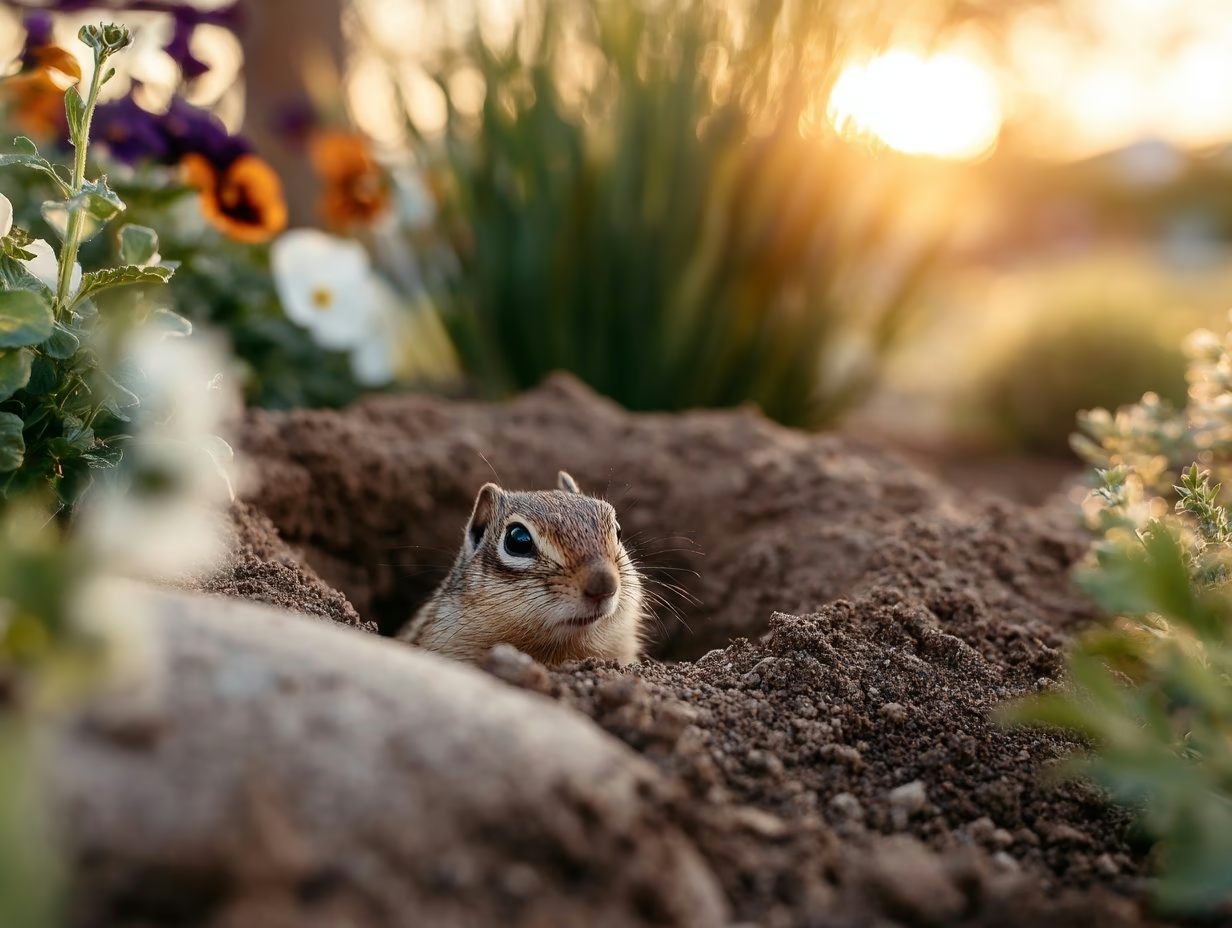
Squirrels. California Ground Squirrels burrow, which can undermine foundations and irrigation lines. Fox Squirrels (the large reddish-brown ones) are a non-native species introduced from the eastern US. Neither is endangered, and both can be managed with physical barriers (hardware cloth, trunk guards) rather than poison, which moves up the food chain and kills the raptors and snakes you actually want.
Coyotes. A well-planted yard with birds and rabbits may occasionally attract coyotes, which are present in every Orange County city. Coyote hazing (making noise, standing tall, never feeding) is the recommended management approach. Do not leave pet food outside.
Gopher snakes. The San Diego Gopher Snake is non-venomous, grows 3 to 5 feet long, and is often killed because homeowners mistake it for a rattlesnake. This is unfortunate, because gopher snakes eat gophers, rats, and mice — providing pest control that would otherwise cost $150 to $400 per professional visit. Learn to tell the difference: gopher snakes have round pupils, no rattle, and a narrower head than rattlesnakes. If you see one in your yard, it is doing you a favor.
Frequently Asked Questions
How long until wildlife shows up after planting?
Insects arrive within days of planting insectary plants like Sweet Alyssum and Yarrow. Lizards claim rock piles and sunny spots within a week or two. Songbirds typically discover new berry-producing shrubs within one to two fruiting seasons. A noticeable increase in overall wildlife activity usually develops within 6 to 12 months of planting.
Will a wildlife garden attract pests?
The opposite. A wildlife garden attracts the predators that eat pests — ladybugs eat aphids, lizards eat ants and mosquitoes, birds eat caterpillars and grubs, bats eat mosquitoes. A functioning backyard ecosystem is the most effective long-term pest management strategy available, because it does not rely on chemicals that kill beneficial species alongside pests.
How do I attract wildlife to my yard if I have a small lot?
Even a 500-square-foot patio or courtyard can support wildlife. Two or three potted native plants (a sage, a buckwheat, and an elderberry in a large container), a shallow water dish, and a small rock arrangement is enough for lizards, beneficial insects, and visiting songbirds. The NWF certifies container gardens and balconies.
What about rattlesnakes?
Southern Pacific Rattlesnakes do live in Orange County, primarily near undeveloped open space, trails, and canyon edges. A wildlife garden in a suburban neighborhood is no more likely to attract rattlesnakes than a conventional landscape. Rattlesnakes are attracted to rodent prey, not to plant species. Keeping rodent populations down (which gopher snakes, hawks, and owls do naturally) is the best prevention.
Can I get my yard certified as a wildlife habitat?
Yes. The National Wildlife Federation's Certified Wildlife Habitat program requires your yard to provide food, water, shelter, places to raise young, and sustainable practices (reduced chemicals, water conservation, native plants). A garden built from this guide meets or exceeds all five requirements. Certification costs $25 and comes with a yard sign.
Do wildlife gardens use a lot of water?
Less than a traditional landscape, in most cases significantly less. The Core 5 coastal sage scrub plants in this guide need zero supplemental water after their first year. The full plant list averages 50 to 85 percent less water than turf grass. A wildlife garden and a water-wise garden are fundamentally the same garden — the plants that attract the most wildlife are also the plants best adapted to Southern California's dry Mediterranean climate.
What is the single best plant to start with?
Blue Elderberry, if you have sun and space (it grows 8+ feet). It supports more bird species than any other plant in this guide and establishes quickly. For shade or small spaces, start with Hummingbird Sage (shade ground cover) or Sweet Alyssum (borders and edges). For a statement shrub, Toyon provides winter berries for 20+ bird species.
The Bottom Line
Every plant in this guide does double duty. The elderberry that feeds 30 bird species also needs less water than your lawn. The sage scrub that shelters lizards and songbirds also survives on rainfall alone. The sweet alyssum that recruits an army of pest-eating insects also costs less than a bag of pesticide.
That is the math of a wildlife garden in Southern California: less water, fewer chemicals, more life. Your yard does not need to be large. It does not need to be professionally designed. Five native plants, a rock pile, and a dish of water — that is the foundation of a backyard habitat that connects your property to the larger ecosystem your neighborhood was built on top of.
Start this weekend. The goldfinches are already checking.