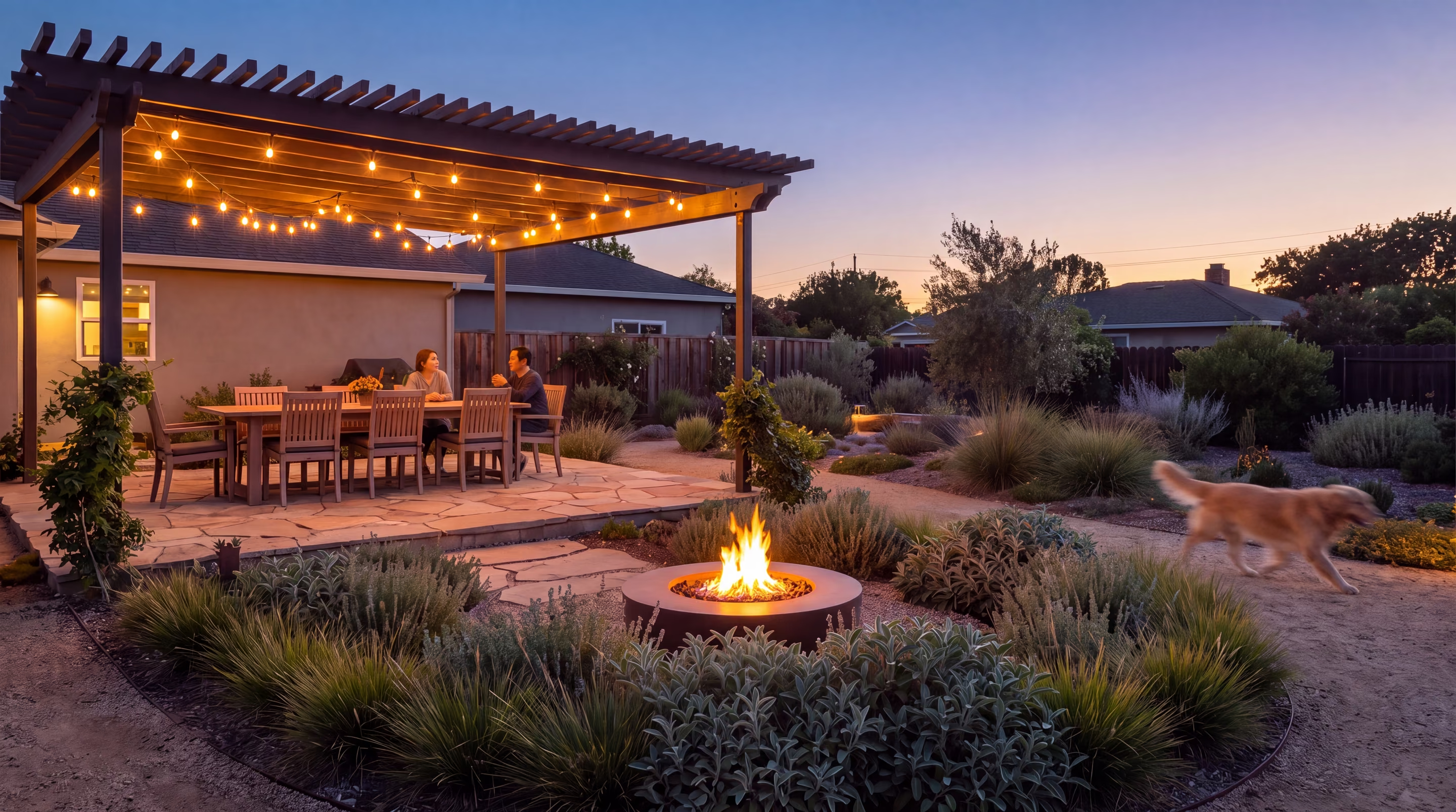
A year ago it was a rectangle of lawn, a concrete pad, and a patio set that got used maybe a handful of times a year. Today there’s a dining terrace under string lights, a low fire pit ringed with sage and grasses, a quiet corner with a small fountain, and a path of pale decomposed granite tying it all together. Same space, finally shaped around the life you actually wanted to live in it. That’s what a full backyard renovation does, and in Southern California, fall is when the strongest projects begin.
KEY TAKEAWAYS
- A full backyard renovation in SoCal changes five layers at once (lawn to water-smart planting, hardscape and zones, irrigation, lighting, and finishing touches) and is best planned as one design, even if you build it in phases
- Fall is the ideal season to start because contractors’ calendars typically open up, plants establish over the cool months, and the yard comes into its own right in time for spring
- Most Orange County transformations run from the low five figures for a redesign to significantly more for a complete overhaul, and IRWD turf replacement rebates can offset a meaningful share
This is the article that turns a folder of backyard renovation ideas into a plan. It walks through what a transformation actually involves, why the season you start matters more than most people think, how to figure out what kind of yard you really want, and generally what to expect on cost and timing.
It’s written for how most homeowners in the IRWD service area approach a renovation: you make the decisions, a designer or design-build team does the work, and your HOA gets a look before anything changes. Dream as big as you want. Getting there is easier than it looks.
What does a full backyard renovation actually involve?
A full backyard renovation is a planned transformation of the whole outdoor space, not a single upgrade. The lawn gives way to water-smart planting and defined zones, hardscape creates rooms for dining and lounging, irrigation and lighting are rebuilt to fit, and a finishing layer of furniture, containers, and decor makes it feel like home. Everything is designed together so the pieces relate, even when the work happens in stages.
Refresh, redesign, or full transformation
Not every project is the same size. A refresh keeps your yard’s existing layout in place and simply upgrades what is already there; think new planting beds, fresh mulch and edging, an upgraded patio set, or improved lighting.
A redesign goes a step further and reworks the plan itself, usually trading lawn for planting and adding one or two brand-new zones, like a dining area or a fire pit.
A full transformation rebuilds the whole space from the ground up, often including new hardscape like paths and patios, and this is where the “think big” projects live.
| Scope | What changes | Typical timeline | Who you hire |
|---|---|---|---|
| Refresh | Planting, mulch, containers, lighting, furniture | A few weeks | Landscaper or garden designer |
| Redesign | Lawn to water-smart beds, one or two new zones, irrigation update | 1-2 months | Landscape designer plus installer |
| Full transformation | All five layers, new hardscape, complete irrigation and lighting | 2-4 months | Design-build firm |
The five layers that change in a transformation
Think of the yard as five layers stacked on top of each other.
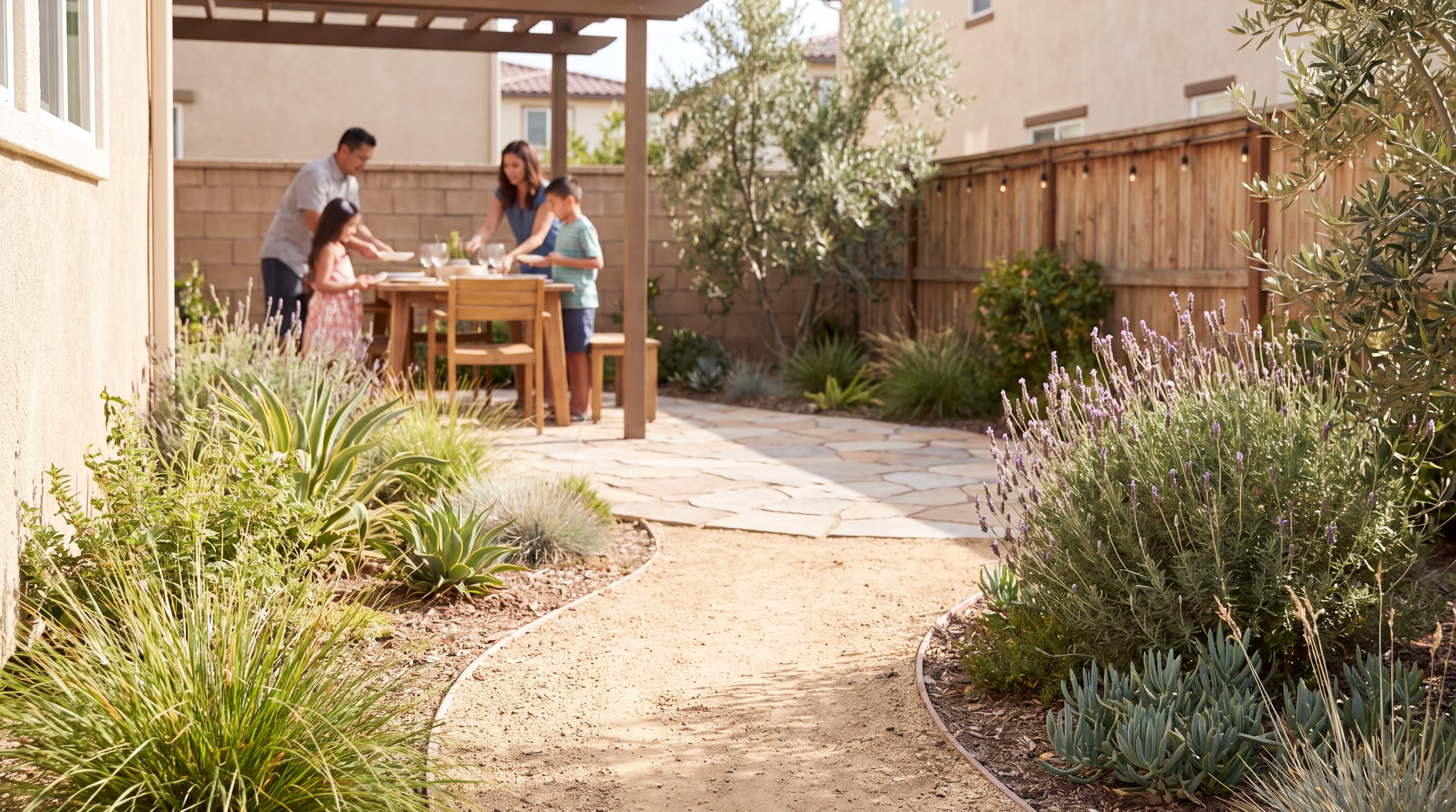
- The ground layer is what takes the lawn’s place: living groundcover, planting drifts, gravel panels (our grass alternatives guide walks through the options).
- The hardscape layer creates the rooms: a dining terrace, a lounge pad, a path that connects them.
- The irrigation layer is rebuilt as drip on a smart controller.
- The lighting layer extends the evening.
- The finishing layer, the personal touches that make it feel like yours, is furniture, pillows, pots, and a lantern or two.
When all five are designed together, the yard reads as one idea, the same principle our backyard design ideas guide walks through when it comes to scaling a single planter’s ideas up to the whole space.
GOOD TO KNOW
A full transformation is also the natural moment to make the whole property work together. Designers often fold the side yard, the front entry, and the backyard into a single plan so materials and plants repeat from the street to the back fence.
Why is fall the right time to start a yard transformation in SoCal?
Fall is the right time to start a yard transformation in Southern California because the weather is kinder to crews and plants, winter rain does the establishment work for free, and a project that begins in fall is finished and settled by the time the warmer months roll back in.
Starting now also gives the slower steps (like HOA review and rebate applications) time to run while design is underway.
Cooler weather for crews and plants
Installation goes faster and cleaner in mild weather, and new plants set out in fall root over the cool months instead of fighting summer heat. By the first warm week of spring, a fall-planted yard already looks like it’s been there a full year.
Our guide to fall planting in SoCal covers the plant palette that thrives on this schedule.
Winter rain does the establishment work
Every water-smart plant needs its first season of steady moisture, and fall planting hands that job to the rainy season. Homeowners who start in fall often report barely touching the controller before spring. It becomes one less thing to think about through the busy holiday months, a real savings in water and attention, and by the time you’re ready to spend more time outside again, the yard has already been quietly taking care of itself.
Ready for spring, when you actually want to be outside
A backyard renovation that starts in fall is the one you host in spring. The birthday party, the graduation, the first warm Friday when everyone just keeps finding a reason to stay a little longer — those are the moments worth planning around, and fall is how you make them.
QUICK STAT
Up to $3 per square foot — that’s the rebate range IRWD offers for qualifying turf replacement projects, which can offset a significant share of a lawn-to-water-smart transformation.
What kind of yard person are you?
The strongest backyard renovation ideas come from knowing how you want to live outside, not from a list of features. Most homeowners recognize themselves in one of four styles, and naming yours makes every later decision easier.
The Gatherer
You count a good weekend by how many friends and family ended up in your yard.
If this sounds like you, prioritize a dining terrace with room for a long table, a fire pit or lounge zone that keeps the evening going after the table is cleared, layered lighting, and planting that looks good at eye level when everyone is seated. Design the rooms first and the garden around them.
The Retreat Seeker
You want the yard to be the quiet place.
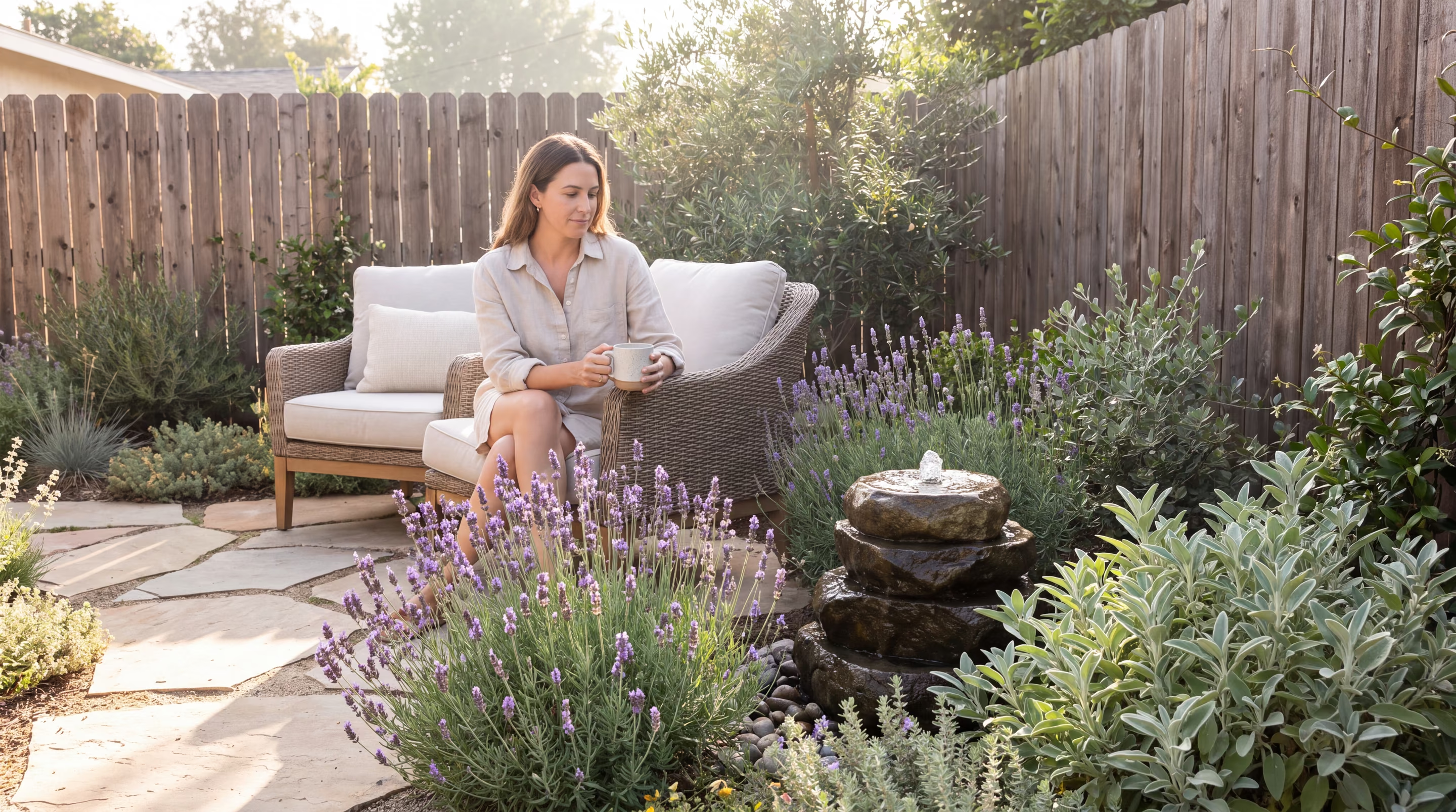
If this sounds like you, prioritize a corner with a small fountain or a water bowl, deep comfortable seating, fragrance (lavender, sage, rosemary), soft groundcover underfoot, and a ten-minute morning ritual spot with a view of something green. Design for one perfect chair before you design for twelve.
The Color and Abundance Lover
You want layers, texture, and something blooming every month.
If this sounds like you, prioritize deep planting beds over hardscape, drifts of salvia and kangaroo paw, climbing vines on the fence, jewel-toned pots, and a few sculptural accents like a stone urn or a fountain. Lean into asymmetry over neat rows, and let ruffled blooms like peonies, camellias, and floribunda roses spill a little past their borders. Give the planting layer the biggest share of the budget.
The Household Herder
You want a yard that survives real life and still looks designed.
If this sounds like you, prioritize durable, cool surfaces (decomposed granite, living groundcovers), a play or pet zone with clear sightlines from inside the house, non-toxic plants, and storage that hides the toys. Start with zoning the space, and let the planting follow.
How do you plan a backyard renovation step by step?
You can plan a backyard renovation in seven steps. If you take it step by step, the project stays just as clear from the first sketch to the last pot.
- Write the wish list. Start with everything, no editing yet. Consider everything you have ever wanted the yard to do, in one place. Dinner for 10. A place to read. Somewhere the dog can run. You will narrow it down later; for now, capture it all.
- Walk the yard at three different times: morning, midafternoon, and dusk. Notice where the sun bakes, where shade falls, what you see from the kitchen window, and where you naturally want to stand. Those observations become the foundation for your whole plan, deciding where each zone belongs before a single stone gets placed.
- Zone the space and rank priorities. Sketch rough circles for dining, lounging, planting, play, and paths. Then rank them. The top two get the nicest light and the biggest budget share.
- Set a budget tier and check rebates. Decide whether this is a refresh, a redesign, or a full transformation, and look up IRWD’s turf replacement and smart controller rebates before your first conversation with a designer. Walking in with a clear budget in mind changes the whole conversation.
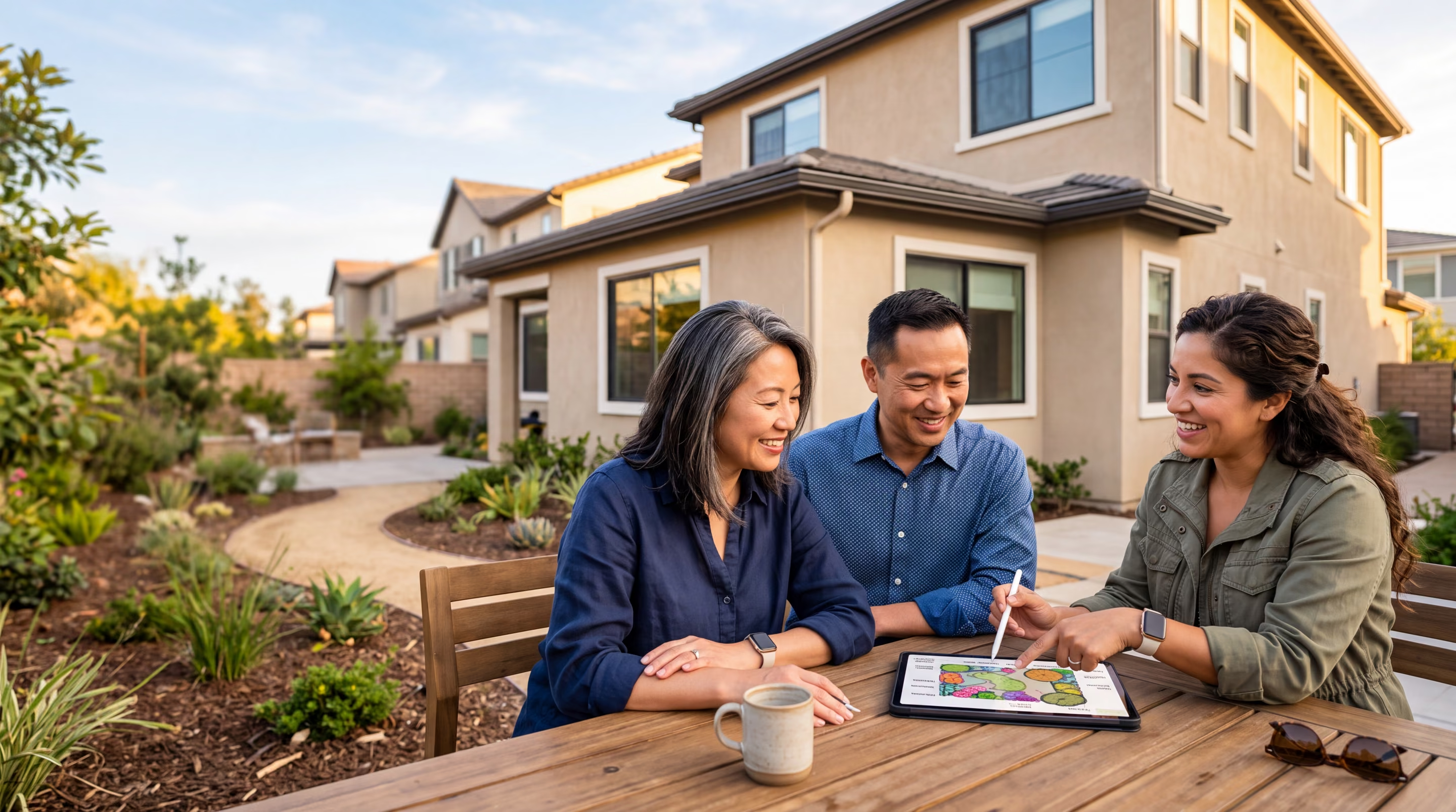
- Bring in a designer or design-build firm. Share the wish list, inspiration photos, and the budget. A good designer turns those into a plan you can approve, price, and phase. Part 4 of the landscaping guide covers how to hire well.
- Plan the phases and the approvals. Most HOAs in the IRWD service area review landscape changes, and many now publish pre-approved water-smart plant palettes. Submitting your plans early keeps the timeline on track. If the project has phases, sequence the hardscape first and the planting second.
- Choose plants and materials for the finished look. With the plan approved, pick the palette: one stone color family, two or three repeating plants per layer, and containers that match your style. Repetition is what makes the yard feel finished.
PRO TIP
Photograph the yard from whichever window you look out most, along with the back door before you start, then tape those photos to the wish list. Every design decision should make those two views better, because they’re the ones you’ll see every single day.
How much does a backyard renovation cost in Orange County?
A backyard renovation in Orange County typically falls into three cost tiers, and they line up with the project sizes covered earlier: a refresh, a redesign, and a full transformation, each a bigger investment than the last.
Rebates, phasing, and smart material choices can bring every tier within closer reach, and the ranges below give you a clearer starting point for where your own project might land.
Typical cost ranges by scope
Treat these as planning ranges rather than quotes.
- A refresh (new beds, mulch, containers, a lighting set) often lands in the low thousands.
- A redesign that converts 100+ square feet of lawn, rebuilds irrigation as drip, and adds a dining or lounge pad commonly runs into the low to mid five figures.
- A full transformation with a new terrace, path, planting across the whole yard, lighting, and a fountain or fire feature can climb well past that, depending on square footage and finishes.
What moves the number
Hardscape square footage is the biggest lever, followed by irrigation rebuilds, lighting runs, and the size of the plants you install. Five-gallon shrubs cost more than one-gallon shrubs and look finished a year sooner; it’s a straightforward trade-off between cost and timing. Water features, pergolas, and outdoor kitchens are the splurge items, and our outdoor kitchen ideas guide walks through what they involve.
Rebates and phasing that bring it into reach
Start small with the layer that changes the view most (usually the planting and the path), take the next step with the dining or lounge pad, and go all out with lighting, a water feature, and the finishing layer once the bones are in.
IRWD’s turf replacement rebate applies to the lawn conversion portion, and the smart controller rebate covers the irrigation brain. Just be sure to apply for both before work begins.
“Rebates covered all costs of the project. We try to design a budget that will produce a net-zero cost up front. That’s important because HOAs are not flush with cash, so the rebates and the projected ROI are the real selling points.”
Robin Reese, The Problem Solver, Bemus Landscape
How long does a full yard transformation take?
A full yard transformation typically takes two to four months from the first design meeting to the last plant in the ground, then a first year of establishment while the planting grows into the design. Design and approvals take the first several weeks, installation follows in phases, and starting in fall gives you the most breathing room to be ready in time for spring.
Design and approvals
Expect three to six weeks for design, from the first walk-through to a plan you can approve and price. HOA review runs alongside and can take a few weeks of its own, which is why submitting early matters. Rebate applications go in during this stretch too.
Installation
Hardscape goes in first, then irrigation, then planting, then lighting and the finishing layer. A redesign often installs in two to four weeks; a full transformation can take four to eight, especially when a terrace or water feature is involved. Your design-build team manages the sequence and the crews.
EXPERT TIP: David Gomez, Water Efficiency Specialist, IRWD
Lock in the irrigation plan before the hardscape is poured. Every sleeve, valve box, and controller location is easy to place while the ground is open and expensive to add after the terrace is set. A thoughtful irrigation layout is the difference between a yard that runs itself and one that needs constant adjusting.
The first year
The first spring is the reveal. Plants set out in fall are established, the groundcover has knit together, and the terrace has hosted its first dinner. By the second summer the planting has filled to its designed size and the maintenance rhythm settles into a few pleasant touchpoints a season.
Homeowners in the Yardtopia real stories describe this stretch the same way: the yard stops being a project and starts being a room in your Yardtopia.
Frequently asked questions about backyard renovations
Do I need a landscape designer for a backyard renovation?
For a redesign or full transformation, yes. A designer turns your wish list into a plan that can be priced, phased, and approved by your HOA, and design-build firms carry that plan straight through installation. For a refresh, a skilled landscaper working from your reference images is often enough.
Can I renovate my backyard in phases?
Yes, and most homeowners do. The key is designing the whole yard first, then building it in a sensible order: hardscape and irrigation, then planting, then lighting and finishing touches. Phasing spreads the cost and time without compromising the finished look.
What makes a backyard renovation go smoothly?
A thought-through wish list, a written plan, early HOA submission, rebate applications filed before work starts, and one point of contact for the crews. Projects that stall usually skipped one of those steps; projects that finish on time did all five.
Does a water-smart backyard renovation need HOA approval?
Usually, yes, for anything beyond routine planting. The good news is that many associations in the IRWD service area have updated their guidelines to welcome water-smart yards and publish pre-approved plant palettes. Review the guidelines early and submit the plan with your designer.
The bottom line
Every transformation in this guide began the same way: someone looked out at their yard and decided it could be more. The plan, the designer, the phases, and the rebates are all just the path from that moment to the first dinner on the new terrace.
Pick the view you see most, start the wish list this week, and make the call to a designer while the fall and winter planting window is still open. If you want help laying out the zones before that first meeting, the free SimplyScapes tool on the Yardtopia website is made for exactly this, and the Landscaping guide walks the whole journey from vision to hiring.
Your bigger, better Yardtopia is one season away.