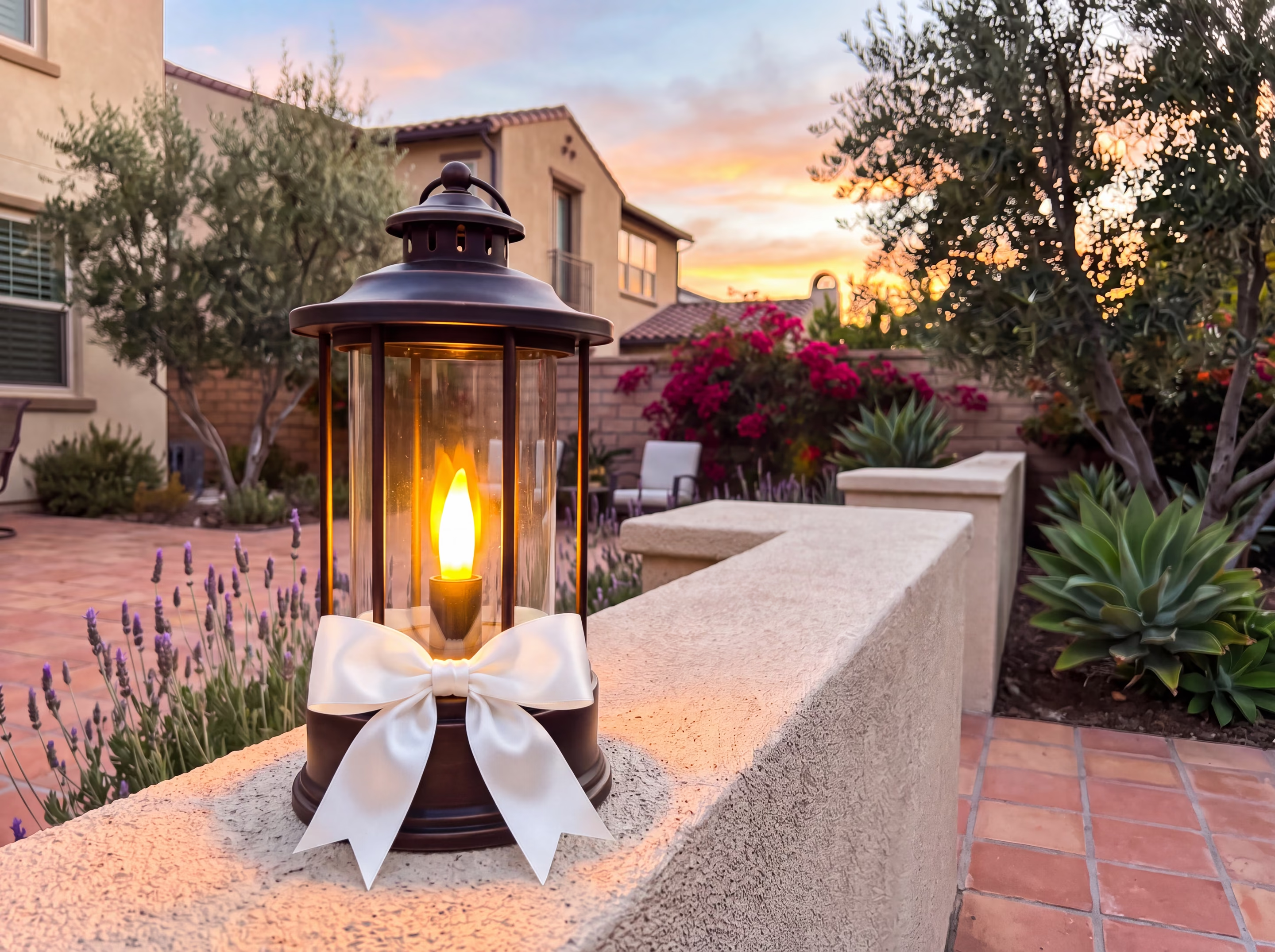
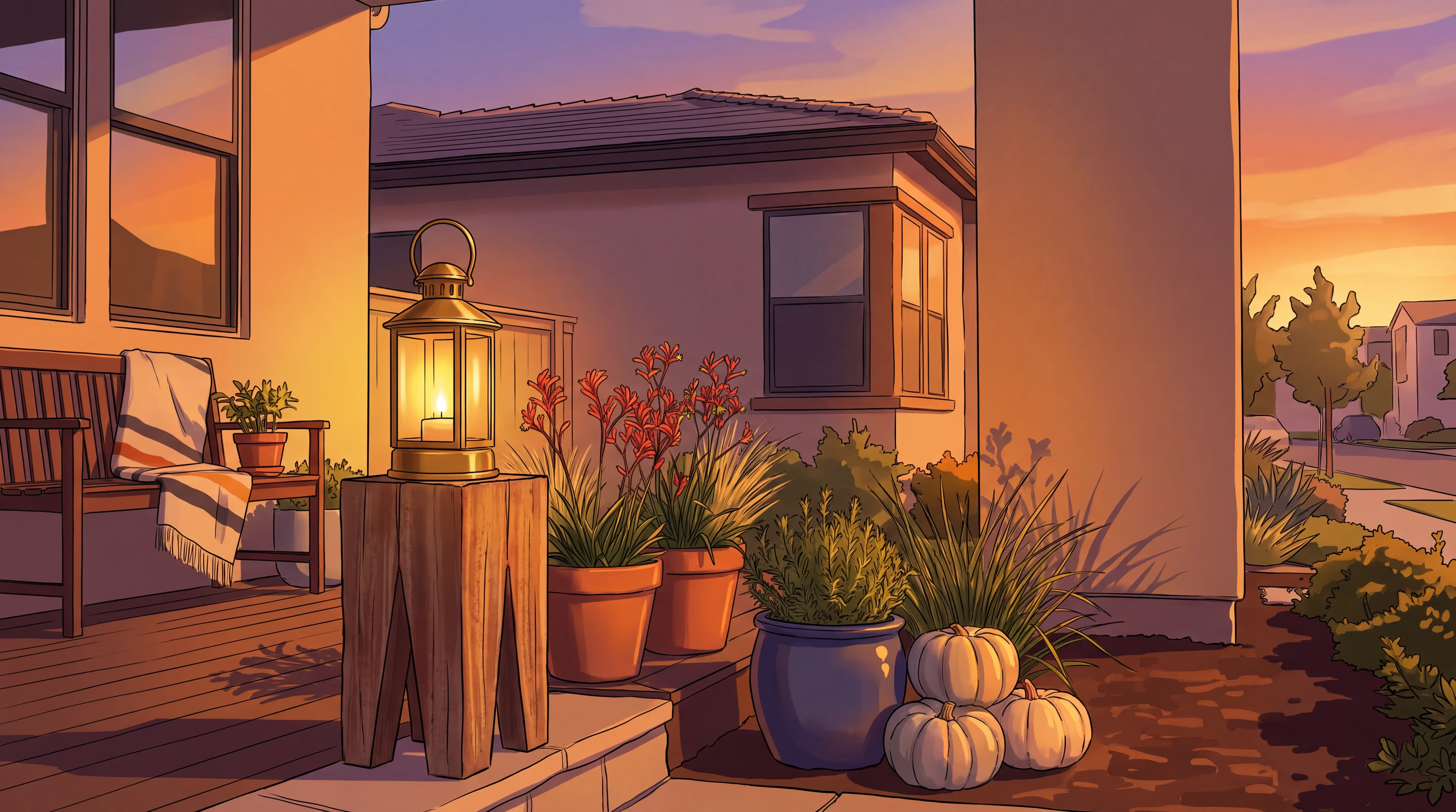
The evenings have started to cool, the light comes in lower across the patio. This is the moment Southern California gardeners truly come alive. Fall planting gives your outdoor space an easy win. The plants you choose now settle in over the mild months with very little help, and by spring they look like they have always been there.
KEY TAKEAWAYS
- Fall is the friendliest planting season in SoCal because warm soil, cooler air, and winter rain let new plants establish roots with far less watering than a spring planting needs
- The strongest fall picks are water-smart shrubs and perennials (westringia, Cleveland sage, rockrose, kangaroo paw, deer grass) planted in drifts, plus bulbs and cool-season color for the porch
- Consider hiring out the planting and keeping your part simple: choose the plants and the look, dial the irrigation down, and let the season do the rest
Fall is the moment to set your yard up for a flourish come spring. Plan for shrubs that give it shape, perennials that bring color, bulbs that surprise you months from now, and a few pots that make the front porch feel finished by the weekend. It picks up where summer planting left off, and it pairs with our fall landscaping makeover guide for the bigger picture.
It’s also written with IRWD families in mind. Whether you hire the planting out, pick up a few favorites at the nursery on a Saturday, or just want a yard that looks composed without taking up your weekends, fall is when it all comes together.
Why is fall the ideal planting season in Southern California?
Fall is the ideal planting season in Southern California because the soil is still warm from summer, the air is cooler, and the rainy season arrives just as new roots are reaching out. Plants set out in fall spend the mild months building roots instead of fighting heat, so by the first warm stretch of spring they’re already established and need a fraction of the water a spring-planted yard would.
GOOD TO KNOW
Landscape professionals in Orange County book up fast once the weather turns, because fall is their favorite planting window too. A quick call in early fall usually gets you on the calendar before the prime weeks fill. If you’re reaching out later in the season, there is still plenty of good planting weather ahead, so it is worth making that call whenever you are ready.
Warm soil, cooler air, and rain on the way
Planting in the latter half of the year gives your plants a real head start. The soil holds onto summer’s warmth for weeks after the air cools, so roots keep growing strong even while the days turn mild above ground. Then the winter rains take over the watering for you.
A plant you put in now spends months settling in before it has to face the full intensity of a Southern California summer.
What a wetter winter means for new plants
Seasonal outlooks are pointing to a wetter-than-average winter, which is good news for anything you plant this fall. More rain means deeper, more consistent moisture while roots are establishing, and less time watching the irrigation controller. Water-smart plants in particular love this rhythm: a generous first winter, then a long, easy life on very little.
PRO TIP
Summer’s over, and it’s time to make some sprinkler adjustments. First, reduce your watering by about 30%. It may still be hot outside but daylight is waning, and plants are slowing down so they use less water. If needed, turn on your sprinkler manually for a few minutes to give them a quick dousing—and remember to shut it off when done. While the system is running, walk around your landscape and note any repairs that may be needed. Fix them soon to prevent water waste.
What should you plant in fall for spring color and structure?
Among the best plants to plant in fall in SoCal are water-smart shrubs and perennials that use the cool months to root in and then carry the yard through spring and summer: westringia, Cleveland sage, rockrose, manzanita, dwarf olive, salvia, kangaroo paw, gaura, and deer grass. Plant them in drifts of three or five, and the bed will read as fully designed from day one, even while everything is still settling in.

Water-smart shrubs that anchor the design
Shrubs are the bones of a yard. Coast rosemary (Westringia) mounds into soft gray-green shapes that look tidy every month of the year. Rockrose covers itself in papery blooms each spring. Manzanita brings sculptural mahogany branches and glossy leaves. Dwarf olive gives you that silver-green Mediterranean presence that flatters stucco and terracotta. Starting with these gives everything you plant afterward something to lean on.
Coast rosemary (Westringia fruticosa)
| Water | Sun | Size | Toxicity | Origin |
|---|---|---|---|---|
| Low to moderate | Full sun to partial shade | 4-6 ft tall, 5-10 ft wide | Non-toxic to pets and children | Australian native suited to Mediterranean climates |
Perennials and grasses for movement and color
This layer is where a yard picks up even more character. Cleveland sage sends up fragrant blue-purple spikes hummingbirds can’t resist. Mexican bush sage carries velvety purple stalks from spring into fall. Kangaroo paw holds coral and gold flowers high above the bed for months on end. Gaura floats pink and white flowers on wandlike stems, and deer grass adds a soft, fountain shape that catches the late light.
Fall planting gives all of them the deep roots they need to come back stronger and fuller next spring.
Cleveland sage (Salvia clevelandii)
| Water | Sun | Size | Toxicity | Origin |
|---|---|---|---|---|
| Low | Full sun | 3-5 ft tall, 4-6 ft wide | Non-toxic to pets and children | Native to Southern California |
For a true blue that reads from the street, California lilac (Ceanothus) is one of those plants that just keeps paying off. Varieties like Concha and Ray Hartman cover themselves in deep blue flowers in spring and stay glossy and evergreen the rest of the year.
California lilac (Ceanothus ‘Concha’)
| Water | Sun | Size | Toxicity | Origin |
|---|---|---|---|---|
| Very low | Full sun | 6-9 ft tall, 6-10 ft wide | Non-toxic to pets and children | Native to California |
Here’s how the headliners compare at a glance:
| Plant | The look | Water once established | When it shines |
|---|---|---|---|
| Coast rosemary (Westringia) | Soft gray-green mounds | Low | Year-round structure |
| Cleveland sage | Blue-purple spikes, fragrant | Low | Spring into summer |
| Rockrose | Papery pink or white blooms | Low | Spring |
| Kangaroo paw | Tall coral and gold stalks | Low | Spring through fall |
| California lilac (Ceanothus) | Deep blue flower clusters | Very low | Spring |
| Deer grass | Fountain of fine green blades | Very low | Fall and winter movement |

Bulbs to tuck in now for spring
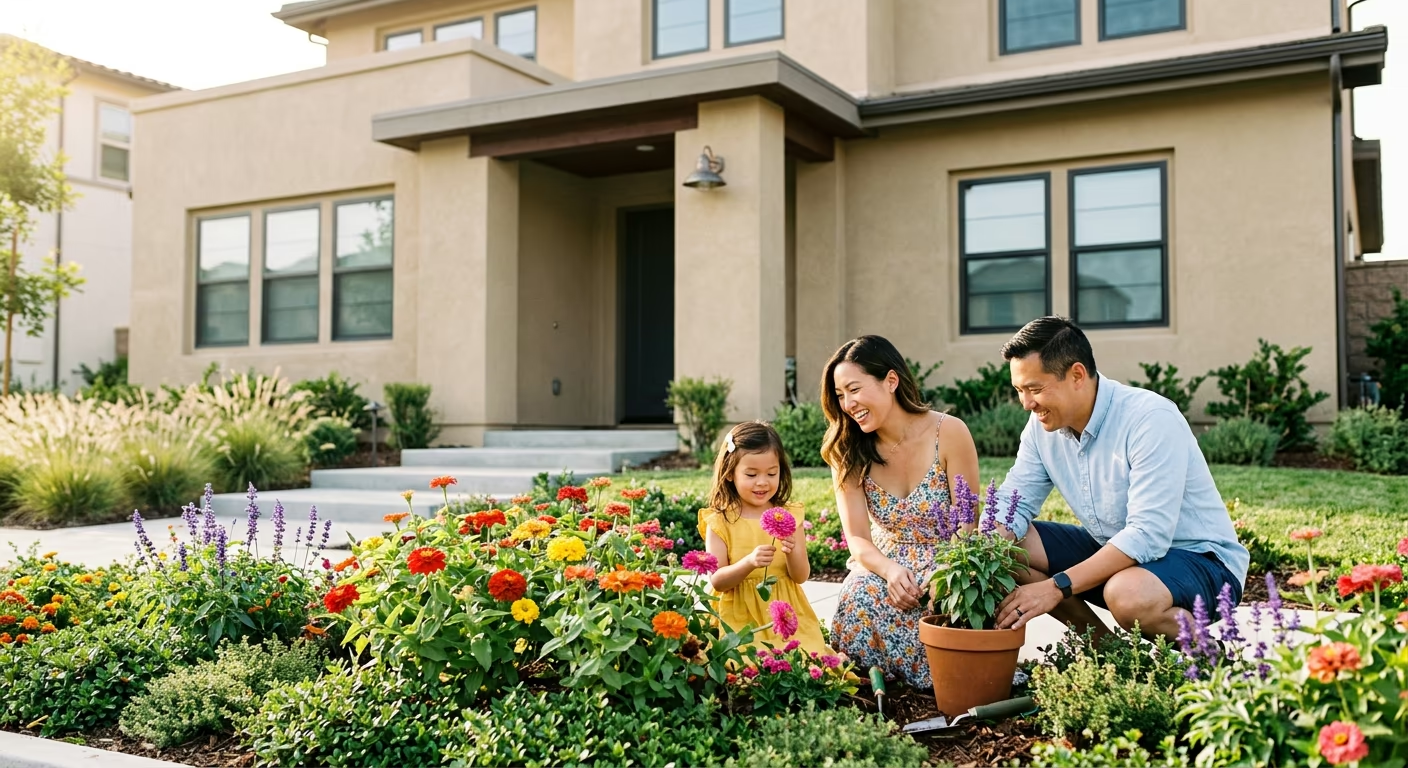
Bulbs are the fall planting that feels like a secret. Freesia, ranunculus, anemone, and babiana all go in during the cool months and come up in spring like a gift you forgot you left yourself. Group them where you’ll see them from the kitchen window or along the front walk. Because they’re small and quick to place, this is a job many homeowners enjoy doing themselves.
PRO TIP
Plant in repeating drifts of three or five of the same variety rather than one of everything. Repetition is what makes a yard look intentional and high-end, and five plants on one watering schedule are far easier to care for than five different sets of needs.
Which fall flowers give color right away?
For color this season, the fall flowers to plant are cool-season annuals: pansies, violas, snapdragons, stock, cyclamen, and lobelia. They thrive in SoCal’s mild fall and winter, bloom for months, and make an entry or patio feel finished while the permanent shrubs are still settling in.
Cool-season annuals for pots and borders
Violas and pansies are the reliable favorites, happy in pots and along borders and blooming straight through winter. Snapdragons add height and old-fashioned charm. Stock brings a sweet evening fragrance to the front door. Lobelia spills a haze of true blue over the edge of a container. Cyclamen gives you saturated color in the shade, though it’s one to keep away from curious pets.
Pairing instant color with permanent planting
The trick is to treat annuals, the plants that bloom for a season and then finish their life cycle, as the finishing layer, not the whole picture. Tuck violas at the feet of a newly planted westringia. Ring a young ceanothus with a drift of blue lobelia so the bed has color while the shrub grows into its space. By spring, the permanent plants take over, and the annuals will have done their job.

Which fall plants for pots work in small spaces?
The fall plants for pots that deliver the most in SoCal combine one structural plant, one color plant, and one that spills: a dwarf olive or kangaroo paw for structure, violas or cyclamen for color, and trailing rosemary or lobelia over the edge. This three-part recipe works on a balcony, a patio, or flanking the front door, easy to set up and just as easy to take with you, which makes it ideal for renters.
A three-part container recipe
Start with structure, add color, finish with spill. A single large pot with a dwarf olive, a ring of violas, and rosemary trailing over the rim reads like a small garden all by itself. Group three pots of different heights and the whole grouping reads as one composition. If you built a botanical bento this summer, fall is the season to refresh its color layer.
Herbs that double as fragrance and texture
Rosemary, thyme, and scented geranium earn their place in fall pots twice over. They handle the cooler months without complaint; they smell wonderful every time you brush past, and they give the porch a soft, textured green that looks beautiful from every angle. A blue-glazed pot underneath is the accent color of the season and flatters every one of them.
How do you help fall plantings thrive by spring?
Fall plantings thrive by spring with three simple moves: dial the irrigation down as the weather cools, mulch the beds so the soil stays evenly moist, and space plants for their mature size so the design fills in without crowding. Your landscape professional handles installation, so your part is simply choosing the look and enjoying the yard as it settles in.
Watering in the cooler months
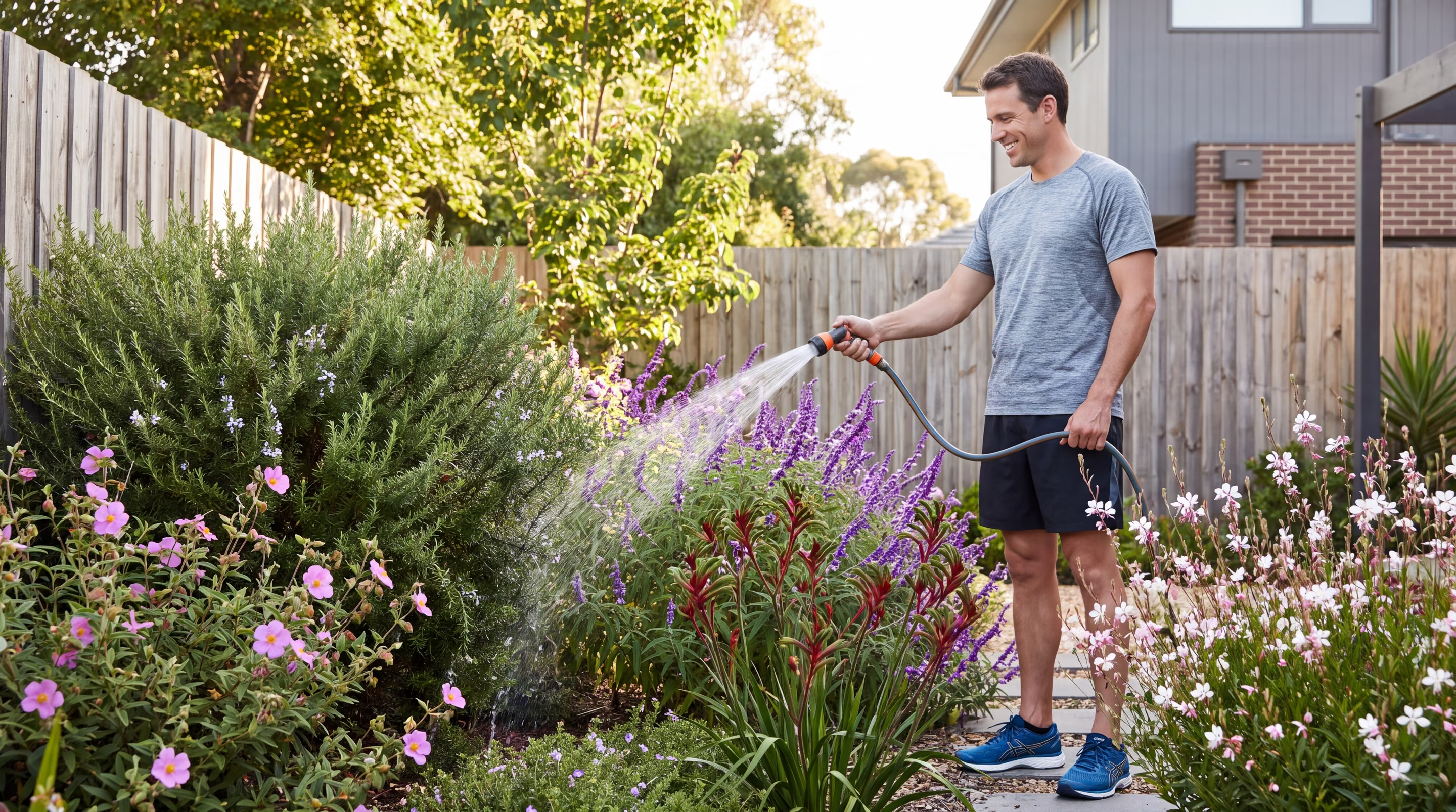
New plants want consistent moisture while roots establish, not a lot of it. Reduce the controller by about a third once summer ends, then let the rains carry the schedule when they arrive. A smart irrigation controller does this adjusting for you and qualifies for IRWD rebates. Our guide to smart irrigation controllers for SoCal yards walks through the options.
EXPERT TIP: Juan C. Garcia, Sr. Water Efficiency Specialist, IRWD
Set your controller before you plant, not after. A weather-based schedule gives new plantings steady establishment water through the cool months and scales back automatically when the rain does the work, so there’s no guessing.
A finished look from day one
Ask for a 2- to 3-inch layer of mulch across every new bed, pulled back a couple of inches from stems. Mulch keeps moisture even, keeps the bed looking freshly finished, and gives the planting that clean, designed edge. Spacing matters too — plants set at their mature width look sparse for a season and perfect for a decade. Our guide to mulching your garden covers depths and timing.
QUICK STAT
About 30 percent less water — that’s how much IRWD recommends dialing back irrigation once summer ends, because shorter days and cooler nights mean plants use less.
What can wait until spring?
Heat lovers that can wait for spring: bougainvillea, hibiscus, lantana, and citrus. These in containers all prefer to start their lives in warming soil rather than cooling soil. Put them on the spring list and give the fall window to the Mediterranean-climate plants that thrive on it. You’ll get two planting seasons a year instead of one, and each group will be planted at the moment it likes best.
Frequently asked questions about fall planting in SoCal
What are the best flowers to plant in fall in Southern California?
For lasting color, plant Cleveland sage, Mexican bush sage, kangaroo paw, and gaura in fall so they root in for a big spring show. For color right away, plant pansies, violas, snapdragons, stock, and lobelia in pots and borders. Both groups thrive in the mild SoCal fall and winter.
Is it too late to plant once the weather cools?
Not at all. In Southern California, the planting window stays open through the cool months, and water-smart shrubs and perennials establish beautifully any time the soil is workable and the heat has passed. The only plants worth waiting on are the true heat lovers, which prefer spring.
What can you plant in pots for fall?
Combine one structural plant (dwarf olive, kangaroo paw, or rosemary), one color plant (violas, pansies, or cyclamen), and one spiller (trailing rosemary or lobelia). Group three pots of different heights for an instant composition on a porch or balcony.
Do fall plantings need less water?
Yes. Plants set out in fall root in during the cool, rainy months and need far less irrigation their first summer than spring plantings do. Once established, most water-smart picks in this guide thrive on a few deep waterings a month.
The bottom line
Picture the yard in a few months: the ceanothus opening in deep blue along the walk, kangaroo paw catching the morning light, the violas you set by the door still blooming as if it were the first week. That version of your Yardtopia starts with a Saturday at the nursery and a call to your landscaper this fall.
“Ten years ago, I bought my first house and wanted to attract more birds and pollinators to my neighborhood. First, I did a lot of planning, then began with the curbside area, replacing the grass there with natives. Gradually, my entire landscape went native.”
Trude Hurd, Project Director of Education, Sea & Sage Audubon Society
Start with one bed you see every day, choose the plants that make you happy, and let the season handle the rest. Whenever you’re ready to sketch it out, the free SimplyScapes tool on the Yardtopia website can help you lay out the space, and the Plant 101 guide is here whenever you want to go deeper on any plant on this list. Your Yardtopia looks its best in spring when it’s planted in fall.