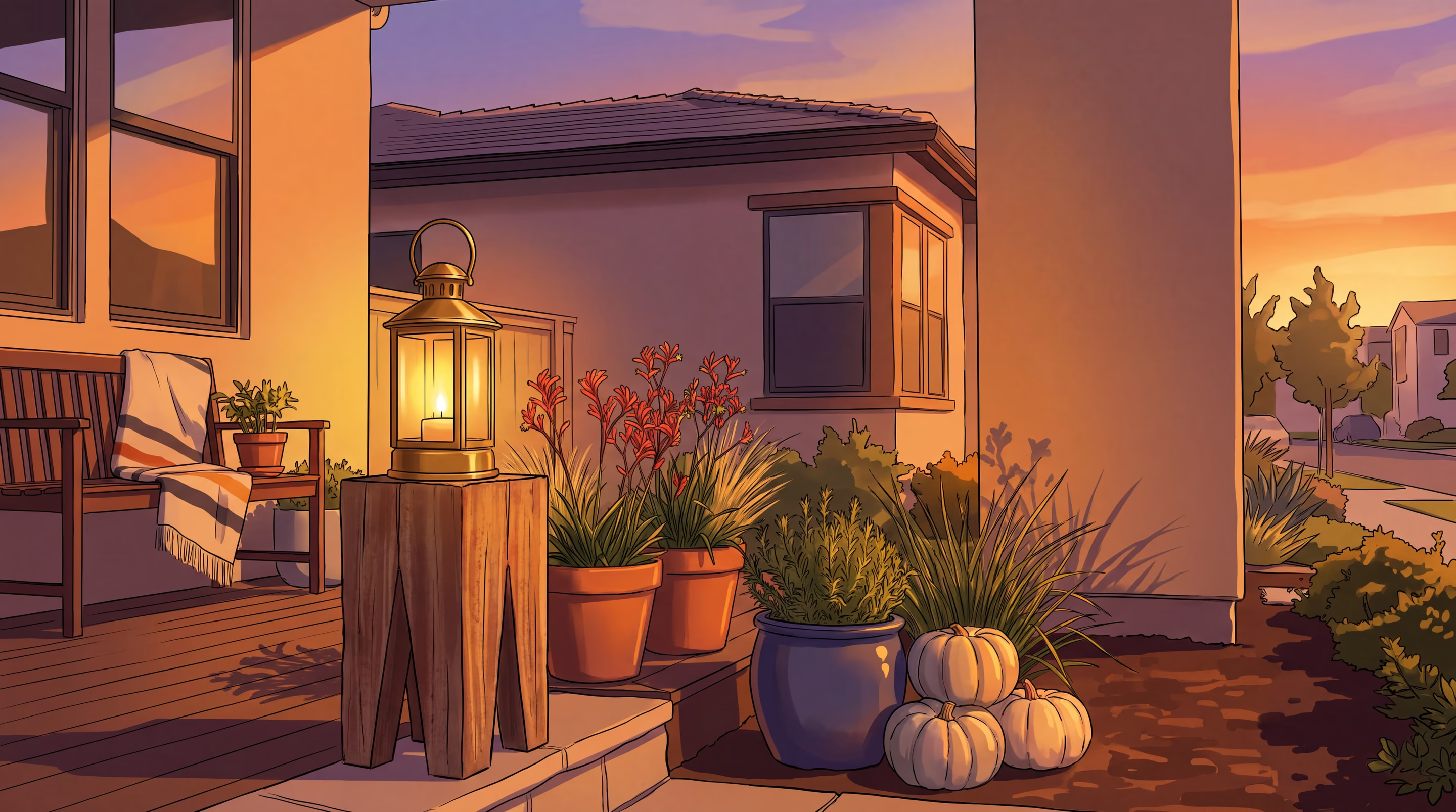
Fall in Southern California means the evenings turn cool enough for a light sweater, the light goes gold a little earlier, and the porch looks ready for a pumpkin or two. You can still enjoy warm evenings outside, and a Mediterranean home palette can make the season’s colors feel especially rich.
KEY TAKEAWAYS
- Fall porch decor on a SoCal home comes together by layering color, texture, and glow (planters, grasses, lanterns, throws) in a palette of terracotta, rust, olive, plum, and a single deep blue accent
- Pumpkins last weeks longer in warm weather when you choose thick-rinded heirloom varieties, keep them in the shade and off warm hardscape, wait to carve, and seal anything you cut
- Fall decorating ideas outside feel most at home when they’re woven into your planting and paths, which also keeps them cool and out of the way of the season’s foot traffic
In Irvine, Tustin, and Newport Beach, fall is long, warm, and mostly spent outside. The best porch decor here is made for our sunshine, our evenings, and our homes.
Whether you want a few quick touches by the front door or a look that carries from the porch through the whole yard, this guide covers the essentials: planters that hold their color for months, pumpkins that stay fresh in the warmth (plus a few harvest-inspired accents with real staying power), warm lighting for the evenings, and decor that settles right into your planting.
What makes fall porch decor work on a Southern California home?
Fall porch decor works on a Southern California home when it treats the porch as an outdoor room, layers color and texture in a few well-chosen pieces, and draws its palette from the house itself, like terracotta, rust, olive, plum, cream, and a single deep blue accent. Warm evenings invite family and guests to settle in, so comfort matters as much as looks.
Warm evenings make the porch a room
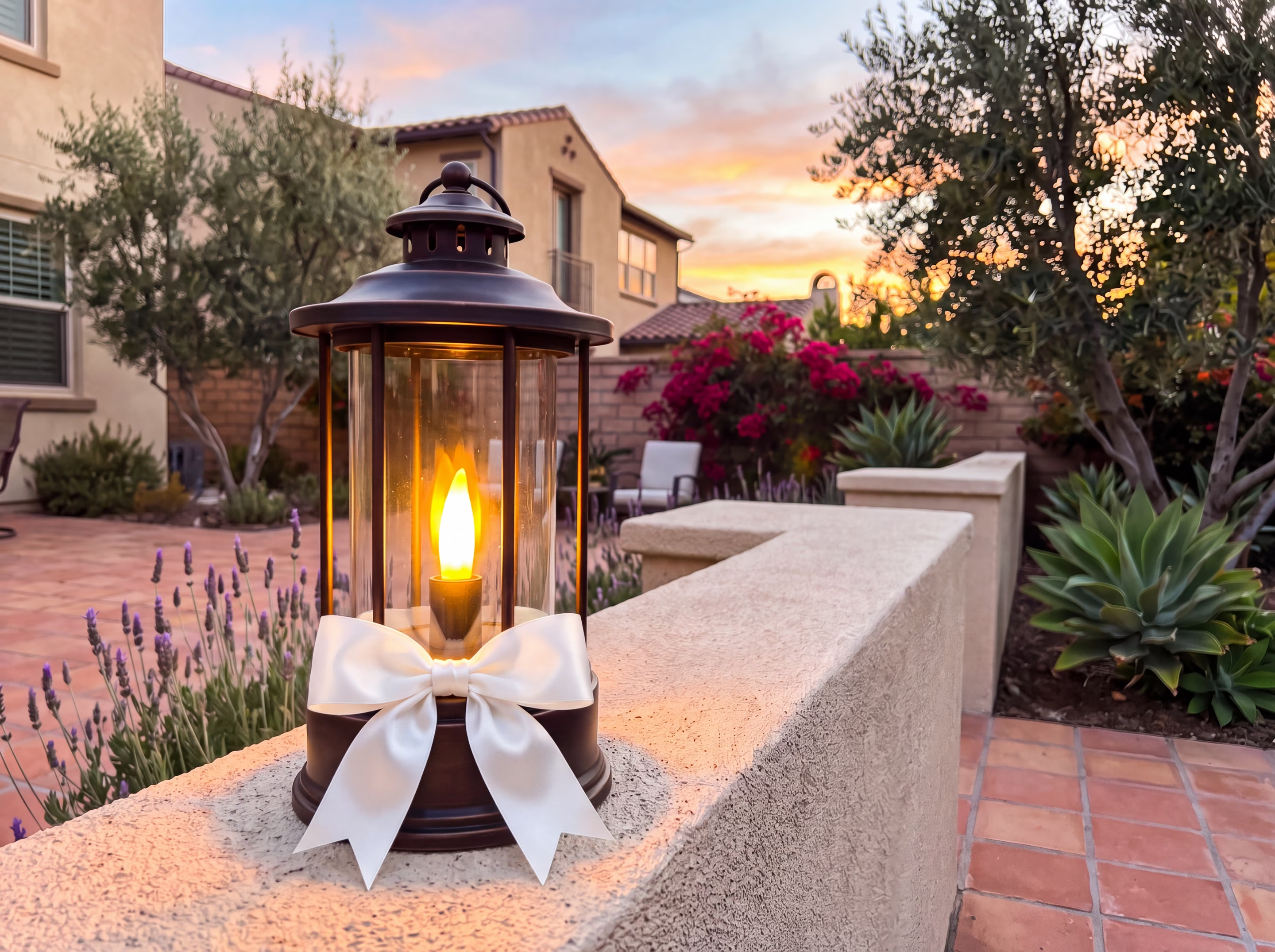
A porch and patio set that invites cozy lounging might include a chair or bench with a throw, a lantern casting a soft glow by the door, and a planter you brush past on the way in. Decor feels most natural when it’s chosen for how you’ll enjoy the space, so let comfort guide each piece.
Color and texture, chosen with intention
Garden style is leaning abundant right now. Go with layered planting, rich color, and decorative pieces that have personality. Repetition is what keeps that abundance feeling calm.
Consider choosing one palette and one material family, then repeating them in threes. Three pots, three pumpkins, or three lanterns read as one design, and the porch feels collected and relaxed.
GOOD TO KNOW
Mediterranean and Spanish-style homes pair beautifully with fall color. Warm stucco and tile roofs flatter rust, plum, and olive tones, and a cobalt or deep blue accent pot against that backdrop looks especially intentional.
How do you build a layered fall porch without it feeling crowded?
A layered fall porch comes together in three steps:
- Anchor the door with a pair of planters. Symmetry at the entry signals intention right away. A matched pair of large terracotta or glazed pots on either side of the door, planted for the season, gives the porch a strong, welcoming frame. If you already have entry containers, a fresh round of cool-season color is an easy way to update them (our fall planting guide covers the options).
- Add height, texture, and glow. For height, plant a tall ornamental grass or kangaroo paw in one of the pots. Texture comes from a woven basket, a wool throw on the bench, or a runner of dried grasses along a rail. Glow comes from lanterns and a string of warm white lights along the eave. Our outdoor string lights guide covers spacing and bulb color if you’re starting fresh.
- Choose one statement piece, then repeat the palette. Let one thing be the star: a grouping of blue-gray heirloom pumpkins, a large cobalt pot, or a wreath of olive branches. Then carry one of its colors into the rest of the porch. Echoing that one color helps all the pieces feel like they belong together.
PRO TIP
Our tip is to look at the porch from the sidewalk for a few seconds. When your eye lands on one piece and then travels comfortably to the door, the layering is working. If it feels busy, try setting aside the two smallest items and take another look.
Which fall planter ideas give color that lasts all season?
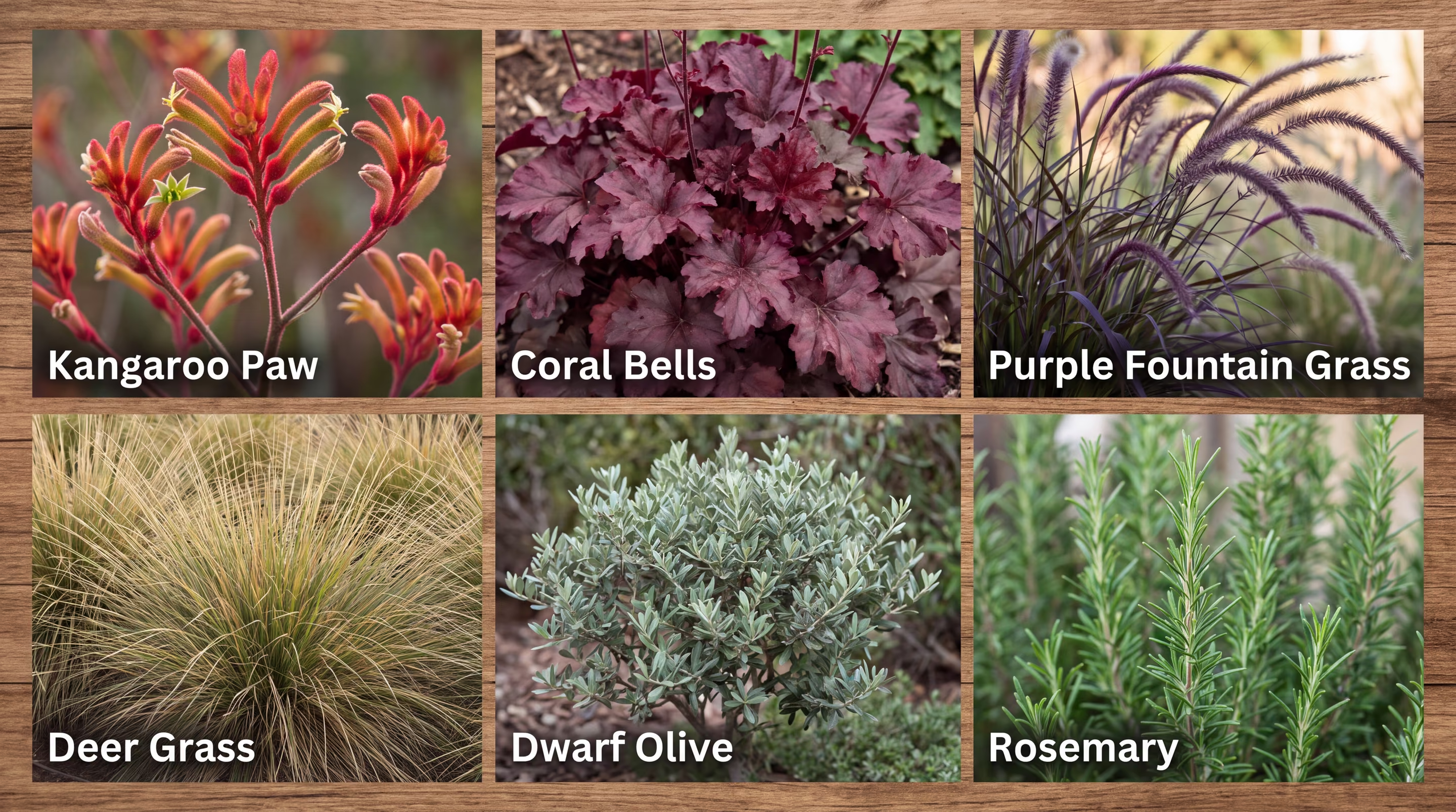
The best fall planters in SoCal pair a few long-lasting plants with cool-season annuals for instant color. Kangaroo paw, salvia, coral bells, ornamental grasses, dwarf olive, and rosemary carry the pot for months, while violas, pansies, and cyclamen add bloom right away.
The longer-lived plants carry the pot through winter and into spring, and the annuals, which bloom for a single season, are an easy way to refresh the color as the months change.
Plants that carry the porch for months
Kangaroo paw lifts rust, coral, and gold flower stalks for months, right in step with the season’s colors. Coral bells bring plum and bronze foliage that feels like autumn all year long. Purple fountain grass and deer grass sway in the breeze and glow in the low evening light. Dwarf olive and rosemary add silver-green structure, plus a little fragrance each time you walk past.
Kangaroo paw (Anigozanthos hybrids)
| Water | Sun | Size | Toxicity | Origin |
|---|---|---|---|---|
| Low | Full sun | 2-5 ft tall in bloom, 1-2 ft wide | Non-toxic to pets and children | Australian native suited to Mediterranean climates |
Where kangaroo paw brings height and warm color, coral bells bring the plum and bronze foliage that reads as autumn color all year.
Island alum root, coral bells (Heuchera maxima)
| Water | Sun | Size | Toxicity | Origin |
|---|---|---|---|---|
| Low | Partial shade | 1-2 ft tall, 2-3 ft wide | Non-toxic to pets and children | Native to California’s Channel Islands |
Instant color to tuck in
Violas and pansies bloom all through the cool season in plum, rust, and gold. Cyclamen gives rich, saturated color to shady spots, though it’s one to keep out of reach of curious pets. Tucked at the feet of the longer-lived plants, these annuals give the pot color right away while the others settle in.
For pairings and watering rhythm, our container plant combinations and container watering guides have you covered.
The blue pot accent
One deep blue glazed pot in a grouping of terracotta is one of the simplest upgrades on this list. Against a backdrop of terracotta, rust, and gold, a deep blue pot stands out in the best way, and it makes the warm tones around it look even richer. Planted with something silver (rosemary or dwarf olive), it becomes a natural focal point.
How do you keep pumpkins from rotting in SoCal warmth?
The best way to keep pumpkins fresh in Southern California is to start with the right one: a firm, thick-rinded heirloom with the stem still attached. Set it in the shade on a cool surface rather than warm pavement, and wait to carve until a day or two before you need to. If you do carve, a thin layer of petroleum jelly on every cut edge helps seal in moisture. Shade, airflow, and a cool surface underneath keep a pumpkin looking fresh the longest.
Choose a long-lasting pumpkin
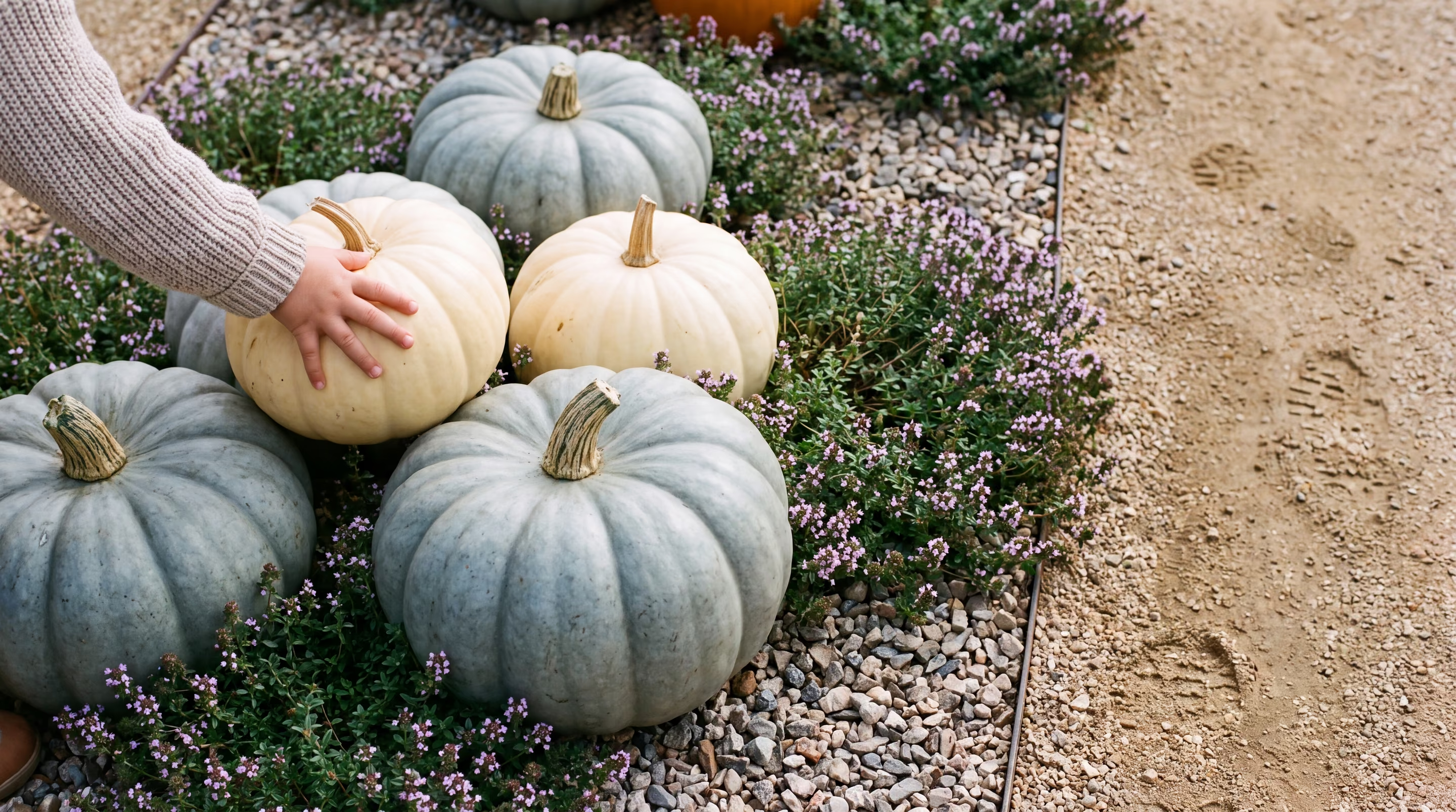
Look for a pumpkin that feels heavy for its size, sounds solid when you tap it, has no soft spots, and still has a few inches of stem (the stem acts as a plug that keeps moisture in). Heirloom varieties tend to last longest: blue-gray Jarrahdale, deep orange Cinderella, tan Fairytale, and white Lumina all have thick rinds that hold up well. Their soft blues, creams, and warm oranges are a lovely fit for the season’s palette, too.
Keep them cool and dry
Pumpkins stay fresh longest on a surface that stays cool. A bed of mulch, a patch of groundcover, a wooden stand, or a doormat all work well, especially in a spot where the porch casts afternoon shade. Airflow helps too, so leave a little space between pumpkins rather than stacking them tight. If a little rain comes through, give each pumpkin a quick wipe with a dry cloth to keep it looking its best.
Wait to carve, and seal what you cut
An uncut pumpkin can last many weeks, while a carved one lasts a few days, and a little less in warm weather. Carving as close to Halloween as you can gives you the longest display. Once you carve, a thin layer of petroleum jelly or vegetable oil on every cut edge helps hold in moisture. For an extra boost, wipe the skin with a diluted vinegar solution (about one part vinegar to 10 parts water) before you set it out.
QUICK STAT
Eight to twelve weeks — that’s how long a firm, uncut heirloom pumpkin can last in a cool, shaded spot with airflow, compared with a few days for a carved pumpkin left in the afternoon sun.
How long each type of pumpkin lasts
Here’s a rough timeline to help you plan your display:
- Uncut heirlooms in shade: most of the season
- Uncut standard carving pumpkins: several weeks
- Carved pumpkins in shade: three to five days
- Carved pumpkins in afternoon sun: a day or two, so a spare comes in handy
A good rule of thumb is to buy display pumpkins early and carving pumpkins later, and to move any pumpkin sitting on a warm surface to a cooler spot overnight.
What can you use instead of pumpkins?
Gourds, dried grasses, and olive or pomegranate branches bring fall abundance that lasts as long as you like. A bowl of persimmons on the patio table adds a fresh pop of color, and ceramic or glass pumpkins can come out again year after year. Mixed with a few real pumpkins, they keep the display looking full through Thanksgiving.
Dried elements also add a lot for very little effort. A bundle of deer grass plumes or a few dried salvia spikes in a tall pot adds height and texture, and ties the porch to the garden around it.
PRO TIP
Take advantage of seasonal rainfall and capture it for watering. One inch of rainfall on a roof can collect as much as 1,200 gallons of water that can be used in your landscape. You might also consider decorative rain chains that divert water from your gutters into your rain barrels and landscape. Another simple trick is to divert your rain gutters directly into your landscape and let the water flow, spread, and sink into the ground for plants to use. Don’t let this precious water go to waste!
When the rains return, a decorative rain chain helps you make the most of every drop. Hung in place of a downspout by the porch, it turns each rainfall into a small water feature and guides the water into your garden beds.
How do you weave fall decor into your planting instead of setting it on the lawn?
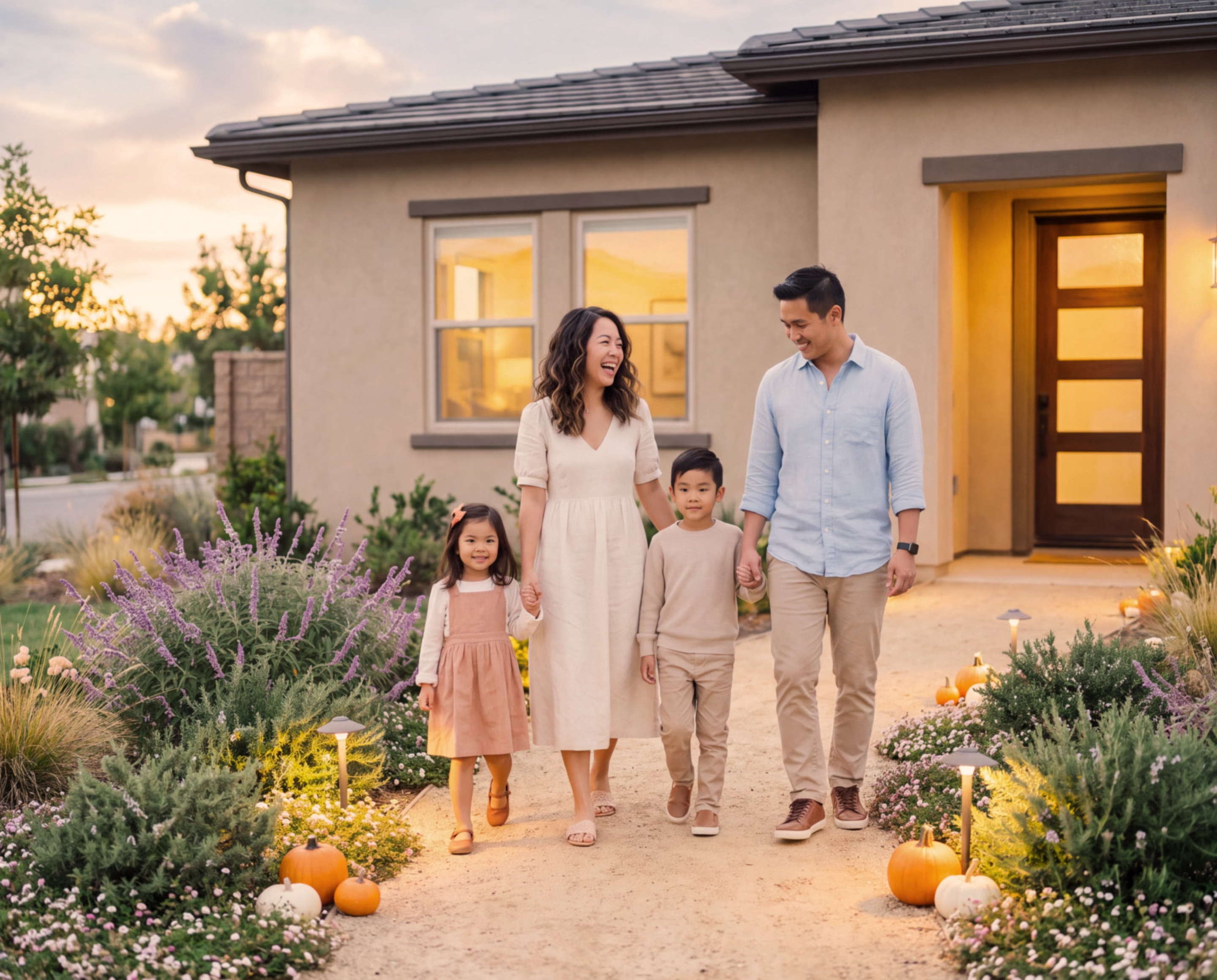
Fall decor looks its best when it sits inside your planting. Nestle pumpkins into groundcover beds or along gravel and decomposed granite paths, set lanterns among the shrubs, and add soft light along the walk for the season’s visitors.
Pieces tucked among the plants feel like part of the garden, and pumpkins tucked into groundcover stay cool and fresh longer.
Pair pumpkins with the plants around them
Think of the planting as the backdrop and the pumpkins as the accent. Blue-gray Jarrahdale looks striking against the cool green of creeping thyme, and deep orange Cinderella glows beside the gray-green leaves of a sage. Tuck a trio in half hidden by the plants and leave a little groundcover showing between them, and the grouping looks as if it grew right there.
Along a decomposed granite path, a line of small pumpkins brings the same look with a slightly more formal feel.
Mulch also gives the display a polished backdrop. A fresh 2- to 3-inch layer across the front beds frames pumpkins and planters beautifully and keeps the surface underneath cool.
“IRWD customers can sign up for the program and get half off the cost of bulk mulch purchased at our Irvine facility.”
Darren Ross, General Manager, Tierra Verde Industries
Light the path for visitors
Between Halloween night and the gatherings that follow, the walk to your front door gets extra use this time of year. Walkable groundcovers handle the extra footsteps easily, and a few path lights in warm white, spaced 6 to 8 feet apart, light the way without feeling overdone. Our pathway lights guide covers placement and fixtures.
EXPERT TIP: David Gomez, Water Efficiency Specialist, IRWD
The season is a great excuse to walk your yard at dusk with the lights on. Anywhere you pause to think about where to step is a good spot for a path light or a wider band of groundcover, and those touches make the yard more welcoming all year, not just for one evening of visitors.
Frequently asked questions about fall outdoor decor
What can you hang on a porch in fall?
A few easy options:
- A wreath of olive branches, dried grasses, or preserved eucalyptus on the door
- A string of warm white lights along the eave
- A woven basket or two on a hook
- A lantern beside the door
Keeping the palette to two or three colors lets the planters carry the rest.
How do you transition the porch from Halloween to Thanksgiving?
Retire the carved pumpkins the morning after and keep the uncut heirlooms, planters, lanterns, and throws. A bowl of persimmons or pomegranates on the table and a bundle of dried grasses in a tall pot are all it takes to carry the porch into the holiday season.
What keeps a fall porch looking designed?
Repetition, simplicity, and real plants. Repeating one palette and one material in threes, choosing just your favorite pieces, and letting living planters carry the look all help. Decor looks most intentional when it’s grouped together and tucked into the planting.
The bottom line
The season is ready when you are. Refresh the planters, set three pumpkins into the thyme, light one lantern, and take a minute to enjoy it. Autumn in your Yardtopia is a season to live in, not just decorate for.
When you’re ready to give the season more room to grow, our fall planting guide covers the plants that go in now and shine by spring. If you’d like to sketch out new beds around the porch, the free SimplyScapes tool on the Yardtopia website can help you lay out the space, and our guide to host gifts for outdoor gatherings has ideas for every porch you visit this season.