What makes a house the one neighbors slow down for on their evening walk? It rarely comes down to the biggest budget on the block. Great curb appeal landscaping comes down to four deliberate moves: a clear focal point, layered planting with the same plants repeated in generous groups (often called drifts), a defined entry, and crisp edges. Get those four right, and the impact adds up, even if the yard comes together one corner at a time.
KEY TAKEAWAYS
- Curb appeal comes from four deliberate moves (a clear focal point, layered planting in repeating drifts, a defined entry, and crisp edges), not from spending the most money on the street
- The fastest wins are fresh mulch, clean edges, and a pair of matching entry containers; larger lawn-to-water-smart transformations can qualify for IRWD turf-replacement rebates
- A water-smart front yard reads lush when you layer evergreen structure, repeated color, and groundcover; plus, that polished look fits comfortably within most Irvine HOA guidelines
If you have been searching for front yard curb appeal ideas and finding mostly national lists written for lawns in Ohio, this guide is for you. Southern California front yards play by their own set of rules. Our architecture, our climate, and our plant palette give local homeowners a head start that most of the country would love to have.
This is a full walkthrough: what actually creates that pulled-together look, the highest-impact upgrades ranked by effort, the plants that earn their spot, and how to keep everything water-smart, evening-ready, and HOA-friendly. Start with what fits your time and your budget. Everything else here is ready whenever you are.
What actually creates curb appeal in a Southern California front yard?
Curb appeal comes from a clear focal point, layered planting in repeating drifts, a defined and welcoming entry, and crisp edges, not from spending the most money. Nail those and your front yard reads as intentional from the street, whether you tackle it all this season or one corner at a time.
A front yard with real presence changes how it feels to pull into your own driveway. It is the quiet pride of being the house neighbors photograph on their walk, and the warm first impression your guests get before they ever reach the door.
The three-second test
From the street, a person’s eye reads a front yard in about three seconds. In that moment, it registers four things: one element to land on (a specimen plant, a beautiful door, a sculptural container), the overall shape of the planting, the path to the entry, and whether the edges look cared for. When their eye finds a focal point and a clear route to the door, the whole composition clicks. Everything else falls into place around it.
That is why repetition beats variety in a front yard. Three drifts of the same Cleveland sage read as a design decision. Nine different one-of-each plants read as a collection. Design for the three-second glance first, and the close-up details will still be there for anyone who lingers.
Why SoCal homes have a head start
Southern California homes, especially the Mediterranean and Spanish-style architecture common across Irvine and the IRWD service area, pair naturally with the plants that thrive here. Warm stucco, terracotta roof tile, and arched entries look their best against silvery foliage, sculptural forms, and soft drifts of color, which is exactly what the Mediterranean plant palette delivers.
Add a climate that supports year-round outdoor living and evergreen structure through every season, and you have conditions most of the country cannot match. A SoCal front yard never has to go dormant and brown for the winter. Done well, it looks composed in January all the way to December.
What are the highest-impact curb appeal landscaping upgrades, ranked by effort?
The fastest curb-appeal wins are fresh mulch, crisp edges, a pair of matching entry containers, and one specimen plant; weekend projects like a planting drift or low-voltage lighting come next, and lawn-to-water-smart transformations deliver the biggest change of all.
Here is the full menu, organized so you can match the project to the time you actually have.
| Upgrade | Effort | Impact |
|---|---|---|
| Fresh mulch and crisp edges | An afternoon, roughly $50 to $200+ | Instantly makes every bed look cared for |
| Matching entry containers | An afternoon, roughly $100 to $300+ | Signals intention at the front door |
| One specimen plant | An afternoon, roughly $50 to $200+ | Gives the eye a place to land |
| Planting drift of five to seven plants | A weekend, roughly $150 to $500+ | Adds lush, repeated color from the street |
| Path refresh with gravel or stepping stones | A weekend, roughly $300 to $1,000+ | Guides the eye to the entry |
| Low-voltage path and accent lighting | A weekend, roughly $200 to $600+ | Extends curb appeal into the evening |
| Lawn-to-water-smart transformation | A multi-weekend or pro project, roughly $2,000 to $20,000+ before rebates | Changes the character of the whole house |
Quick wins: an afternoon, not a project
Start small. These are the moves that cost the least and change the most about how cared-for a front yard feels:
- Fresh mulch in one uniform, natural brown across every bed. Nothing makes planting look more deliberate, and a 2- to 3-inch layer keeps soil moisture in through late summer.
- Crisp edges where beds meet the walkway and driveway. Clean lines are the difference between “growing” and “designed.”
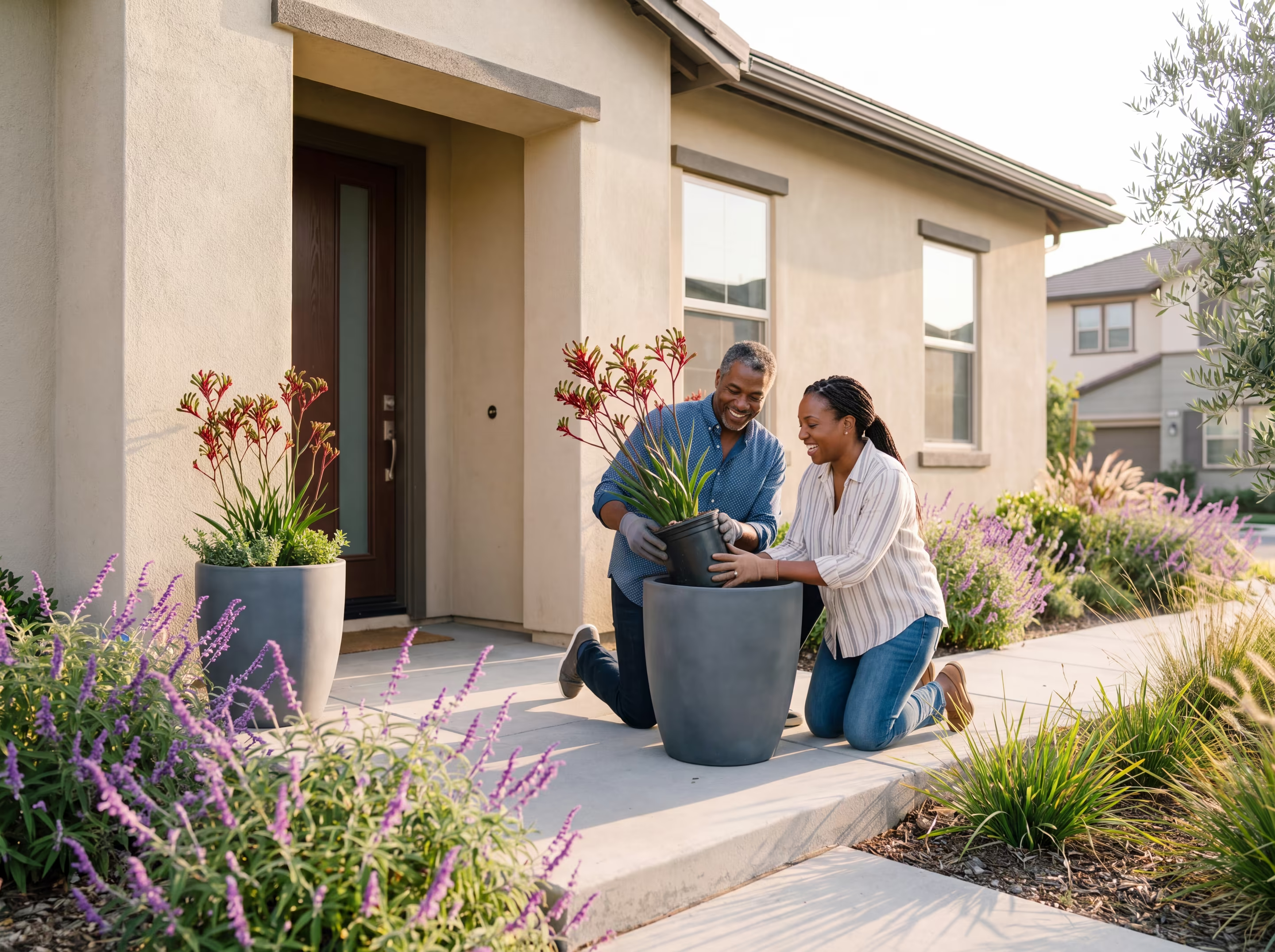
- A pair of matching containers flanking the front door or the start of the path. Symmetry at the entry signals intention instantly.
- One specimen plant placed where the eye lands from the street. A single foxtail agave or kangaroo paw cluster can carry a whole bed.
This tier is also the perfect one-corner-at-a-time starting point. Upgrade the entry zone alone and the entire house reads differently from the street.
Repeat one container style, one mulch color, and one edging treatment across the whole front yard, even if you upgrade it in stages over several months. Consistency in the hard elements makes every later planting addition look like part of a master plan.
Weekend projects: visible change by Sunday evening
With a free weekend, you can plant a drift of five to seven matching plants along the path or under a window, refresh a tired path with new gravel or stepping stones, or add low-voltage lighting along the walkway. All beginner-friendly, and all visible from the street the moment they are done.
EXPERT TIP: David Gomez, Water Efficiency Specialist, IRWD
If you only upgrade one thing, make it the entry. A defined focal point at the front door, framed by two containers and a clear sightline from the street, returns more curb appeal per dollar than any other single move I see in Orange County front yards.
Bigger moves: transforming the front yard itself
The largest gains come from transforming a thirsty front lawn into a layered, water-smart planting design, adding a hardscape entry courtyard, or commissioning a full redesign. These projects change the character of the whole house, and IRWD’s turf-replacement rebate program can offset a meaningful share of the cost (more on that below).
A full redesign is also the natural moment to plan how the whole property works together, from the street-facing beds to functional zones in back like the ones in our dog run and pet zone ideas.
Which plants give a SoCal front yard instant curb appeal?
Evergreen structure plants like westringia and dwarf olive, street-visible color from salvia, lantana, and kangaroo paw, and sculptural accents like foxtail agave deliver the fastest curb appeal in a Southern California front yard. Think of the palette in three layers: bones, color, and art.
The secret is buying multiples. Five of one plant arranged in a drift creates that lush, designed look; five different plants scattered around create visual static. Choose fewer varieties and repeat them generously.
To match plants to your exact sun, soil, and spot, the California Native Plant Society’s Calscape guidance and the UC Master Gardeners of Orange County are both wonderful free resources.
Evergreen bones that hold the picture together
Structure plants keep a front yard composed every month of the year. Coast rosemary (westringia) mounds into soft, silvery forms that clip beautifully or grow loose. Pittosporum varieties give you glossy hedging and screening. Dwarf olive brings that unmistakable Mediterranean silver-green that flatters stucco and tile.
Coast rosemary (Westringia fruticosa)
| Water | Sun | Size | Toxicity | Origin |
|---|---|---|---|---|
| Low | Full sun to partial shade | 3-5 ft tall, 3-6 ft wide | Non-toxic to pets and children | Mediterranean-climate shrub, Australian native |
Where westringia gives you softness, dwarf olive gives you presence. A pair flanking the entry, or a single specimen anchoring a corner bed, instantly ties the planting to the architecture.
Dwarf olive (Olea europaea, dwarf fruitless varieties)
| Water | Sun | Size | Toxicity | Origin |
|---|---|---|---|---|
| Very low | Full sun | 4-6 ft tall, 4-6 ft wide | Non-toxic to pets and children | Mediterranean native, well adapted to SoCal |
Color that reads from the street
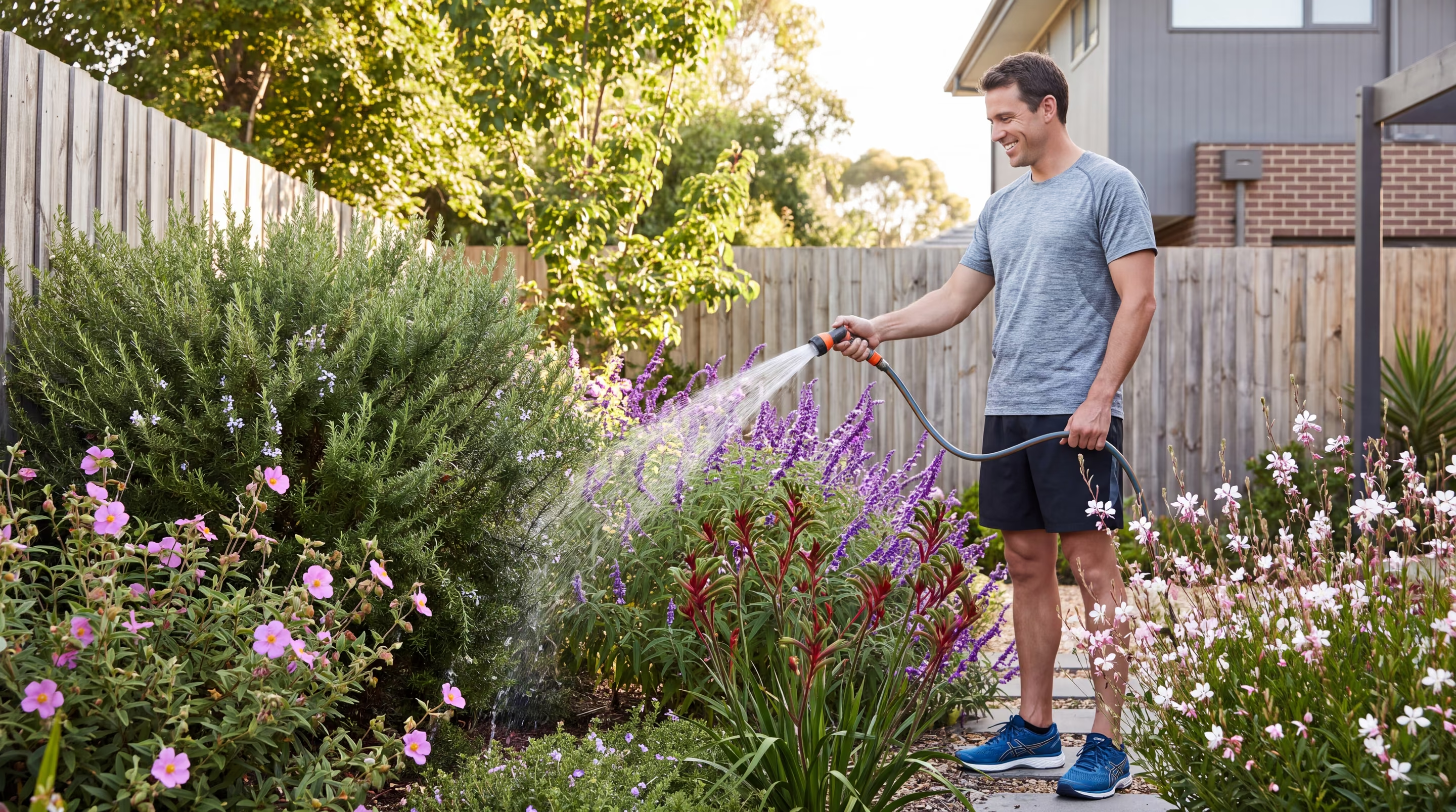
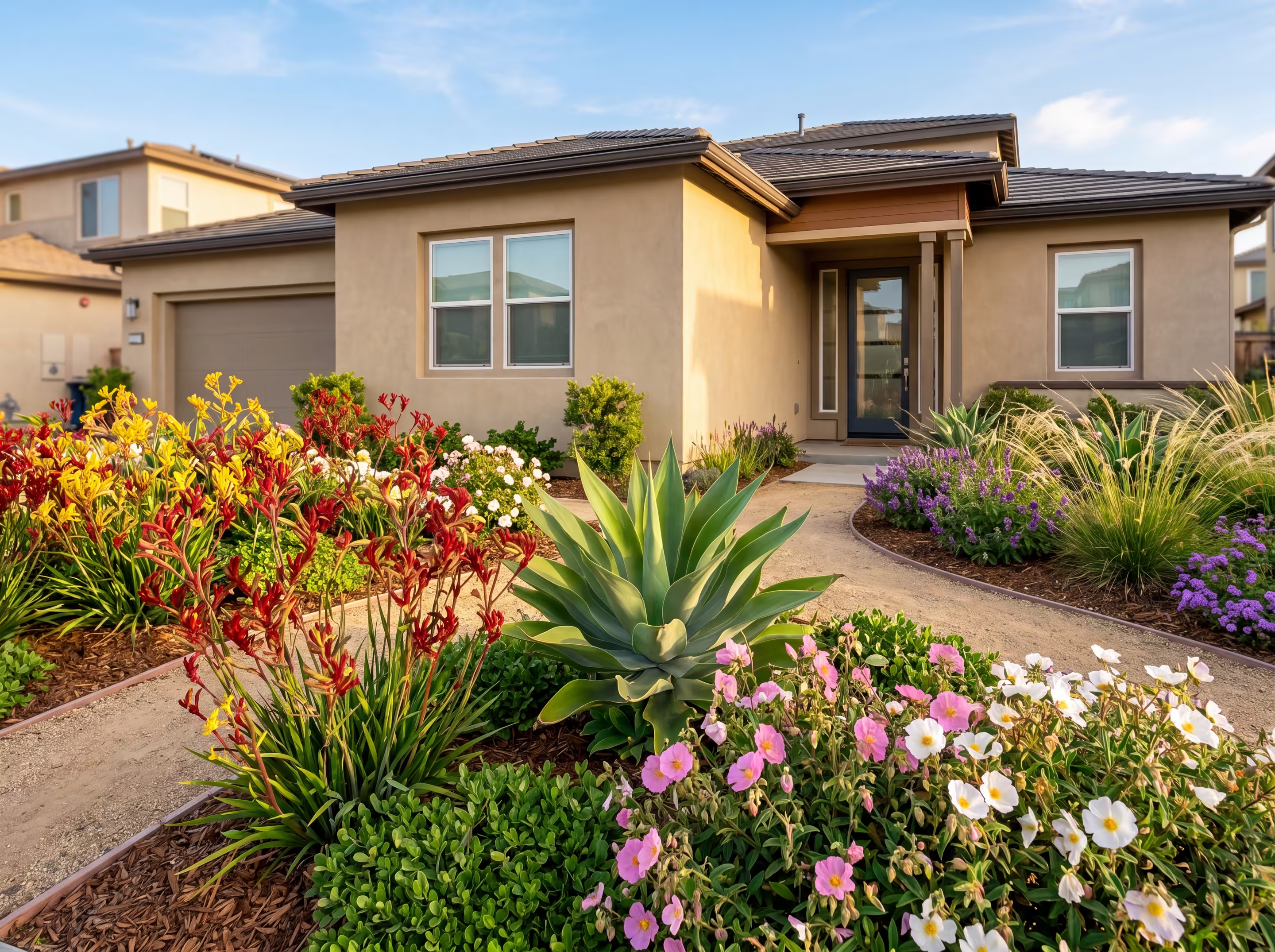
For color with presence at 40 feet, plant in drifts of three to seven. Cleveland sage sends up fragrant blue-purple spikes that hummingbirds love. Lantana blankets itself in bloom from spring through fall. Kangaroo paw holds vivid, velvety flower stalks high enough to read from across the street, and rockrose covers itself in papery pastel blooms with almost no help from you.
Cleveland sage (Salvia clevelandii)
| Water | Sun | Size | Toxicity | Origin |
|---|---|---|---|---|
| Low | Full sun | 3-5 ft tall, 4-6 ft wide | Non-toxic to pets and children | Native to Southern California |
For height and drama in the same drift, kangaroo paw is the standout. Its flower stalks hold their color for months and give the bed a vertical rhythm that reads clearly from the sidewalk.
Kangaroo paw (Anigozanthos flavidus)
| Water | Sun | Size | Toxicity | Origin |
|---|---|---|---|---|
| Low | Full sun | 2-5 ft tall, 1-2 ft wide | Non-toxic to pets and children | Australian native suited to Mediterranean climates |
Sculptural accents that act like garden art
Every composed front yard needs one or two plants that behave like sculpture. Foxtail agave forms smooth, spineless rosettes that look stunning against a stucco wall. Dasylirion creates a perfect sphere of fine, arching leaves. Deer grass adds fountain-like movement that catches the late-afternoon light. Framed by softer planting and warm architecture, these accents read as modern and sculptural, a natural fit for Irvine’s clean Mediterranean look.
Foxtail agave (Agave attenuata)
| Water | Sun | Size | Toxicity | Origin |
|---|---|---|---|---|
| Very low | Full sun to partial shade | 3-4 ft tall, 3-4 ft wide | Sap can irritate skin; plant back from play areas | Mexican native, spineless and widely used in SoCal gardens |
Here is a timing advantage worth knowing: fall and early winter are prime planting season here, because plants set out now root into soil that is still warm and get the benefit of the seasonal rain that follows.
“With the weather getting cooler, it’s time to plan for planting. Warm soil and natural rainfall later in the season will promote vigorous root growth so your plants grow strong in the spring. Start preparing your plant list now.”
Juan C. Garcia, Sr. Water Efficiency Specialist, IRWD
How do you design a water-smart front yard that still looks lush?
A water-smart front yard looks lush when it layers evergreen structure, repeated color drifts, and groundcover in place of lawn, so it reads as designed from every angle. The sparse look people worry about almost always comes from too few plants spaced too far apart, not from the plants themselves.
Layer heights and repeat generously
Work in three heights: taller structure shrubs at the back or corners, mid-height color in drifts through the middle, and groundcover flowing to the edges. Aim for roughly 60 percent evergreen plants so the composition holds together in every season, and let each drift repeat at least once somewhere else in the yard. Repetition plus layering is the entire formula for “lush.”
Lawn alternatives that look intentional
In place of a front lawn, three approaches consistently look designed rather than improvised: walkable groundcover in broad drifts (our ground cover plants guide covers the best low-water choices), gravel panels framed by generous planting (see our decorative rock and gravel guide for materials and border ideas), or fully planted beds organized around a path.
Whichever you choose, keep edges crisp and let planting cover at least half the visible ground so the yard reads green-first.
For the upkeep side of a front yard like this, from irrigation to seasonal care, our companion guide to low-maintenance water-smart yards breaks down the full framework.
The turf-replacement rebate as a curb-appeal upgrade path
If a front-lawn transformation is on your list, IRWD’s turf-replacement rebate program turns it into one of the most affordable major upgrades a homeowner can make. Not sure what should take the lawn’s place? Our guide to grass alternatives walks through the options that thrive out front.
Up to $3 per square foot is the rebate range IRWD offers for qualifying turf-replacement projects, which can offset a significant share of a front-yard transformation. Remember to start the rebate process before you start your project to ensure maximum benefits.
How do entry, pathways, and lighting elevate curb appeal after dark?
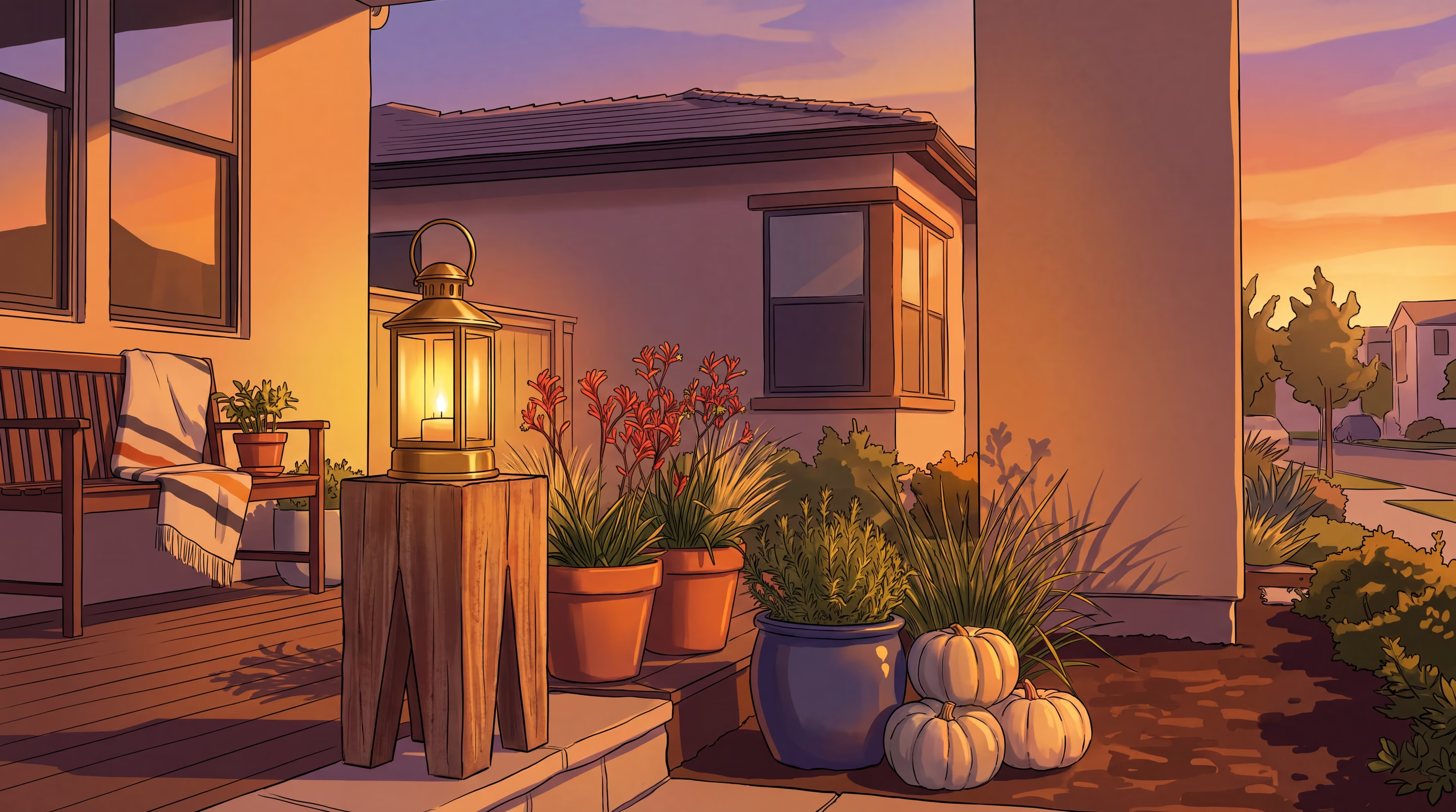
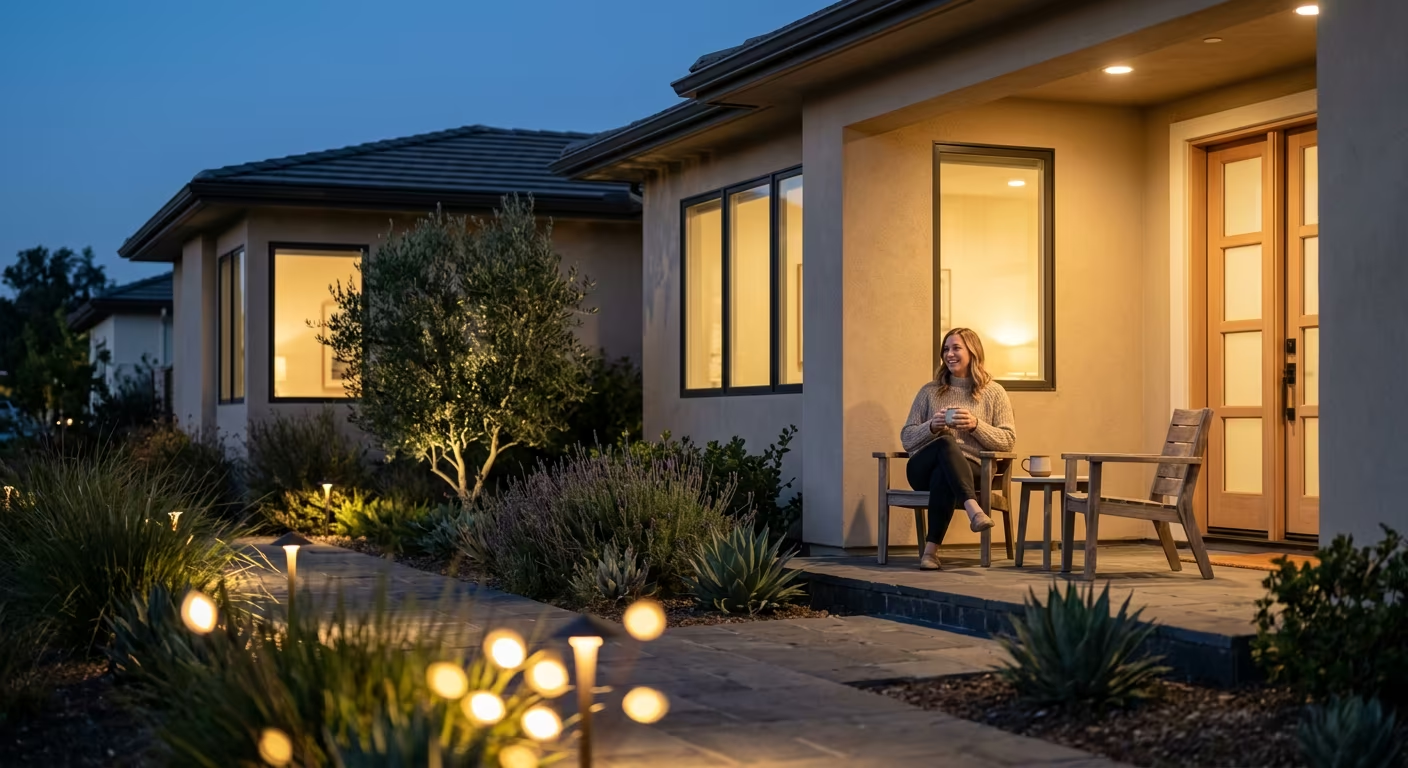
A defined entry, a path that guides the eye, and layered low-voltage lighting keep a front yard looking intentional and welcoming around the clock. With warm SoCal evenings stretching well past sunset, your yard gets to shine long after the sun goes down. That means coming home to a space that feels just as polished at night as it does during the day.
A defined, welcoming entry
The entry is where every sightline should resolve. Consider framing the front door with a matched pair of containers, placing one focal plant where the path begins, and keeping the route from sidewalk to door visually clear. If overgrown shrubs currently hide the door, gentle pruning to open that sightline is one of the fastest transformations available.
A path that guides the eye
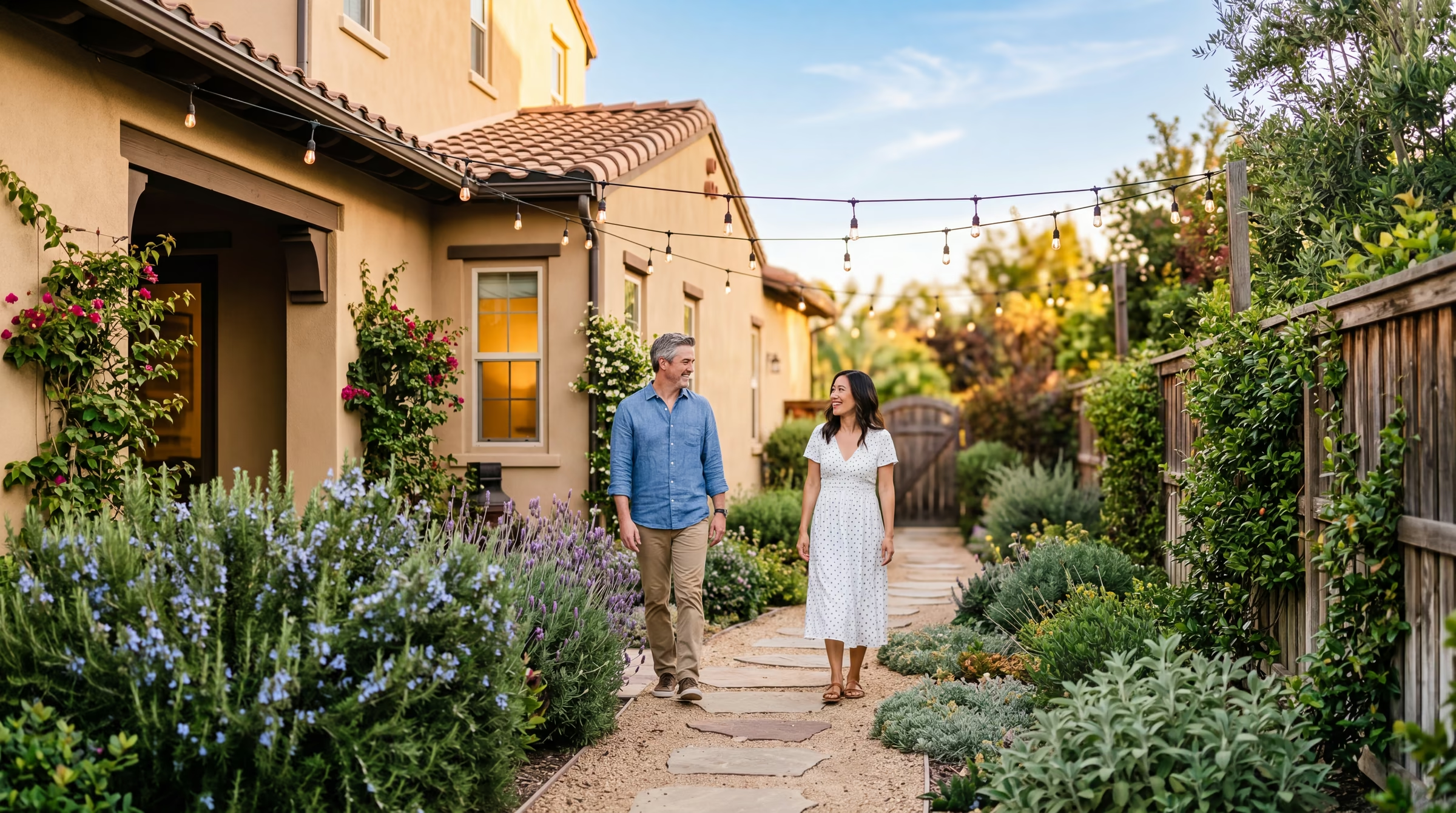
A front path works best when it reads as an invitation. Gently curved routes feel relaxed and garden-like, while straight paths suit formal, symmetrical facades. Not sure which material fits your style? Our tip is to pick one and stay with it. Decomposed granite, pavers, or stepping stones set in groundcover all suit Mediterranean architecture beautifully.
Layered lighting for the evening hours
Evening curb appeal comes from three layers: path lights to guide footsteps, one or two uplights on your focal plant or a specimen tree, and a warm glow at the entry itself. Our guides to pathway lights and landscape lighting ideas walk through fixtures, spacing, and layouts in detail.
For front-yard lighting, warm white bulbs (2700K) give the softest, most inviting glow, and path lights look their best spaced 6 to 8 feet apart rather than lined up like a runway. A few warm, well-placed lights read as elegant every time.
How do you keep front-yard curb appeal HOA-friendly in Irvine?
Stay within common HOA parameters for plant height, sightline visibility, and edging by choosing a tidy, repeated water-smart palette, and your front yard can be both distinctive and approval-ready. Most Irvine-area HOA guidelines and water-smart design goals point in the same direction: composed, well-edged, intentional planting.
What HOA guidelines usually cover
Most local associations focus on a few predictable areas:
- Plant heights near sidewalks, corners, and driveways (usually to protect visibility)
- The ratio of planted area to hardscape
- Approved plant palettes or styles
- Standards for edging and general upkeep
Review your association’s landscape guidelines before a major project, and submit plans early for anything beyond routine planting.
Many HOAs in the IRWD service area have updated their guidelines in recent years to welcome water-smart front yards, and some now maintain pre-approved plant palettes built around the same Mediterranean varieties featured in this guide. Approval is often simpler than homeowners expect.
Standing out within the lines
The yards that shine inside HOA communities win on execution, not rule-bending. Repetition, symmetry at the entry, crisp edges, and one memorable focal point create distinction that no guideline prohibits. Think of the guidelines as the frame. The composition inside it is yours to design.
What is the easiest first curb-appeal project to start this weekend?
Start at the entry. Set a matched pair of containers by the front door, add one focal plant where the path begins, and finish with fresh edges and mulch across the front beds. That single zone is what the eye reads first from the street, it takes an afternoon or two, and it delivers more visible change than any other starter project. Once that first impression lands, build outward one corner at a time.
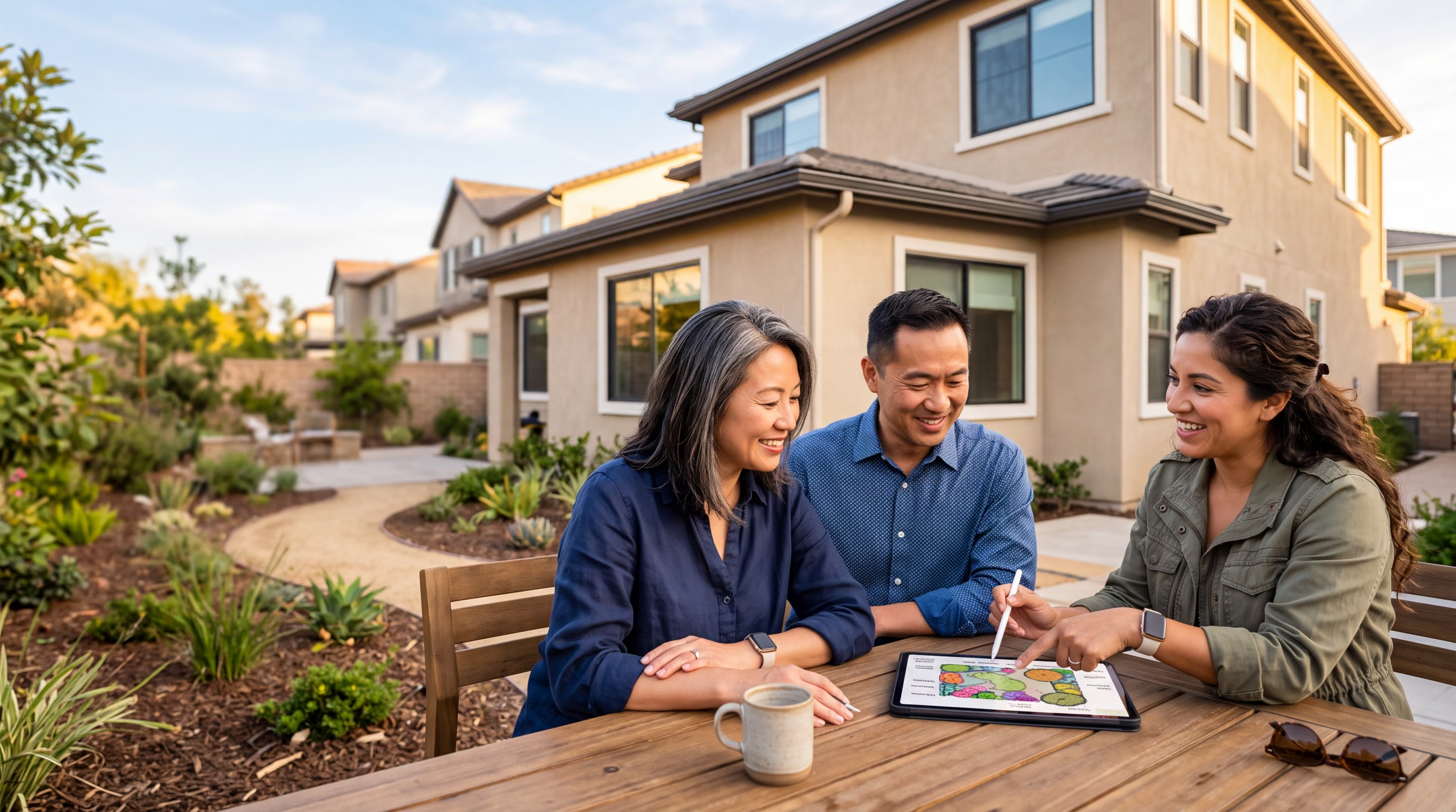
Whenever you are ready for more, explore IRWD’s SimplyScapes tool for help laying out a front-yard design, look into the turf-replacement rebate if a bigger transformation is on your radar, or simply browse the plant and lighting guides above.
Your front yard is already on its way to feeling like the space you have always wanted to come home to. The only question is which corner you will start with.